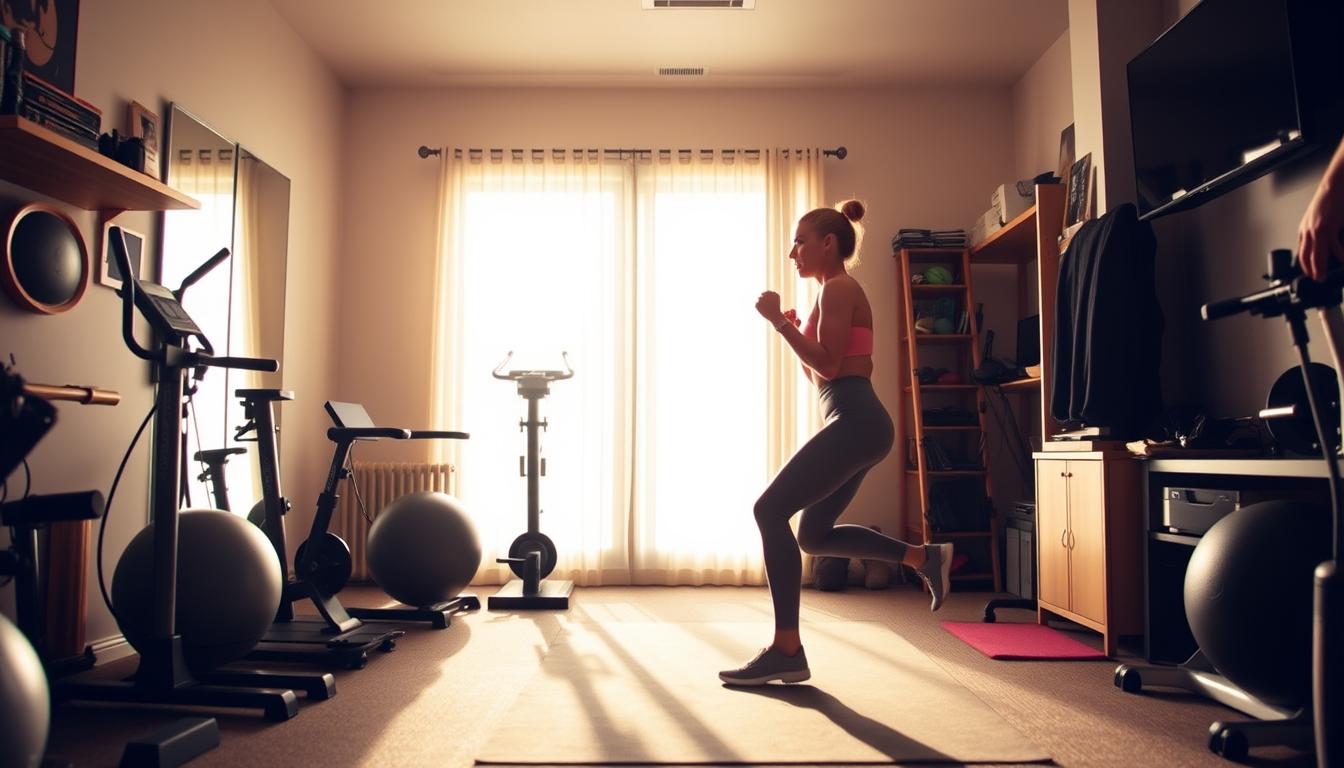
You’ve probably heard of Tabata, a high-intensity interval training method. It’s known for being quick and effective at boosting overall strength. This 20-minute workout plan is challenging but delivers a full-body workout in just a few minutes.
The Tabata method is straightforward: 20 seconds of all-out effort followed by 10 seconds of rest. This pattern is repeated for 4-6 rounds. You get a 20-minute workout that’s both challenging and rewarding. We’ll look at four simple total-body exercise pairs for your Tabata workout routine.
Key Takeaways
- Tabata is a time-efficient method for improving total body strength.
- A typical Tabata cycle involves 20 seconds of effort followed by 10 seconds of rest.
- Four simple total-body exercise pairs will be covered for a full-body workout.
- This 20-minute workout plan is designed to be challenging yet rewarding.
- You can customize your Tabata workout routine to suit your fitness goals.
What Is Tabata Training?
Dr. Izumi Tabata created this training method. It’s known for boosting heart health and strength. Tabata is a high-intensity interval training (HIIT) that’s popular in fitness.
The Origin of Tabata Protocol
Dr. Izumi Tabata, from Japan, developed the Tabata protocol. His research focused on intense, short bursts of exercise. This led to the HIIT protocol named after him.
It started with Olympic speed skaters, but now helps many. Tabata training boosts both aerobic and anaerobic capacities worldwide.
The 20-10 Structure Explained
The Tabata protocol has a 20-10 structure. It’s 20 seconds of full effort followed by 10 seconds of rest. This cycle is completed in 4-6 rounds, each lasting about 4 minutes.
This structure maximizes the benefits of HIIT in a short time. It improves cardiovascular fitness and muscle endurance. Tabata workouts are brief and intense, making them great for busy people.
The Science Behind Tabata Workouts, High-Intensity Interval Training (HIIT), and 20-Minute Workouts
Tabata and High-Intensity Interval Training (HIIT) demonstrate that short, intense workouts can have a significant metabolic impact. Knowing how these workouts affect your body helps you see their value and results.
Metabolic Impact of Short, Intense Efforts
Tabata makes your body use stored glucose for energy, leading to significant calorie burn. This high-intensity interval training not only burns calories during the workout. It also helps maintain a high metabolism even after you stop exercising.
EPOC: Why You Keep Burning Calories After Tabata
Tabata and HIIT have a specific benefit known as Excess Post-Exercise Oxygen Consumption (EPOC). EPOC means your body uses more oxygen after intense exercise, burning more calories. This happens because your body needs to refuel, repair muscles, and recover, all of which require additional energy and burn more calories.
Benefits of Tabata for Total Body Strength
Tabata training improves total-body strength in several ways. It’s a high-intensity workout that’s short but effective. This makes it popular for quick fitness gains.
Time Efficiency vs. Traditional Workouts
Time Efficiency vs. Traditional Workouts
Tabata is quick, lasting only 20 minutes. This is a big plus for those with tight schedules. It’s perfect for getting fit fast without spending hours at the gym.
Strength and Cardiovascular Improvements
Tabata strengthens muscles and boosts heart health. Its intense nature works both your aerobic and anaerobic systems. This leads to better endurance and stamina.
Adaptability for All Fitness Levels
Adaptability for All Fitness Levels
Tabata fits everyone, from beginners to pros. You can adjust the workout to match your fitness level. This makes it a great choice for anyone looking to improve their fitness.
Preparing for Your Tabata Workout
To get ready for a Tabata workout, follow a few easy steps. First, think about the equipment you’ll need and how to arrange your workout area.
Essential Equipment
Tabata workouts are great because you can do them with little to no equipment. You can use bodyweight exercises alone. But, if you want to add some gear, here are some essentials:
- Dumbbells for added resistance
- A jump rope for cardio exercises
- A yoga mat for comfort during floor exercises
- Resistance bands for varied strength training
These tools can improve your workout, but you don’t need them to have a good Tabata session.
| Equipment | Purpose |
|---|---|
| Dumbbells | Added resistance for strength training |
| Jump Rope | Cardio exercises |
| Yoga Mat | Comfort during floor exercises |
| Resistance Bands | Varied strength training |
Setting Up Your Workout Space
Having a good workout space is key to a great Tabata session. Ensure your area is clear, has a non-slip floor, and is well ventilated. If you’re working out at home, choose a room free of distractions.
With the proper setup and equipment, you’ll be ready to get the most out of your Tabata workout.
The Tabata Workout Structure
To get the most out of Tabata, understanding its structure is key. The traditional Tabata involves 20 seconds of full effort followed by 10 seconds of rest. This pattern is repeated for eight cycles. It’s designed to challenge your body and boost your fitness.
Warm-Up Protocol
A good warm-up is vital before starting Tabata. It prepares your muscles for the intense workout. Include light cardio and mobility exercises to improve blood flow and reduce injury risk. A simple warm-up can be jogging in place, jumping jacks, or cycling for 5-10 minutes.
Example Warm-Up: Start with 5 minutes of jogging, then do dynamic leg swings and arm circles.
Understanding Workout Rounds and Rest Periods
The Tabata workout is known for its 20-10 interval. Work at maximum intensity for 20 seconds, then rest for 10 seconds. This cycle is done 8 times, lasting 4 minutes per exercise. Sticking to this structure is crucial for Tabata’s benefits.
As Dr. Izumi Tabata once said,
“The most important thing is to go all out during those 20 seconds.”
Exercise Pair 1: Lower Body Focus
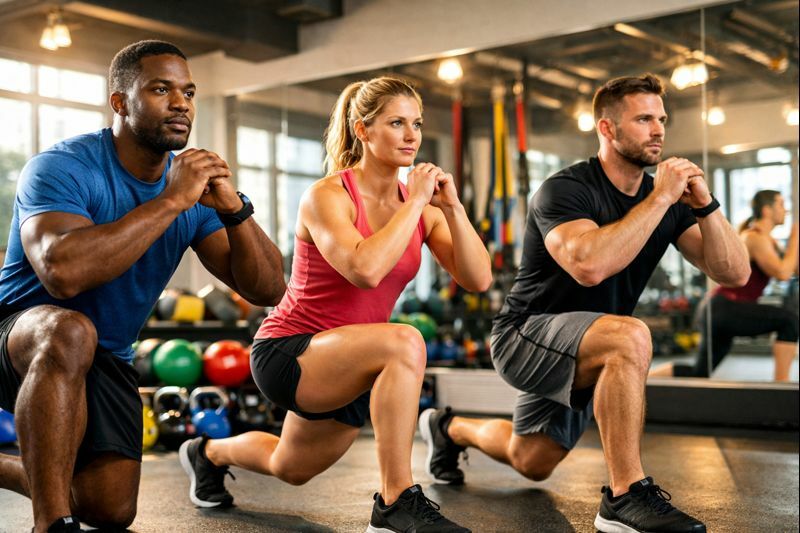
To start your Tabata workout, we focus on lower-body exercises. These can be adjusted to fit your fitness level. Building lower-body strength is key to overall fitness and sports performance.
Squat Variations
Squats are a basic exercise for strengthening the lower body. You can adjust squats to suit your level, from bodyweight to weighted.
- Bodyweight squats: Great for beginners, they help you learn proper form.
- Weighted squats: Adding weights makes it harder and works your muscles more.
- Sumo squats: A wider stance targets different muscles, like the adductors.
Lunge Combinations
Lunges are effective for working multiple lower-body muscles. You can try walking lunges, stationary lunges, and side lunges.
- Walking lunges: Improve balance and coordination.
- Stationary lunges: Work the quadriceps, hamstrings, and glutes.
- Side lunges: Strengthen the adductors and glutes, enhancing hip mobility.
Proper Form Guidelines
It’s essential to maintain proper form to avoid injury and get the most out of squats and lunges.
| Exercise | Proper Form Tips |
|---|---|
| Squats | Keep your back straight, engage your core, and lower until your thighs are parallel to the ground. |
| Lunges | Ensure your front knee is behind your toes, lower your back knee until it almost touches the ground, then push back up. |
Common Mistakes to Avoid
Avoid common errors such as letting your knees go past your toes in lunges or not lowering enough in squats.
- Not engaging your core during squats.
- Not keeping your back straight during lunges.
- Not using the full range of motion.
Exercise Pair 2: Upper Body Push and Pull
Adding upper-body push-and-pull exercises to your Tabata routine can significantly boost your strength. These exercises work different muscle groups, making your workout balanced.
Push-Up Variations
Push-ups are key for working the chest, shoulders, and triceps. You can make them more complicated and more effective by trying different versions.
- Standard Push-Up: Works the chest, shoulders, and triceps.
- Diamond Push-Up: Emphasizes the triceps.
- Decline Push-Up: Increases the intensity on the upper chest.
Rowing Movements
Rowing exercises focus on the back, shoulders, and biceps. They balance out the push movements.
- Bent-Over Row: Works the back and biceps.
- Seated Row: Targets the middle and upper back.
- Inverted Row: Engages the back, shoulders, and arms.
Proper Form Guidelines
Maintaining proper form is key to a good workout and to avoiding injuries. Make sure your body is straight during push-ups and your core is tight during rows.
Common Mistakes to Avoid
Don’t let your hips drop during push-ups or use momentum in rows. Stick to controlled movements.
Exercise Pair 3: Core Strengthening
Core strengthening is key to stability and balance. It’s also vital for athletic performance. A mix of dynamic exercises and isometric holds works well.
Dynamic Core Exercises
Dynamic exercises move your core through different motions. Examples are:
- Russian twists
- Leg raises
- Bicycle crunches
These boost strength, flexibility, and coordination in your core.
Isometric Core Holds
Isometric exercises contract your core without moving. Examples include:
- Plank holds
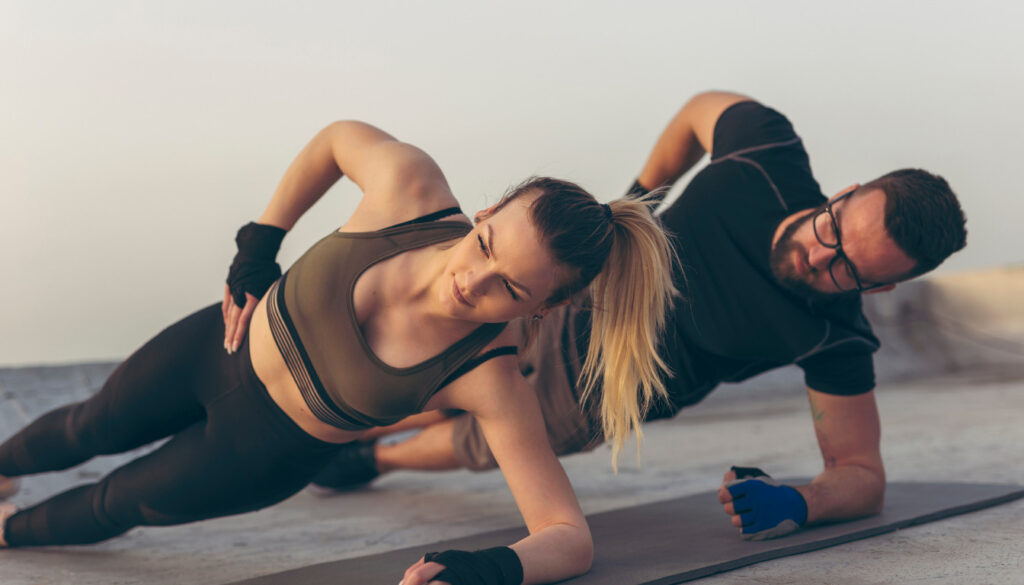
- Side plank holds
- Glute bridges
They build core endurance and strength.
Proper Form Guidelines
Proper form is crucial for practical core exercises. This means:
- Engaging your core muscles
- Keeping a neutral spine
- Avoiding back arching or straining
Common Mistakes to Avoid
Some common mistakes to avoid include:
| Mistake | Correction |
|---|---|
| Letting your form deteriorate | Focus on controlled movements |
| Holding your breath | Practice deep, rhythmic breathing |
Exercise Pair 4: Full Body Integration
Exercises that engage multiple muscle groups at once are ideal for a Tabata workout. They help boost your strength and endurance. Compound movements and explosive exercises make your workout more effective.
Compound Movement Combinations
Compound movements such as burpees and mountain climbers engage multiple muscle groups. They improve strength and heart health. Adding these to your Tabata routine boosts your workout’s power.
Some good compound movement combos are:
- Squat to press
- Lunge jumps
- Push-up to mountain climbers
Explosive Power Exercises
Explosive exercises like box jumps boost your power and speed. They’re key to better sports skills and calorie burn.
Some top explosive exercises are:
- Kettlebell swings
- Box jumps
- Medicine ball throws
Proper Form Guidelines
Maintaining proper form is crucial in full-body exercises. Use controlled movements and keep your core tight. Proper technique prevents injuries and improves your workout.
Common Mistakes to Avoid
Don’t rush and forget about form. Pay attention to how your body moves to stay safe and effective.
Implementing Your Tabata Routine
To get the most out of Tabata, plan your workouts carefully. Make sure to fit Tabata into your weekly schedule. Also, keep pushing yourself to get better.
Sample Weekly Schedule
Having a weekly plan for Tabata workouts is key. Here’s a simple way to organize your week:
| Day | Exercise Pair | Workout Focus |
|---|---|---|
| Monday | Lower Body | Squat Variations |
| Tuesday | Upper Body | Push-Up Variations |
| Thursday | Core Strengthening | Dynamic Core Exercises |
| Friday | Full Body Integration | Compound Movement Combinations |
Progressive Overload Strategies
To keep improving with Tabata, use progressive overload. Here are some ways to do it:
- Do more reps or sets as you get stronger.
- Take less rest between intervals.
- Add weights or resistance to your exercises.
- Make exercises more challenging by changing them (e.g., diamond push-ups).
These strategies will keep your Tabata workouts challenging and effective.
Conclusion
You now know a lot about Tabata training and its benefits. It’s great for your body strength and health. Adding high-intensity interval training to your routine can really improve your health and fitness.
The Tabata protocol is a quick way to see significant results. Just 20 minutes a day can make a big difference. You’ll see improvements in your metabolism, strength, and heart health.
When you start doing Tabata, remember to keep getting stronger. Adjust the exercises as you improve. With regular practice, you’ll get a more substantial, leaner body. Tabata is a great way to reach your fitness goals.