You’re trying to lose weight, but hunger is getting in the way. You’re not alone. Many people struggle to feel full and satisfied when on a diet. The good news is that there’s a simple solution: focus on protein-rich foods.
Protein-rich diets have been shown to enhance feelings of fullness. They also support sustainable weight loss. By preserving muscle mass, protein helps you maintain a healthy metabolism. This makes it easier to achieve your weight loss goals.
Key Takeaways
- Eating enough protein is crucial for managing hunger and supporting weight loss.
- Protein-rich foods can help you feel fuller for longer.
- A high-protein diet can help preserve muscle mass and support a healthy metabolism.
- Focusing on protein can help you achieve sustainable weight loss.
- Including protein-rich foods in your diet can help you stick to your weight-loss plan.
The Weight Loss Dilemma: Why Most Diets Fail
Most diets fail because they don’t tackle the urge to eat. By cutting out certain foods or eating too little, you’re not solving hunger.
The Cycle of Restriction and Rebound
Diets often lead to a cycle of restriction and rebound. You might lose weight at first, but then regain it when you return to your regular eating habits. This cycle harms your metabolism and health.
Why Hunger Sabotages Your Best Intentions
Hunger is a significant barrier to weight loss. When you’re hungry, you might eat too much or choose unhealthy foods. The key to managing hunger is understanding its biological causes.
The Biological Drive to Eat
Your body naturally wants to eat, thanks to hormones like ghrelin and leptin. Specific diets can increase these hormones, making you hungrier. It’s essential to work with these biological drives for lasting weight loss.
To lose weight for good, you must tackle hunger directly. This means choosing the right foods and making sure you get enough protein to stay full.
Understanding Satiety: The Missing Piece in Weight Loss
For weight loss, knowing about satiety is key. Satiety is the feeling of being full and satisfied after eating. It plays a significant role in how much we eat.
What Is Satiety and Why Does It Matter
Satiety is more than just feeling full. It’s a bodily response to food that tells your brain you’ve eaten enough. This feeling changes based on the food, how you eat, and your hormones.
The Satiety Index: How Foods Rank
The satiety index shows how foods affect your fullness. Foods with high scores keep you feeling full longer. Protein-rich foods are at the top of this list.
Protein’s Position at the Top
Protein is at the top because it slows digestion and keeps you full. This makes protein foods key to losing weight.
| Food | Satiety Index Score |
|---|---|
| Eggs | 220 |
| Greek Yogurt | 210 |
| Chicken Breast | 250 |
Protein for Weight Loss: The Science Behind the Strategy
Protein plays a significant role in weight loss. It affects hunger hormones and calorie burn. Eating protein triggers many responses that help you lose weight.
How Protein Affects Your Hunger Hormones
Protein significantly impacts hunger and fullness hormones. It can make you feel less hungry and fuller.
Ghrelin Suppression
Ghrelin is called the “hunger hormone” because it increases appetite. A high-protein diet lowers ghrelin levels, which means you eat less.
Peptide YY and GLP-1 Stimulation
Protein also boosts PYY and GLP-1, hormones that make you feel full. This means you’ll stay full longer with a protein-rich diet.
The Thermic Effect: Why Protein Burns More Calories
Protein’s high thermic effect is another advantage. The thermic effect of food (TEF) is the energy used to digest nutrients. Protein’s TEF is higher than carbs and fats, so your body burns more calories digesting it.
| Nutrient | Thermic Effect |
|---|---|
| Protein | 20-30% |
| Carbohydrates | 5-10% |
| Fats | 0-5% |
Adding a protein-rich diet to your weight loss plan helps in two ways. It reduces hunger and boosts metabolism. This makes protein key to lasting weight loss.
Muscle Preservation: Protecting Your Metabolic Engine
When you’re trying to lose weight, keeping your muscle mass is key. Losing muscle can slow down your metabolism. This makes it harder to lose weight and keep it off.
Why Losing Muscle Tanks Your Metabolism
Muscle tissue is essential for your metabolic rate. The more muscle you have, the faster your metabolism. Losing muscle slows metabolism, making it easier to regain weight.
Muscle burns calories even when you’re not moving. This is why it’s so important to keep it.
How Protein Prevents Metabolic Slowdown
A protein-rich diet is vital for keeping muscle during weight loss. Protein helps repair and grow muscle. Eating enough protein enables you to maintain muscle mass, even when you’re eating fewer calories.
Amino Acids and Muscle Protein Synthesis
Amino acids are key for muscle protein synthesis. This process is essential for building and repairing muscle. A diet rich in protein ensures you have enough amino acids. This supports muscle protein synthesis and helps keep your muscle mass.
Breaking Through Weight Loss Plateaus with Protein
Struggling to lose weight? You’re not alone. Weight loss plateaus are common. When you’ve stuck to your diet and exercise but see no change, it’s time to try something new. Protein can be a game-changer.
Why Plateaus Happen
Plateaus happen when your body gets used to eating fewer calories. It slows down your metabolism to conserve energy. Dr. Eric Berg says, “Your body is designed to maintain homeostasis, and when you restrict calories, it will find ways to conserve energy.”
How Protein Helps You Push Past Sticking Points
Protein is key to breaking through weight loss plateaus. It helps keep your muscles strong, which supports your metabolism. More protein can boost your metabolic rate and make you feel less hungry.
Metabolic Adaptation and Protein’s Role
When you diet, your body tries to save energy. Protein helps by:
- Keeping muscle mass, which burns more calories than fat
- Requiring more energy to digest, which boosts your metabolism
- Helping control hunger hormones to prevent overeating
Adding high-protein snacks and maintaining a consistent diet can help you overcome weight-loss plateaus. As
“The key to successful weight loss is not just about cutting calories, but about making sustainable lifestyle changes that include a balanced diet with adequate protein.”
By focusing on protein-rich foods and snacks, you can overcome weight-loss plateaus and reach your weight-loss goals.
The Protein-First Approach: Restructuring Your Meals
Changing your meals to focus on protein is key to weight loss. It helps manage hunger and supports your weight-loss goals. It’s not just about eating more protein. It’s about planning your meals wisely.
Starting Every Meal with Protein
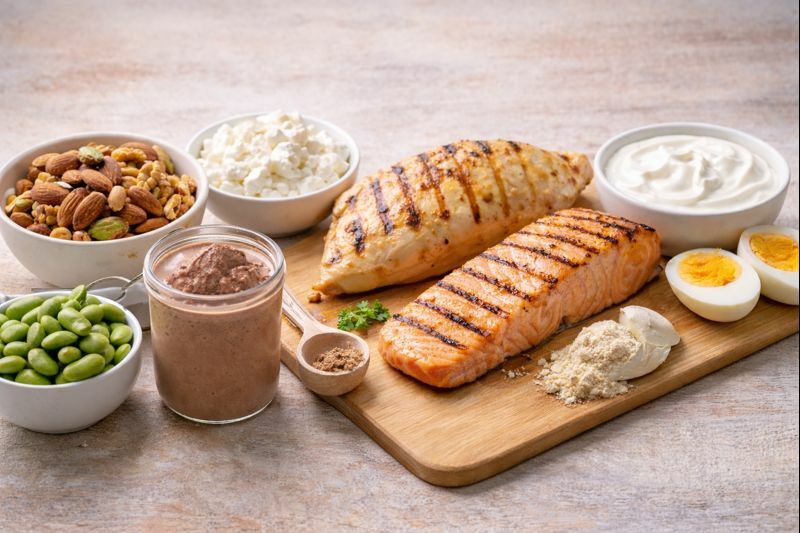
Starting with protein can make you feel full longer. Protein-rich foods such as chicken, fish, and eggs should be prioritized. This simple change can help you avoid overeating.

The 30/30 Rule: Timing and Amount
The 30/30 rule is to eat 30 grams of protein within 30 minutes of waking. It boosts your metabolism and starts your day right. Try a protein-rich breakfast, such as Greek yogurt with nuts or scrambled eggs with spinach.
Practical Meal Sequencing
To use the protein-first approach, follow these tips:
- Start with protein: Begin your meal with a protein source.
- Follow with vegetables: Add them to support satiety and nutrient intake.
- Include whole grains or starchy vegetables: Finally, add them to provide sustained energy.
Adopting this meal structure can boost your weight loss and health. Make sure protein is the base of your meals. This ensures you get enough to support your weight loss goals.
Calculating Your Optimal Protein Intake
Figuring out how much protein you need is key to losing weight. Your protein needs depend on your activity level and your fat-loss goals.
Protein Needs Based on Activity Level
Your activity level affects how much protein you need. For example, if you’re sedentary, you’ll need less protein than someone who is active or an athlete.
- Sedentary individuals: 0.8 grams of protein per kilogram of body weight
- Active individuals: 1.2-1.6 grams of protein per kilogram of body weight
- Athletes: 1.6-2.2 grams of protein per kilogram of body weight
Adjusting for Fat Loss Goals
For fat loss, you might need to increase your protein intake. A higher-protein diet helps maintain muscle mass while losing fat.
Tools and Formulas for Personalization
To determine your ideal protein intake, use online calculators or consult a nutritionist. These tools consider your lean body mass and activity factor for a personalized plan.
By following these tips, you can adjust your protein intake to help you reach your weight loss goals.
Complete vs. Incomplete Proteins: Making Smart Choices
It’s key to understand the difference between complete and incomplete proteins to ensure adequate protein intake. Proteins are made of amino acids. Some amino acids are essential because our bodies can’t make them.
Animal vs. Plant Protein Sources
Proteins from eggs, dairy, and meat are usually complete because they have all the essential amino acids. On the other hand, most plant proteins are incomplete because they miss one or more amino acids. But you can mix plant proteins to get all the amino acids your body needs.
Combining Proteins for Maximum Benefit
To boost your protein intake, mix different plant proteins. For example, pair legumes with grains, seeds, or nuts. This way, you get all essential amino acids. It also makes your diet more varied and nutritious.
Essential Amino Acid Profiles
Knowing the amino acid profiles of different proteins helps you make informed decisions. For instance, lysine is in legumes but not in grains. Grains, however, have methionine, which legumes lack. By mixing these, you ensure a balanced amino acid intake.
High-Protein Snacks to Beat Cravings
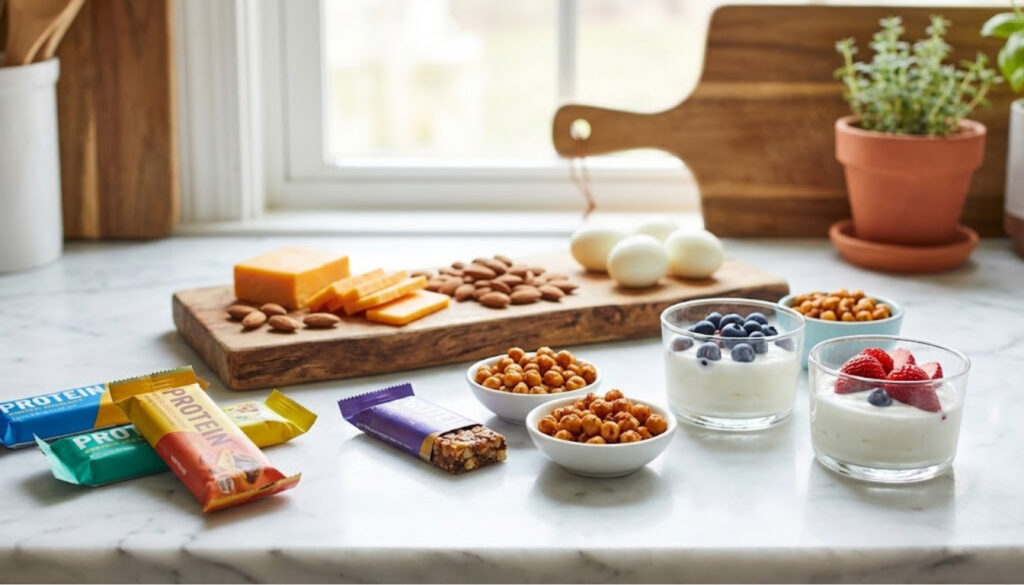
To beat cravings and stay full, add high-protein snacks to your day. These snacks can help control hunger and support weight loss. They keep you feeling full for longer.
Quick Protein Options Under 200 Calories
Choosing the right snacks is key. Here are some high-protein snack options under 200 calories for your diet:
- Greek yogurt with nuts (150 calories, 15g protein)
- Hard-boiled eggs (78 calories, 6g protein per egg)
- Cottage cheese (80 calories, 11g protein per half cup)
- Protein smoothie with milk or almond milk (120 calories, 10g protein)
- Beef or turkey jerky (100 calories, 10g protein per ounce)
| Snack | Calories | Protein Content |
|---|---|---|
| Greek Yogurt with Nuts | 150 | 15g |
| Hard-Boiled Egg | 78 | 6g |
| Cottage Cheese | 80 | 11g |
| Protein Smoothie | 120 | 10g |
| Beef Jerky | 100 | 10g |
Preparing Snacks for On-the-Go
Preparing snacks in advance keeps you on track. Try keeping snacks in a bag, at your desk, or in your car.
Emergency Protein Strategies
For unexpected moments, have an emergency protein strategy. Keep protein bars or nuts with you to avoid unhealthy cravings.
Meal Prep Strategies for Protein-Rich Eating
Getting enough protein is easier with the proper meal prep. Spend a few hours each week on meal prep. This way, you’ll always have enough protein for your diet.
Batch Cooking Protein Sources
Batch cooking is key to a protein-rich diet. It means cooking lots of protein at once. Then, you can use it for many meals. Good options include chicken, turkey, tofu, and lentils.
Start by picking 2-3 proteins to cook in bulk each week. For example, grill 5 lbs of chicken on Sunday. Use it in salads, wraps, and as a main dish all week.
Storage and Reheating Tips
Storing and reheating meals correctly is essential. Use airtight containers for cooked proteins. Please keep them in the fridge at 40°F (4°C) or below.
Reheat proteins to 165°F (74°C) to avoid illness. You can use the microwave, oven, or stovetop. Choose what’s best for your schedule and taste.
Weekly Prep Schedule Template
| Day | Protein Source | Meal Ideas |
|---|---|---|
| Monday | Grilled Chicken Breast | Salad, Wrap |
| Tuesday | Cooked Lentils | Lentil Soup, Lentil Salad |
| Wednesday | Turkey Meatballs | Pasta, Sub Sandwich |
With this meal prep plan, you’ll always get enough protein. It makes reaching your diet goals much easier.
Overcoming Protein Challenges
Starting a protein-rich lifestyle is easier with the proper knowledge. You’ll face some common challenges when adding more protein to your diet.
Dietary Restrictions and Alternatives
Following a vegetarian or vegan diet, or having food allergies, makes getting enough protein tough. But, there are many alternatives. Beans, lentils, and tofu are great for those who don’t eat meat.
Budget-Friendly Protein Sources
Protein-rich foods can be pricey. But there are affordable options. Eggs, canned tuna, and beans are inexpensive and high in protein.
Taste Fatigue Solutions
Getting tired of the same protein foods is normal. Try new recipes and explore different proteins like tempeh or seitan. “Variety is the spice of life” applies to protein, too.
A well-planned protein-rich diet is not just about overcoming challenges; it’s about sustaining a lifestyle that promotes overall health and well-being. A nutrition expert once said,
“The key to a successful protein-rich diet is not just about the quantity of protein but also the quality and variety.”
Understanding common challenges and how to overcome them helps keep your protein diet consistent and adequate.
Conclusion: Making Protein the Foundation of Sustainable Fat Loss
Learning about sustainable fat loss shows it’s more than just cutting calories. It’s about making protein a key part of your diet. This helps manage hunger and preserve muscle mass, leading to a more effective weight-loss plan.
Protein is key to weight loss because it boosts your metabolism and helps maintain a consistent diet. Adding the right amount of protein to your meals helps avoid the traps of strict diets. It leads to a more balanced approach to weight loss.
To maintain sustainable fat loss, make protein a core part of your diet. This means eating enough protein and choosing high-quality sources. Pairing it with other nutrient-dense foods will help you maintain your weight loss and support your health.
Choosing a protein-first diet helps you build a sustainable and maintainable eating plan. This supports your long-term health goals. It leads to a healthier, more balanced life.