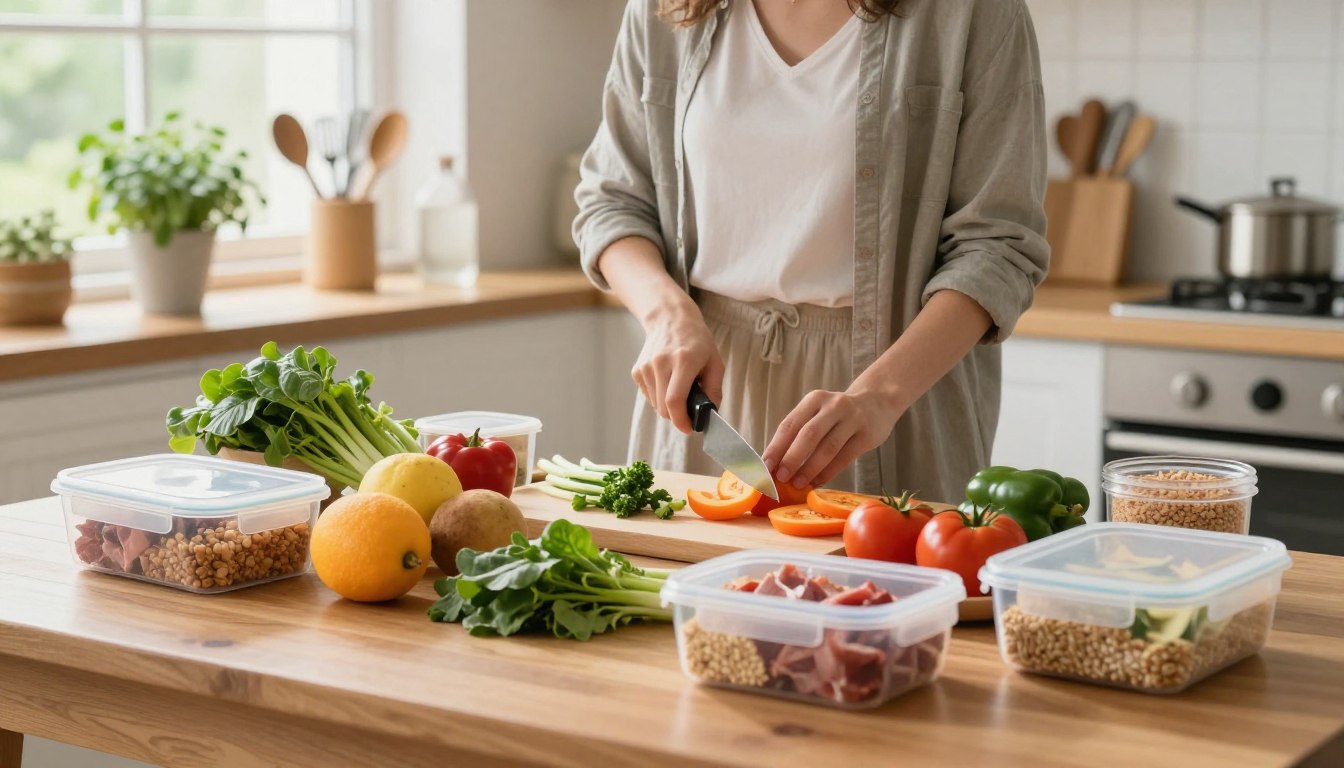
Ever felt so hungry you didn’t want to cook? Making healthy choices can be tough when you’re in a rush. That’s where a smart kitchen system comes in. It makes healthy eating simple and stress-free.
Preparing high-protein foods in advance helps you avoid overeating. This method saves time and lowers stress. It makes it easy to stick to a balanced diet. With a good system, cooking becomes stress-free and portion control automatic, making healthy eating habits simple.
Key Takeaways
- Simplify your eating habits with a well-planned kitchen system.
- Reduce decision fatigue by preparing high-protein components in advance.
- Save time and minimize stress with meal preparation.
- Maintain a balanced diet with automatic portion control.
- Enjoy stress-free cooking with a simplified kitchen routine.
Why Traditional Portion Control Fails
Many people find it hard to control portions because it requires constant decisions. This can be overwhelming, leading to frustration and failure.
The Problem with Willpower-Based Approaches
Traditional portion control relies on willpower, which is limited. When you’re hungry, tired, or stressed, your willpower is low. Meal prep helps by reducing the need for constant decisions.
Decision Fatigue and Its Impact on Eating Habits
Decision fatigue is mental exhaustion from too many decisions. It can lead to poor food choices and overeating. Preparing meals in advance can help fight this.
How Hunger Amplifies Poor Decision Making
Hunger makes it harder to choose healthy foods. When hungry, you might pick high-calorie, high-fat options. Meal prep ensures healthy meals are always available, even when you’re hungry.
Understanding the limits of traditional portion control and decision fatigue is key. It’s the first step towards better food management.
The Psychology Behind Successful Meal Prep for Weight Loss
Effective meal prep is not just about the food. It’s about building habits for lasting weight loss. Understanding the psychology behind meal prep makes it easier to make healthy choices.
How Systems Outperform Willpower
Using willpower alone often fails for weight loss. Willpower is limited and can wear off from daily stress and temptations. A good meal prep system, however, guides you to healthy choices without needing self-control.
By preparing meals ahead, you make healthy eating the default. This way, you’re less likely to choose unhealthy options.
Creating the Path of Least Resistance
Meal prep simplifies your day by cutting out food decisions. With healthy meals ready, you’re less tempted by unhealthy ones. This follows the idea of making things easy.
Removing Decision Points from Your Daily Routine
Meal prep takes away the daily “what to eat” question. This reduces decision fatigue, helping you stay on track with your weight-loss plan. Here are some benefits:
- Saves time during busy weekdays
- Reduces the chance of unhealthy food choices
- Keeps calorie intake steady
Implementing a meal prep system does more than plan meals. It sets you on a path to lasting weight loss. This method focuses on building habits rather than relying on willpower.
Understanding Calorie Density for Effective Portion Control
Learning about calorie density can change how you plan meals. Calorie density is how many calories are in a certain amount of food. Foods with low calorie density have fewer calories per serving. This means you can eat more without exceeding your daily calorie limit.
High-Volume, Low-Calorie Foods
Adding foods with lots of volume but few calories to your meals can help. For example, broccoli and leafy greens are low in calories but full of nutrients. They make you feel full longer, helping you stay on track with your diet.
Protein’s Role in Satiety and Portion Management
Protein is key to feeling full and managing portion size. Protein-rich foods, such as lean meats and fish, require more energy to digest. This can make you feel fuller and less hungry. Adding protein to your meals helps keep your diet balanced and prevents overeating.
The Balanced Plate Method
The balanced plate method is a simple way to plan meals. It divides your plate into thirds: half for vegetables, a quarter for protein, and a quarter for carbohydrates. This method helps you see and control your portions while ensuring you get all the nutrients you need.
Setting Up Your Kitchen for Meal Prep Success
A well-organized kitchen is key to meal prep and portion control. To begin your meal prep journey, you need the right tools and strategies.
Essential Tools and Equipment
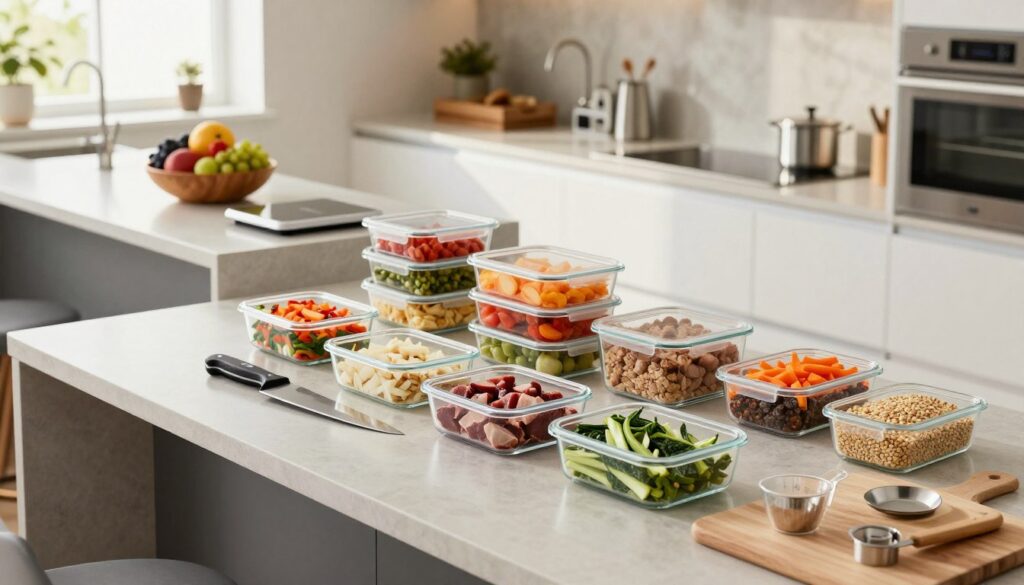
Having the right kitchen tools is crucial to efficient meal prep. You’ll need sharp knives, cutting boards, measuring cups, and containers for storing meals. A slow cooker or Instant Pot is also helpful for making meal prep recipes in bulk.
Organizing Your Pantry and Refrigerator
Keeping your pantry and fridge organized is vital. Use clear containers and labels to keep things tidy. Also, have a system for rotating stock to avoid expired items.
Creating Designated Prep Zones
Setting up specific areas for meal prep can make things easier. Create a main prep zone with your most used tools and ingredients. Have a secondary zone for washing and chopping veggies. This helps you stay organized and focused on portion control for weight loss.
Habit #1: Batch Cooking Protein Sources
Batch cooking proteins is key to meal prep success. Spend a few hours each week cooking proteins in bulk. This makes meal planning easier and ensures you get the nutrients you need for weight loss.
Best Proteins for Meal Prepping
Choosing the right proteins is important. Chicken breast, lean beef, fish, tofu, and eggs are great because they’re high in protein and versatile. You can cook them in large batches and use them in various meals throughout the week.
Storage and Reheating Methods
Properly storing and reheating proteins is crucial. Use airtight containers and keep them in the fridge or freezer. When reheating, ensure the protein is hot enough to avoid food poisoning.
Portion Guidelines for Different Protein Sources
Controlling portions is key to weight loss. The right portion size varies by protein. For example, chicken or fish should be 3-4 ounces. Use a food scale to get the right amount.
Weekly Protein Rotation Templates
Keep your meal prep interesting with a weekly protein rotation. Here’s a simple template:
- Monday: Grilled chicken breast
- Tuesday: Baked salmon
- Wednesday: Tofu stir-fry
- Thursday: Lean beef strips
- Friday: Scrambled eggs
Incorporating batch-cooked proteins into your meal prep is a significant step toward your weight-loss goals. It makes meal planning effective.
Habit #2: Pre-Cutting Vegetables for Quick Assembly
Pre-cutting vegetables saves time during the week. It makes meal prep easier and keeps veggies fresh. This habit is key to healthy eating habits and meal prep for weight loss.
Vegetable Prep Techniques That Maintain Freshness
To keep pre-cut veggies fresh, use the right methods. Store them in airtight containers or zip-top bags. Keep them in the fridge at a temperature below 40°F (4°C). You can also keep them fresh by submerging them in water or using a damp paper towel.
Creating Ready-to-Go Vegetable Mixes
Make ready-to-go veggie mixes for the week. Chop various vegetables such as bell peppers, carrots, and broccoli. Mix them together. You can adjust the mix to fit your favorite recipes or dietary needs.
Using Vegetables as Natural Portion Control
Vegetables help control portion sizes. Fill half your plate with pre-cut veggies. This balances your meal and prevents overeating. As Lori Zanini, a registered dietitian, says, “Eating more veggies makes you feel full without too many calories.”
Veggie Snack Stations for Hunger Management
Set up veggie snack stations to manage hunger. Choose a spot in your fridge or pantry for pre-cut veggies. Make them easy to see and grab. This encourages healthy snacking and avoids unhealthy choices.
“The key to successful meal prep is making healthy choices convenient,” says
Marion Nestle, a renowned nutrition expert, who stresses the importance of having pre-cut veggies ready.
Habit #3: Preparing Portioned Complex Carbohydrates
Good meal prep is not just about protein. It also means planning complex carbs in portion sizes. These carbohydrates provide energy and fiber. Preparing them in advance helps keep your meals balanced and controlled.
Measuring and Storing Grains and Starches
First, measure and store grains and starches correctly. Use airtight containers to keep them fresh. Label them with the date and what’s inside. This helps you track your intake and avoid overeating.
Creating Grab-and-Go Carb Portions
Make carb portions easy to grab for your meals. Cook rice, quinoa, or pasta in bulk. Then, split it into single servings. Store these in containers that are easy to carry to help you stay on track.
Balancing Carbs in Your Meal Plan
It’s key to balance carbs in your diet for energy and health. Think about your daily activities and goals when setting your carb intake.
Carb Cycling Options for Different Goals
Carb cycling works for various fitness aims. You might eat more carbs on workout days and less on rest days. This method can improve your performance and support weight management.
Some important carb cycling tips include:
- Change carb intake with workout intensity and frequency
- Eat more carbs on active days
- Eat fewer carbs on rest days
By using these strategies in your meal prep, you can better control portions. This supports your health and fitness goals.
Habit #4: Creating Healthy Sauce and Seasoning Stations
Discover how creating healthy sauce and seasoning stations can change your meal prep. It makes healthy eating easy and tasty. By adding these stations to your kitchen, you can make meals more exciting and nutritious.
Low-Calorie Flavor Boosters
Low-calorie flavor boosters can enhance your meals. Use herbs, spices, and citrus juices for flavor without extra calories. For example, a squeeze of fresh lemon juice can brighten a dish. A sprinkle of paprika adds a smoky depth.
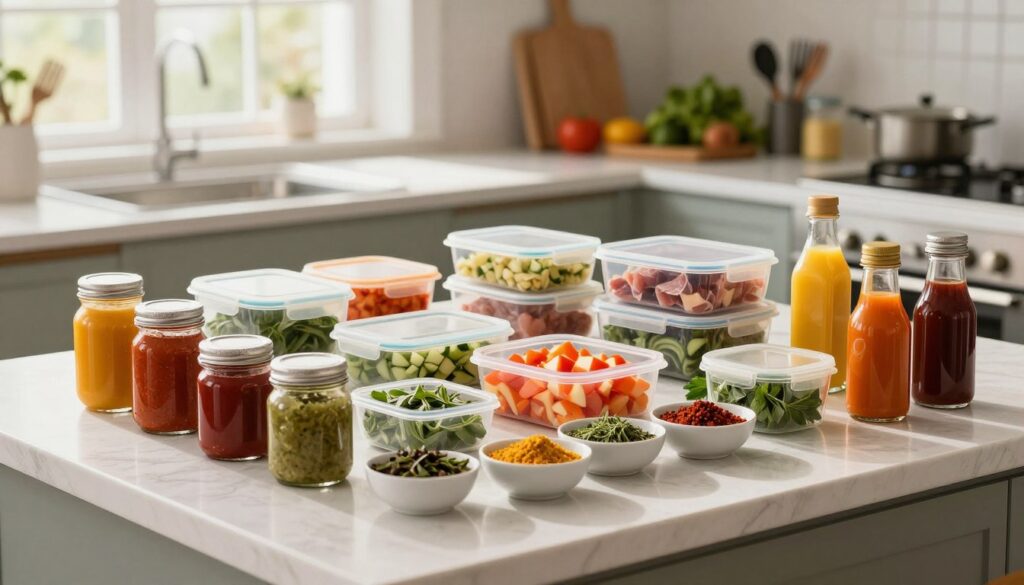
Pre-Portioned Sauce Containers
Pre-portioning sauces into individual containers makes meal prep easier. It saves time and helps with portion control. Prepare a batch of your favorite sauce, divide it, and store it in the refrigerator or freezer for later use.
Herb and Spice Blends for Instant Flavor
Creating custom herb and spice blends can instantly enhance the flavor of your meals. Try different combinations to find your favorites. For example, a mix of basil, oregano, and thyme can add a Mediterranean flavor to your dishes.
DIY Seasoning Recipes
Make your own seasoning blends at home. A simple recipe is to mix garlic powder, onion powder, and dried herbs such as parsley and dill. Store these blends in airtight containers to keep them fresh.
Habit #5: Implementing the Container Method for Automatic Portion Control
The container method makes meal planning easier by helping with portion control. It uses containers of different sizes to portion out your meals. This makes it easier to stay on track with your weight-loss goals.
Choosing the Right Container Sizes
Choosing the right container sizes is key to portion control. Use smaller containers for high-calorie foods and larger ones for low-calorie, nutrient-dense foods. This helps manage calories and keeps you full.
Creating Balanced Meal Templates
To create balanced meals, create templates that include protein, complex carbs, and vegetables. Use your containers to portion out these components in the right proportions. For instance, divide your container into sections for protein, carbs, and veggies.
Weekly Assembly Routines
Having a weekly assembly routine makes meal prep easier. Set aside time each week to prepare and portion your meals. This ensures you have healthy, portion-controlled meals all week.
Color-Coding System for Effortless Meal Planning
For easier meal planning, try a color-coding system for your containers. Assign different colors to different meal types or days of the week. This visual system makes it easy to choose the right meal, boosting your meal-prep efficiency.
Using the container method in your meal prep makes portion control easier. You’ll reach your meal planning goals more effectively.
Transitioning to Meal Prep for Weight Loss: A Beginner’s Guide
Starting small is key for beginners in meal prep. It’s all about being consistent. To lose weight with meal prep, you need strategies that work well.
Starting Small: The 3-Day Method
Start with the 3-day method. Prep meals for just three days at first. This method helps you get used to meal prep without undue stress. It’s a great way to test your recipes and routines before doing more.
Gradually Building Your Meal Prep Routine
When you’re comfortable with the 3-day method, you can prep for a week or more. Plan your meals, make a grocery list, and set aside time for prep. Consistency is key to making meal prep a habit.
Combining Store-Bought and Homemade Components
To make meal prep easier, mix store-bought and homemade items. For example, buy pre-washed greens or pre-cooked proteins to save time. This mix makes your meal-prep routine easier to maintain.
First Month Meal Prep Calendar
Here’s a sample meal prep calendar for your first month:
| Week | Meal Prep Focus | Grocery List |
|---|---|---|
| Week 1 | 3-day meal prep | Chicken breast, brown rice, mixed veggies |
| Week 2 | 5-day meal prep | Quinoa, salmon, roasted vegetables |
| Week 3 | Full week prep with variety | Turkey mince, sweet potatoes, avocado |
| Week 4 | Advanced meal prep with new recipes | Lentils, chicken thighs, whole grain pasta |
By following this guide, you can smoothly transition into meal prep. It will become a sustainable part of your weight loss journey.
Conclusion: Building Your Sustainable Meal Prep System
You now have the tools to create a meal-prep system that supports your weight-loss goals. By using habits like batch cooking and pre-cutting vegetables, you’re setting yourself up for success. This system helps you control portions automatically.
Creating a sustainable meal prep system means building habits that last. Make meal prep a regular part of your routine. Soon, planning meals for weight loss will feel natural.
Remember, consistency is crucial to your weight-loss journey. Regular meal prep helps you develop healthy eating habits. These habits make it easier to reach your goals. By following these strategies, you’re on your way to a healthier lifestyle.