

You go through your days on autopilot, with 95% of your actions driven by unconscious patterns. But what if you could realign with your mission and clear mental fog instantly? Introducing micro-meditation, a powerful tool for busy professionals to cultivate mindfulness in just a minute.
By adding simple mindfulness practices to your daily routine, you can lower stress and boost your well-being. Here, we’ll look at three “micro-practices” to help you stay focused and calm, even on chaotic days.
Key Takeaways
- Discover the power of micro-meditation for busy professionals
- Learn three simple “micro-practices” to reduce stress and improve focus
- Understand how mindfulness can improve overall well-being
- Find out how to incorporate mindfulness into your daily routine
- Improve your ability to stay focused and composed under pressure
Redefining Meditation for Modern Life
Meditation doesn’t have to mean long, quiet times. It’s not just for those with lots of free time. Busy lives can make it hard to find time for meditation.
Why Traditional Meditation Feels Impossible
It’s tough to find time for meditation when your schedule is full. The idea of taking 20-minute breaks sounds good, but it’s hard to do. That’s why micro-meditation is great – it’s short but still powerful.
The Power of One-Minute Mindfulness
One-minute mindfulness can change your life if you’re always on the go. Just 60 seconds can make a big difference for your mind. Here’s why:
| Benefit | Description |
|---|---|
| Reduced Stress | Short mindfulness can lower stress and cortisol levels. |
| Improved Focus | Even a minute can boost your concentration and clarity. |
| Enhanced Emotional Regulation | One minute can help you better understand and manage your emotions. |
Imagine being able to reset your mental state in just a minute. It’s not only possible but also very empowering. Adding one minute of mindfulness to your day can bring you these benefits.
The Science of Micro-Meditation and Stress Management
Micro-meditation changes how our brain and body work. It helps us feel less stressed. Studies show that even short sessions, like 60 to 90 seconds, can calm us down.
How Brief Mindfulness Affects Your Brain
Short mindfulness practices lower stress hormones, such as cortisol. This makes it easier to handle stress. Regular short sessions can also change our brain’s focus and emotional control areas.
The Physiological Benefits of 60-Second Resets
These quick breaks can lower blood pressure and heart rate. Adding micro-meditation to your day can bring calm and reduce stress.
Research on Fragmented Meditation Practice
Studies prove that short meditation sessions boost mental health. They show that short, frequent sessions improve focus and cognitive function. Micro-meditation helps us manage stress better.
Identifying Your Micro-Meditation Moments
To start your micro-meditation practice, first find moments of mindfulness in your busy day. Mindfulness isn’t just about long meditation sessions. It’s about making the most of the small moments you have.
Transition Points in Your Daily Schedule
Transition points are natural breaks in your day for micro-meditation. These could be between meetings, while waiting for your computer, or during your commute. For example, take a few deep breaths while waiting for the elevator or pause before starting a new task.
| Transition Point | Micro-Meditation Practice |
|---|---|
| Between Meetings | Take 5 deep breaths, focusing on the sensation of the breath. |
| While Waiting for Coffee | Practice a quick body scan, noticing any areas of tension. |
| During Commute | Listen to a guided meditation or simply observe your surroundings. |
Leveraging “Wait Time” for Mental Clarity
“Wait time” is another chance for micro-meditation. Whether waiting in line, at a red light, or for someone to arrive, use these moments for mindfulness. As
“The mind is everything; what you think, you become.”
– Buddha. Focusing on your breath or body sensations can turn these moments into chances for mental clarity.
Creating Intentional Pauses
Creating intentional pauses in your day can boost your micro-meditation. This could mean setting reminders for deep breaths or stepping away to stretch. These pauses can reduce stress and improve focus. Try the “4-7-8” breathing: breathe in for 4 seconds, hold for 7, and exhale for 8.
By identifying and using these moments, you can bring mindfulness into your daily life. This improves your well-being and self-care.
The “Breath Anchor” Micro-Practice for Focus
The “Breath Anchor” technique is a great way to improve focus and lower stress in just one minute. It’s a simple yet effective method to help you stay focused.
Step-by-Step Implementation Guide
To begin the “Breath Anchor” practice, follow these steps:
- Place both feet flat on the floor and notice the pressure distribution.
- Take a deep breath in, feeling the air fill your lungs.
- Exhale slowly, focusing on the sensation of the breath leaving your body.
- Repeat this process, anchoring your attention to the breath.
Using This Practice While Waiting for Coffee
One great time to use “Breath Anchor” is while waiting for your coffee. Instead of checking your phone or getting impatient, focus on your breath. This simple act can turn a boring moment into a mindfulness exercise.
How to Deepen the Practice in Just 60 Seconds
To make the “Breath Anchor” practice more intense in a minute, pay attention to your feet on the ground and the rhythm of your breath. If your mind starts to wander, gently bring your focus back to these anchors.
Common Mistakes and Corrections
A common error is trying to control your breath. Instead, observe it naturally. If your mind drifts, gently refocus on the breath without judgment.
By adding the “Breath Anchor” micro-practice to your daily routine, you can boost your focus and lower stress. Even practicing once a day can greatly improve your mental clarity and overall well-being.
The “Purpose Pause” Micro-Practice for Spiritual Clarity
Learn how the “Purpose Pause” can refocus your life’s purpose in just a minute. It’s a simple practice for spiritual clarity and direction, even on the busiest days.
Reconnecting with Your Mission in One Minute
The “Purpose Pause” is a simple yet powerful exercise. Close your eyes and imagine a place where you feel calm and connected to your purpose. This could be a peaceful natural setting or a sacred space.
As you imagine, take deep breaths and let yourself feel the peace and clarity of this place. This brief pause can help you reconnect with your core mission and values.
Implementing This Practice During Commutes
Practicing the “Purpose Pause” during your daily commute is very effective. Whether driving, taking public transport, or walking, it’s easy to add to your routine.
Just take a few moments to close your eyes or focus inward. Start your visualization. You can also use a guided meditation app or a simple mantra to stay focused.
Variations for Different Spiritual Traditions
The “Purpose Pause” can be tailored to fit various spiritual practices. You might add prayer, mantra repetition, or contemplation of sacred texts. The goal is to connect with your deeper self and spiritual beliefs.
Measuring the Impact on Your Sense of Purpose
| Aspect | Pre-Practice | Post-Practice |
|---|---|---|
| Clarity of Purpose | Feeling lost or uncertain | Clear direction and focus |
| Emotional State | Stressed or anxious | Calm and centered |
| Decision Making | Indecisive or doubtful | Confident and aligned with values |
Regularly practicing the “Purpose Pause” can greatly improve your sense of purpose and well-being. It’s a powerful tool for maintaining spiritual clarity in a busy world.
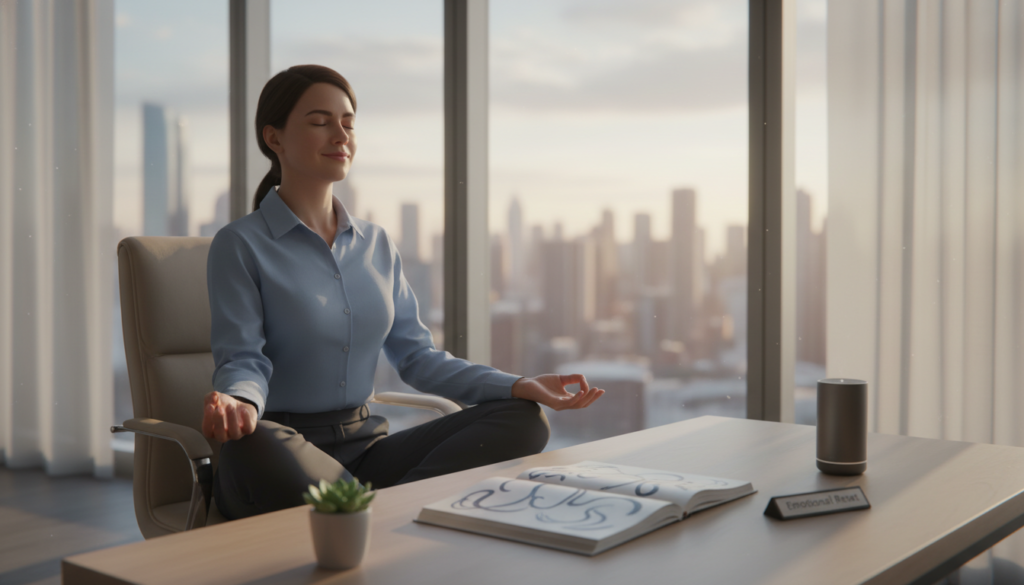
The “Emotional Reset” Technique for Regulation
Emotional tension can build up fast. But the “Emotional Reset” technique can help you release it in just a minute. This method is great for managing stress and improving emotional control, leading to better mental health.
Identifying and Releasing Emotional Tension
The first step is to know how you feel. Take a moment to notice your emotions. Are you feeling tense, anxious, or frustrated? Once you know, you can start to let go of the tension.
- Take a deep breath in through your nose, and exhale slowly through your mouth.
- As you breathe out, imagine any tension or stress leaving your body.
- Repeat a simple phrase to yourself, such as “I release my tension,” to help focus your intention.
Using This Practice Between Meetings
In today’s fast-paced work world, meetings can follow one after another. Use the “Emotional Reset” technique between meetings to recharge and refocus.
Quick Tips:
- Step away from your desk or meeting room to create some physical distance.
- Take 60 seconds to practice the “Emotional Reset” technique.
- Return to your next meeting feeling more centered and prepared.
Adapting for High-Stress Situations
The “Emotional Reset” technique is especially useful in stressful situations. By adjusting the practice to fit your needs, you can better manage your emotions and handle tough times more effectively.
Creating an Emotional Vocabulary for Faster Processing
Having an emotional vocabulary helps you identify and process your feelings faster. With a range of words to describe your emotions, you can better understand and meet your emotional needs.
Example Emotional Vocabulary:
- Frustrated
- Anxious
- Overwhelmed
- Calm
- Focused
Designing Your Personal Micro-Meditation System
Make your micro-meditation fit your busy life. It’s all about creating a system that works for you. This way, mindfulness becomes a part of your daily routine without effort.
Environmental Triggers That Work
Find things around you that remind you to meditate. It could be a certain place, object, or time. For example, take a few deep breaths when you get home or before work.
- Use a specific scented candle as a reminder to breathe deeply.
- Place a mindfulness reminder on your fridge or near your front door.
- Associate your morning coffee routine with a brief mindfulness practice.
Digital Reminders Without Adding Stress
Digital reminders can help, but they shouldn’t stress you out. Try a mindfulness app for gentle reminders. Or, set a phone event with a calming phrase like “breathe.”
Pairing Practices and Existing Habits
Link your meditation to things you already do. For instance, meditate for a minute while waiting for coffee or after brushing your teeth.
| Existing Habit | Micro-Meditation Practice |
|---|---|
| Brushing teeth | One-minute focus on breath |
| Waiting for coffee | Body scan or mindful breathing |
| Daily commute | Listening to a guided meditation |
By adding these habits to your day, mindfulness becomes second nature. It boosts your well-being and focus.
Overcoming Common Obstacles to Micro-Meditation
Many people struggle with starting a micro-meditation practice. It’s important to know how to get past these challenges. This way, you can keep up with your micro-meditation habit.
When You “Forget” to Practice
Forgetting to meditate is common, especially for beginners. To remember, set reminders on your phone or use sticky notes. Try to meditate at the same time every day, like after brushing your teeth or before coffee.
Dealing with Skepticism (Yours and Others’)
Skepticism can stop you from meditating. You might doubt its benefits or feel shy about meditating in public. Remember the good changes you’ve noticed, like clearer thinking or less stress. When others doubt you, share how meditation has helped you.
Adapting Practices for Different Environments
Practicing in different places can be hard. For example, it’s tough to meditate in a loud office or on a busy commute. Use headphones to block out noise or find a quiet spot.
Troubleshooting When You Can’t Focus
It’s normal to have trouble focusing at first. If your mind wanders, just acknowledge it and refocus. Keep practicing, and you’ll get better at staying focused.
By tackling these common problems, you can keep up your meditation practice. This will improve your mental well-being and quality of life. Find a method that works for you by trying different approaches.
Advanced Micro-Meditation Techniques for Holistic Healing
As you explore micro-meditation further, you’ll find advanced techniques that boost your holistic healing. These methods add depth to your practice and improve your overall well-being.
Combining Breath, Purpose, and Emotional Awareness
One advanced technique combines breath awareness, purpose, and emotional regulation. This approach helps balance and harmony by addressing different aspects of you. By linking your breath with purpose and emotional awareness, you achieve holistic healing.
Incorporating Positive Affirmations
Using positive affirmations in your micro-meditation is another effective method. Choose affirmations that support your healing journey. For example, “I am capable of healing and growth” or “I trust in my body’s natural ability to restore balance.” Repeating these during your sessions can boost their effect and speed up your healing.
Using Micro-Meditation for Physical Tension Release
Micro-meditation can also help release physical tension. Focus on tense areas and use specific breathing techniques. This method is great for quick moments, like between meetings or while waiting in line.
Building a Progressive Practice System
To get the most from these techniques, create a progressive practice system. Start simple, like with breath awareness, and add more elements like purpose or affirmations as you grow. This way, you can keep improving and deepening your practice, leading to deeper holistic healing.
Conclusion: Transforming Your Day One Minute at a Time
Incorporating micro-meditation into your daily routine can change your life. It helps manage stress and boosts your well-being. These short breaks improve focus, emotional control, and mindfulness.
Try practices like the “Breath Anchor,” “Purpose Pause,” and “Emotional Reset” daily. They can turn your day around, one minute at a time. These moments of mindfulness make life’s challenges easier to handle.
Starting or continuing your micro-meditation journey is all about being consistent. Begin with small, doable steps. Be patient as you build this habit. Regular practice makes micro-meditation a key tool for stress management and finding calm in your daily life.
wow your article is simply a masterpiece, i like that, keep it up and will be checking for new update. do you post often? you can check the biggest webdesign freelancer in platform in germany called https://webdesignfreelancerdeutschland.de/ Thank you
wow your article is simply a masterpiece, i like that, keep it up and will be checking for new update. do you post often? you can check the biggest webdesign freelancer in platform in germany called https://webdesignfreelancerfrankfurt.de/ Thank you for your wonderful post