

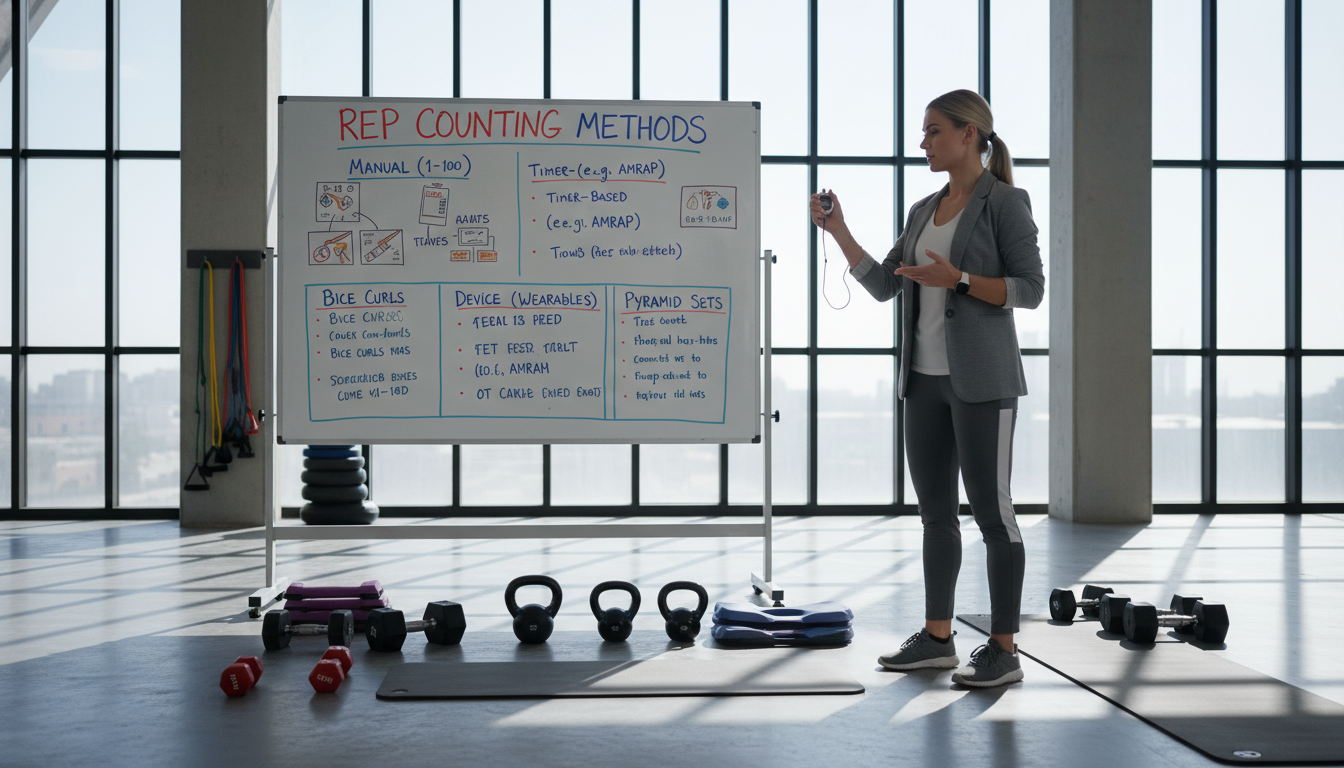
Do you find it hard to keep track of your sets and fitness goals? You’re not alone. Counting reps is key to any workout, but it’s often missed or done wrong.
It’s not just about how many reps you do. Reaching muscle fatigue is more important. Different rep ranges help you achieve different goals, like building strength or muscle.
Knowing how to count reps can take your training to the next level. It helps you reach your fitness goals.
Key Takeaways
- Understand the importance of counting reps in your workout routine.
- Learn how different rep ranges impact your fitness goals.
- Discover the role of muscle fatigue in achieving desired results.
- Explore effective methods for tracking your reps.
- Find out when ditching the count can actually help you grow stronger.
The Science Behind Counting Reps
Counting reps is more than just tracking numbers. It’s a way to engage your brain and improve your workouts. This process involves complex neural pathways that affect both your mind and body.
How Your Brain Processes Exercise Repetitions
Exercise repetitions are processed by a network of brain paths. These paths control how your muscles move, ensuring they do what you want.
Neural Pathways and Movement Patterns
Neural pathways are like roads in your brain that guide muscle movements. Repeating exercises strengthens these paths, making movements more efficient. This is key to better workouts.
Attention and Performance Connection
Your focus is vital for exercise success. Counting reps keeps your attention sharp, boosting your performance and helping you reach fitness goals.
The Link Between Counting and Muscle Engagement
Counting reps does more than track progress. It also helps engage muscles better. Knowing your rep count lets you target muscles more effectively, leading to better workouts.
Mind-Muscle Connection Benefits
The mind-muscle connection is a powerful fitness tool. Focusing on reps and movements boosts muscle activation. This is essential for improving your workout and achieving progressive overload.
Grasping the science behind counting reps can greatly benefit your fitness journey. Being mindful of your rep count and the brain processes involved can optimize your training for better results.
Why Counting Exercise Reps Matters for Your Progress
Counting reps is key to getting the most out of your workouts. It helps you reach your fitness goals by tracking your progress.
Tracking Progressive Overload
Progressive overload means getting stronger by doing more reps or lifting heavier weights. Counting reps helps you see how you’re getting stronger.
Measuring Strength Gains Over Time
Tracking your reps shows how your strength is growing. This information helps you adjust your workouts to keep improving.
Setting Benchmarks for Future Workouts
Tracking your reps lets you set goals for your next workouts. For example, if you did 10 reps last week, aim for 12 this week. This keeps you challenged.
| Workout Day | Exercise | Sets | Reps | Weight |
|---|---|---|---|---|
| Monday | Squat | 3 | 10 | 100 lbs |
| Wednesday | Deadlift | 3 | 8 | 120 lbs |
| Friday | Bench Press | 3 | 12 | 80 lbs |
Maintaining Proper Form Through Awareness
Counting reps keeps you focused on your form. Knowing how many reps you’ve done helps you stay consistent.
Preventing Injury Through Controlled Movement
Controlled movement is vital to avoid injuries. Focusing on each rep helps you move safely. This is especially true for beginners.
In conclusion, counting reps is more than just a number. It helps you build strength, stay safe, and achieve your fitness goals. By tracking your reps, you can make your workouts more effective.
Common Rep Counting Mistakes That Sabotage Your Results
Counting reps might seem simple, but many gym-goers make critical mistakes. These mistakes can hinder progress. Accurate rep counting is key for tracking progress, maintaining form, and reaching fitness goals.
Losing Focus Mid-Set
One common mistake is losing count mid-set due to distraction. To avoid this, stay focused on your exercise. Use a consistent counting method. Try verbalizing your count or use a mental anchor to keep your focus.
Inconsistent Counting Techniques
Inconsistent counting can lead to inaccurate tracking. To avoid this, choose a rep counting method that works for you. Stick to it. Popular methods include counting reps aloud, using a mental count, or having a workout buddy count for you.
Prioritizing Numbers Over Form
Prioritizing reps over form is dangerous. It can lead to miscounting and increase the risk of injury. To avoid this, focus on proper form and let the count follow. If form is hard, consider reducing the number of reps or adjusting your weight.
When Ego Lifting Leads to Miscounting
Ego lifting can result in miscounting reps and compromised form. To avoid this, be honest with yourself about your capabilities. Prioritize proper form. This ensures accurate counting and maximizes your gains while minimizing the risk of injury.
Knowing these common rep counting mistakes helps you avoid them. So, should you count reps? Absolutely, but do it correctly and with focus on proper form.
How to Count Exercise Reps: 3 Proven Methods
Learning to count reps effectively can improve your workouts. It’s key to tracking your progress, maintaining proper form, and reaching your fitness goals. Here are three ways to count your reps accurately.
The Traditional Numerical Method
This method is simple. Just count each rep as you do it. You can adjust it to fit your needs.
Counting Up vs. Counting Down
You can count up or down. Counting down can make you more focused. It builds anticipation for the next rep.
Using Landmarks (5, 10, 15) for Mental Tracking
Break your reps into smaller sets with landmarks such as 5, 10, or 15. This makes it easier to manage your reps.
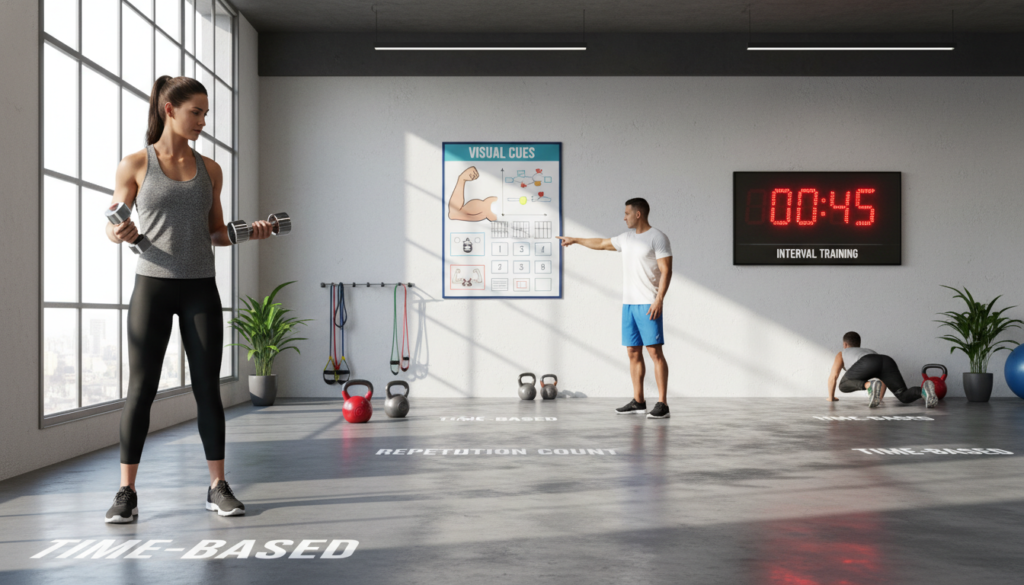
The Mind-Muscle Connection Approach
This method connects your mind with your muscles. Focus on the muscle contraction to boost your performance.
The Breathing Technique
Sync your breath with your movements. This keeps your rhythm steady and improves your form.
Syncing Breath with Movement Patterns
Inhale while lowering and exhale while lifting. This helps you stay in rhythm and boosts endurance.
Try these methods in your workouts to improve your rep counting. Find what works best for you by experimenting.
Tech Solutions: Apps and Devices That Count Reps For You
In today’s digital age, tracking your workout reps has never been easier. Technology offers many solutions, letting you focus on your exercise while devices count for you.
Smartphone Apps for Rep Tracking
Smartphone apps have changed how we track workouts. They use your phone’s sensors to detect movements and count reps. Some top apps include:
- JEFIT: A comprehensive fitness database with a large exercise library
- MyFitnessPal: Primarily a calorie tracking app, but also offers workout logging
- Nike Training Club: Provides guided workouts and rep tracking
Top 3 Apps for Different Fitness Levels
For beginners, Sweat by Kayla Itsines offers guided workouts. Intermediate users might prefer StrongLifts 5×5, which focuses on strength training. Advanced users can benefit from JEFIT Pro, which offers advanced logging features and a large exercise database.
Wearable Fitness Trackers
Wearable fitness trackers have become more advanced. They can detect various exercises and count reps. These devices use sensors to track your movements.
How Modern Devices Detect Exercise Movements
Modern wearable devices use advanced algorithms to recognize different exercises. As one fitness expert notes,
“The future of fitness tracking lies in its ability to accurately detect and analyze complex movements.”
This technology allows for more precise rep counting and workout analysis.
Smart Gym Equipment
Many modern gyms have smart equipment that tracks your reps in real-time. These machines often have digital displays and connectivity options. This lets you sync your workout data with your personal fitness apps.
By using these tech solutions, you can improve your workout. You can ensure accurate rep counting, maintain consistent form, and track your progress over time. As fitness technology evolves, we can expect even more innovative solutions to help optimize your workouts.
Low-Tech Rep Counting Methods That Never Fail
There are many low-tech ways to count reps that work just as well as high-tech ones. These methods are simple, reliable, and can make your workouts more fun.
Using Physical Counters and Markers
Counting reps without tech is easy with physical counters or markers. A simple clicker counter can help you keep track. Or, you can use coins or beads on the floor to mark each rep.
DIY Solutions for Home Workouts
At home, you can make your own counting system. Use chalk on the wall or a whiteboard to mark each rep. It’s fun and interactive, making your workout more enjoyable.
The Buddy System: Partner Counting
Working out with a partner is a great way to count reps without tech. Your partner can count for you, encourage you, and check your form. It makes your workout more fun and keeps you motivated.
Visual Cues and Environmental Markers
Using visual cues or markers is another low-tech method. Just set up cones or markers to show how many reps you’ve done.
Using Objects to Track Set Completion
Move objects like water bottles or cones as you finish each set. Seeing your progress can motivate you and keep you focused.
When to Focus on Feel Instead of Numbers
Counting reps has its place, but sometimes listening to your body is better. As you get better at working out, you’ll find times when feeling your body is more important than counting.
Intuitive Training Sessions
Intuitive training means listening to your body and adjusting your workout. It’s great on days when you’re not sure if you’re fully recovered or when you’re trying to get past a plateau.
Listening to Your Body’s Signals
Listening to your body helps avoid overtraining and injuries. When you’re in tune with your body, you can adjust your workout to fit your current recovery and fatigue levels.
Recovery Workouts and Deload Weeks
Recovery workouts and deload weeks are about letting your body heal. In these times, focusing on how you feel helps you find the right intensity and volume.
Breaking Through Plateaus with RPE Training
Rate of Perceived Exertion (RPE) training adjusts workout intensity based on how hard you feel you’re working. It’s great for getting past plateaus.
Rate of Perceived Exertion Explained
RPE is rated from 1 to 10, with 1 being easy and 10 being very hard. Using RPE helps you work out at the right intensity without overdoing it.
When Mindful Training Trumps Strict Counting
Mindful training means being fully present and aware during your workout. It’s better than counting reps for complex movements or improving form.
Mixing rep counting with a focus on feel makes your workouts more balanced and effective. This way, you can track your progress and listen to your body’s needs.
Adapting Your Rep Counting Strategy for Different Exercise Types
Changing your rep-counting strategy for different exercises is crucial for better fitness. Each exercise needs a unique rep-counting approach. This can significantly affect the success and efficiency of your workout.
Strength Training vs. Endurance Work
Strength training focuses on low reps with heavy weights. Accurate rep counting is key for progressive overload. On the other hand, endurance work involves more reps and keeping a steady pace and technique.
Power Lifting and Olympic Lifting Considerations
Powerlifting and Olympic lifting typically involve low reps. However, these lifts require proper form and technique. It’s important to consider how many reps to perform to improve skill and strength.
Counting for Compound vs. Isolation Exercises
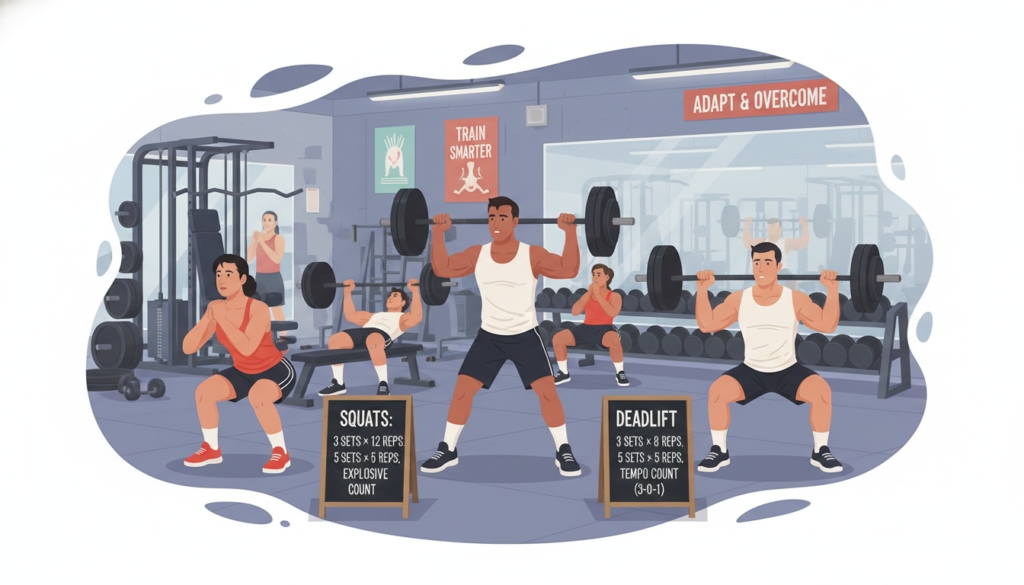
Compound exercises, such as squats and deadlifts, engage multiple muscle groups and require greater form focus. Isolation exercises, such as biceps curls, use simpler rep counts but still require good technique. For compound exercises, exercise form over reps is key to avoiding injury and effectively working muscles.
Special Considerations for HIIT and Circuit Training
HIIT and circuit training involve quick exercise changes with little rest. Rep counting may need to switch to time-based tracking to maintain workout intensity. This method is effective for rep counting to support progressive overload in intense workouts.
Time-Based vs. Rep-Based Tracking
In HIIT, tracking time instead of reps can be more effective. This method focuses on workout intensity and density, not just reps. It’s a flexible strategy that fits your fitness goals and workout style.
Conclusion: Balancing Structure and Intuition in Your Workouts
Counting exercise reps is key to better workouts. Mixing structured counting with intuitive training boosts your progress. This guide has shown you how to start.
Beginners should start with a plan and add intuitive training later. This helps you improve and adjust your routine as you go.
Finding the right mix of structure and intuition is crucial. Try different methods, listen to your body, and adjust as needed. With this guide, you’re ready to enhance your workouts and reach your goals.


Just tried saowinbet. Quick impression, it’s alright. The site loads fast and there’s a fair range of choices. Had a few wins, so can’t complain too much! Check it out here: saowinbet