
Most carbs quickly turn into sugar. But some carbs are special because they aren’t digested early. You might wonder, what is resistant starch, and why is it good for you?
This fiber goes straight to your large intestine. There, it feeds the good bacteria in your gut. Many studies show that eating these foods offers significant health benefits.
Choosing resistant starch for gut health can make digestion better and give you steady energy. It helps control blood sugar by changing how you digest food. Adding these foods to your meals can make you feel better and stay healthy every day.
Key Takeaways
- This carbohydrate acts like a healthy fiber in your body.
- It feeds the beneficial bacteria in your digestive tract.
- You can improve your daily blood sugar management.
- Most of it passes through the small intestine safely.
- It supports long-term digestive wellness and comfort.
- Human studies confirm these powerful metabolic effects.
What Is Resistant Starch and How Does It Work?
Resistant starch is a special type of carb that your body can’t digest in the small intestine. Instead, it feeds the good bacteria in your large intestine. This makes it a key player in keeping your gut healthy.
It works like soluble fiber, moving through your stomach and small intestine without being broken down. Only when it reaches your colon does it start to work its magic. There, it helps feed the good bacteria, supporting a healthy gut.
The Unique Nature of Resistant Starch
Resistant starch is special because it doesn’t get broken down into glucose during digestion. This means it doesn’t raise your blood sugar levels much. It’s great for people who need to keep their blood sugar in check.
Dr. John C. Higgins, a researcher on dietary starch, says, “Resistant starch is an exciting area of research. It has the potential to positively influence gut health and metabolic function.”
How Resistant Starch Differs from Regular Starch
Unlike regular starch, which quickly breaks down into glucose, resistant starch remains intact. This is key to understanding how it supports your gut health without causing blood sugar spikes.
| Characteristics | Resistant Starch | Regular Starch |
|---|---|---|
| Digestion | Resists digestion in the small intestine | Broken down into glucose in the small intestine |
| Impact on Blood Sugar | Minimal impact | Causes a spike in blood glucose |
| Gut Health | Feeds beneficial gut bacteria | Limited role in gut health |
The Digestive Journey of Resistant Starch
The journey of resistant starch through your body is quite interesting. It starts in your mouth and moves through your stomach and small intestine without much breakdown. Once it reaches your colon, it’s fermented by your gut bacteria.
This fermentation produces short-chain fatty acids. These acids are important for maintaining your colon’s health and supporting your gut barrier function.
“The fermentation of resistant starch by gut bacteria produces short-chain fatty acids, which are crucial for maintaining the health of the colon and supporting the gut barrier function.”
Understanding how resistant starch works and its unique qualities helps you see its importance for your health. It’s especially good for your gut health and blood sugar control.
The Four Types of Resistant Starch
Resistant starch isn’t just one thing. It’s a group of four types, each with its own special features, and where you can find it. Knowing about these types helps you add resistant starch to your meals effectively.
Physically Inaccessible Starch (Type 1)
Type 1 resistant starch is trapped in the cell walls of grains, seeds, and legumes. It’s found in whole or partly milled grains. This type remains intact due to the food’s structure, reaching the colon undigested.
Resistant Starch Granules (Type 2)
Type 2 resistant starch is in raw starch granules that enzymes can’t break down. Raw potatoes, green bananas, and some starchy veggies are examples. These foods’ starch granules are naturally resistant, so they reach the large intestine for gut bacteria to ferment.
Retrograded Starch (Type 3)
Type 3 resistant starch forms when starchy foods are cooked and then cooled. This process, called retrogradation, makes the starch more resistant to digestion. Foods like cooked and cooled potatoes, rice, and pasta are high in this type. Cooling changes the starch’s structure, making it harder for enzymes to digest.
Chemically Modified Starch (Type 4)
Type 4 resistant starch is produced through chemical modifications, such as etherification or crosslinking. It’s often in processed foods to boost fiber. While not in Whole Foods, Type 4 is key in some products designed to improve gut health.
Learning about the different types of resistant starch and where to find them helps you make better choices. This supports your health and well-being.
How Resistant Starch Supports Your Gut Microbiome
Your gut microbiome is a complex ecosystem that benefits from resistant starch. It’s key for your overall health, affecting digestion and immune function.
Feeding Beneficial Gut Bacteria
Resistant starch feeds the good bacteria in your gut. When these bacteria digest it, they make compounds vital for colon health. Dr. Sarah Berry, a gut health expert, says, “Resistant starch is a powerful prebiotic that can help promote a healthy gut microbiome.”
This supports the growth of beneficial bacteria. A diverse gut microbiome is better at handling disturbances and maintaining your health.
The Role of Fermentation in Colon Health
The digestion of resistant starch by gut bacteria is a fermentation process. This process is key to producing short-chain fatty acids. These acids are essential for colon health.
Fermentation is a key process that not only provides energy for the cells lining the colon but also helps regulate its pH. This creates an environment that’s favorable for beneficial bacteria to thrive.
Short-Chain Fatty Acids and Butyrate Production
Butyrate, a short-chain fatty acid, is a main product of resistant starch fermentation. It’s the primary fuel source for the cells lining the colon. A study in the Journal of Nutrition found, “Butyrate has anti-inflammatory properties and plays a crucial role in maintaining the integrity of the colon.”
The production of butyrate and other short-chain fatty acids is a big benefit of resistant starch. These compounds support colon health and boost your immune system, leading to better overall health.
Resistant Starch Benefits for Blood Sugar Control
Resistant starch is a great way to control blood sugar and improve insulin sensitivity. It works by stabilizing blood sugar levels and boosting metabolic health. Adding it to your diet can make a big difference.
Why Resistant Starch Doesn’t Spike Blood Glucose
Resistant starch resists digestion in the small intestine. It doesn’t quickly turn into glucose. Instead, it gets fermented by good bacteria in the large intestine, making short-chain fatty acids.
This helps keep blood sugar stable and supports a healthy gut microbiome.
Improving Insulin Sensitivity Over Time
Research shows that resistant starch can improve insulin sensitivity. This is key for managing glucose. Better insulin sensitivity means cells can use insulin more effectively, lowering the risk of type 2 diabetes.
Metabolic Health and Glycemic Response
The fermentation of resistant starch makes short-chain fatty acids. These acids can help manage blood sugar and improve metabolic health.
| Benefit | Description |
|---|---|
| Stable Blood Sugar | Resistant starch doesn’t cause a rapid spike in blood glucose levels. |
| Improved Insulin Sensitivity | Resistant starch can enhance the body’s response to insulin. |
| Better Metabolic Health | The fermentation of resistant starch supports overall metabolic function. |
The Connection Between Resistant Starch and Weight Management
Resistant starch can help you reach your weight loss goals and boost your health. It’s a type of fiber that doesn’t get digested in the small intestine. Instead, it gets fermented in the large intestine, offering several benefits for weight management.
Promoting Satiety
Resistant starch helps with weight management by making you feel full. It forms a gel in your stomach, slowing digestion. This keeps you feeling fuller for longer, which can lower your calorie intake.
Studies have shown that soluble fiber, including resistant starch, can help with weight loss. It increases feelings of fullness and reduces hunger.
“Soluble fiber supplements can contribute to weight loss, primarily by increasing feelings of fullness and reducing appetite.”
Lower Caloric Impact Compared to Regular Starch
Resistant starch has fewer calories than regular starch. Regular starch has about 4 calories per gram, while resistant starch has about 2 calories per gram. This difference can help with weight loss and management.
| Type of Starch | Calories per Gram |
|---|---|
| Regular Starch | 4 |
| Resistant Starch | 2 |
Supporting Your Weight Loss Goals
Adding resistant starch to your diet can help you lose weight. It promotes satiety and lowers calorie intake, aiding in weight management.
To get the most from resistant starch for weight management, eat a variety of resistant starch-rich foods. Include green bananas, legumes, and cooked and cooled starches in your meals.
Top Resistant Starch Foods You Should Eat
To get the most from resistant starch, it’s key to know which foods are full of it. Adding these foods to your diet is simple and tasty.
Green Bananas and Plantains
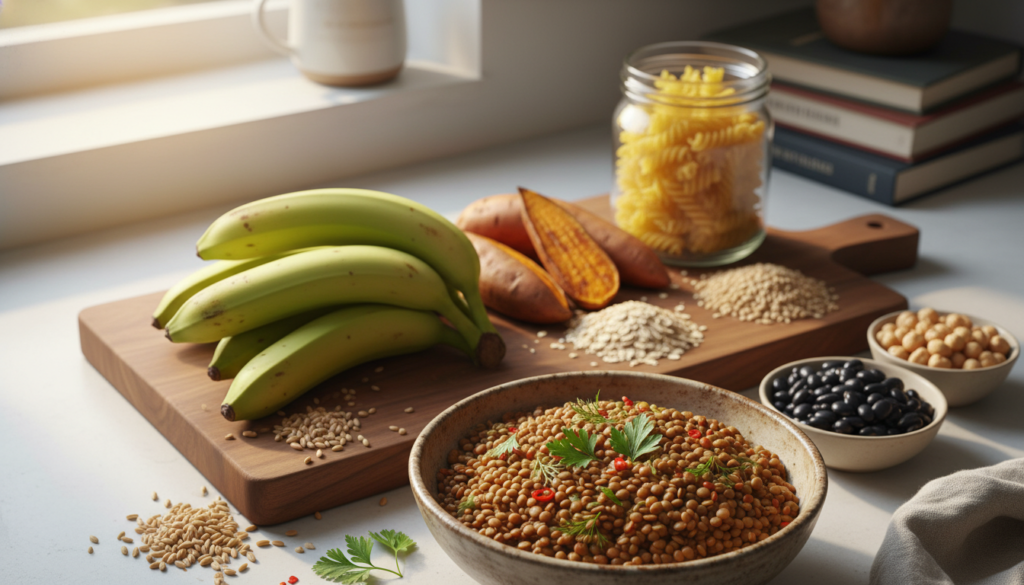
Green bananas and plantains are packed with resistant starch. This type of starch is hard for your body to digest. It’s a great source of fiber for your gut. You can blend them into smoothies or cook them as a side dish.
Legumes: Beans, Lentils, and Chickpeas
Legumes like beans, lentils, and chickpeas are not just high in protein; they are also rich in fiber. They also have a lot of resistant starch. You can toss them into soups, salads, or other dishes. They’re super nutritious.
Whole Grains and Oats
Whole grains and oats are also good for resistant starch. Enjoy oatmeal for breakfast or use it in baking. Brown rice, quinoa, and whole-wheat bread are also great choices.
Cooked-and-Cooled Starches
Cooking and cooling starchy foods can make them even better for you. This includes potatoes, rice, and pasta. By cooling them down after cooking, you can increase your intake of resistant starch.
| Food | Resistant Starch Content | Preparation Tips |
|---|---|---|
| Green Bananas | High | Use in smoothies or cook as a side dish |
| Legumes (Beans, Lentils, Chickpeas) | High | Add to soups, salads, or stews |
| Whole Grains and Oats | Moderate to High | Enjoy as oatmeal or use in baking |
| Cooked-and-Cooled Potatoes | High | Cook, cool, and use in salads |
How to Increase Resistant Starch Through Cooking and Cooling
Cooking and cooling can increase the amount of resistant starch in foods rich in carbs. This change happens through retrogradation, making starch harder to digest.
Understanding the Retrogradation Process
Retrogradation is a chemical change that occurs when starchy foods are cooked and then cooled. Cooking breaks down starch into simpler sugars. When these cooked starches cool, they realign into a crystalline structure. This structure is tough for digestive enzymes to break down.
Key factors influencing retrogradation include:
- Cooking method: The cooking method can affect the extent of starch retrogradation.
- Cooling time: Longer cooling times, especially in the fridge, increase the amount of resistant starch.
- Storage conditions: The fridge is better than room temperature for retrogradation.
Step-by-Step: Preparing Potatoes for Maximum Resistant Starch
To get the most resistant starch from potatoes, follow these steps:
- Cook the potatoes until they’re soft.
- Let them cool to room temperature.
- Refrigerate them overnight to boost retrogradation.
- Reheat them gently before eating to keep the resistant starch.
Step-by-Step: Creating Resistant Starch in Rice
To increase resistant starch in rice, follow these steps:
- Cook the rice as usual.
- Cool it down to room temperature.
- Store it in the fridge overnight.
- Reheat the rice gently before eating.
Step-by-Step: Making Resistant Starch Pasta
For pasta, the steps are simple:
- Cook the pasta al dente to keep starches intact.
- Cool it quickly by rinsing with cold water.
- Store the cooled pasta in the fridge.
- Reheat it gently when you’re ready to eat.
By using these cooking and cooling methods, you can increase your intake of resistant starch. This supports your gut health and overall well-being.
How to Incorporate Resistant Starch into Your Daily Diet
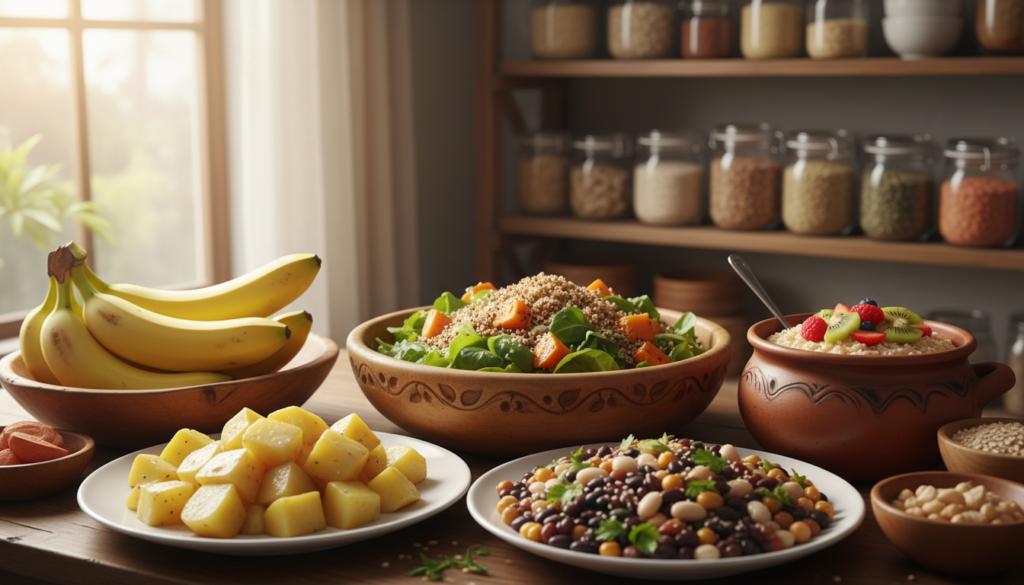
To start enjoying resistant starch, add it slowly to your meals. This lets your gut adjust without discomfort. Try replacing some regular starches with resistant starch options.
Starting Slowly to Avoid Digestive Discomfort
It’s important to start slow with resistant starch. Your body might react with gas or bloating if you eat too much too soon. Start with small amounts and gradually increase them.
For example, if you’re new to green bananas, start with half a banana a day. See how your body reacts before adding more. Raw potato starch is also a good source of resistant starch. Start with one tablespoon a day, mixed with water, and increase as needed.
Meal Planning with Resistant Starch Foods
Good meal planning is key to adding resistant starch to your diet. Here are some tips:
- Include a variety of resistant starch foods in your meal plan, such as green bananas, legumes, and cooked and cooled starchy foods.
- Plan your meals around seasonal produce to ensure freshness and variety.
- Experiment with new recipes that feature resistant starch ingredients.
Practical Tips for Meal Prep and Storage
Proper meal prep and storage keep resistant starch in your foods. Here are some tips:
- Cook and cool starchy foods like potatoes and rice to increase their resistant starch content. Store them in the refrigerator overnight and consume them the next day.
- When preparing legumes, cook them thoroughly and then cool them before refrigerating or freezing for later use.
- For foods like green bananas, store them at room temperature until they reach your desired level of ripeness, then refrigerate or freeze them to halt further ripening.
By following these tips, you can enjoy the benefits of resistant starch while keeping your digestion comfortable.
Potential Side Effects and Important Considerations
Adding resistant starch to your diet can benefit your gut and blood sugar. But adding it too fast might make you uncomfortable.
Common Digestive Symptoms When Starting Out
Starting with resistant starch might make you feel bloated, gassy, or uncomfortable in your stomach. This is because your gut is adjusting to the new food. To ease these issues, start with a small amount and slowly add more. This lets your gut bacteria get used to it.
Who Should Be Cautious with Resistant Starch
Resistant starch is usually safe, but some people should be careful. Those with digestive issues like IBS should be extra cautious. Also, people with other health problems should talk to a doctor before changing their diet.
Balancing Resistant Starch with Overall Nutrition
To get the most from resistant starch, make sure your diet is balanced. Eat a variety of foods, including fruits, veggies, lean proteins, and whole grains. This mix helps you get the most benefits from resistant starch while keeping your body healthy.
Knowing the possible side effects and how to avoid them helps you use resistant starch wisely. It can improve your gut health and more.
Conclusion
Adding resistant starch to your diet can boost your health. It helps your gut by feeding good bacteria. This keeps your gut microbiome balanced.
A summary of the benefits of resistant starch shows that it helps control blood sugar and insulin levels. This can lower the risk of serious diseases. It also helps with weight management by making you feel full and by reducing calorie intake.
To enjoy these benefits, try adding foods high in resistant starch to your meals. Include green bananas, legumes, whole grains, and cooked and cooled starches. As you get used to these foods, find new ways to cook them to increase your intake of resistant starch.
In conclusion, resistant starch is key to better metabolic and digestive health. It improves your overall quality of life.