Many people spend a lot of time in the gym trying to look good. But true strength is often overlooked. Your ability to grip, hold, and carry things is a key indicator of how long you might live.
This simple test shows more than just how much weight you can lift. It gives insight into your heart health and overall strength. By focusing on the benefits of grip strength, you can make your body stronger for everyday tasks.
Investing in grip strength is a smart move for functional aging. A stronger grip means you can stay independent and active for longer. It’s time to focus on the muscles that really matter.
Key Takeaways
- Hand power is a reliable indicator of your long-term health and heart function.
- Moving beyond aesthetic training helps you maintain independence as you grow older.
- Simple daily habits can significantly improve your physical capacity.
- Your ability to hold objects correlates directly with lower mortality risks.
- Focusing on these specific muscles supports a higher quality of life.
The Science Behind Grip Strength Benefits
Research shows a strong link between grip strength and health. A strong handshake might mean you’ll live longer. Grip strength is more than muscle power. It shows how well your heart and muscles are doing.
Why Your Hands Are a Window Into Your Health
Hands are complex, made of bones, muscles, tendons, and nerves. They work together on many tasks. A strong grip can tell us a lot about your hand health.
A strong grip means you have more muscle and strength. This is key to doing daily tasks and staying independent as you get older.
Studies show grip strength is a key marker of longevity. It’s a simple way to check your health. A weak grip can mean you’re at risk for heart disease, disability, and even dying early.
- Grip strength shows how strong your muscles are.
- It’s linked to heart health and how long you might live.
- A weak grip can signal health problems.
The Correlation Between Forearm Power and Mortality
The muscles in your forearms are key to grip strength. Their power is linked to your overall health. Research shows that strong forearms are associated with better health and lower death rates.
Forearm power is more than grip strength. It shows how well your muscles and heart are working. Doing grip-strength exercises can boost forearm strength. This can lead to better health and possibly a longer life.
| Health Indicator | Relation to Grip Strength |
|---|---|
| Cardiovascular Health | Strong grip strength is associated with a lower risk of cardiovascular disease. |
| Muscle Mass and Strength | Grip strength reflects overall muscle mass and strength. |
| Mortality Rates | Weak grip strength is associated with higher mortality. |
Shifting Focus from Beach Muscles to Longevity Muscles
As we age, we should focus on building muscles that help us live longer. This change is key to staying physically fit and healthy as we get older.
The old way of thinking about fitness is all about looking good. But it doesn’t help much with staying healthy and functional for a long time.
The Limitations of Mirror-Based Training
Mirror-based training is all about muscles that look good. While it’s nice to look fit, it doesn’t really help with functional aging or health.
Why Functional Aging Requires More Than Just Biceps
Functional aging means maintaining independence in daily tasks as we age. It’s about muscles that help with grip, posture, and moving around.
| Muscle Group | Function | Importance of Aging |
|---|---|---|
| Forearm Muscles | Grip Strength | Essential for daily activities and overall independence |
| Core Muscles | Posture and Stability | Critical for preventing falls and maintaining mobility |
| Lower Body Muscles | Mobility and Balance | Vital for maintaining independence and preventing age-related decline |
By focusing on these key muscles, we can enhance functional aging. This leads to better health, mobility, and quality of life as we age.
Understanding the Link Between Hand Strength and Heart Health
Research has found a strong link between hand strength and heart health. Grip strength is seen as a key indicator of heart health. This connection comes from the physical ties between muscle strength, blood vessel function, and overall health.
Grip strength is more than just hand muscle power. It shows how well your muscles and blood vessels are working. People with weaker grip strength are more likely to get heart diseases like heart attacks and strokes.
Systemic Health Indicators in Your Grip
Grip strength is a sign of overall health. A strong grip is associated with better health, including lower blood pressure and a reduced risk of chronic diseases.
Vascular health is key to grip strength. The blood vessels in your forearm and hand are vital for muscle function. Poor blood vessel health can weaken your grip.
How Vascular Function Impacts Muscular Endurance
Vascular function is crucial for muscle endurance. It ensures muscles get the oxygen and nutrients they need. Endothelial function, the health of blood vessel linings, is especially important. Poor endothelial health can reduce blood flow to muscles, affecting grip strength and endurance.
| Vascular Function Aspect | Impact on Muscular Endurance | Relation to Grip Strength |
|---|---|---|
| Blood Flow | Essential for delivering oxygen and nutrients | Directly affects grip strength |
| Endothelial Health | Influences vascular dilation and blood flow | Impacts overall muscular endurance |
| Nutrient Delivery | Critical for muscle contraction and recovery | Supports sustained grip strength |
Working on grip strength through exercise can boost your health in many ways. It can improve blood vessel function and heart health. Adding grip-strengthening exercises to your routine can improve your hand health and overall well-being.
Assessing Your Current Baseline
Before starting grip strength training, it’s key to check your current level. This baseline helps measure progress and tailor your training. Grip strength reflects overall health and can hint at muscle endurance and potential health risks.
How to Use a Dynamometer for Accurate Measurement
A dynamometer measures grip strength. Here’s how to use it:
- Hold the dynamometer in your hand with the dial facing upwards.
- Squeeze the dynamometer as hard as you can for a few seconds.
- Take note of the reading on the dial.
- Repeat the process for the other hand.
For best results, take multiple readings for each hand. Use the highest value. Consistency is key; keep the same grip span and posture for each reading.
Interpreting Your Results Based on Age and Gender
After getting your grip strength measurements, compare them to averages for your age and gender. Grip strength varies by age and gender, so knowing where you stand is important.
Studies often show grip strength percentiles by age and gender. Understanding your percentile ranking helps set realistic goals and track your progress.
| Age Group | Average Grip Strength (Men) | Average Grip Strength (Women) |
|---|---|---|
| 20-29 | 45-55 kg | 25-35 kg |
| 30-39 | 40-50 kg | 20-30 kg |
| 40-49 | 35-45 kg | 15-25 kg |
Knowing your grip strength and how it compares to others helps create a focused training plan. Adding grip and forearm exercises to your routine can strengthen your forearms and improve hand health.
Essential Equipment for Building a Stronger Grip
To build a stronger grip, you need more than just willpower. You need the right tools. Understanding the essential equipment is key to improving grip strength.
Hand grippers are crucial for grip training. They target the muscles in your hands and forearms. This helps build the strength and endurance needed for various grip-related activities.
Choosing the Right Hand Grippers
Choosing the right hand grippers is important. They should match your current grip strength level. There are many types, from adjustable to fixed resistance levels.
| Gripper Type | Description | Benefit |
|---|---|---|
| Adjustable Grippers | Allow for adjustable resistance levels | Ideal for progressive overload |
| Fixed Resistance Grippers | Offer a specific resistance level | Great for focused training |
| Captains of Crush Grippers | High-quality grippers with precise resistance | Preferred by grip strength enthusiasts |
The Role of Chalk and Proper Technique
Chalk is also important in grip training. It keeps your hands dry, improving your grip. This reduces the risk of dropping weights or other equipment.
Proper technique is crucial when doing grip exercises. Using the right form makes your workout more effective. It also lowers the risk of injury.
Using the right equipment and proper technique can greatly improve grip strength and hand health. Adding grip strength exercises to your routine can boost your fitness and athletic performance.
Mastering the Farmer’s Carry for Total Body Stability
To strengthen forearms and improve total body stability, mastering the Farmer’s Carry is key. This exercise is a vital part of functional aging. It greatly contributes to overall health and longevity.
The Farmer’s Carry involves walking while carrying weights in each hand. It works many muscle groups at once. It’s a great forearm exercise that boosts grip strength, endurance, and stability.
Proper Form to Prevent Injury
Proper form is crucial for the Farmer’s Carry. It helps you get the most benefits while avoiding injury. Here are important tips:
- Stand upright with your shoulders back and core engaged.
- Hold the weights firmly but not too tightly to avoid strain.
- Keep your gaze forward and avoid leaning to one side.
- Take slow, deliberate steps, focusing on stability with each stride.
Experts say proper form is not just for looks. It’s about functionality and safety.
“The way you perform the Farmer’s Carry reflects your overall physical conditioning and ability to handle stress on your body.”
Progressive Overload Strategies for Beginners
Beginners should start with manageable weights and gradually increase them. Here’s a simple strategy:
| Week | Weight | Distance/Duration |
|---|---|---|
| 1-2 | Light | 10 meters/30 seconds |
| 3-4 | Moderate | 15 meters/45 seconds |
| 5+ | Heavy | 20 meters/60 seconds |
As you get stronger, listen to your body. Adjust the weight and duration based on your comfort and strength. Adding the Farmer’s Carry to your routine can greatly improve your physical capability.
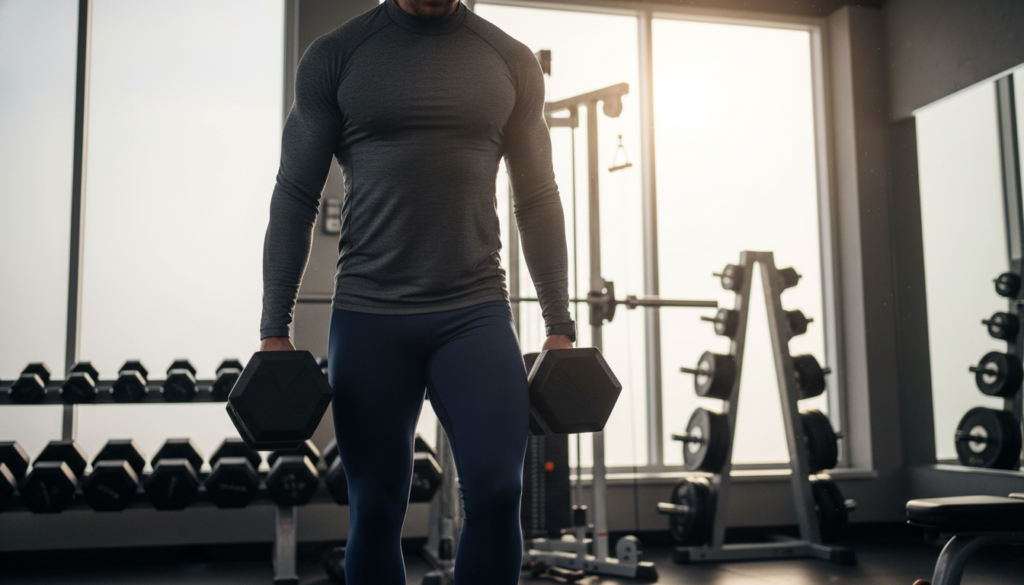
Mastering the Farmer’s Carry improves grip strength and forearm development. It also enhances total body stability. This exercise is a valuable part of any fitness plan aimed at improving health and longevity.
The Power of Dead Hangs for Shoulder and Forearm Health
Dead hangs are a simple yet effective exercise for improving shoulder and forearm health. They contribute to better longevity markers. This exercise is particularly beneficial for enhancing grip strength, which is closely linked to overall health and functional aging.
Dead hangs work multiple muscle groups simultaneously. They are an efficient addition to any workout routine aimed at enhancing functional aging. By strengthening your forearms, shoulders, and back, dead hangs improve overall upper-body endurance and stability.
Techniques for Improving Hang Time
To get the most out of dead hangs, it’s crucial to focus on proper technique. Start in a dead-hang position with your hands shoulder-width apart on a pull-up bar. Engage your lats and maintain a straight body line from head to heels. Begin with shorter hangs and gradually increase your hang time as your strength and endurance improve.
Improving hang time requires consistent practice. You can also incorporate variations, such as changing grip width or using different grip orientations (e.g., pronated, supinated, or neutral).
Integrating Passive and Active Hanging
Both passive and active hanging techniques can improve grip strength and overall upper-body health. Passive hanging involves relaxing your muscles as much as possible while hanging, focusing on endurance. In contrast, active hanging requires you to engage your muscles, particularly in your shoulders and back, to maintain the hang.
Alternating between passive and active hanging can provide a well-rounded upper-body workout. This variation helps prevent plateaus and keeps the exercise engaging.
By incorporating dead hangs into your workout routine and focusing on both technique and variation, you can significantly enhance functional aging and improve overall health.
Advanced Forearm Exercises for Functional Aging
Adding advanced forearm exercises to your routine can greatly improve your life as you age. Focusing on functional aging means understanding how certain exercises can improve our daily lives. Forearm strength is key to our health, helping us with simple tasks like opening jars and more complex ones like playing with grandkids.
Plate Pinches and Their Impact on Thumb Strength
Plate pinches are a simple yet effective way to boost thumb strength, a big part of grip strength. To do a plate pinch, hold a weightlifting plate with your thumb and fingers on opposite sides. Start with a lightweight and add more as your thumb gets stronger.
This exercise is great because thumb strength is a big marker of longevity. A strong thumb helps you do daily tasks and stay independent as you get older.
Wrist Curls and Extensions for Joint Longevity
Wrist curls and extensions are key to keeping your joints healthy over the long term. These exercises work the muscles in your forearm, making your wrist more flexible and strong. To do a wrist curl, hold a dumbbell with your palm up and curl your wrist. For wrist extensions, hold the dumbbell with your palm down and lift your wrist.
| Exercise | Repetitions | Sets | Benefits |
|---|---|---|---|
| Plate Pinches | 8-12 | 3-4 | Improved thumb strength, enhanced grip |
| Wrist Curls | 10-15 | 3-4 | Increased wrist flexibility, forearm strength |
| Wrist Extensions | 10-15 | 3-4 | Enhanced wrist stability, reduced injury risk |
By adding these advanced forearm exercises to your routine, you can greatly improve your aging well benefits. You’ll not only get stronger forearms but also boost your overall health and function.
Integrating Grip Training Into Your Weekly Routine
Effective grip training needs a balanced approach. It should match your traditional lifting exercises. To improve grip strength, add specific grip exercises to your routine, but don’t overdo it.
When planning grip training, think about how often and how hard you work out. It’s key to find a balance between grip exercises and other workouts. This helps avoid overtraining and injury.
Balancing Grip Work with Traditional Lifting
A good fitness plan mixes grip exercises with weightlifting. You can set aside days for grip training or mix it into your current routine.
For instance, do grip exercises like dead hangs or plate pinches on days you work your back or arms. This way, your grip training supports your fitness goals.
Recovery Protocols for Tendon Health
Recovery is vital for grip training, especially for tendons. Tendons heal more slowly than muscles, so rest is crucial.
To help tendons recover, add recovery steps such as foam rolling, stretching, or self-myofascial release. Also, make sure you eat enough protein and other nutrients for tendon repair.
By balancing grip exercises with lifting and focusing on recovery, you can improve grip strength and maintain hand health.
Common Mistakes That Hinder Progress
Even the most dedicated people can make mistakes in grip training. These errors can slow down progress in strengthening forearms and achieving functional aging. It’s important to know these mistakes so you can avoid them.
Two big mistakes can stop your grip training from working well. Knowing these mistakes helps you keep moving forward and enjoy the benefits of grip strength as a longevity marker.
Over-training and the Risk of Tendonitis
One common mistake is over-training. Doing too many grip exercises can strain your tendons, raising the risk of tendonitis. This condition can be very painful and stop you from training for a while, slowing your progress.
Moderation is key in grip training. Finding the right balance between challenging your grip and giving it time to recover is crucial. Too much training can lead to inflammation and injury, weakening your grip strength and hand health.
Ignoring the Importance of Eccentric Control
Another big mistake is failing to focus on eccentric control in grip training. Eccentric control means slowly and carefully releasing a grip or weight. It’s very important for staying healthy and strong as you age.
Failing to pay attention to eccentric control can make your grip stronger than your release. This imbalance can lead to injuries and make grip training less effective.
To avoid these mistakes, it’s important to have a balanced grip training program. Include exercises that strengthen your grip, improve eccentric control, and work on your forearms. This way, you can make steady progress and enjoy the benefits of grip training for functional aging and health.
Lifestyle Habits That Support Hand Health
A strong grip is more than just hand strength. It’s about the habits you keep. Keeping your hands healthy is key for feeling good and aging well. Eating right, staying hydrated, and being active can boost your grip and hand health.
Nutrition and Hydration for Connective Tissue
Good nutrition and hydration are crucial for connective tissue health. Vitamins and minerals, such as vitamin C, D, and calcium, are important. They help keep tendons, ligaments, and bones in your hands strong.
- Eat foods rich in omega-3 fatty acids, such as salmon and walnuts, to help fight inflammation.
- Add foods high in antioxidants, such as berries and leafy greens, to help fight oxidative stress.
- Drink lots of water to stay hydrated.
The Impact of Daily Activity on Grip Maintenance
What you do every day affects your grip and hand health. Doing activities that challenge your grip and keep your hands moving is good. It helps keep your grip strong.
Some good activities include:
- Gardening or hobbies that make you grip and move your hands.
- Carrying heavy things that need a strong grip.
- Doing sports or exercises that require grip, like rock climbing or rowing.
Adding these habits to your daily life helps your hand health. It also improves your grip, leading to better aging and overall health.
Conclusion
As we get older, keeping our physical abilities is key to living well and staying independent. Grip strength is a big longevity marker, showing how well we’re aging. It links to many health outcomes, making it a simple yet powerful indicator of our health and lifespan.
Adding grip training to your workout can bring many benefits to your grip strength. It can boost your heart health and strengthen your muscles. This training helps you age well and live longer.
Using a whole-body approach with grip exercises, good food, and healthy habits can really help you stay active and strong as you age. Focusing on grip strength means you’re working towards a healthier, stronger you.