
Are you torn between two top bodyweight exercises? It’s key to know the difference between pull-ups and chin-ups to build a strong body. Both exercises work your upper body, but they target muscles differently.
The main difference is in how you hold your hands. An overhand vs. underhand grip affects how force is applied during the lift. These grips are crucial for working your back and arms.
For a wider back, pull-ups are the way to go. But if you’re after toned biceps and a stronger chest, chin-ups are better. Many newbies find chin-ups easier because they work the arms more directly. Knowing these differences helps you train safely and effectively for your fitness goals.
Key Takeaways
- Pull-ups primarily target the lats to build back width.
- Chin-ups provide more activation for the biceps and chest.
- Hand position dictates which muscle groups work the hardest.
- Beginners often find chin-ups easier to perform initially.
- Both movements are essential for a well-rounded calisthenics routine.
Understanding the Mechanics of Vertical Pulling
Vertical pulling is key for strong upper-body workouts. Knowing how your body works with the bar makes training safer and more effective. It helps you move from just doing reps to training with purpose.
The Role of Grip in Upper Body Mechanics
Your grip connects your body to the resistance. In bodyweight exercises, how you position your hands affects the muscles used. A good grip keeps tension steady from start to finish.
Choosing the right grip is crucial for upper-body exercises. It keeps your wrists and elbows stable, reducing strain. A strong grip is the foundation for achieving your upper-body strength training goals.
How Hand Placement Alters Muscle Recruitment
Changing where your hands are on the bar changes which muscles work the most. These bodyweight back exercises focus on shifting the load between muscles. Adjusting your grip changes the demands of the workout.
Using different bar exercises for back muscles lets you target specific areas. A wider grip works the outer lats, while a closer grip focuses on the center back and arms. Learning these adjustments is vital for effective upper-body strengthening exercises.
Pull-ups vs. Chin-ups – Grip, Muscles, and Which to Choose First.
Learning the difference between pull-ups and chin-ups begins with your grip. When comparing these exercises, the overhand vs. underhand grip is key. The right grip helps you achieve your fitness goals more effectively.
Defining the Overhand Grip for Pull-ups
Pull-ups use an overhand grip, with palms facing away. This grip is best for back exercises targeting the latissimus dorsi. Adjusting your pull-up grip width effectively targets the back muscles.
To perform pull-ups correctly, hold the bar firmly with knuckles up. The overhand grip benefits your upper back and rear deltoids. This grip also demands strong forearms and hands.
Defining the Underhand Grip for Chin-ups
Chin-ups are performed with an underhand grip, palms facing your body. This is easier for beginners, as it engages the biceps more. Knowing the differences between chin-ups and pull-ups helps in achieving a balanced body.
The best grip for pull-ups is overhand, but underhand is better for biceps. Try different grips for pull-ups and chin-ups to find what works for you. Building grip strength lets you do more in your workouts.
Targeting the Latissimus Dorsi for Back Width
To get a wide, V-tapered back, you need to focus on the latissimus dorsi. These big muscles are key for back width. Choosing the right back exercises is crucial for your progress. Regular back muscle workouts can change your look and boost your pulling power.
Why Pull-ups are the Gold Standard for Lats
Pull-ups are the top choice for strengthening the lats. They work the lats in a way that’s hard to match with other gear. Using an overhand grip, you get a full range of motion. This is great for building latissimus dorsi muscles.
“The pull-up is the king of upper body movements, providing a level of muscle recruitment that machines simply cannot match.”
Doing these bar exercises for back muscles uses your body weight for resistance. They’re some of the best bodyweight exercises for back growth. They also boost your core strength as you work your back muscles.
Optimizing Latissimus Dorsi Exercises for Hypertrophy
To grow your lats, treat them like any other muscle. Try alternative lat pull-downs to keep your workouts fresh. When doing exercises for the latissimus dorsi, move slowly to get the most out of each rep.
Here’s a comparison of exercises for your back muscles workout:
| Exercise | Primary Focus | Difficulty |
|---|---|---|
| Pull-ups | Lat Width | High |
| Chin-ups | Bicep/Lat | Medium |
| Inverted Rows | Mid-Back | Low |
Focus on these lat exercises for the width you want. Consistency is key for hypertrophy. Keep track of your reps and sets to keep pushing your muscles to grow stronger.
Engaging the Biceps and Chest with Chin-ups
Want to boost your bicep growth in a back workout? Chin-ups are the way to go. Switching to an underhand grip opens up a new challenge for your upper body. This underhand grip lets you move naturally, hitting your arms and back muscles.

The Biomechanical Advantage for Bicep Growth
Chin-ups are great for arms because of the supinated grip. This grip puts your biceps in a perfect spot to work hard. As you do these muscle-building exercises, your biceps stretch and contract more.
Regular chin-ups help build muscle by keeping your arms under tension longer. Unlike other grips, the underhand grip makes your biceps the main movers. This makes chin-ups key for bigger arms and a stronger back.
“True strength is built by understanding how small adjustments in your form can lead to massive gains in muscle recruitment.”
Secondary Muscle Activation in the Pectorals
Chin-ups are also great for the chest. Your pectorals help pull at the start because your elbows are closer to your body. This makes chin-ups a full-body exercise.
Adding chin-ups to your upper body workout balances your physique. The table below shows how different muscles work during chin-ups compared to other exercises.
| Muscle Group | Activation Level | Primary Role |
|---|---|---|
| Latissimus Dorsi | High | Main Pulling Force |
| Biceps Brachii | Very High | Elbow Flexion |
| Pectoralis Major | Moderate | Shoulder Adduction |
Knowing the benefits of chin-ups helps you train smarter. By working your back, biceps, and chest together, you build a stronger, more attractive upper body.
Analyzing Range of Motion and Muscle Stretch
Achieving a full range of motion is key to better muscle growth in your back exercises. The depth of your pull and the quality of your extension affect muscle fiber recruitment. By focusing on these, you can make simple movements into powerful exercises for latissimus dorsi development.
Maximizing the Lat Stretch in Chin-ups
The underhand grip benefits shine when you reach the bottom of the movement. Your palms facing you allows for a deeper lat stretch. This is a major benefit of chin-ups for improving the back.
At the bottom of a chin-up, your lats are under a lot of tension. This full extension is crucial for developing the latissimus dorsi. Hanging completely prepares the muscles for a powerful contraction on the way up.
Comparing Full Extension and Contraction Phases
Looking at comparing pull-up techniques, focus on the stretch-to-squeeze transition. Chin-ups offer a more natural elbow path, leading to a complete contraction at the top. These movements are great alternatives to the lat pull-down because they mimic natural movement.
The table below shows the main differences in how these movements affect your back muscles’ exercise routine:
| Feature | Pull-up (Overhand) | Chin-up (Underhand) |
|---|---|---|
| Lat Stretch | Moderate | Maximum |
| Contraction | High (Upper Back) | High (Lats/Biceps) |
| Joint Comfort | Variable | Generally Higher |
| Primary Focus | Back Width | Lat/Bicep Synergy |
Addressing Elbow Health and Injury Prevention
Keeping your joints safe is crucial to any strength-training plan. Building muscle is the main goal, but your tendons and ligaments must be strong as well. Ignoring early signs of pain can lead to long-term injuries that keep you out of the gym.
Managing Golfer’s Elbow with Proper Grip Selection
Medial epicondylitis, or golfer’s elbow, is common in heavy vertical pulling. It happens when tendons on the inside of the elbow get strained. Picking the best grip for back exercises can help lessen this stress.
The overhand vs. underhand grip debate often comes down to comfort. Some prefer the underhand grip for its smooth feel. Others find the overhand grip eases elbow joint stress. If you’re fighting golfer’s elbow, changing your grip might help.
When to Switch Grips to Reduce Joint Stress
Never ignore sharp or shooting pain during workouts. If you feel constant aching, it’s time to switch your grip. This change lets different muscles handle the load, easing joint stress.
Finding the best grip for pull-ups depends on your body. If one grip hurts, try another to see if it helps. Consistency is key, but making smart grip changes is essential for long-term success.
Selecting the Right Exercise for Beginners
Starting your fitness journey with bodyweight exercises can be daunting. Choosing the right movement is crucial. Beginners should aim to build a strong base without risking injury.
Focus on exercises that offer a mechanical advantage. This helps you gain confidence and build muscle.
Why Chin-ups are Often Easier for Novices
Many newcomers find chin-ups for beginners a perfect way to start vertical pulling. The underhand grip puts your biceps in a stronger position. This helps your biceps and chest muscles, making the exercise easier.
This advantage is key for those who can’t do full pull-ups yet. It lets you do more reps and boost your strength training. Regular practice will prepare you for more challenging exercises later.
Progressive Loading Strategies for Pull-up Mastery
When you’re comfortable with basic exercises, it’s time to increase your grip strength. Resistance bands are great for this. They help at the bottom of the movement, where you’re weakest.
As you get stronger, switch to thinner bands or do eccentric-only reps. These strength training exercises keep challenging your muscles safely. Following a steady plan will help you master strict pull-ups.
| Exercise Type | Primary Muscle Focus | Difficulty Level |
|---|---|---|
| Chin-ups | Biceps and Lats | Beginner |
| Resistance Band Pull-ups | Lats and Upper Back | Intermediate |
| Strict Pull-ups | Lats and Scapular Stabilizers | Advanced |
Advanced Variations and Grip Width Adjustments
Getting past a training plateau means trying new grip adjustments and pulling techniques. Adding pull-up variations to your routine can help grow muscles in ways regular exercises can’t. These back workout variations are key for a balanced physique and stronger lats.
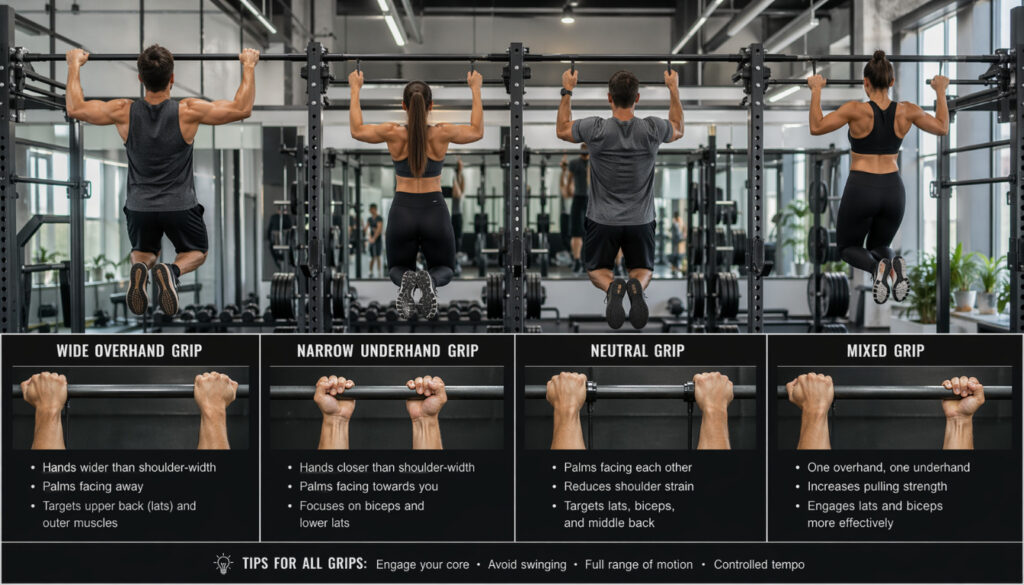
The Impact of Wide vs. Narrow Grip Widths
Changing your pull-up grip width alters the muscles used. A wider grip works the outer lats to develop a wider back. A narrower grip, however, allows for deeper stretches and better works the lower lats and biceps.
Here’s what to consider when picking your grip:
- Wide Grip: Focuses on upper lats and needs more shoulder stability.
- Narrow Grip: Allows deeper stretches and works lower lats and biceps.
- Medium Grip: Balances lat strengthening while reducing joint stress.
Incorporating Neutral Grip Variations for Variety
Neutral grips for pull-ups are great if standard grips hurt. They use parallel bars or special handles, easing wrist and shoulder pressure. This type of strength training is good for long-term joint health.
Adding chin-up variations keeps workouts interesting and challenging. Switching hand positions keeps your back muscles adapting. This variety helps avoid plateaus and keeps training fresh.
Integrating Both Movements into Your Training Routine
A good upper body workout needs both pull-ups and chin-ups. These exercises work together to strengthen your back and arms. This way, you hit different muscles and keep your body balanced.
Designing a Balanced Upper Body Workout
When planning your upper-body strength training, consider pull-ups and chin-ups as a team. Pull-ups focus on your back, while chin-ups help your biceps. Using both ensures you cover all areas of your upper body.
Alternate these exercises in your workouts. Start with pull-ups to work your lats. Then, switch to chin-ups to focus on your arms and other muscles.
Rotating Exercises to Prevent Plateaus
Doing the same exercise too much can slow your progress. Mix up your muscle-building exercises to keep your muscles guessing. This is key for lasting gains.
Here’s a schedule to keep your workouts effective:
| Exercise Type | Primary Focus | Recommended Frequency |
|---|---|---|
| Pull-ups | Latissimus Dorsi | 1-2 times per week |
| Chin-ups | Biceps & Lats | 1-2 times per week |
| Neutral Grip | Brachialis & Forearms | As a variation |
By rotating your exercises, your upper-body pull-up workout stays effective. Stick to your plan but listen to your body. Adjust your workout to fit your recovery needs.
Common Form Mistakes to Avoid
Getting your technique right is key to making progress in your back muscles workout. Even top athletes can slip into bad habits that slow growth and raise injury risks. By aiming for precision, you can safely try out different pull-up variations and variations of chin-ups without harming yourself.
Eliminating Kipping and Momentum
Using momentum to finish a rep is a common mistake. Kipping might boost your rep count, but it can put too much stress on your joints. To master pull-ups, focus on strict, controlled movements. Keep your core tight from start to finish.
Swinging or jerking can hurt your shoulders and elbows. If you’re struggling with a clean rep, try resistance bands or a lat pulldown machine. These tools help build strength while keeping your form perfect during your upper-body pull-up workout.
Ensuring Proper Scapular Retraction
Proper scapular retraction is crucial for a safe and effective back workout variation routine. Before starting, pull your shoulder blades down and back. This step stabilizes your shoulders and lets your lats do the work.
Ignoring this can cause rounded shoulders and stress on your rotator cuff. Paying attention to your scapular position also helps prevent golfer’s elbow. Always focus on quality over quantity to protect your joints and build muscle.
Conclusion
Building a strong body means knowing how different exercises affect you. The pull-ups vs. chin-ups debate shows how changing your grip can change your results. Now, you can adjust your workouts to reach your specific goals.
For a wider back, go for pull-ups. But if you’re starting out, chin-ups are a better choice. They focus more on your biceps. This comparison shows that both exercises play different roles in your workout routine.
Knowing the difference between pull-ups and chin-ups helps you mix up your workouts. This can prevent you from getting stuck in a routine. It also keeps your joints safe while your muscles grow.
Stick to your workout plan and maintain perfect form for lasting results. Your hard work in these basic exercises will shape your success in the gym. Begin using these tips today to boost your upper body strength.