

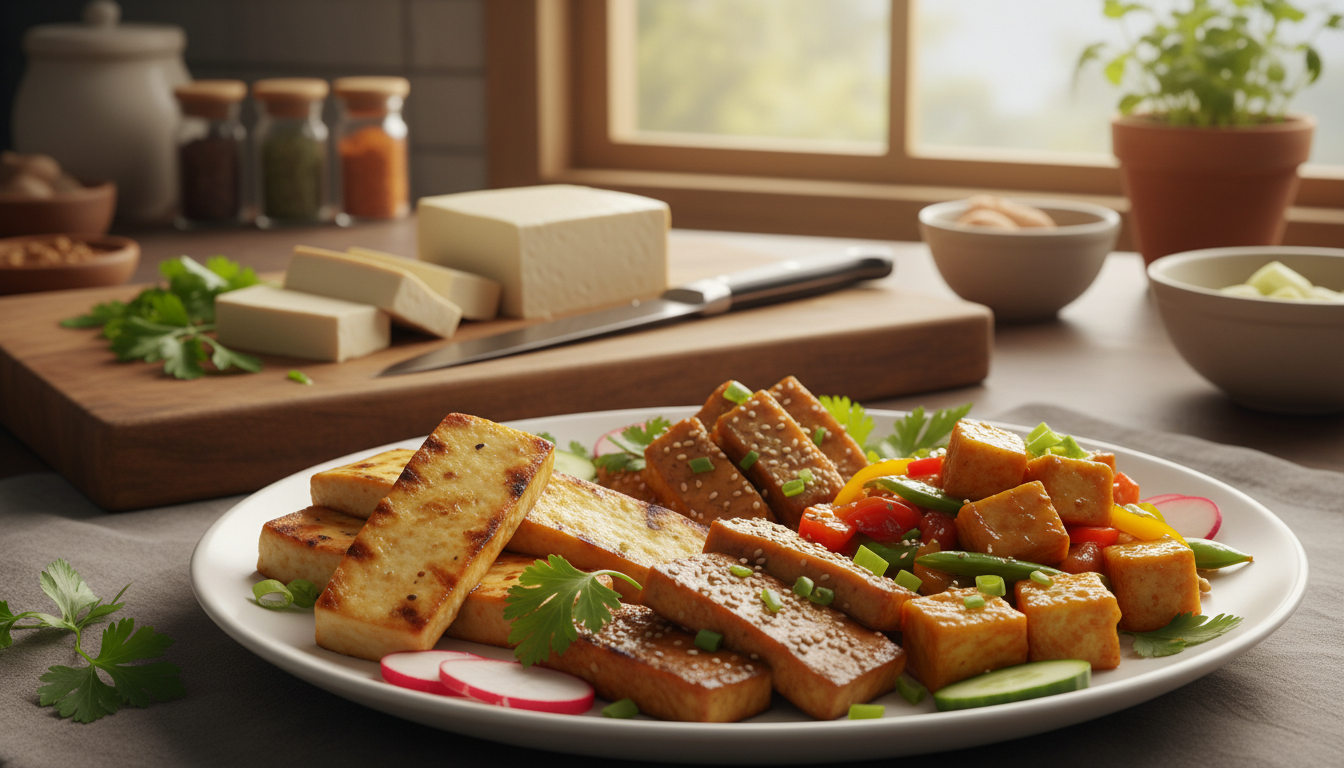
Starting a plant-based diet can seem scary, especially if you miss your favorite textures. Many people worry that soy will make their food taste bland or mushy. But learning to use tofu as a meat alternative is easier than you think.
When done right, tofu soaks up flavors well and gets crispy in a pan. You can use tofu instead of chicken to make tasty meals that fill you up. Choosing these plant-based diet options lets you enjoy your favorite dishes while being kind to your health and the planet.
If you’re looking for a vegan chicken substitute or a plant-based chicken alternative, this guide is for you. You’ll learn how to add more plant-based protein to your meals without losing flavor. Start changing your kitchen habits today.
Key Takeaways
- Understand how to overcome common texture myths when cooking with soy.
- Learn the best techniques to make your meals crispy and flavorful.
- Discover the environmental benefits of choosing sustainable food sources.
- Explore simple ways to swap animal products in your favorite recipes.
- Gain confidence in preparing nutritious meals that satisfy your cravings.
Understanding the Nutritional Value of Tofu
Switching to high-protein vegetarian meals means knowing what you eat is key. Tofu is a great vegetarian protein source for many diets. Looking at tofu nutrition facts helps you see how it supports your health goals.
Comparing Protein Content to Animal Sources
Many wonder how protein-rich plant-based foods compare to meat. Tofu has 8 to 15 grams of protein per serving, based on its firmness. It’s a great meatless protein option for keeping muscle mass without animal products.
When comparing tofu vs chicken nutrition, tofu has a cleaner profile. It’s a reliable source of soy protein with essential amino acids. Adding tofu to your diet meets daily protein needs and opens up new food experiences.
“Plant-based proteins like tofu are not just alternatives; they are nutrient-dense powerhouses that offer a sustainable way to fuel your body and protect your heart.”
The Health Benefits of Zero Cholesterol and Lower Saturated Fat
Eating tofu also offers benefits for heart health. Unlike many animal-based vegetarian protein sources, tofu has no cholesterol and less saturated fat. It’s a top choice for heart-healthy living.
Choosing protein-rich plant foods helps control unhealthy fats. The nutritional benefits of tofu are clear compared to beef or pork, which are high in saturated fat. Using this soy-based protein is a simple step to a healthier lifestyle.
| Nutrient | Tofu (per 3oz) | Chicken Breast (per 3oz) |
|---|---|---|
| Protein | 8-10g | 26g |
| Cholesterol | 0mg | 73mg |
| Saturated Fat | 0.5g | 1g |
Adding these meatless protein sources to your meals is a smart move. Whether you’re looking for vegan protein sources or just want to mix up your vegetarian protein options, tofu is a great choice. It’s a clean, efficient fuel that’s good for your health.
Why Tofu is the Ultimate Tofu Meat Alternative
Tofu has been a staple for over 2,000 years. Yet, many still see it as just a simple soy block. It’s actually a versatile tofu meat alternative. By replacing meat with tofu, you can enjoy high-protein vegetarian meals that are both good for the planet and taste great.
Debunking Common Texture Myths
Many think soy products are mushy or tasteless. But this is often because they’re not prepared properly. When done correctly, tofu can have a satisfying bite, just like meat.
To get the right texture for your protein-rich tofu dishes, follow these tips:
- Pressing: Removing excess water makes tofu firmer and meatier.
- Freezing: Freezing changes tofu’s structure, making it chewier and more porous.
- High Heat: Cooking at high temperatures, like pan-searing or baking, gives it a crispy exterior and a soft interior.
“The beauty of tofu lies in its neutrality; it is a blank canvas waiting for the chef to define its character through heat and seasoning.”
How Tofu Absorbs Flavors Better Than Meat
Tofu is great because it absorbs flavors like a sponge. Unlike meat, which can be hard to season, tofu soaks up marinades and spices quickly.
This makes it perfect for adding bold flavors to your meals. Whether you’re making a stir-fry or a stew, tofu ensures every bite is full of flavor. It’s a top choice for those who love rich, complex tastes in their food.
Choosing tofu as your soy-based meat alternative means more than just a healthy meat substitute. It’s a versatile ingredient that can elevate your cooking. By using these plant-based protein options, you can enjoy familiar textures and explore new ways to make your favorite dishes.
Navigating Tofu Varieties and Textures
Choosing the right tofu can seem overwhelming, but each type has its own use. Knowing which block to pick is key to successfully adding tofu to your diet. By understanding the differences, you can make tofu a key part of your cooking. This way, you get to enjoy all the nutritional value of tofu.
Silken Tofu for Creamy Sauces and Dairy Replacements
Silken tofu is soft and has a lot of water. It’s great for making smoothies, puddings, and creamy sauces because of its smooth texture. When blended, it becomes a creamy base, similar to heavy cream or yogurt, but without the fat.
Looking at the tofu nutrition facts will show you its protein-rich benefits. It’s perfect for making lighter versions of classic dishes. It blends well in both sweet and savory recipes.
Firm and Extra-Firm Tofu for Grilling and Stir-Frying
For a meatier texture, go for firm or extra-firm tofu. These are pressed to remove extra water, making them great for high-heat cooking. They stay firm when grilled, stir-fried, or made into “chicken” nuggets.
These vegan tofu options are great for those who want to mimic meat. By focusing on tofu’s nutritional benefits, you can have a filling meal that’s also good for you. Remember, the firmer the tofu, the better it holds up to cooking.
Essential Preparation Techniques for a Meaty Bite
Learning how to cook tofu at home starts with the right prep. A few minutes of extra effort can make all the difference. These steps help your tofu get a firm, meaty texture.
The Importance of Pressing Your Tofu
Most tofu blocks are too wet, which prevents them from getting crispy. Pressing the tofu removes this water. This lets the tofu brown rather than steam.
To press your tofu, use a tofu press or a clean towel. Put a heavy object, such as a skillet or books, on top for 30 minutes. This step is key to cooking with tofu.
Freezing Tofu to Change Its Internal Structure
Freezing your tofu can lead to new ways to cook it. Freezing turns the tofu’s water into ice. When thawed, this water turns the tofu into a sponge.
This sponge-like texture is great for soaking up flavors. It makes the tofu chewier, like meat, in stir-fries or stews. After thawing, squeeze out the extra liquid before seasoning.
| Preparation Method | Primary Benefit | Best Used For |
|---|---|---|
| Pressing | Removes excess water | Crispy pan-searing |
| Freezing | Creates a chewy texture | Hearty stews and curries |
| Marinating | Infuses deep flavor | Grilling and roasting |
Using these techniques will make you a pro at cooking tofu. With practice, cooking with tofu will become easy and fun.
Mastering Cooking Methods for Plant-Based Protein
Learning to cook with tofu is key to a tasty, plant-based meal. The heat you use changes the texture of your dish. Knowing how to cook tofu right can turn it into a main attraction.
Pan-Searing for Crispy Edges
Pan-searing gives you a golden, crunchy outside like fried meat. Heat your pan well with a bit of oil. High heat is crucial for a great crust without drying out the tofu.
Put your seasoned tofu in the hot pan without crowding. Let it cook for a few minutes until it’s easy to move. This way, you get the perfect crispy edges loved in many tofu dishes.
Baking Techniques for Chewy Results
Baking makes tofu denser and chewier. It’s great for salads or grain bowls because it’s firm. Baked tofu also soaks up sauces well.
Coat your tofu in oil and seasonings, then bake on a parchment-lined tray. Bake at 400°F, flipping halfway for even browning. This method is a reliable vegan option for many dishes.
| Method | Best Texture | Ideal Use |
|---|---|---|
| Pan-Searing | Crispy and Golden | Stir-fries and Tacos |
| Baking | Chewy and Firm | Salads and Bowls |
| Air-Frying | Light and Airy | Quick Snacks |
Creative Swaps for Your Favorite Meat Dishes
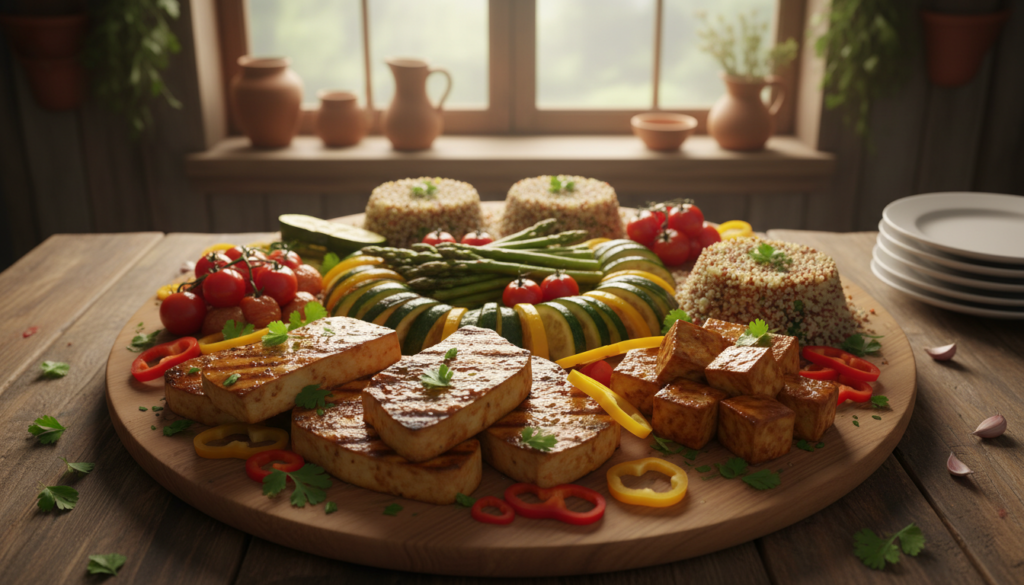
You can make your favorite comfort foods new again by picking a plant-based meat substitute. By replacing meat with tofu, you open up a world of tasty possibilities. These small changes let you enjoy classic flavors while eating healthier.
Crumbling Tofu as a Ground Meat Substitute
One great way to use tofu as a meat alternative is to crumble it. Sautéing firm tofu with taco seasoning makes it taste like ground beef. It’s perfect for burritos, tacos, or pasta sauces.
Choosing a vegetarian meat substitute means you get a meal rich in protein but lower in fat. It’s a quick and tasty meatless alternative that soaks up spices well.
Slicing and Breading Tofu for Cutlets
For a crunchy texture, thinly slice extra-firm tofu. Breading these slices with panko or seasoned breadcrumbs makes a vegan meat substitute like chicken cutlets. Pan-frying or baking them until golden brown is a satisfying meal.
These healthy meat substitutes offer a great texture in sandwiches or with roasted veggies. Trying these methods shows you can make tasty, filling tofu dishes without animal products.
| Dish Type | Tofu Preparation | Best Seasoning |
|---|---|---|
| Tacos | Crumbled | Chili & Cumin |
| Cutlets | Sliced & Breaded | Garlic & Herb |
| Pasta Sauce | Finely Crumbled | Italian Herbs |
| Sandwiches | Pressed Slabs | Smoked Paprika |
The Environmental Impact of Your Protein Choices
Choosing your protein source can greatly help our planet. By picking a sustainable protein, you help save natural resources. Many people know about tofu’s health benefits, but its environmental benefits are just as significant.
Choosing a healthy plant-based meat is a big step toward reducing your ecological footprint. By choosing a sustainable protein option, you avoid food systems that use a lot of resources. This choice is good for you and the planet.
Comparing Water Usage: Tofu vs. Poultry and Pork
Water scarcity is a major global issue, and your food choices contribute to it. Tofu uses much less water than animal agriculture. Choosing healthy meat alternatives saves thousands of gallons of water each year.
Poultry and pork need a lot of water for the animals and crops they eat. Soybeans, on the other hand, use much less water. Using plant-based meat alternatives helps keep our freshwater for the future.
Carbon Footprint Reduction Through Plant-Based Eating
Choosing a plant-based meat alternative helps lower your carbon footprint. Animal farming releases a lot of greenhouse gases, but plant-based proteins have a smaller impact. Adding healthy protein options to your meals helps reduce climate change.
The benefits of tofu are significant, making it a great choice for a lower-impact lifestyle. Making healthy meat alternative tofu a regular in your kitchen is good for the planet.
| Protein Source | Water Usage (Gallons/lb) | Carbon Impact (CO2e/lb) |
|---|---|---|
| Tofu | Low | Minimal |
| Poultry | Moderate | High |
| Pork | High | Very High |
The health benefits of tofu are clear, but its environmental benefits are even more compelling. Knowing these facts makes you a conscious consumer. Choosing tofu benefits your diet and supports a sustainable future.
Tips for Successful Flavor Infusion
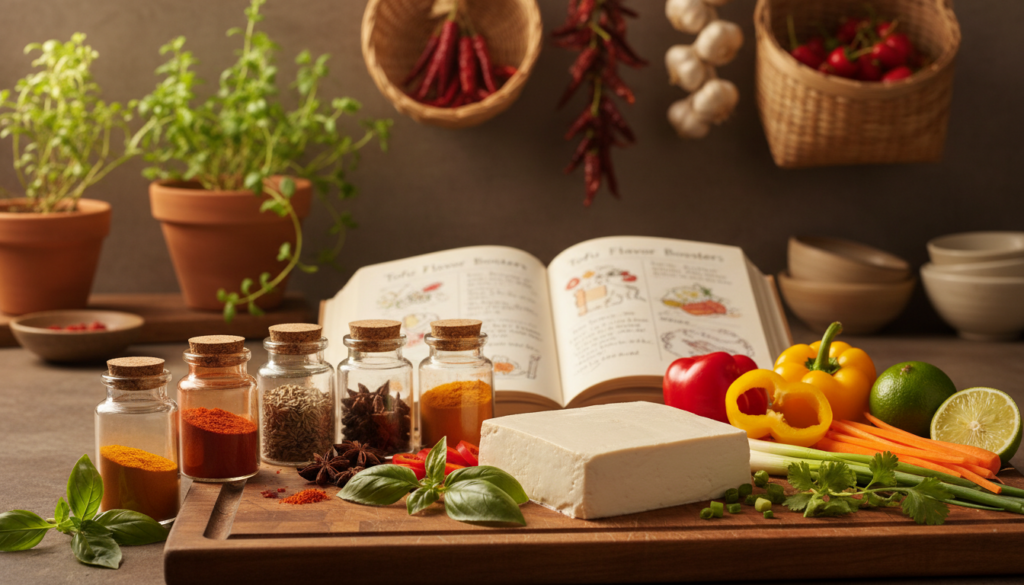
Tofu is a blank slate for flavors, making it a great base for plant-based meals. Learning to layer flavors brings out the benefits of tofu in your cooking. This skill turns simple tofu into a tasty main dish.
Selecting the Right Marinades
Using balanced marinades is key to adding depth to your tofu. By adding tofu to your diet, you get a protein that soaks up flavors well. Let it marinate for at least thirty minutes before cooking.
Try adding acidic ingredients, such as rice vinegar or citrus juice, to brighten the flavor. These help the flavors penetrate the tofu. Regular marinating makes vegan tofu options that even meat lovers will enjoy.
Using Spices to Mimic Traditional Meat Profiles
Dry spices are crucial for getting that meaty taste. Smoked paprika or cumin adds a rich, earthy flavor. This soy protein alternative shines when seasoned like meat.
Here are some flavor combinations to try for your next tofu meal ideas:
| Meat Profile | Key Spices | Best Marinade Base |
|---|---|---|
| Barbecue | Smoked Paprika, Garlic Powder | Molasses and Apple Cider Vinegar |
| Taco/Mexican | Cumin, Chili Powder, Oregano | Lime Juice and Cilantro |
| Asian Stir-Fry | Ginger, Five-Spice, White Pepper | Soy Sauce and Sesame Oil |
| Mediterranean | Dried Basil, Thyme, Rosemary | Olive Oil and Lemon Juice |
Quick Tofu Chicken-Style Stir-Fry Recipe
Using tofu instead of chicken makes weeknight dinners easy. This dish is great for those trying meat substitute recipes. It’s a tasty and healthy option for busy days.
“The beauty of plant-based cooking lies in the ability to transform simple, humble ingredients into a meal that satisfies both the palate and the body.”
Ingredients You Will Need
You’ll need basic pantry items for this meal. Make sure to have one block of extra-firm tofu. It’s the best for mimicking chicken.
- 1 block extra-firm tofu, pressed and cubed
- 3 tablespoons low-sodium soy sauce
- 2 cloves fresh garlic, minced
- 2 cups seasonal vegetables (such as broccoli, bell peppers, or snap peas)
- 1 tablespoon high-heat cooking oil
Step-by-Step Cooking Instructions
This tofu recipe is quick, ready in just 15 minutes. Start by heating oil in a large skillet or wok. Add cubed tofu and sear until golden brown.
Then add the chopped vegetables and sauté for 5 minutes. Stir in garlic and soy sauce for a savory flavor. Serve over brown rice or quinoa for a full meal.
| Feature | Tofu Stir-Fry | Chicken Stir-Fry |
|---|---|---|
| Prep Time | 15 Minutes | 25 Minutes |
| Cholesterol | 0mg | High |
| Cooking Ease | Very Simple | Moderate |
| Versatility | High | Moderate |
This comparison shows why many choose tofu meal ideas over meat. It’s healthier and better for the planet. This recipe proves you can eat well without animal products.
Conclusion
Switching to a plant-based protein lifestyle is good for you and the planet. You can now make tasty meals from simple ingredients, just like traditional dishes.
Choosing plant-based proteins reduces your environmental impact and gives your body the nutrients it needs. Adding plant-based meat alternatives to your meals helps make a difference for our planet.
There are many healthy meat alternatives available, like Nasoya or House Foods. These options let you try different plant-based diets without losing the textures you enjoy.
You don’t need to change everything in your kitchen to make healthy choices. Start by replacing one meal a week with a plant-based protein dish.
Try new spices and cooking methods to keep your kitchen exciting. Soon, you’ll find endless inspiration for dinner with these healthy protein options.
Your journey to a sustainable diet is personal and rewarding. Keep trying different plant-based meat alternatives to find the flavors you like best.

https://shorturl.fm/R3Aui