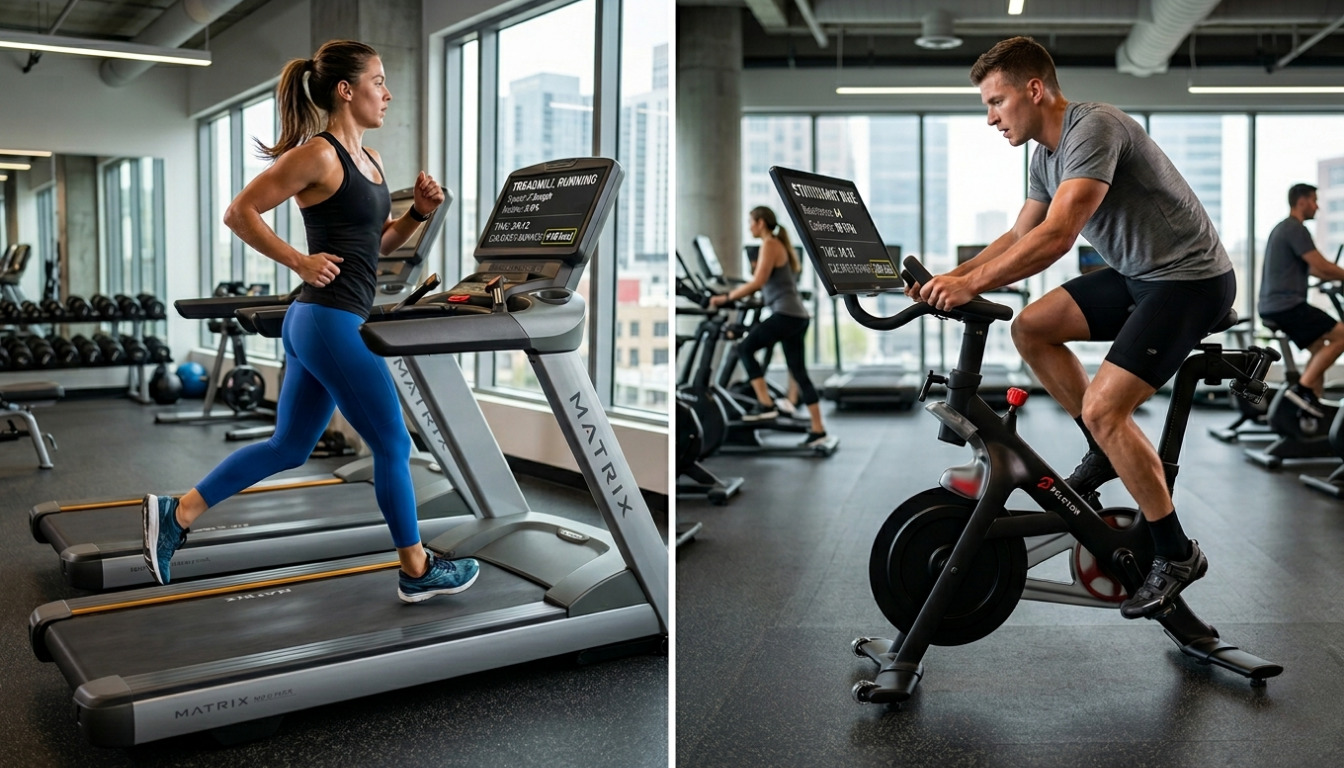
Choosing the right equipment for your home gym is a big step towards your fitness goals. You might wonder which machine gives the best cardio results and fits your lifestyle. Whether you want to lose weight or boost endurance, knowing the benefits of each is key.
A treadmill can burn 600–800 calories per hour. It also strengthens your core and glutes. On the other hand, a stationary bike is a low-impact choice that’s easy on your joints. Both have unique benefits for your health journey.
This guide compares the main features of these popular machines. We look at space needs, calories burned, and how well they work for your routine. By considering these points, you can choose the best option for your long-term success.
Key Takeaways
- Treadmills are highly effective for weight loss and bone density.
- Stationary cycles offer a joint-friendly workout for all fitness levels.
- Consider your available home space before making a final purchase.
- Both machines provide excellent options for improving heart health.
- Your personal goals should dictate which equipment best fits your needs.
Understanding Your Fitness Goals and Equipment Needs
Finding the best home exercise equipment for weight loss begins with knowing what you need. Before buying, decide if you want high-intensity workouts, easy-on-the-joints exercises, or just to boost your heart health. Knowing what you want makes choosing between a treadmill and a stationary bike easier.
Defining Your Primary Objective
Your fitness goals guide you to the right machine. If you want to burn calories by running, a treadmill might be best. But if you need something gentle on your joints, a bike could be better.
Think about the treadmill pros and cons and how they fit into your long-term plans. Treadmills are great for walking and running, helping your bones. On the other hand, bikes are easier on your knees but still offer a good treadmill vs stationary bike for cardio workout experience.
Assessing Your Available Home Space
It’s not just about how well the machine works; it also needs to fit in your home. Make sure you have enough space for the machine. The size of a treadmill vs. a stationary bike can affect your decision.
Stationary bikes take up less space, making them perfect for small spaces. Treadmills need more space for safety and to move properly. Check your room layout to avoid any issues with your new equipment.
Also, consider how often you’ll use it. If you’re busy, pick something you like using. Consistency is the key to achieving your fitness goals, no matter the equipment.
Analyzing Treadmill vs Stationary Bike Calories Burned: Treadmill vs Bike Low-Impact Card
Choosing between a treadmill and a stationary bike depends on your calorie-burning goals. When you compare calories burned on a treadmill vs. a bike, you see how your body reacts to different exercises. Knowing this helps you plan your workouts to lose weight more effectively.
Caloric Expenditure Potential on Treadmills
Treadmills are known for burning calories fast. Running or walking on a treadmill is hard because you’re fighting gravity. You can burn 600 to 800 calories per hour, depending on how hard you work and the incline.
This makes treadmills great for quick weight loss. In a low-impact cardio comparison between treadmills and bikes, treadmills often burn more calories. But reaching these numbers can be tiring.
Caloric Expenditure Potential on Stationary Bikes
Stationary bikes offer a unique way to work out with steady effort. While treadmill vs. stationary bike calories burned might lean toward treadmills, bikes are more efficient and easier to keep up with for longer. You can burn 400 to 500+ calories per hour while cycling steadily.
The big plus is the treadmill vs bike low-impact cardio aspect of bikes. Since bikes support your weight, you can do longer workouts without getting as tired. This is perfect for building stamina while still burning calories.
The Impact of Cardiovascular Training on Your Joints
It’s important to know how running and cycling affect your joints. Cardio training is good for your heart, but the choice of equipment matters for your joints. Choosing wisely helps keep your knees and ankles healthy for years.
Why Treadmills Are Considered High-Impact
Treadmills make you move like you’re running outside. Every step puts a lot of force on your joints. This can be hard on your knees, hips, and ankles, especially if you’re already prone to injury.
If you have joint pain, treadmills might not be the best choice. The constant shock from each step can be tough on your body. Over time, it might cause more pain for those with sensitive joints.
The Benefits of Low-Impact Cycling for Joint Health
Stationary bikes are easier on your joints because they don’t make you bear weight. This reduces the impact on your joints. Cycling is great for keeping your heart rate up without hurting your joints.
“Cycling is one of the most effective ways to maintain cardiovascular conditioning while minimizing the wear and tear on weight-bearing joints.”
When it comes to treadmills vs. bikes for joint health, bikes are better. They let you move smoothly without hurting your cartilage. This way, you can exercise harder without worrying about injuries. Many people find biking easier to do for a long time.
| Feature | Treadmill | Stationary Bike |
|---|---|---|
| Impact Level | High | Low |
| Weight-Bearing | Yes | No |
| Joint Stress | High | Minimal |
| Best For | Bone Density | Joint Recovery |
Choosing between treadmills and bikes depends on your health and your needs. If you worry about joint impact from treadmill vs. bike, bikes are safer. You can still get a good workout by focusing on how hard and long you exercise, not just the impact.
Muscle Engagement and Full-Body Conditioning
Muscle engagement varies widely across cardio machines. This affects how toned and strong you get. Each machine works different muscles, which is key to reaching your fitness goals.
Targeting Core, Glutes, and Hamstrings on a Treadmill
Using a treadmill works many muscles at once. It keeps you balanced and moving forward. Your core muscles help keep your body steady with every step.
Your glutes and hamstrings get a lot of work too. They help push you forward against gravity. This makes treadmills great for building lower-body strength and power. Plus, your arms swing to keep rhythm, making it a full-body workout.

Upper Body and Core Limitations of Stationary Bikes
Stationary bikes are good for your legs but not as much for your upper body. When you’re sitting, your core doesn’t have to work as hard. This is important when comparing treadmills and bikes for overall toning.
Stationary bikes do focus on your legs, but they miss out on arm movement. Unless you use a bike with moving handlebars, your arms don’t get much work. This is crucial when deciding between a treadmill and a bike for your workouts.
Thinking about a treadmill vs. a bike for weight loss? Consider how much muscle you want to use. Treadmills might be better because they work more muscles at once. Choosing the right machine is key to your fitness success.
Space Requirements and Home Gym Logistics
When deciding between a treadmill and a stationary bike, think about your home gym space. Check how much room you have before buying. This helps you pick the right gear for your home without cluttering it.
Managing the Large Footprint of Treadmills
Treadmills are bulky and need a lot of space. When you compare a treadmill vs. a stationary bike, treadmills take up more room. This is a big issue for those living in small places.
Before getting a treadmill, measure your room well. Many find that a treadmill vs. a stationary bike comparison shows treadmills need a lot of space. If you don’t have room, a bike might be a better choice.
Maximizing Efficiency with Compact Stationary Bikes
Stationary bikes are compact and efficient. They fit in tight spots where treadmills can’t. If you’re choosing between a treadmill and a stationary bike, bikes are better for small spaces.
Modern bikes are light and easy to move. This makes them great for home use. When choosing between a treadmill and a stationary bike, consider how much space you have. Space is key.
Your choice between a treadmill and a stationary bike should match your home. Make sure your gym space is easy to use. A well-planned area helps you stay consistent, whether you choose a treadmill or a stationary bike.
Noise Levels and Environmental Considerations
When you compare a treadmill to a stationary bike, the sound is often ignored. Your living situation is key in choosing the right machine. It helps avoid disturbing neighbors or family.
Quiet operation is crucial if you live in an apartment or with others. The right choice keeps your workout private and peaceful for all.
Managing Treadmill Noise in Shared Living Spaces
Treadmills make noise, like the motor hum and foot thud. These sounds can travel through floors and walls, especially in older buildings.
To reduce these problems, try these tips:
- Put a high-density rubber mat under your machine to absorb vibrations.
- Choose a treadmill with a quiet, home-use motor.
- Wear cushioned running shoes to lessen the impact of your stride.
“A home gym should be a sanctuary for your health, not a source of stress for those living around you.” — Fitness Enthusiast Weekly
The Quiet Advantage of Magnetic Resistance Bikes
If you want quiet, a magnetic resistance bike is better. These bikes use magnets for resistance, so there’s no friction.
This means pedaling is almost silent, no matter how hard you pedal. They’re perfect for early morning or late-night workouts when you need to keep it quiet.
In the end, the treadmill vs. the stationary bike choice depends on your home. Treadmills offer a unique running experience. But the bike wins when keeping it quiet is most important.
Weight Loss Strategies and Workout Intensity
When searching for the best cardio machine for weight loss, focus on intensity. A consistent calorie deficit is key for fat loss, no matter the machine. Adjusting your heart rate and effort can transform any workout into a fat-loss tool.
Leveraging Treadmill Running for Maximum Fat Loss
Running on a treadmill is great for burning calories. It’s a weight-bearing activity that boosts your metabolism. This makes treadmills efficient for burning calories quickly.
Varying incline, not just speed, is crucial. Steep inclines work your glutes and hamstrings more. This can be more effective than flat running for some. It helps with cycling vs running for belly fat by increasing energy output.
Using HIIT on Stationary Bikes to Match Calorie Burn
If you prefer low-impact, consider which is better for calorie burn: a treadmill or a stationary bike. Treadmills have an edge, but HIIT on bikes can close the gap. Short, intense bursts followed by rest periods raise your heart rate like running.
This cardio machine comparison for calorie burning shows that consistency is key. Pushing hard on a bike boosts your metabolism long after. The best cardio machine for burning calories depends on your ability to stay intense.
| Feature | Treadmill | Stationary Bike |
|---|---|---|
| Primary Intensity Driver | Incline and Speed | Resistance and RPM |
| Calorie Burn Potential | Very High | High (with HIIT) |
| Best For | Maximum Fat Loss | Sustainable Intensity |
| Impact Level | High | Low |
Whether it’s a treadmill or bike, your effort matters most. Use these tools to challenge your heart. Stay dedicated to your intensity goals for the best cardio machine for calorie burn that suits your lifestyle.
Recovery and Rehabilitation Considerations
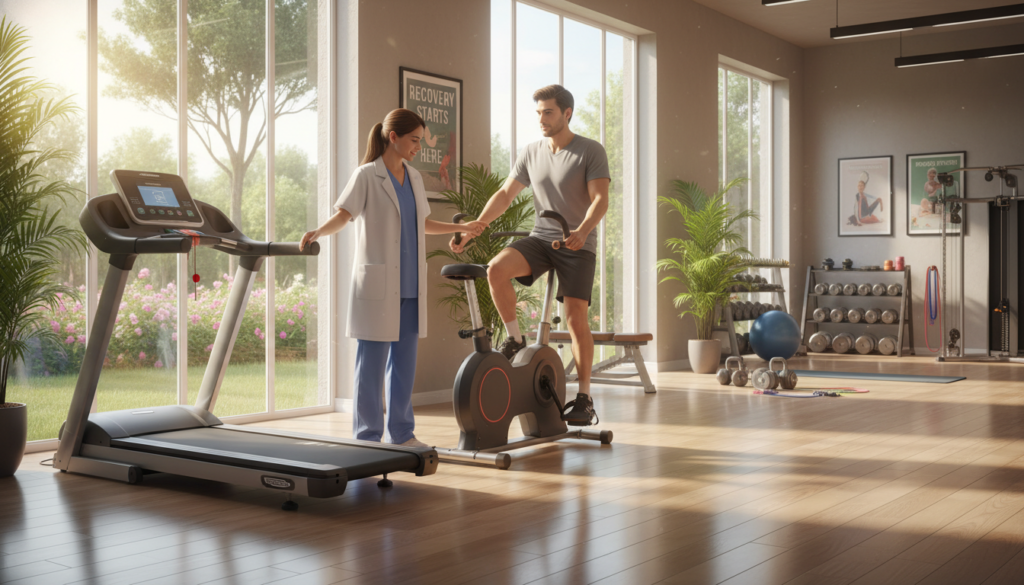
Choosing the right equipment is key when recovering from an injury. Finding the right balance between a treadmill and a stationary bike for low-impact cardio helps keep your heart rate up without stressing your healing tissues too much.
When to Choose a Bike for Knee and Ankle Recovery
Stationary bikes are best for those recovering from lower-body injuries. The circular motion of pedaling is smooth and doesn’t jar your joints like running does.
Adjusting the resistance helps strengthen muscles around your knees and ankles. This method builds stability and reduces the chance of re-injury. Physical therapists often recommend it for its consistent motion.
Transitioning from Low-Impact to High-Impact Training
When your range of motion improves and pain goes away, you might want to try harder activities. Switching from a stationary bike to a treadmill needs a careful, incremental approach to handle the increased load.
Always talk to a doctor before making your workouts more intense. When comparing a treadmill vs. a stationary bike for low-impact cardio, treadmills require more core and ankle stabilization. A slow, steady increase is the safest way to add more intense training to your routine.
| Feature | Stationary Bike | Treadmill |
|---|---|---|
| Joint Impact | Very Low | High |
| Rehab Suitability | Excellent | Advanced Stage Only |
| Movement Type | Fixed/Circular | Weight-Bearing |
| Best For | Early Recovery | Performance Gains |
The choice between these machines depends on your healing stage. Using a treadmill vs stationary bike for low-impact cardio wisely means listening to your body and focusing on long-term joint health over short-term gains.
Evaluating Long-Term Consistency and Motivation
The best home gym equipment is what you enjoy using. Technical specs are important, but your long-term commitment is key to success. Choose based on what feels good to you, not just the numbers.
If you don’t look forward to working out, you won’t keep doing it. Pick a treadmill vs. a stationary bike based on what energizes you. Consistency is the secret ingredient to lasting health, and it only happens when you enjoy your workouts.
Matching Equipment to Your Personal Workout Style
Your body type and workout preferences are crucial. Some find cycling meditative, while others prefer the rush of running. Choose a machine that fits your needs to avoid burnout.
Consider your preferences. If you prefer low-impact, a stationary bike might be best. But if you love high-energy runs, a treadmill might be a better option. Listen to your body to make a choice that lasts.
Overcoming Boredom with Interactive Training Features
Modern tech has changed the treadmill vs stationary bike debate. Many machines now have interactive screens for virtual workouts. These features make your routine more engaging.
These tools also help track your progress and compete with friends. Whether you pick a treadmill or a stationary bike, adding variety keeps you motivated. By keeping your routine fresh, you’ll see better health and higher motivation every day.
Conclusion
Choosing the right equipment is all about you. It’s about your body, the space you have, and how you like to work out. The debate between a treadmill and a stationary bike often focuses on numbers. But your success comes from sticking to your workout routine over time.
Every user has their own reasons for choosing between a treadmill and a stationary bike. If you love intense workouts, a treadmill might be a good fit. If you’re looking to protect your joints, a stationary bike could be the better choice. Brands like Peloton or NordicTrack make sure you stay engaged, no matter your choice.
Your fitness journey is unique. Choosing between a treadmill and a stationary bike is just the beginning. Think about your home and your physical needs to make a smart choice. A good investment in a treadmill or a stationary bike means showing up for your workouts every day.
Being consistent is more important than how hard you work out. Whether you pick a treadmill or a stationary bike, your dedication is key. Use this guide to help you decide. Buying a treadmill or a stationary bike is a promise to yourself. Make your choice with confidence today.