
Are you tired of spending hours in the gym without seeing results? Many think more time lifting is needed to build muscle faster. But science says quality often outweighs quantity in fitness.
Using a two-set-to-failure approach can help you grow muscle faster while saving gym time. This method uses low-volume training to safely push your body to its limit. Studies show that even with lighter weights, reaching exhaustion can lead to significant muscle hypertrophy.
This high-intensity training style focuses on perfect form and intensity. It’s great for both beginners and experienced athletes. By training to failure, every rep counts towards your goal. Learn how this strength training can change your workout routine and master workout-to-failure sessions.
Key Takeaways
- Prioritize intensity over total volume to stimulate growth effectively.
- Scientific data shows that lighter loads produce results similar to those of heavier loads when fatigue sets in.
- This method is ideal for those seeking time-efficient exercise solutions.
- Focusing on fewer, harder efforts helps prevent overtraining and burnout.
- Consistent application of these principles leads to sustainable long-term progress.
The Philosophy of Two Sets to Failure Training to Failure High-Intensity Training HIT Workout
Switching to a two-sets-to-failure method changes how you think about training. Many believe that long gym sessions are key to a big physique. But, fitness science shows that focused intensity works better than just doing more.
Understanding the Shift from Volume to Intensity
Old-school hypertrophy training might have you doing 28-30 sets per muscle group per week. This can work, but it often leads to burnout and poor workout recovery. By doing just two sets to failure, you can break through plateaus without too much volume.
This method focuses on progressive overload by making every rep count. With fewer sets, you focus more on each movement. This is great for those who want quick, effective workouts.
Why Quality Outperforms Quantity in Hypertrophy
Muscles grow mainly from mechanical tension, not just how many reps you do. Training to failure maximizes muscle fiber recruitment, making your body adapt. This beats doing lots of reps that don’t really help.
Good weightlifting techniques focus on form and intensity, not just doing lots of sets. By pushing to failure, you keep your CNS recovery in check. This lets you perform better next time. Here’s a table showing the main differences between these training methods.
| Feature | High-Volume Training | Two Sets to Failure |
|---|---|---|
| Primary Driver | Total Workload | Mechanical Tension |
| Time Required | 60–90 Minutes | 30–45 Minutes |
| Recovery Demand | High CNS Stress | Optimized CNS Recovery |
| Best For | Endurance/Volume | Maximal Hypertrophy |
Using these gym training tips helps you see the difference between beginner vs advanced training. By focusing on intensity, you make your gym time count for muscle gain, not just fatigue.
The Physiological Benefits of Training to Failure
The science behind intense training shows why hitting volitional fatigue is key for muscle growth. When you can’t do another rep right, your body starts making big changes. This way, you build muscle well and cut down on unnecessary workout volume.
Maximizing Muscle Fiber Recruitment
Getting to volitional fatigue helps us use more muscle fibers, especially with lighter weights. In regular resistance exercise, you only use what’s needed to lift the weight. But as you get closer to failure, you use more powerful fibers to keep lifting.
These powerful fibers grow the most. Using two sets of failure training to high-intensity training hit workout methods, you make sure to exhaust them. This is way better than doing many sets that don’t fully engage your muscles.
“The intensity of the effort is the primary driver of the adaptive response, not the duration of the session.”
The Role of Metabolic Stress in Muscle Growth
Failure training also helps muscle growth by changing the muscle’s internal environment. When you do intense exercise, your muscles produce waste products, such as lactate and hydrogen ions. This waste signals your muscles to grow more.
Here are some benefits of this high-intensity workout method:
- Increased hormonal response: It helps create a better environment for growth.
- Cellular swelling: The “pump” from failure stretches your muscle fascia.
- Time efficiency: You get more from two sets of training than from long sessions.
By focusing on intense but short fitness training, you recover faster. This way, you still get the growth stimulus you need. Every rep you do helps you reach your fitness goals.
Determining Your Readiness for High-Intensity Training
Before starting a two-set-to-failure workout, check if your body is ready. This intense workout routine is for those who have a strong gym foundation. It’s not for beginners who are still learning.
Identifying Intermediate and Advanced Training Status
To get the most from this high-intensity training program, you need at least one to two years of lifting. Intermediate and advanced lifters have the skills to safely reach muscle failure. Their experience keeps their form stable, even when muscles are exhausted.
Trained athletes use this failure training regimen to overcome plateaus. When progress stops, the workout intensity helps break through. Beginners should focus on mastering volume and technique first.
Assessing Your Recovery Capacity and CNS Readiness
Recovery is as crucial as the gym work. A high-intensity workout style stresses your Central Nervous System (CNS) and requires time to heal. Feeling tired or seeing strength drops means your body needs rest.
Training effectively means balancing pushing limits and resting. Before starting, monitor sleep and energy levels. If you can’t recover, muscle growth won’t happen. Always put your health first to keep muscle failure training a part of your life.
Structuring Your Two-Set Failure Routine
Creating an effective hitting training routine means choosing the right exercises for your goals. You should work out every major muscle group twice a week. This keeps your high-intensity workout plan balanced and helps you grow consistently.
Selecting the Right Exercises for Maximum Impact
Choose exercises that work many muscles at once. Focus on squats, hinges, pushes, and pulls. These compound movements are key for maximum-effort training without excessive volume.
Every hit exercise must be done with perfect form. When you aim for muscle failure, keeping good form is crucial to avoid injury. Pick exercises that let you move fully to maximize training-to-failure benefits over time.
Balancing Isolation Movements and Compound Lifts
A good failure high-intensity training plan separates exercises by type. Use true failure workout sets for isolation exercises where form is less likely to fail. For heavy compound lifts, stop short of failure to protect your nervous system.
This approach to intense strength training lets you push hard while staying safe. By using effective training methods, you can see big results without overdoing it. Here’s how to manage intensity in different exercises.
| Exercise Category | Intensity Level | Primary Goal |
|---|---|---|
| Compound Lifts | Near Failure | Strength & Foundation |
| Isolation Movements | True Failure | Metabolic Stress |
| Accessory Work | Controlled Fatigue | Hypertrophy Focus |
Adding this high-intensity workout plan to your weekly routine helps you see your progress more clearly. Remember, strength training to failure is a tool, not a must for every rep. Balancing your intensity keeps you going strong and consistent in your fitness journey.
Step-by-Step Guide to Executing Failure Sets
The key to making big gains is how you handle muscle fatigue. To really grow, you need a muscle-building workout that demands your full attention. These advanced workout techniques ensure every rep counts toward your goal.
Mastering Proper Form Under Extreme Fatigue
Maintaining proper form is crucial in any maximum-effort workout. When you get tired, you might want to use momentum or bad posture. But it’s important to stay focused on keeping your fitness routines efficient, safe, and effective.
Even when your muscles ache, focus on slow, controlled movements. This muscle fatigue training requires you to stay focused every second. If your form starts to slip, it’s time to stop the set, even if you feel like doing one more rep.
“Intensity is the bridge between where you are and where you want to be.”
Identifying True Muscular Failure Versus Technical Failure
It’s important to know the difference between these two states for your fitness regimen. A technical failure occurs when you can’t do a rep with perfect form. This is when you should stop to avoid injury during your hit training.
True muscular failure is when your muscles can’t move the weight, no matter how hard you try. In a muscle failure workout, aim to hit technical failure first. This way, you can keep getting stronger without risking injury.
Listening to your body is key in intensity training. Stopping at the first sign of technical failure protects your joints and tissues. This careful approach lets you come back to the gym stronger for your next workout.
Safety Protocols for High-Intensity Resistance Training
Your long-term progress depends on training hard without injuries. An intense workout routine is key, but safety comes first. High-intensity exercise needs a disciplined approach to keep your body strong.

Using a two-set workout is good, but know your limits. It’s better to stop short of failure on heavy lifts.
When to Stop Short of Failure on Compound Lifts
Compound lifts like squats and deadlifts put significant stress on your body. Going to failure during fitness training can compromise your form and increase your risk of injury. Stopping a rep or two before failure keeps your high-quality hit exercise routine high.
“The goal of training is to stimulate the muscle, not to annihilate the joints. True strength is knowing when to stop before your form breaks down.”
This intensity training program lets you train hard without too much fatigue. The two-set failure regimen is effective and joint-friendly. Focusing on form over ego is the best training method.
Mitigating Injury Risk During Intense Training
Joints and connective tissues take longer to recover than muscles. A weightlifting routine can cause long-term damage if you ignore your body’s signals. Always warm up properly to prepare your tendons for heavy loads.
Doing controlled reps helps you exhaust your muscles safely. If you feel sharp pain or instability, stop right away to avoid injury. Staying healthy is key to consistent strength gains.
Optimizing Your Gym Sessions for Time Efficiency
Efficiency is key for those aiming to build muscle with a busy schedule. You don’t need to spend hours in the gym to see results. By focusing on maximizing training efficiency, you can make your fitness journey quick and easy to fit into your day.
Achieving a Full Workout in 30 to 45 Minutes
The 2-2-2 method is a game-changer for shortening gym sessions. It lets you do a full-body workout in 30 to 45 minutes by focusing on sets to failure. Instead of doing endless reps, you do two hard sets per exercise.
This method is perfect for busy professionals. It ensures every rep counts toward your goal. You’ll find that intense workout routines are more effective than long, unfocused sessions.
Managing Rest Periods for Optimal Performance
To keep optimal workout intensity, managing rest periods is crucial. When you aim for muscular failure training, your body needs time to recover. Taking two to three minutes between sets helps you perform at your best.
Skipping rest can lower your performance and prevent reaching muscle fatigue. The goal is to keep high output in every set. Proper rest leads to consistent increases in muscle fatigue, which is key for growth.
By balancing rest, you maintain optimal training intensity throughout. This makes your muscle-building workouts safe and effective. You can push your limits while respecting your body’s recovery needs during failure training.
Integrating Progressive Overload into Low-Volume Training
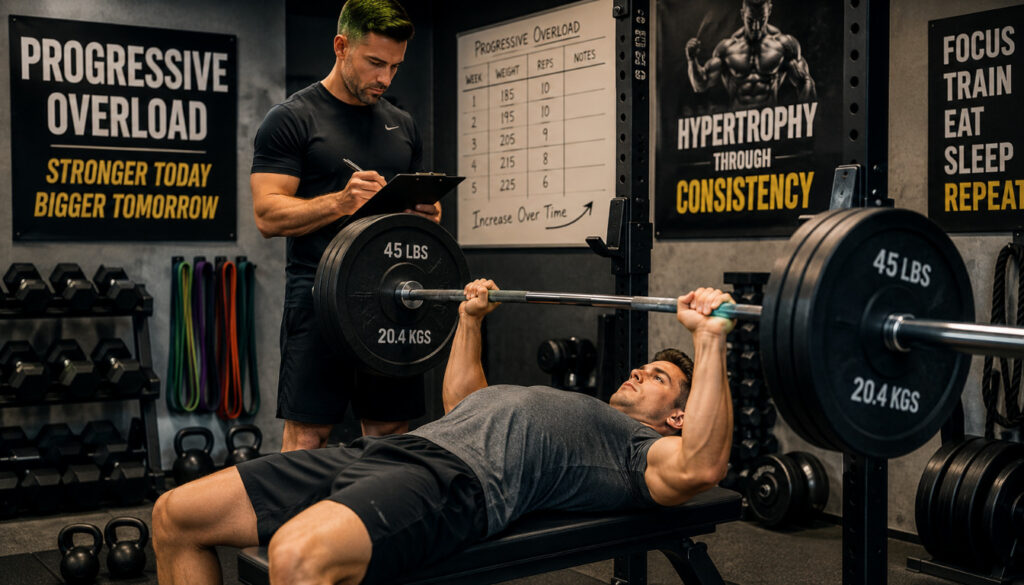
Even with less training, the key to muscle growth is still progressive mechanical tension. You don’t need lots of sets to build muscle if you focus on the quality of each rep. Using advanced training methods ensures your muscles are constantly challenged. This forces them to adapt and get stronger over time.
Tracking Your Gains Without Excessive Volume
To succeed with a two-set-to-failure approach, you must closely track your progress. Since you’re doing fewer sets, each rep is crucial. Keeping a detailed log is key for any hypertrophy-focused workout to ensure you’re on the right path.
Here are some important tracking strategies to keep moving forward:
- Record the exact weight used for each set to monitor your strength-training techniques.
- Note the number of repetitions achieved before reaching training to failure.
- Track your rest intervals to ensure consistency across your high-intensity training sessions.
- Monitor your perceived exertion to gauge if you are truly pushing to the limit of your capacity.
Adjusting Intensity and Load Over Time
Once you have a baseline, you need to increase the challenge of your hit workout without adding more volume. Aim to make the intense training method harder by changing load, tempo, and rest. This keeps your effective workout plans effective as your body adapts.
The following table shows how to increase your load for optimal muscle growth:
| Progression Method | Action | Goal |
|---|---|---|
| Micro-loading | Add 1-2 lbs per side | Incremental strength gains |
| Tempo Control | Slow the eccentric phase | Increased time under tension |
| Repetition Target | Reach the upper rep limit | Prepare for a weight increase |
By using resistance training to failure, you force your body to use more muscle fibers. Always focus on form over ego, as the failure training method works best with precision. Stay consistent with your logging, and you’ll see that less volume, when done with high intensity, is powerful for long-term growth.
Managing Recovery and CNS Fatigue
True muscle growth happens when you’re not in the gym. Low-volume training pushes you hard, but your body needs time to heal and recharge. Skipping this recovery time can lead to burnout and stop your strength training progress.
The Importance of Rest Days in High-Intensity Regimens
Doing a workout to failure is tough on your muscles and nervous system. Taking two to three rest days between workouts lets your body fully recover. This rest is key to keeping your workouts intense and helping you build muscle faster.
During rest, your body undergoes supercompensation, becoming stronger and larger. Skipping these days can lead to overtraining, which hurts your muscle hypertrophy goals.
Nutrition and Sleep Strategies for Faster Muscle Growth
Good nutrition is crucial for workout recovery. You need plenty of high-quality protein for muscle repair. Also, eat complex carbs to refill glycogen stores used up in your efficient workouts.
Sleep is vital for CNS recovery and hormone balance. Aim for seven to nine hours of sleep each night. Without enough sleep, your nervous system stays stressed, affecting your performance.
The table below shows key recovery metrics to track your progress and prepare for your next workout.
| Recovery Factor | Optimal Strategy | Impact on Growth |
|---|---|---|
| Rest Days | 2–3 days per week | High (Prevents CNS burnout) |
| Protein Intake | 1.6g–2.2g per kg of body weight | High (Muscle protein synthesis) |
| Sleep Duration | 7–9 hours nightly | Critical (Hormonal regulation) |
| Hydration | 3–4 liters daily | Moderate (Cellular function) |
Conclusion
Using the two-set-to-failure training method changes how you work out. It focuses on doing intense exercises rather than doing too many. This way, you get the most out of your workouts in less time.
Knowing the difference between beginner and advanced training is key. Fitness science shows that doing quality exercises is better than doing lots of them. By using the right weightlifting techniques, you avoid injury and push yourself harder.
These workouts are great for people with busy lives. They save you hours each week but still help you build muscle. Sticking to these methods helps you reach your fitness goals.
Keep an eye on how you’re doing and adjust your weights to stay challenged. Remember, rest is just as important as working out. Try these methods today and see how much more efficient your workouts can be.