Modern wellness technology has changed how we reach our health goals. With a smart mobile tool, you can better understand your diet than ever before. These apps give you data to make better health choices.
These tools help you build healthy eating habits or track what you eat. Features like AI and barcode scanning make tracking easy. No more guessing what to eat.
Adding a nutrition-tracking app to your life boosts your dietary awareness. Logging meals turns data into a clear path for your health. This guide will show you the key features and tips to help you thrive.
Key Takeaways
- Leverage advanced technology to monitor your daily intake with precision.
- Use barcode scanners and AI features to streamline your meal logging.
- Gain a deeper understanding of your dietary patterns to support weight goals.
- Make informed health decisions based on real-time data and metrics.
- Build sustainable habits by maintaining a consistent record of your meals.
The Science Behind Digital Nutrition Tracking
The mix of psychology and digital tools helps you make lasting changes in your diet. Using mobile health apps is more than just logging numbers. It’s a step towards focusing on your health goals.
Psychological Benefits of Self-Monitoring
Self-monitoring is key to good nutrition management. Regularly tracking your food intake helps you become more aware of your eating habits. A study of 72,084 app reviews found that these tools are easy to use and useful in daily life.
This awareness helps you make better food choices. Seeing your food choices in digital form motivates you to stick to your health goals. This is why diet tracking is so popular for lasting results.
The Role of Data in Behavioral Change
Data connects your current habits to your future goals. With diet-tracking software, you can see how your food affects your energy levels. This motivates you to keep up healthy habits.
The table below shows how digital tools compare to old ways of tracking health:
| Feature | Traditional Journaling | Digital Tracking Apps |
|---|---|---|
| Data Accuracy | Subjective/Manual | Automated/Verified |
| Feedback Speed | Delayed | Instant |
| Behavioral Insight | Limited | Advanced Analytics |
| Ease of Use | Low | High |
For dietary awareness to work, you need to be consistent. Mobile health apps make tracking food easy. This data-driven method is crucial for sustained nutrition management and successful diet tracking.
How Nutrition Tracking Apps Can Improve Your Diet, Health, and Weight Management
Digital tools do more than count calories. They give you a full view of your eating habits. With a tracking food intake app, you can make better meal choices. This leads to lasting healthy habits that boost your well-being.
Achieving Sustainable Weight Management Goals
Managing weight means balancing what you eat and how much you move. A good weight loss tracker lets you see your progress clearly. A 2021 study showed these apps are pretty accurate, missing only 2 to 5 calories per item.
This accuracy helps keep your diet on track. By tracking daily calories, you avoid guessing at your diet. This steady approach helps you reach your weight goal in a healthy way.
Optimizing Macronutrient Ratios for Performance
Macro tracking helps improve your body’s shape. It’s great for athletes or anyone wanting more energy. A macro-tracking tool balances protein, fat, and carbs to meet your body’s needs.
Using a meal-planning app to maintain these ratios boosts your health and performance. It moves you from restrictive diets to a balanced eating style. This nutritional monitoring helps you reach your best physical state.
Monitoring Micronutrient Intake for Overall Wellness
Good health isn’t just about calories; it’s about the quality of the food you eat. Micronutrient tracking ensures you get vital vitamins and minerals. When you track meals and snacks, you spot diet gaps you might miss.
A detailed nutrition log guides your health long-term. Regular meal logging helps you understand the nutrient value of your food. This dietary awareness helps prevent deficiencies and boosts your energy.
| Tracking Focus | Primary Benefit | Best For |
|---|---|---|
| Calorie Counting | Energy Balance | Weight Management |
| Macro Tracking | Body Composition | Performance Goals |
| Micronutrient Tracking | Overall Wellness | Long-term Health |
| Meal Logging | Dietary Awareness | Habit Formation |
Key Features to Look for in a Modern Food Tracking App
In 2021, over half of mobile phone users downloaded health apps. With so many choices, picking the right food tracking app is key. A good meal tracking tool should make your life easier, not just track calories.
AI-Powered Meal Recognition and Image Scanning
Artificial intelligence has changed many healthy eating tools. Now, apps use AI to recognize food from photos. This makes meal logging quick and easy for those with busy lives.
Using a meal tracking app with visual recognition saves time. It’s great for those who want to track meals and snacks without typing for hours. It makes tracking food a breeze.
Integration with Wearable Fitness Technology
A top food tracker app should work well with other devices. When it syncs with a fitness watch, it shows your energy balance. This helps you see how your activity affects your nutrition.
Choosing a track-your-food-intake app that syncs data is important. It keeps your health metrics consistent across devices. This is a key feature of today’s top food-tracking apps. It helps you understand your metabolic health better.
Database Accuracy and Verified Nutritional Information
The quality of a meal logging app depends on its food database. Look for apps with verified nutritional data for accurate logs. Many top food logging apps include a barcode scanner for quick checks.
Good data means fewer mistakes. Using a healthy eating app with a reliable database boosts your confidence in your diet. Here’s a quick guide to choosing the right food-tracking app.
| Feature | Benefit | User Impact |
|---|---|---|
| AI Recognition | Fast logging | High consistency |
| Wearable Sync | Holistic data | Better insights |
| Barcode Scanner | Verified info | Increased accuracy |
| Database Size | Broad coverage | Fewer manual entries |
Mastering the Digital Food Journal: Best Practices for Accuracy
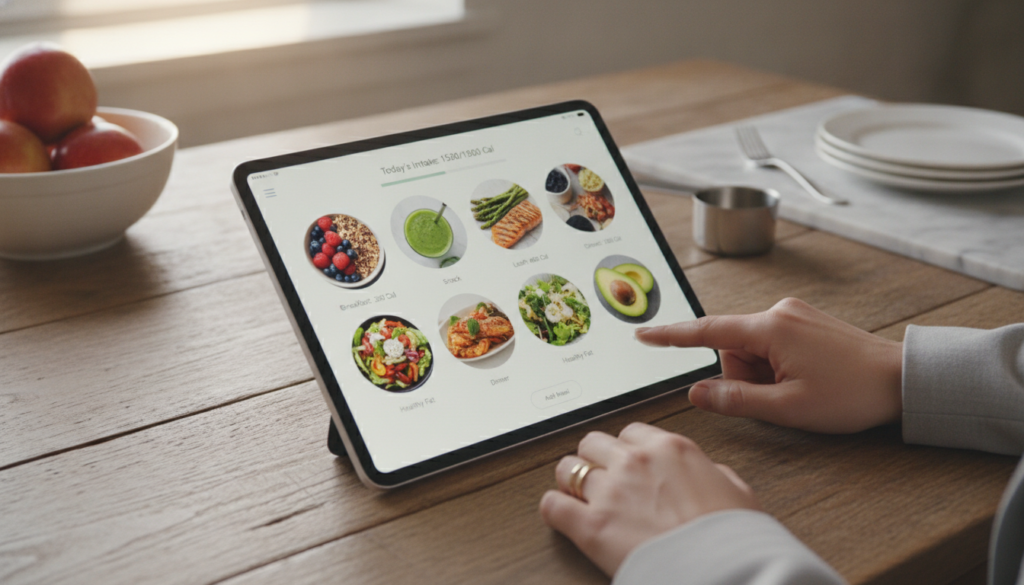
Logging your food digitally is a big step for your health. A digital food journal maps your habits. It’s all about accuracy for real health insights.
The Importance of Consistent Logging
Being consistent is key with a food diary app. A 2014 study showed app users were more consistent than paper users. Daily logging keeps your nutrition log true to your life.
Logging every meal stops you from forgetting snacks or hidden calories. A consistent log is a powerful tool for staying on track. It reveals patterns you might miss otherwise.
Strategies for Estimating Portion Sizes
Estimating food portions is crucial for users of food log apps. Use everyday objects as guides. For example, a protein serving is like a deck of cards, and veggies are like a baseball.
Be honest with yourself about these estimates in your diet journal app. If unsure, overestimate to keep your meal diary realistic.
Utilizing Barcode Scanners for Packaged Foods
Modern tech makes tracking easy. A barcode food scanner instantly adds nutritional data. It’s a must-have in top food diary apps.
Just scan the label to fill your online food log with exact data. It’s perfect for those who want a nutrition diary without the hassle of manual entry. These tools keep your diet diary accurate and simple.
Common Pitfalls to Avoid When Using a Calorie Tracker
Using a calorie-counting tool is more than just logging numbers. It’s about being aware of common traps. These tools are great for weight management, but they can lead to frustration if you forget your health goals. Stay mindful of how you use your data to keep your experience positive and lasting.
Avoiding Obsessive Tracking Behaviors
It’s easy to get too focused on hitting exact numbers every day. But calorie counting should guide you, not control your happiness. If you feel anxious about missing a number or deviating from your plan, it’s time to take a step back.
- Focus on long-term trends rather than daily fluctuations.
- Remember that your weight loss tracker is a tool, not a judge of your character.
- Prioritize your mental well-being alongside your physical progress.
The Danger of Underestimating Liquid Calories
Many forget to track calories from drinks daily. Morning lattes, sweetened teas, and post-workout smoothies are high in calories. A diet tracker app only works if you log every drink.
People often think drinks don’t count toward their total. But these calories can quickly add up, slowing your progress. Always log these items right after drinking to keep your tracking accurate.
Managing Hidden Ingredients in Restaurant Meals
Dining out is a challenge for calorie counters. A 2021 study showed people often underreport their energy intake, especially when eating out. Hidden fats, oils, and sauces are hard to guess.
When logging restaurant food in your best calorie-counting app, overestimate your portion sizes. This helps you stay on track even without exact nutritional labels. Using a daily calorie counter this way helps you enjoy social dining without harming your health goals.
Leveraging Data for Long-Term Metabolic Health
Changing how you view food is key to better health. Tracking helps right away, but it’s the long-term insights that really matter. By using your app like a lab, you can find out what foods work best for you.
Identifying Patterns in Energy Levels and Mood
Your daily logs show more than just numbers. They reveal how your body reacts to food. A 2022 review found that 60% of people improved their diet, eating more veggies and less salt. These changes often lead to better energy and mood.
Start by tracking how you feel after meals. If you always feel tired after sugary lunches, your data is telling you something. Recognizing these patterns helps you link food to how you feel and think.
Adjusting Dietary Habits Based on App Insights
Once you spot these trends, you can make smart changes. Use your data to try different foods or meal times. If you find that protein keeps you full, adjust your meals to include more.
This isn’t about being perfect. It’s about getting better over time. Small changes can lead to lasting results. These habits will become second nature, making it easy to stay healthy without constant effort.
Transitioning from Tracking to Intuitive Eating
The goal of tracking is to learn so you can stop logging every meal. As you listen to your body, you won’t need to track every bite. You’re training your intuition with the data you’ve collected.
Intuitive eating means trusting yourself to choose healthy foods based on what you’ve learned. Use your app as a tool now and then, not every day. This marks the end of your wellness journey, where healthy habits are part of your everyday life.
Examples of Popular Nutrition Tracking Apps
Finding the right tool for your health journey is key to reaching your goals. With many nutrition-tracking apps available, picking one that fits your lifestyle is crucial. Whether you need a simple calorie counter or a detailed personalized nutrition tracker, here are some top choices.
“The best diet is the one you can stick to, and the right technology makes that consistency much easier to maintain.”
MyNetDiary for Comprehensive Nutrient Analysis
MyNetDiary is known for its comprehensive nutrient analysis and easy-to-use design. It’s a great food diary app for those who want detailed insights without hassle. It makes logging your food a smooth part of your day.
Cronometer for Micronutrient Precision
Cronometer is the go-to for micronutrient tracking. It offers unmatched accuracy for vitamins and minerals. It’s a top choice for users who focus on health data. This best nutrition tracker helps you count calories and nutrients.
MyFitnessPal for Extensive Food Databases
MyFitnessPal is a leading food-tracking app with a large database of foods. It’s easy to find almost any food, making logging a breeze. It’s a reliable calorie counter app for all levels.
MacroFactor for Dynamic Calorie Adjustments
MacroFactor is great for macro tracking with a science-backed approach. It adjusts calories based on your weight trends, not formulas. This top food logging app is ideal for those who want a flexible, data-driven diet.
- MyNetDiary: Best for user-friendly, comprehensive analysis.
- Cronometer: Best for precise micronutrient monitoring.
- MyFitnessPal: Best for an extensive, global food database.
- MacroFactor: Best for adaptive, goal-oriented macro adjustments.
Integrating Technology into Your Daily Wellness Routine
Creating a lasting wellness routine needs more than just determination. It requires the right digital tools. By adding wellness technology to your daily life, you create a supportive environment for your health goals. The goal is to make these tools a natural part of your life, not a source of stress.
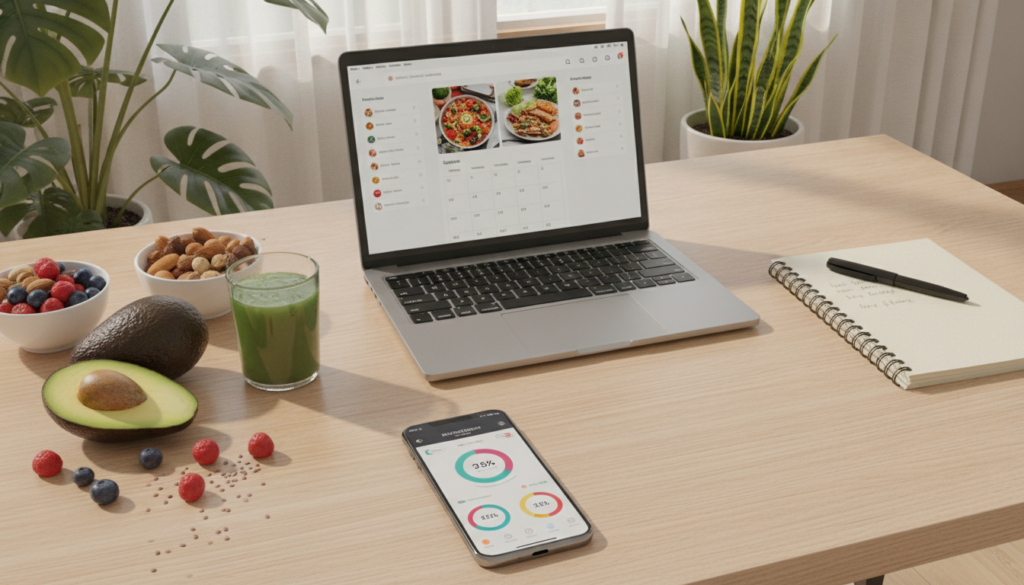
Consistency is key when using a food-tracking app. Regularly logging your meals and activities gives you insights into your body’s responses. This data-driven approach keeps you accountable and motivated on your path to a healthy lifestyle.
Setting Realistic Milestones for Success
Success in health journeys is not about quick changes. Instead, aim for small, achievable milestones. These milestones, like hitting a protein target or logging consistently, build confidence for lasting change.
Using a fitness nutrition app helps you see these milestones clearly. Breaking down big goals into daily tasks makes them less overwhelming. Remember, progress is often uneven, and being flexible keeps you moving.
“Consistency is the bridge between goals and accomplishment. Small, daily actions are the foundation of a healthy lifestyle.”
Syncing Nutrition Data with Exercise Logs
Linking your nutrition data to exercise logs provides a complete view of your daily energy intake and output. This integration shows how the food you eat affects your physical activity. A reliable diet and exercise tracker connects your kitchen habits with your gym performance.
Seeing your data in one place helps you make smart adjustments. For example, you might find your energy improves when you balance your macronutrients well. This awareness is a powerful tool for improving your physical health.
| Tracking Metric | Benefit | Frequency |
|---|---|---|
| Calorie Intake | Energy Balance | Daily |
| Exercise Duration | Cardiovascular Health | Weekly |
| Hydration Levels | Metabolic Function | Daily |
| Sleep Quality | Recovery Speed | Weekly |
The best diet and exercise tracker is one that fits easily into your life. Prioritize simplicity and accuracy to make your fitness nutrition app a helpful tool. Embrace the data, stay consistent, and enjoy the journey of becoming a better version of yourself.
Conclusion
Nutrition tracking apps are game-changers. They give you the data and awareness you need to hit your health and weight goals. These apps turn vague eating habits into clear, doable steps.
By focusing on consistency and long-term trends, you learn what your body really needs. This journey goes beyond just logging what you eat. It’s about understanding yourself better.
Apps like MyNetDiary, Cronometer, MyFitnessPal, and MacroFactor offer the feedback you need for lasting success. They help you improve your metabolic health or create a balanced diet.
Start your journey of self-discovery today. Let these powerful tools guide you to make healthy choices every day. Your path to a better lifestyle begins with the data you collect now.