Do you feel stiff after sitting at your desk or struggle with simple chores? You’re not alone. Many people focus on growing muscles in isolation. But functional fitness offers a better way.
This approach helps you move easily by mimicking real-life movements. It’s about how you move at home or work.
By focusing on real-world strength, you prepare your body for life’s demands. Functional training keeps your joints healthy and muscles strong. It’s about lasting health and feeling capable in your own skin.
Embracing this everyday functional fitness mindset changes how you handle physical tasks. Join the everyday fitness movement today. Unlock your full potential and enjoy a more active lifestyle.
Key Takeaways
- Focus on natural body patterns to improve your quality of life.
- Build resilience to perform daily tasks without pain.
- Prioritize mobility and balance to prevent future injuries.
- Adopt a sustainable approach that fits into your busy schedule.
- Enhance your physical independence for years to come.
Understanding the Core Principles of Functional Fitness
Your body is made to work together, not as separate parts. Traditional gyms focus on looking good, but holistic fitness looks at how your body works as a whole. By focusing on movement-based training, you get your body ready for life’s surprises.
Why Movement Patterns Matter More Than Isolated Muscles
Most workouts focus on single muscles, but real life doesn’t work that way. Your body needs functional movement patterns for tasks like lifting or reaching high shelves.
Movement-based fitness trains your body to work together. This movement training makes you strong and stable for everyday tasks. It keeps your body ready for anything without getting hurt.
The Shift from Aesthetic Training to Practical Capability
Switching from looks to function opens up big functional fitness benefits. True strength comes from training for real-life tasks, not just looks. A holistic fitness approach makes sure your strength is useful, not just visible.
Choosing full-body workouts connects the gym to real life. You’ll see functional training benefits everywhere, from better posture to more energy. This shift prepares your body for today’s challenges.
Mastering the Functional Fitness, Functional Training, Real-World Strength, and Everyday Fitness Move
You can change your daily life by focusing on seven key movements. These movements help you do everyday tasks better. They make carrying groceries and climbing stairs easier.
By focusing on these movements, you keep your body strong and healthy. It also helps avoid common injuries.
Defining the Seven Fundamental Human Movements
To create a good functional training program, you need to know how your body moves. These seven patterns are the basics for all functional exercises:
- Squat: It’s key for lower body strength and hip flexibility.
- Lunge: It helps with balance and single-leg strength.
- Push: It’s needed for moving things away from you.
- Pull: It’s important for keeping your back healthy and maintaining good posture.
- Hinge: It’s how you safely pick things up from the ground.
- Carry: It builds grip and core strength for fitness in daily life.
- Rotate: It’s important for twisting motions in sports and at home.
“Movement is the song of the body, and functional training is the rhythm that keeps it playing beautifully throughout your entire life.”
How to Integrate These Patterns into Your Weekly Routine
You don’t need to spend hours in the gym to include these functional movement patterns in your routine. Start with two or three sessions a week. Each session should focus on one or two of these movements.
It’s important to do these movements well, not just a lot. This way, you move safely and effectively.
Being consistent is key to building practical strength that lasts. As you get better, you can make the movements harder or add weights. The goal is to make your life outside the gym easier and more fun.
Developing Lower Body Power with Squats and Lunges
Your legs play a big role in how you move around. Functional movements prepare you for daily activities. Strength training helps keep your muscles and joints strong and flexible.
Perfecting the Bodyweight Squat for Daily Mobility
The squat is a key strength-training exercise. It boosts your hip and knee health. It’s like sitting down and standing up, which helps you stay independent.
To do it right, keep your chest up and your weight balanced. Move your hips back as if sitting. Regular practice of these bodyweight exercises lays a strong foundation for more challenging workouts.
Utilizing Lunges to Improve Balance and Coordination
Lunges help with one-leg stability, unlike squats. They work each leg independently, which is key for everyday activities. Walking or climbing stairs, for example, requires shifting weight.
- Enhances core engagement during movement.
- Corrects muscle imbalances between the left and right sides.
- Improves overall stability for athletic performance.
Common Form Mistakes to Avoid During Leg Training
Poor form during bodyweight workouts can lead to injuries. Many people let their knees bend too much in squats. Make sure your knees are over your toes for proper alignment.
Another mistake is taking steps that are too short in lunges, which can hurt the front knee. Always focus on doing it right, not on how many you can do. Avoiding these mistakes helps you train safely and effectively.
Building Upper Body Strength Through Pushing and Pulling
Building upper-body strength is more than just looks; it’s about being ready for real-world tasks. Whether you’re reaching high shelves or carrying heavy bags, your muscles need to work together. This ensures your upper body is as strong as your lower body for real-world fitness.
Pushing Exercises for Real-World Tasks
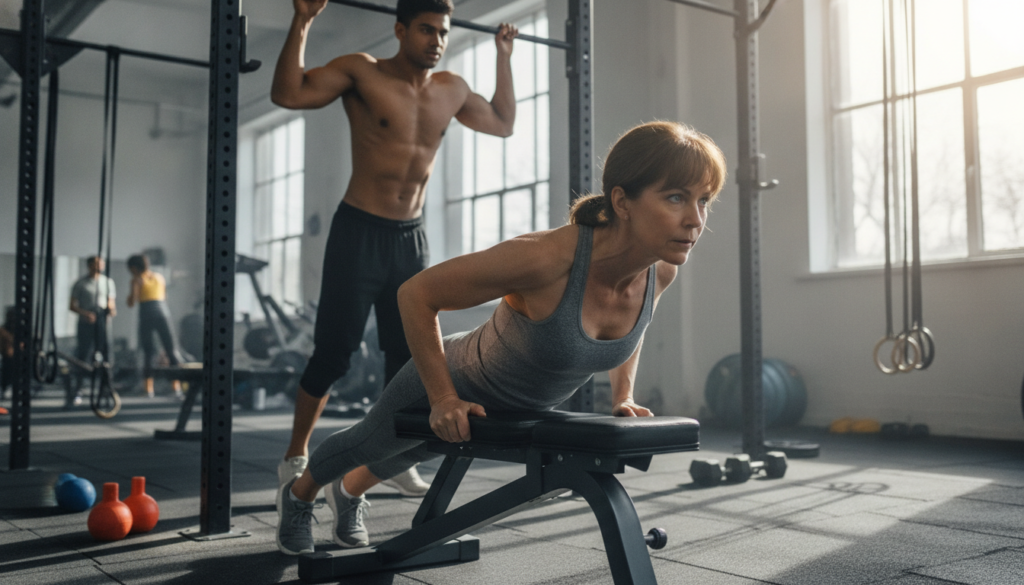
Pushing exercises are key for practical strength training. They help you move objects away from you or stay stable when falling. These exercises make your body stronger for daily life.
Try simple exercises like push-ups or overhead presses. They work your chest, shoulders, and triceps. Regular practice keeps you independent in daily tasks.
Pulling Movements to Enhance Posture and Back Health
Pulling exercises are also crucial for good posture. They work your back and biceps, often ignored in today’s sedentary lives. Regularly doing pulling exercises is important for functional strength training.
When you do rows or pull-ups, you fight against slouching from sitting too much. Strengthening your back muscles improves your overall fitness and protects your spine. Focusing on these exercises will greatly boost your strength training results.
Enhancing Core Stability and Rotational Power
Your body uses rotational force every day. A strong center helps your limbs move safely. It gives you the strength and stability needed for daily tasks.
Why Rotational Movements Are Essential for Daily Life
Many daily actions, like reaching for a seatbelt, involve twisting. These movements need power from the center. Without training, they can cause strain.
Rotating well improves your balance and coordination. A strong core lets you move with confidence. This keeps your body ready for a busy life.
“The core is the bridge between your upper and lower body; if the bridge is weak, the entire structure suffers under pressure.”
Exercises to Strengthen Your Core for Injury Prevention
Good core-stability training is more than just sit-ups. Focus on exercises that challenge your rotation control. These prepare you for life’s twists.
Try these exercises to help prevent injuries:
- Pallof Press: This teaches you to resist rotation, keeping your spine stable.
- Woodchoppers: Using a cable, this builds explosive power in a diagonal plane.
- Bird-Dogs: A simple floor exercise that boosts cross-body coordination and deep abdominal strength.
Doing these exercises regularly strengthens your core. This protects your back and hips. Remember, it’s the quality of your movements that matters, not the weight you lift. Focus on control for long-term health.
The Importance of Loaded Carries for Functional Longevity
Building a body that lasts is more than just lifting weights in one place. Loaded carries connect gym exercises to daily life. They strengthen and stabilize your body, protecting your joints and muscles.
How Farmer Carries Improve Grip and Posture
The farmer carry is simple yet powerful. Holding heavy weights at your sides makes your body work hard to stay straight. This helps strengthen your core and improve your posture.
These loaded carries are great for grip strength, too. A strong grip means a stronger body. Holding dumbbells or kettlebells strengthens your forearms and hands, making everyday tasks easier.
Integrating Carries into Your Existing Workout Program
You don’t need to change your whole workout to benefit from these exercises. Just add a few sets of loaded carries to the end of your strength sessions. Start with a weight that lets you walk for 30 to 60 seconds without losing form.
Being consistent is key to seeing results. As you get better, you can walk further or carry heavier weights. Use the table below to see how different loaded carries target different fitness areas.
| Carry Variation | Primary Benefit | Difficulty Level |
|---|---|---|
| Farmer Carry | Grip and Posture | Beginner |
| Suitcase Carry | Core Anti-Lateral Flexion | Intermediate |
| Overhead Carry | Shoulder Stability | Advanced |
| Zercher Carry | Upper Back Strength | Advanced |
Improving Mobility and Flexibility for Pain-Free Living
Achieving a pain-free life starts with moving your body well. Strength is important, but your joints need to be flexible too. Functional mobility training helps you move freely without pain.
Dynamic Stretching Techniques for Better Range of Motion
Unlike static stretching, dynamic exercises get you ready for activity. They move your muscles in a controlled way. This increases blood flow and warms up your body.
Adding these exercises to your warm-up can boost your performance. They’re great for any activity and help keep your joints moving smoothly. Staying consistent is key to better movement.
“Movement is a medicine for creating change in a person’s physical, emotional, and mental states.”
Addressing Tightness in Hips and Shoulders
Modern life often makes hips and shoulders tight. Mobility training can help. It opens up your hip flexors and thoracic spine, easing lower back pain and improving posture.
The table below shows the difference between static stretching and dynamic exercises. It helps you pick the right choice for your dynamic fitness goals.
| Feature | Static Stretching | Dynamic Exercises |
|---|---|---|
| Primary Goal | Relaxation | Preparation |
| Best Timing | Post-Workout | Pre-Workout |
| Movement Type | Holding Still | Controlled Motion |
| Joint Benefit | Increased Length | Improved Function |
By focusing on functional mobility training, you’re investing in your health. Dynamic workouts are for everyone, not just athletes. Start small, stay consistent, and enjoy a body that moves easily.
Tailoring Functional Training for Different Fitness Levels
Functional training is great because it fits your current fitness level. It doesn’t matter if you’re just starting or have been working out for years. Your fitness program can be tailored to meet your fitness goals. This way, your fitness training stays safe and effective for a long time.
Adapting Movements for Beginners and Older Adults
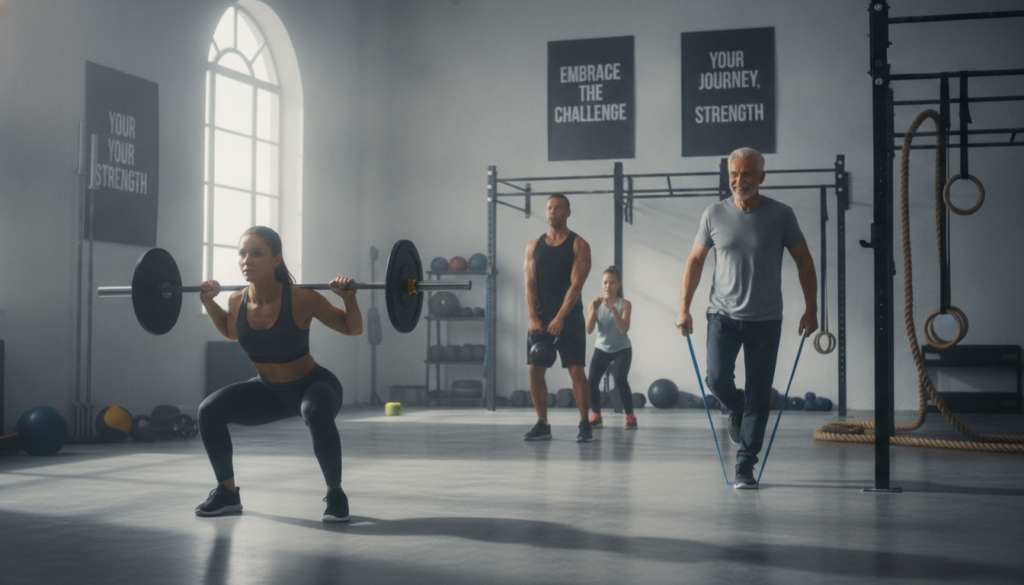
If you’re new to working out or focusing on healthy aging, building a strong base is key. Start with mobility training to improve joint movement. This is especially helpful for seniors’ fitness, as it supports everyday activities.
Modify exercises to make them safer and more stable. For instance, use a chair for support in squats or do wall-based pushes. This lets you learn the movements without risking injury. Consistency is key, so start slow and focus on feeling the muscles work.
Scaling Intensity for Athletes and Advanced Trainees
If you’ve got the basics down, functional fitness programs can get much harder. Increase the challenge by adding weights, moving faster, or cutting down rest time. This helps you reach your fitness goals by pushing your body to adapt.
Advanced trainees should aim for complex, multi-planar movements. These require coordination and power. Try explosive moves or unstable surfaces to challenge yourself while keeping the focus on functional fitness for all levels. Even at the top level, the goal is to improve your everyday abilities and physical strength.
Preventing Injuries Through Consistent Movement Practice
Regular movement is key to fighting off daily wear and tear. Unlike gym routines that focus on looks, functional movement training focuses on keeping your body healthy. It prepares your body for real-life demands and supports your joints and tissues.
How Functional Training Protects Your Joints
Your joints need strong, stable muscles. Gym routines often miss this, focusing too much on single muscles. Functional training, however, works on movements that use many muscles at once.
This method helps prevent injuries by fixing imbalances early. It keeps your joints safe and your body balanced. Here’s how it helps:
- Improved Joint Alignment: It makes sure your bones and ligaments work together smoothly.
- Enhanced Proprioception: You learn to sense your body more effectively, reducing the risk of falls.
- Balanced Muscle Development: It helps avoid muscle imbalances, reducing injury risk.
Building Resilience for Everyday Activities
Movement-based fitness prepares your body for daily tasks. It’s about moving confidently, whether carrying groceries or climbing stairs. This training supports healthy aging and helps you stay independent.
It’s not just for seniors; it’s for everyone. Functional movement gets your body ready for life’s surprises. This approach keeps you strong and stable, supporting healthy aging and preventing injuries.
Choosing functional movement training is a smart move for your future. It’s not just about looking good; it’s about living freely. Stay consistent, and your body will always be ready for whatever you do.
Creating Your Personalized Functional Exercise Routine
You can boost your daily fitness by creating a functional workout routine that suits you. A good fitness program guides you and keeps you on track to reach your fitness goals. It turns exercise into a way to live longer, not just a task.
Structuring Your Weekly Training Schedule
For a balanced functional exercise routine, mix up your workouts and rest days. Aim for three to four sessions a week that work your whole body. This keeps you ready for any challenge.
Here’s a weekly plan for your functional fitness workouts:
- Monday: Do squat exercises and push exercises to strengthen your legs and arms.
- Wednesday: Try lunges, pulling exercises, and rotational exercises to improve balance and strengthen the core.
- Friday: Use functional conditioning with loaded carries and bodyweight exercises to boost stamina.
- Weekend: Spend time on active recovery or light daily functional fitness practices like walking or yoga.
Tracking Progress Beyond the Scale
Don’t just rely on a scale to measure your success. True everyday fitness shows in how you move, feel, and perform daily tasks. Tracking your movement patterns gives you a better view of your physical abilities.
“Success is not measured by what you accomplish, but by the opposition you have encountered and the courage with which you have maintained the struggle against overwhelming odds.”
Keep a simple log to track your functional workout routines. Note any improvements in form, weight carried, or ease in total body workout movements. Focusing on these metrics makes your fitness training rewarding and lasting.
Conclusion
Your dedication to a holistic fitness journey changes how you see the world. By choosing a functional exercise routine, you get more than just physical strength. You open the door to a life filled with ease, longevity, and confidence.
Adopting a holistic training mindset helps your body perform everyday tasks more effectively. These benefits go beyond the gym. You’ll notice better posture and less pain during simple tasks.
Adding dynamic exercises to your routine leads to lasting wellness. This workout adapts to your needs, making fitness accessible to everyone. You deserve a body that supports your goals at every stage of life.
Focus on functional mobility training to stay independent and full of life. A holistic fitness approach keeps your joints and muscles in top shape. Begin your dynamic fitness journey today for lasting benefits.
Consistency is key to your progress. Small, thoughtful actions build a vibrant life. Take control of your health and enjoy the freedom of a strong, capable body.