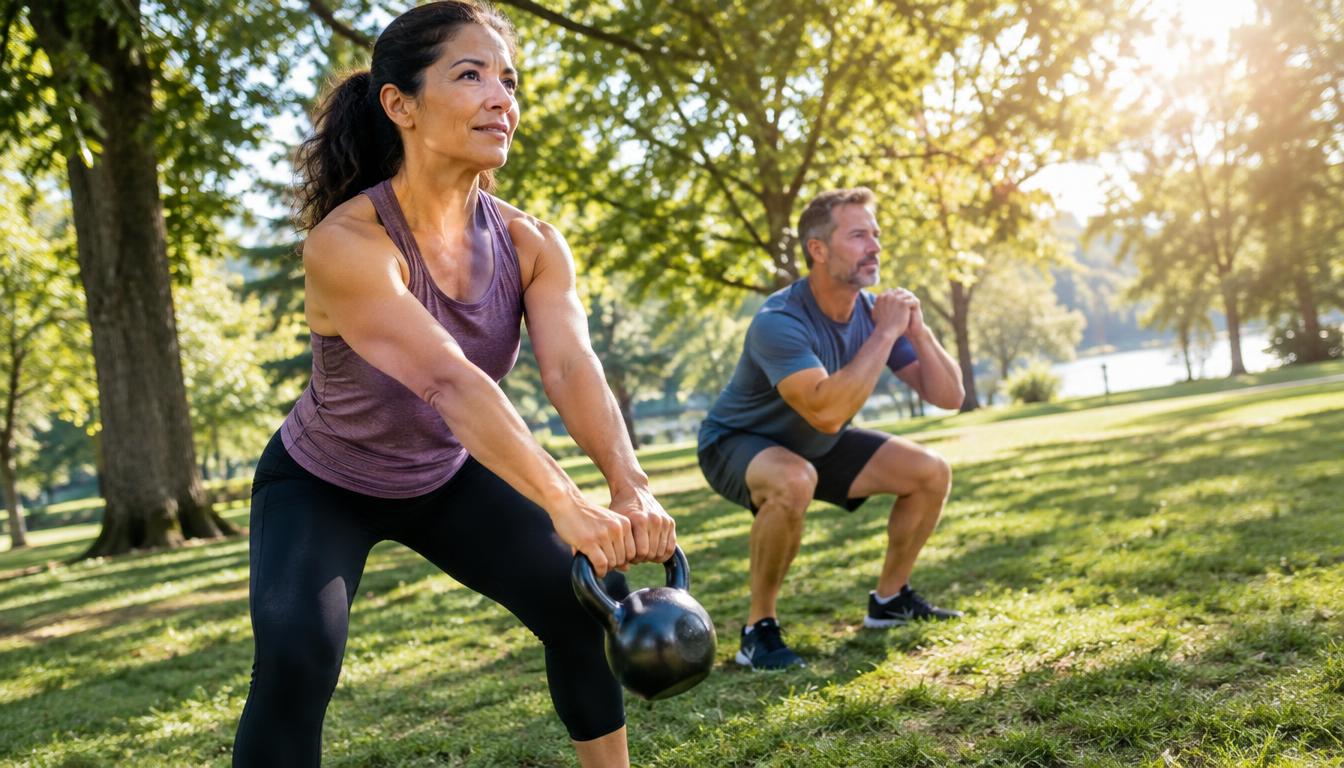
Many people see the gym as a place to shape muscles or burn calories. Yet everyday fitness prepares your body for real-life demands. This focus helps you stay capable and pain-free for decades.
Functional fitness is a smart investment in your future. These movements mimic daily tasks, like carrying heavy groceries or climbing stairs, rather than isolating muscles. This approach supports joint health and stability, not just appearance.
Expert Adam Hewitt says the best workouts build resilience, not only burn energy. Adding longevity exercises helps you stay independent as you age. Functional strength training helps your body handle physical setbacks more easily.
Ultimately, functional fitness supports more than today’s workout. It helps your future self move with confidence and ease.
Key Takeaways
- Prioritize movement patterns that mimic real-life activities to improve daily mobility.
- Build resilience to prevent injuries during routine tasks.
- Shift your mindset from aesthetic goals to long-term physical independence.
- Use multi-joint movements to support better stability and structural integrity.
- View your physical routine as a proactive investment in your future quality of life.
Functional Fitness, Longevity Exercises, Joint Health, Functional Strength Training: Why Training for Real Life Is Gaining Ground
The way you train today shapes how easily you move tomorrow. Many people now favor functional movement patterns over routines focused only on appearance. This change supports active, independent, and pain-free living later in life.
The shift from appearance-focused workouts to everyday performance
For years, fitness focused on muscle size and body composition. Looking good is a common goal, but it can ignore the practical reality of daily movement. With full-body functional exercises, you train muscles to work together, not alone.
This approach builds strength that supports your joints and improves your quality of life. It prepares your body for real-world tasks, such as lifting heavy boxes or playing with grandchildren.
What current fitness and healthy-aging conversations emphasize about movement quality
Modern experts say how you move matters as much as the weight you lift. A high-quality healthy-aging workout builds stability, mobility, and coordination to help prevent joint pain. These skills help keep your joints healthy and strong under stress.
This approach matters greatly for people who want to stay independent. Whether you create a functional exercise program for seniors or simply stay fit, the goal is the same. Build a body that is capable, durable, and ready for anything.
Why gym strength does not always transfer to lifting, reaching, walking, or climbing
Many people assume machine strength transfers directly to real-world tasks. Machines lock your body into fixed paths, so your stabilizing muscles do less work. Daily activities require balance, reaching, and spinal stability at the same time.
True functional strength helps your brain and muscles work together across several joints. Movements that mimic daily life connect gym training with the outside world. This training can make chores and recreation easier and safer.
Where Traditional Machine-Isolated Workouts Leave Gaps
Fixed-path machines provide control, but they rarely prepare your body for daily life’s chaos. When you train for real life, you must account for how your body naturally meets the world. Machine-only workouts can separate gym performance from real-world physical ability.
How fixed-path machines limit coordination between joints and muscles
Most gym machines lock your body into one specific, repeated path. This design reduces the need for stabilizing muscles to work with your main movers. When one muscle group works alone, you miss the essential neural communication needed for fluid, multi-joint movement.
Real resilience depends on compound movements that make your body work as one unit for longevity. Removing balance-demanding exercises bypasses the systems that keep you upright and agile. That is why many people feel strong on a leg press but struggle on uneven ground.
Why muscle size alone cannot guarantee balance, stability, or mobility
Many people think larger muscles guarantee better physical performance. You may have strong muscles but still need joint-stability exercises to protect your body during daily tasks. Muscle size does not teach your nervous system to react to sudden shifts in weight or posture.
Without proprioceptive challenges, muscles may be strong while joints stay vulnerable. A well-rounded approach values movement quality over total weight lifted. This makes your strength useful when you need it most.
The real-world demands that isolated exercises often fail to reproduce
Life rarely gives us balanced, predictable resistance. Daily tasks often involve shifting forces. Isolated exercises cannot copy a crowded sidewalk or lifting a heavy box from an awkward position.
Uneven loads, changing surfaces, awkward angles, and sudden movements
Heavy grocery bags rarely hang evenly or stay stable. Use core stability exercises to keep your spine from twisting under pressure. These tasks force your body to adapt to uneven ground and sudden direction changes, unlike standard machine circuits.
When machine-based training still has a useful role in a balanced routine
Machines still have a useful place in a balanced routine. They can isolate a muscle during rehabilitation or build basic strength without free weights’ added complexity. A smart functional mobility routine can include both approaches.
Use machines to load one area safely during recovery or add training volume. However, isolated movements shouldn’t become your entire fitness plan. Balance machine work with dynamic, real-world training to build a strong body ready for whatever life brings.
How Multi-Joint Functional Movement Protects Your Joints
Functional training benefits reach beyond the gym because they prepare joints for the surprises of real-world movement. Moving through several planes teaches muscles to share the load. This helps active people avoid constant aches and pains.
Squats and step-ups for knee control and stair-climbing strength
Squats and step-ups teach you how to protect joints by improving knee tracking. They engage the quadriceps, glutes, and calves in a coordinated pattern. This matches climbing stairs or rising from a chair and keeps knees stable under pressure.
Hinges and deadlift patterns for hip power and safer lifting
Mastering the hip hinge is a key skill that protects your lower back during daily tasks. It shifts work to your powerful glutes and hamstrings instead of your spine. These multi-joint exercises build the strength to lift heavy grocery bags or move furniture with confidence.
Carries and core integration exercises for posture under load
Carrying heavy objects makes your core stabilize your whole frame. Holding weight on one side forces your body to resist leaning, strengthening your obliques and deep abdominal muscles. This integrated approach keeps your posture upright and resilient, even when tired.
Pushes, pulls, and reaches for shoulder stability and upper-body control
Pushing and pulling help maintain shoulder health as you age. These patterns help you reach high shelves or pull doors open without straining your rotator cuff. Adding mobility training for longevity keeps these joints fluid and responsive.
Coordinating the feet, hips, trunk, shoulders, and hands as one system
The true power of training for daily life comes from moving as one cohesive unit. Stable feet support your base, hips create power, and your trunk transfers force to your shoulders and hands. Coordinating these areas protects joints by preventing one area from taking on too much stress during complex daily activities.
Building Resilience in the Knees, Hips, Shoulders, and Spine
Building a resilient body takes more than heavy lifting; it requires attention to the joints that support daily movement. A functional fitness routine prepares your body to handle life’s physical demands with more ease and confidence.
Strengthening the stabilizing muscles around the knees
Knees often signal discomfort first when movement patterns work poorly. Target the smaller muscles that provide side-to-side stability and protect these joints. Consistent, controlled movement helps these stabilizers keep the knee joint aligned during walking, squatting, or navigating stairs.
Using hip strength to reduce compensatory stress on the knees and lower back
Strong hips power your lower body. Weak glutes and hip stabilizers force the knees and lower back to handle extra pressure. Strength training for joints shifts the load to the hips and helps reduce the risk of chronic strain.
Developing shoulder-blade control for safer reaching, carrying, and pressing
Your shoulders need stable shoulder blades during overhead reaches, heavy carries, and pressing. Scapular control creates a firm base and protects the delicate rotator cuff. It also helps your upper body move through its full range without feeling restricted or vulnerable.
Improving trunk stability so the spine can transfer force efficiently
The spine is your body’s central pillar, so it needs a strong base to transfer force safely. Core integration exercises teach your midsection to brace against external loads. This stability supports tasks like lifting a heavy box and maintaining good posture all day.
Why gradual loading supports joint health better than avoiding movement altogether
Many people think resting a sore joint helps it heal. Yet avoiding movement completely can cause stiffness and more weakness. Gradual loading—slowly increasing movement intensity—signals joints to grow stronger and more resilient over time.
How balanced strength and mobility help correct movement imbalances
True physical health combines strength and flexibility. Functional bodyweight exercises help you spot and correct uneven movement patterns before injury. This commitment to active aging fitness keeps your body capable, balanced, and ready for tomorrow’s challenges.
Functional Fitness Benefits for Injury Prevention and Chronic Pain Management
Daily life places physical demands on your body. Functional movement training builds movement patterns that help you handle unexpected stress with strength.
Reducing avoidable injuries during groceries, housework, travel, and recreation
Common aches can begin when you lift groceries or reach for a high shelf. Functional strength training methods help your muscles work together rather than in isolation. This practice makes chores feel lighter and safer for your joints.
How stronger movement patterns can limit overuse and compensatory stress
Overuse injuries may happen when one muscle group does another group’s work. More efficient movement spreads physical loads more evenly across your body. Reducing compensatory stress is a key goal of effective functional training.
The relationship between mobility restrictions, poor control, and recurring discomfort
Recurring discomfort may signal limited range of motion or poor stability. When your hips are tight, your lower back often has to work harder during simple movements. Regular mobility workouts reduce these limits, so you move with better control and less pain.
Why pain-aware exercise should be individualized rather than abandoned
Stopping all movement because of a pain twinge can be a mistake. Instead, use pain-aware exercise that respects your limits while building capacity. Adjusting your routine helps you progress without irritating sensitive areas.
When to modify an exercise and when to seek guidance from a qualified professional
Sharp or lasting pain means you should shorten the movement or lower the load immediately. If discomfort continues after these changes, consult a physical therapist or certified trainer. Professional guidance helps tailor injury-prevention exercises to your anatomy and history.
Using strength, balance, and coordination as practical injury prevention exercises
Real resilience combines strength, balance, and coordination in your weekly routine. These injury prevention exercises support your joints during daily activities. Functional training supports an active, independent future with fewer avoidable physical setbacks.
Why Functional Training Supports Mobility and Independence as You Age
Your independence later in life depends on the strength and mobility you build now. A proactive plan helps you enjoy daily activities with physical freedom and confidence. By focusing on functional fitness benefits, you help your body serve you for years.
Preserving the abilities required for standing, walking, lifting, and getting up from the floor
Healthy living starts with performing basic human movements with ease. Rising from a chair and lifting a heavy grocery bag require coordinated muscles. Prioritizing these patterns keeps your joints flexible and muscles ready for daily demands.
Protecting balance and reaction capacity against age-related decline
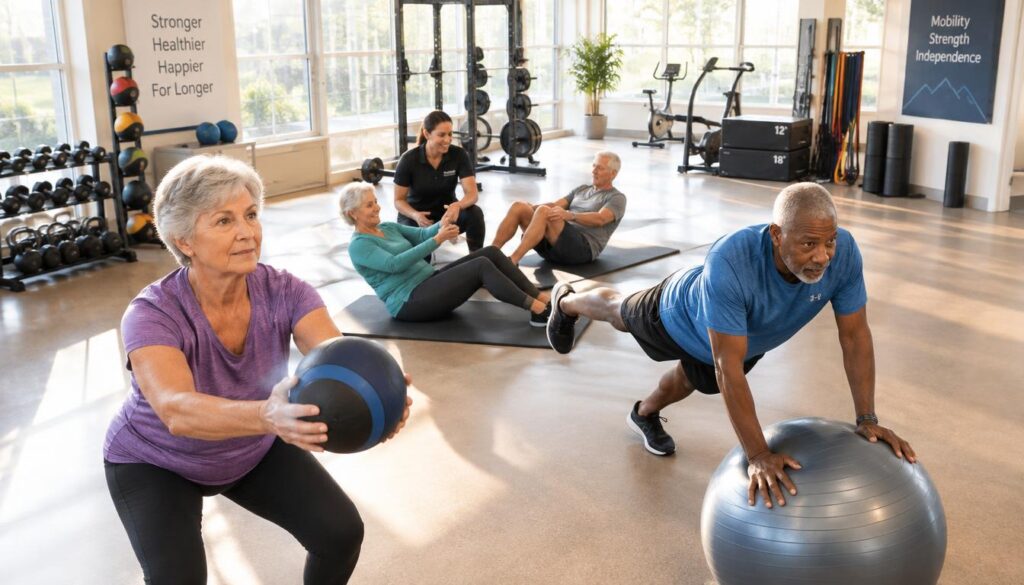
Balance means more than standing on one leg; it also means reacting to sudden changes around you. Longevity exercises sharpen your nervous system and improve spatial awareness. This plan lowers fall risk and helps you stay steady during daily tasks.
Maintaining muscle, bone-loading capacity, and confidence through compound movements
Compound movements use multiple joints and muscle groups, supporting bone density and metabolic health. Adding strength training for joint health helps keep your bones strong and able to support your weight. Feeling capable builds confidence to stay active and involved.
Adapting functional exercises for seniors and different fitness levels
You don’t need complex or dangerous movements to get the benefits of a functional routine. A good routine matches exercises to your abilities while still challenging you enough to keep you progressing. Customization is key to making these movements accessible to everyone, no matter where you start.
Scale range of motion, resistance, speed, and support without losing the movement goal
Adjust any movement by changing squat depth or using a sturdy chair for stability. Slower speeds and lighter resistance preserve the movement pattern while supporting joint-friendly workouts. These changes help you train safely and pursue long-term physical goals.
Why consistent mobility workouts matter more than occasional high-intensity sessions
Consistency helps preserve your physical independence over time. A holistic fitness approach favors regular, moderate movement over rare, intense sessions that can cause burnout or injury. Daily movement keeps joints lubricated and muscles ready for life’s demands.
A Joint-Friendly Bodyweight Circuit to Train for Daily Life
Daily life demands movement, so build a steady, joint-friendly practice. Use strength and mobility exercises that copy common tasks to support independence. This circuit needs only simple items, such as a sturdy chair or wall.
How to prepare your space, choose support, and set an appropriate pace
Clear a small area before you begin, and remove anything that could cause trips. Keep a stable chair nearby for balance and a wall for support during some movements. Consistency matters more than intensity when you first build these habits.
Safety checks for balance, pain, fatigue, footwear, and available clearance
Wear supportive footwear for a stable base. Stop at once if you feel sharp pain or unusual fatigue, and reduce your range of motion. Check that you have room to reach, step, and squat safely.
Chair squat for sitting, standing, and stair-related leg strength
Stand before a chair with your feet hip-width apart. Lower your hips slowly until they lightly touch the seat, then push through your heels to stand. This movement builds leg power for climbing stairs and rising from low furniture.
Hip hinge with wall reach for safer lifting mechanics
Stand a few inches from a wall, facing away from it. Push your hips back until your glutes lightly touch the wall, and keep your spine neutral. This pattern teaches you to lift safely from the floor without straining your lower back.
Incline push-up for upper-body strength and shoulder control
Place your hands on a sturdy countertop or the back of a heavy chair. Keep your body straight as you lower your chest toward the support, then push back up. This is one of the most effective mobility exercises for shoulder health and upper-body function.
Supported reverse lunge or split squat for single-leg stability
Hold a wall or chair for balance while stepping one foot back into a lunge. Keep your torso upright, with your front knee aligned with your toes. These injury-prevention workouts support balance while walking and traveling over uneven ground.
Bird dog for core stability and cross-body coordination
Start on your hands and knees in a tabletop position. Extend your opposite arm and leg together, keeping your back flat and core engaged. This movement helps stabilize your spine during daily reaching and twisting tasks.
Suitcase carry or stationary march for anti-leaning core strength
Hold a light weight in one hand, or march in place while keeping your torso still. Prevent your body from leaning to either side. This builds core strength for carrying groceries or luggage without discomfort.
Calf raise with support for ankle strength and walking resilience
Stand tall while holding a chair for balance. Rise onto your toes, hold for a second, then slowly lower your heels to the floor. Strong calves support walking, running, and overall stability throughout your day.
“Movement is the medicine for creating change in a person’s physical, emotional, and mental states.”
How to organize the circuit for beginners, older adults, and progressing exercisers
To support your fitness for overall health, arrange these movements in a logical order. Perform these functional training exercises as a circuit, moving between them with little transition time.
Starting with one to two rounds, controlled repetitions, and generous rest
Beginners should start with one or two rounds of 8 to 10 repetitions per exercise. Rest 60 to 90 seconds between movements to maintain perfect form. Choose movement quality over completing more repetitions.
Progressing through range of motion, repetitions, tempo, and external load
When comfortable, increase the challenge by slowing your tempo or expanding your range of motion. Later, add light external loads, such as water bottles during carries or squats. Listen to your body to support steady, sustainable progress.
| Exercise | Primary Benefit | Daily Life Application |
|---|---|---|
| Chair Squat | Leg Power | Sitting and Standing |
| Hip Hinge | Posterior Chain | Lifting Objects |
| Incline Push-up | Upper Body | Pushing Doors |
| Bird Dog | Core Stability | Reaching and Twisting |
How to Build a Sustainable Functional Fitness Routine
Build a routine that supports your body for years. It takes a new view: choose exercise for longevity over short-term looks. Focus on how your body feels and works to create a foundation that lasts a lifetime.
Combining strength training for joints with mobility and balance work
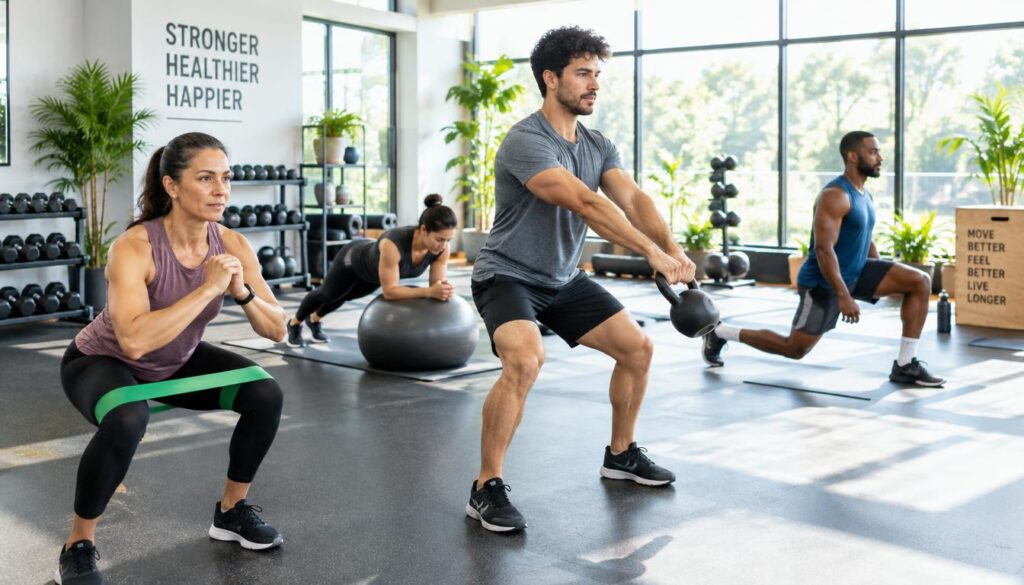
A balanced plan supports several parts of physical health. Blend functional movement exercises with mobility sessions to keep your joints supple. This keeps your muscles strong and your range of motion fluid.
Scheduling functional workouts around walking, cardiovascular exercise, and recovery
Consistency matters, but you do not need high-intensity training every day. Alternate functional workouts with low-impact activities like walking or swimming. Plan rest days; your body repairs itself and gets stronger during recovery.
Choosing exercises that reflect your actual responsibilities and activities
The best functional fitness tips involve movements that copy your daily activities. If you often carry groceries, focus on loaded carries. If you garden, practice hip hinges and squat patterns to protect your lower back.
Tracking useful outcomes beyond weight or muscle size
Many people feel discouraged when they focus only on the scale. Look for practical improvements that improve your quality of life. Measure Movement training by how much easier daily tasks become over time.
Monitoring easier stairs, steadier balance, improved carrying, and less daily discomfort
Keep a simple log of your physical wins. You may notice that stairs no longer leave you winded or that your balance feels steadier on uneven ground. These signs show long-term health better than a number on a scale.
| Metric | Traditional Focus | Functional Focus |
|---|---|---|
| Primary Goal | Muscle Size | Joint Longevity |
| Measurement | Body Weight | Daily Performance |
| Outcome | Aesthetics | Independence |
Common functional training mistakes that undermine joint health
Good strength and conditioning takes patience and quality over quantity. Don’t rush through sessions, because rushing often leads to poor form.
Moving too quickly, adding load too soon, and sacrificing alignment for repetitions
Choosing speed or heavy weight over alignment can cause unnecessary strain. This matters especially in strength training for seniors, when joint integrity is vital. Master each movement pattern before adding extra resistance.
Conclusion
Physical health supports every experience throughout life. Fitness for longevity shifts your focus from short-term appearance goals to a capable, resilient body. Choose movements that match daily needs to support lasting independence.
Functional training for longevity helps you maintain the balance, coordination, and strength you need for your favorite activities. These habits protect your joints and help you lift, reach, and move with confidence. You prepare your future self for the physical demands of the coming decades.
Consistent practice remains the best way to see results. Specific exercises for joint health can help prevent common injuries and reduce chronic discomfort.
You do not need extreme intensity to improve. Focus on steady, progressive movements that respect your current limits.
Choosing the right strength exercises for joint health makes each workout a practical investment. Every squat, hinge, and carry builds stability for tomorrow. Stay committed to mindful movement to preserve mobility and vitality for years to come.