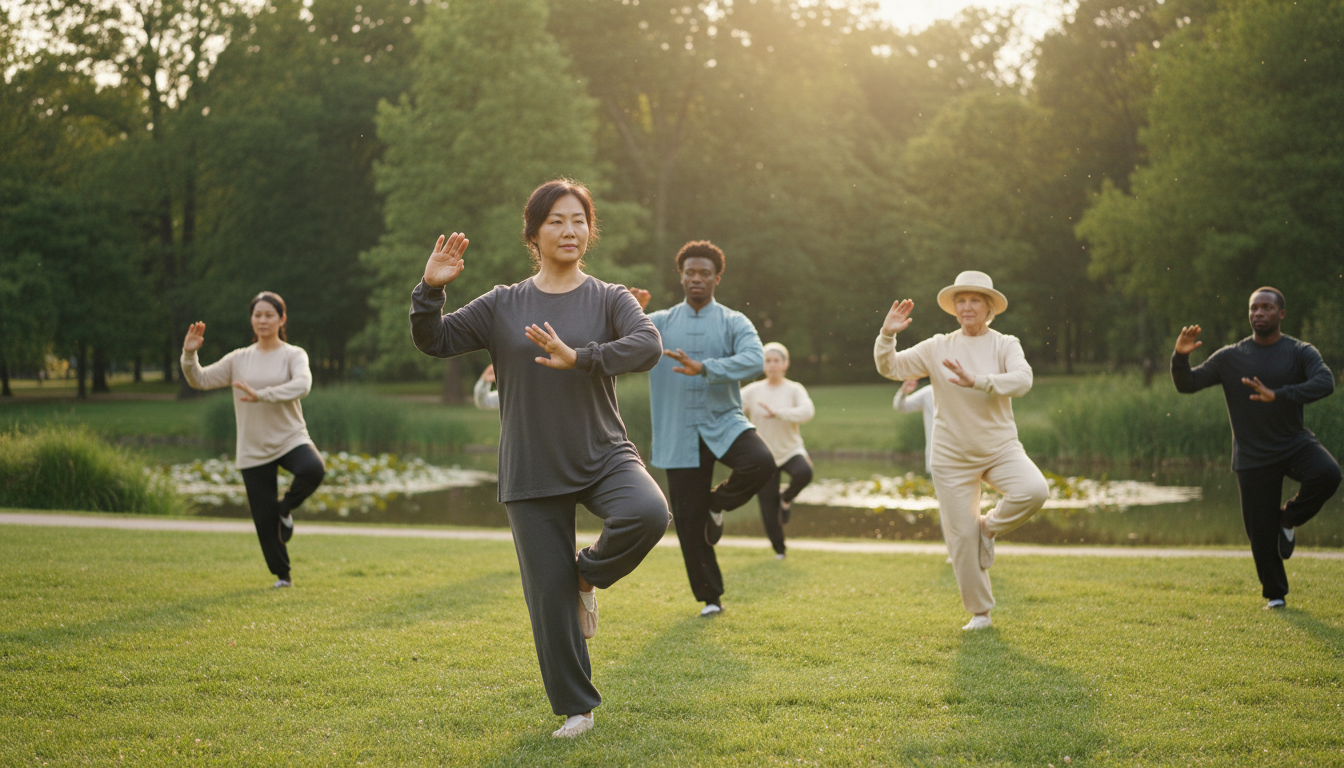
Imagine finding stability and calm with every step. This is what mindful walking, or mindfulness in motion, offers. It turns walking into a mental connection that keeps you grounded all day.
For beginners, tai chi is about intentional weight distribution. Paying attention to your footwork helps strengthen your posture. It’s about moving with purpose, not just rushing.
Studies show that tai chi, when paired with strength training, can help prevent frailty. This combo is great for avoiding health issues as you age. Tai chi walking lets you move with confidence and grace.
Learning tai chi balance exercises doesn’t need a gym or expensive gear. Just a small space and a willingness to slow down. This approach boosts coordination and clears your mind.
Key Takeaways
- Enhance your physical stability with intentional steps and focus.
- Combine gentle movement with strength training to avoid frailty.
- Experience mindfulness in motion to reduce daily stress.
- Practice careful weight distribution for better long-term coordination.
- Access a low-impact workout without any special or costly equipment.
- Improve your mental clarity by focusing on the present moment.
What Is Tai Chi Walking? Mindfulness in Motion
Tai Chi walking is a way to be fully present in every step. It mixes slow movements, deep breathing, and focus. This creates a mix of exercise and meditation.
This practice comes from traditional Tai Chi, a Chinese martial art. It has changed into a low-impact, meditative form. It helps with balance, flexibility, and finding inner peace. By paying attention to each step, you become more aware of your body.
The practice includes slow, flowing movements to relax and reduce stress. While walking, you should focus on the now. This makes Tai Chi walking different from regular walking.
Key Elements of Tai Chi Walking:
- Slow and deliberate movements
- Deep breathing and relaxation
- Mental focus and concentration
- Awareness of body alignment and movement
To understand Tai Chi walking better, let’s compare it with regular walking:
| Aspect | Traditional Walking | Tai Chi Walking |
|---|---|---|
| Speed | Variable, often brisk | Slow and deliberate |
| Focus | Often on the destination or conversation | On the sensation of each step |
| Breathing | Natural, often unconscious | Deep, synchronized with movement |
Tai Chi walking is a complete way to exercise, improve your mind, and grow spiritually. It can make you more balanced and flexible. It also helps you feel calmer and more at peace.
Why Your Body Needs Intentional Weight Distribution
The way you distribute your weight while walking is key to balance and avoiding falls. Many people don’t realize how their weight is spread out during walking. This can lead to walking patterns that are not only inefficient but also harmful.
Walking becomes automatic over time. While this makes tasks easier, it can also cause imbalances and increase injury risk. This is because we lose control over our body movements.
The Problem with Automatic Walking Patterns
Automatic walking patterns can cause uneven weight distribution. This puts too much stress on some joints and muscles. It affects your posture and balance, and increases the risk of injury.
Uneven weight distribution also increases your risk of falling. This is especially true on uneven or slippery surfaces.
How Tai Chi Walking Rewires Your Movement
Tai Chi walking teaches you to distribute your weight on purpose. It changes your walking patterns to improve balance and reduce fall risk. This practice focuses on mindful movement, making you fully aware of your body’s position and movement.
With Tai Chi walking, you learn to move your weight smoothly. This reduces stress on your joints and improves balance. It also makes you more physically stable.
Adding Tai Chi walking to your routine can make you move more efficiently and safely. It can also improve your overall quality of life.
The Three Core Benefits of Tai Chi Walking
Adding Tai Chi walking to your daily routine can greatly improve balance, joint health, and mental clarity. This ancient practice boosts overall well-being. Its benefits go beyond just physical health.
Tai Chi walking combines movement, breath, and focus into a unique form of exercise. The three main benefits work together to enhance your health.
Strengthening Ankle and Hip Stabilizers for Better Balance
Tai Chi walking improves balance by strengthening ankle and hip stabilizers. These are key to staying balanced. It helps your body stay balanced, lowering fall risk.
Studies show that Tai Chi walking improves balance across all ages. It’s great for older adults at risk of falls. The slow movements strengthen muscles around the ankles and hips, supporting movement.
Joint Health: A Low-Impact Hug for Your Knees and Lower Back
Tai Chi walking is good for joint health, especially in the knees and lower back. It’s low-impact, making it perfect for those with joint pain or arthritis. It promotes gentle movements that strengthen muscles around joints.
Research shows that Tai Chi walking can reduce knee pain and improve function in people with knee osteoarthritis. The controlled movements help keep joints mobile and reduce inflammation.
Grounding Your Monkey Mind by Connecting Breath to Movement
The third benefit of Tai Chi walking is its calming effect on the mind. Connecting breath to movement fosters mindfulness, reduces stress, and promotes relaxation. This is known as “moving meditation.”
Practicing Tai Chi walking helps you stay more focused and calm. It helps you tackle daily challenges with clarity and composure. The synchronization of breath and movement quiets the mind, leading to inner peace.
Understanding the Fundamental Mechanics Before You Start
Before starting Tai Chi walking, it’s key to know its basic mechanics. This practice is simple yet powerful for both body and mind. You must understand the principles behind its movements to get the most out of it.
Tai Chi walking focuses on moving in harmony with your body and energy flow. It involves slow movements to improve balance, flexibility, and inner peace.
The Three-Phase Movement Cycle
The mechanics of Tai Chi walking follow a three-phase movement cycle. This cycle ensures smooth and balanced steps. It covers the preparation, execution, and completion of each step.
The first phase is getting ready for the movement, aligning your posture and engaging your core. The second phase is the actual step, where you slowly move your weight. The third phase is finishing the movement while maintaining balance and stability.
Why Slower Is Actually Better
Slow movement is a core principle of Tai Chi walking. Moving slowly helps you focus on each step, keeping balance and stability. It also deepens your body awareness.
Slow movements offer many benefits. They reduce stress and anxiety, promoting calmness. They also boost balance and coordination by strengthening muscles and improving neuromuscular coordination.
By mastering the mechanics of Tai Chi walking, you can enjoy a more balanced and healthy life.
How to Perform the Empty Step Technique
Learning the empty step technique is key to better tai chi walking. It helps improve your balance and makes your movements smooth. This technique is essential for mastering tai chi.
Touching Your Heel Down with Zero Weight Commitment
The first step in the empty step technique is to gently touch your heel down. Your heel should hit the ground first, but don’t put your weight on it yet. This is important for a smooth start.
To do this right, keep your ankle relaxed and your weight balanced over your back leg. It’s like placing your heel down lightly, not fully committing your weight.
Testing for True Emptiness
To check if your step is truly empty, try lifting your back foot a bit. If you can do this without losing balance, your front foot is empty. This is a good sign.
This test ensures you’re not putting too much weight on your front foot too soon. This can mess up the flow of your tai chi walking.
Common Empty Step Errors to Avoid
One common mistake is putting your weight on your front foot too fast. This makes your movements stiff and unnatural.
- Not keeping your front foot’s ankle relaxed is another error. This can cause tension and affect your balance.
- Not moving smoothly and controlled can also mess up the empty step technique.
Knowing these common mistakes helps you avoid them. This way, you can improve your weight shifting in tai chi. This leads to a more graceful and effective practice.
Mastering the Fluid Weight Shift
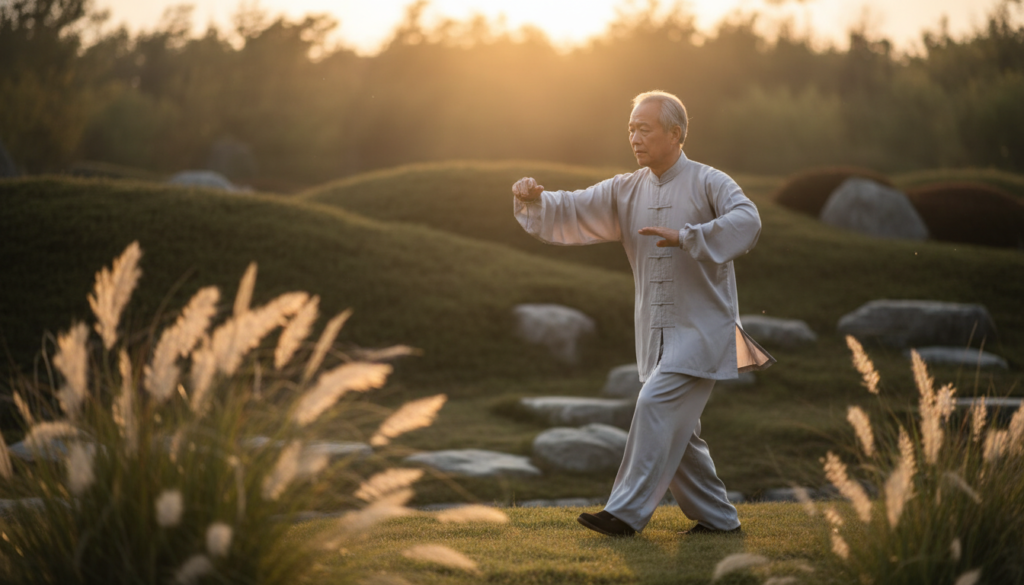
Mastering the fluid weight shift is key in Tai Chi walking. It changes how you walk, bringing balance and harmony. This technique involves smoothly shifting your weight from one foot to the other, like pouring water.
Pouring Weight Into Your Foot Like Water
Imagine pouring weight into your foot like water when practicing. Let your weight settle into your foot slowly and smoothly. Relax your muscles and let your body move naturally.
This feels like filling a container with water. It starts empty, fills up, and then overflows. In Tai Chi walking, you start with an empty step, fill it up, and then move to the next step.
Finding the Gradual Transfer Speed
Finding the right speed for transferring your weight is important. It should be slow enough to keep balance but not too slow. The right speed varies based on your practice and comfort.
Try shifting your weight at different speeds to find what works best for you. Pay attention to how your body feels. You want to feel balanced and grounded.
Coordinating Your Breath with the Shift
Matching your breath with the weight shift is key to harmony in Tai Chi walking. Inhale as you prepare to shift your weight, and exhale as you do. This helps regulate your energy and makes walking more meditative.
Let your breath guide your movements. This creates a smooth flow, enhancing your Tai Chi walking experience.
The Rooting Principle and Your Bubbling Spring Point
In Tai Chi walking, the rooting principle is key to balance and stability. It’s closely tied to the Bubbling Spring point, a vital spot in Tai Chi.
The Bubbling Spring point, or Yongquan (K1), is on the foot’s sole. Finding it is important for Tai Chi walking.
Locating Your Bubbling Spring on the Ball of Your Foot
The Bubbling Spring point is on the foot’s ball, about one-third from the toes. Press the sole of the foot with your fingers to find it.
Maintaining Connection Throughout Each Step
Keeping a connection with the Bubbling Spring point is crucial for rooting. As you walk, keep this point in contact with the ground.
Dr. Paul Lam, a Tai Chi expert, says, “The rooting principle is about a strong ground connection. It’s key for balance and stability.”
“Rooting is not just about physical stability; it’s also about mental focus and awareness.”
How Rooting Improves Your Stability
Rooting through the Bubbling Spring point boosts stability by creating a solid base. This connection improves balance and lowers fall risks.
| Benefits of Rooting | Description |
|---|---|
| Improved Balance | Rooting enhances your overall balance by creating a strong connection with the ground. |
| Reduced Risk of Falls | By improving balance and stability, rooting reduces the risk of falls. |
| Increased Confidence | A strong rooting principle gives you more confidence in your movements. |
Understanding and applying the rooting principle can greatly improve your Tai Chi walking. It leads to better balance, stability, and overall well-being.
Regular Walking vs. Tai Chi Walking: A Complete Comparison
Walking is more than just moving your feet. It can be done mindfully, as in Tai Chi walking, or automatically, as in regular walking. Knowing the differences between these two can help you see the special benefits of Tai Chi walking.
Weight Distribution Differences: 50/50 Split vs. Full and Empty
In regular walking, you usually put your weight evenly on both feet. Sometimes, you might lean a bit more on the foot that’s supporting your body. But in Tai Chi walking, you deliberately shift your weight. One foot is fully on the ground, while the other is lifted.
This full-and-empty approach is key to balance and stability. It makes your body respond differently to each step. Regular walking might make your muscles stiff, while Tai Chi walking keeps them active and balanced.
| Walking Style | Weight Distribution | Muscle Engagement |
|---|---|---|
| Regular Walking | 50/50 or near-equal split | Less dynamic engagement |
| Tai Chi Walking | Full and empty distinction | More dynamic engagement |
Pace Comparison: Automatic vs. Deliberate Movement
Regular walking is often done on autopilot, with a pace you’re used to. But Tai Chi walking is slower and more mindful. It’s not just about moving slowly; it’s about being fully present in each step.
The slow pace of Tai Chi walking helps you pay attention to your body’s movement. It makes walking a mindful experience, where you’re fully engaged in the moment.
Focus Shift: Destination vs. Process
When you walk regularly, you often focus on where you’re going. But Tai Chi walking makes you focus on the act of walking itself. You pay attention to each step and how your body moves.
This change in focus can greatly improve your mental state. It helps reduce stress and increases calm and well-being.
Your First Tai Chi Walking Session: A Step-by-Step Guide for Beginners
Welcome to Tai Chi walking, a journey to better balance and health. Starting can be thrilling yet daunting. This guide will help you set up your space, learn a simple routine, and focus on key areas for your first week.
Setting Up Your Practice Space
First, create a good environment for your Tai Chi walking. Find a quiet, open spot where you can walk slowly without distractions. It should be flat and non-slippery. A small, clear area is enough. Also, a calm atmosphere can improve your practice.
Tips for Your Practice Space:
- Clear the area of any obstacles or tripping hazards.
- Ensure good lighting to help you maintain your balance and visibility.
- Consider playing soft, calming music in the background to set the tone.
The Five-Minute Beginner Routine
Start with a simple five-minute routine for your first session. Stand still, feet shoulder-width apart, and breathe deeply. Then, walk slowly, focusing on the Empty Step Technique and Fluid Weight Shift you’ve learned. Keep your knees slightly bent and your back straight.
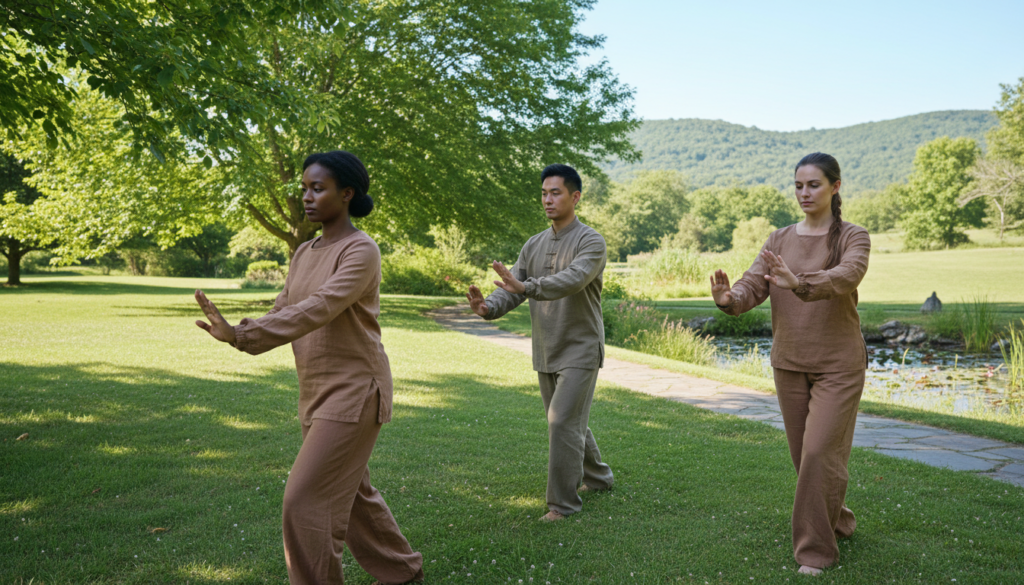
As you walk, focus on your breathing and try to sync it with your steps. Move slowly and with grace. It’s okay if you feel awkward at first. Keep practicing.
What to Focus on in Your First Week
In your first week, focus on mastering basic movements and getting the rhythm of Tai Chi walking. Pay attention to your posture, weight transfer, and breathing. Feeling clumsy or self-conscious is normal at first. But with daily practice, you’ll get better.
Key areas to focus on:
- Maintaining a smooth weight transfer.
- Keeping your upper body relaxed.
- Coordinating your breath with your steps.
By focusing on these and practicing regularly, you’ll enjoy the many benefits of Tai Chi walking.
Common Mistakes in Tai Chi Balance Exercises and How to Fix Them
When you practice Tai Chi walking, knowing common mistakes is key. These exercises need precision and awareness. By spotting these errors, you can improve your balance and harmony.
Rushing Through the Weight Transfer
Rushing the weight transfer is a common mistake. It can throw off your balance and diminish the exercise’s benefits. Make slow, careful movements, shifting your weight slowly from one foot to the other.
Tip: Try moving your weight at different speeds. This will help you feel more in control and balanced.
Losing Your Rooting Connection Mid-Step
Another error is losing your rooting connection mid-step. Your rooting connection is through the Bubbling Spring point on the ball of your foot. Keep your foot relaxed and your weight evenly spread to hold this connection.
Forgetting to Breathe Naturally
Forgetting to breathe naturally can cause tension and discomfort. Tai Chi walking combines movement and breath. Practice breathing with your steps to keep a natural, relaxed flow.
Leaning Forward or Backward
Leaning forward or backward can upset your balance and lessen the benefits of your Tai Chi practice. Stay upright, with your weight evenly over your feet.
| Common Mistake | Correction Technique |
|---|---|
| Rushing Through Weight Transfer | Slow, deliberate weight transfer |
| Losing Rooting Connection | Relax foot, even weight distribution |
| Forgetting Natural Breathing | Coordinate breath with steps |
| Leaning Forward or Backward | Maintain upright posture |
Tai Chi Walking Benefits for Seniors and Special Populations
As you get older, keeping your balance and managing pain gets harder. Tai Chi walking is a great solution for seniors and special groups. It helps with knee pain, balance, and mobility issues.
Managing Knee Pain
Tai Chi walking eases knee pain with its gentle movements. These movements don’t stress the knee too much. It strengthens the muscles around the knee without too much strain.
The slow Tai Chi movements do a lot:
- They reduce inflammation
- Improve joint lubrication
- Strengthen the muscles around the knee
Balance Improvement for Fall Prevention
Tai Chi walking boosts balance, lowering fall risks. Better balance means you can stay independent and avoid injuries.
It works by:
- Strengthening ankle and hip stabilizers
- Improving how your body senses its position
- Boosting physical coordination
| Benefits | Description |
|---|---|
| Knee Pain Management | Gentle movements reduce stress on knee joints |
| Balance Improvement | Strengthens stabilizers and improves proprioception |
| Limited Mobility Adaptation | Can be modified to suit individual mobility levels |
Adapting the Practice for Limited Mobility
Tai Chi walking can be adjusted for those with limited mobility. It’s perfect for seniors or those with health issues.
To make Tai Chi walking work for limited mobility:
- Start with shorter sessions and gradually increase duration
- Use support devices if necessary (e.g., canes or walkers)
- Focus on upper body relaxation and breathing techniques
Adding Tai Chi walking to your routine can greatly improve your life. You’ll see the benefits firsthand.
Building Your Daily Tai Chi Walking Practice
Starting a daily Tai Chi walking practice can change your life. It improves balance, lowers stress, and boosts well-being. It’s a mindful way to move that’s good for both body and mind.
To make Tai Chi walking a regular part of your life, try these tips:
Integrating Moving Meditation into Your Morning Routine
Begin your day with Tai Chi walking to feel more centered. Spend a few minutes each morning on this practice. Focus on your breath and the ground beneath your feet.
Moving meditation is key in Tai Chi walking. It mixes physical movement with mindfulness. This creates a calm and clear state of mind. Practice near a window or outside to connect with nature.
Combining Tai Chi Walking with Traditional Tai Chi Forms
If you know traditional Tai Chi forms, mixing them with Tai Chi walking is a great way to practice. The slow steps of Tai Chi walking add to the flowing movements of traditional forms. This mix benefits both body and mind.
| Practice Element | Benefits | Tips for Integration |
|---|---|---|
| Tai Chi Walking | Improved balance, reduced stress | Start with short sessions, focus on breath |
| Traditional Tai Chi Forms | Enhanced flexibility, mental clarity | Practice forms after warming up with Tai Chi walking |
| Combined Practice | Comprehensive physical and mental benefits | Alternate between Tai Chi walking and traditional forms |
Tracking Your Progress Over Time
To stay motivated and see the benefits, track your progress. Use a journal or app to record your sessions. Note any changes in balance, stress, or well-being.
Regular tracking helps spot patterns and areas to improve. It lets you adjust your practice for better results.
Conclusion
Tai chi walking can change your daily life in many ways. It helps improve balance and joint health. It also makes you feel more focused and calm.
This practice is based on intentional weight distribution and fluid movement. By mastering these, you get all the benefits of tai chi. These include less stress, better mobility, and overall well-being.
As you keep practicing tai chi walking, it will become a big part of your day. It’s like brushing your teeth or going for a morning walk. By doing this, you’ll enjoy many benefits. You’ll become more balanced, harmonious, and healthy.