You might have heard of “gluteal amnesia” or “dead butt syndrome.” It’s when your glutes forget their purpose, making them weak or dormant.
This condition can lead to knee pain and other problems due to a lack of muscle support. If your glutes don’t work properly, it can affect how you move. This puts more stress on your knees.
But, there are easy exercises to wake up your glutes and ease knee pain. Adding these to your routine can make your glutes stronger. This will also help you move better.
Key Takeaways
- Gluteal amnesia is a condition that can lead to weak or dormant glutes.
- Dormant glutes can cause knee pain and other mobility issues.
- Simple exercises can help reactivate your glutes.
- Strengthening your glutes can improve your overall mobility.
- Proper glute function is essential for maintaining healthy knees.
Understanding Glute Amnesia: The Silent Epidemic
In today’s world, many people face glute amnesia. This is when the gluteal muscles don’t work right, causing muscle problems.
What Exactly Is Glute Amnesia?
Glute amnesia means the gluteal muscles can’t activate well. It happens when you sit a lot and don’t stand right. This makes your glutes weak and less active.
How Common Is This Condition?
Glute amnesia is more common than you think. It affects people who work at desks or sit a lot. Many people have weak glutes because of their lifestyle.
| Risk Factors | Description | Impact on Glutes |
|---|---|---|
| Prolonged Sitting | Sitting for extended periods | Gluteal muscles become underactive |
| Poor Posture | Incorrect sitting or standing posture | Alters gluteal muscle activation patterns |
| Lack of Exercise | Insufficient physical activity targeting the glutes | Leads to gluteal weakness and atrophy |
It’s essential to understand glute amnesia to fix its causes. By knowing the risks, we can prevent or lessen its effects on our health.
The Sitting Epidemic: How Modern Lifestyle Deactivates Your Glutes
In today’s world, we spend a lot of time sitting. This affects our glutes a lot. Desk jobs and prolonged sitting are significant problems for our glutes.
The Biomechanics of Prolonged Sitting
Sitting for long periods can weaken our glutes. This can make them forget how to work right. Sitting changes how our muscles work and our posture, hurting our glutes.
How Your Office Chair Is Sabotaging Your Glutes
Your office chair can hurt your glutes. Chairs that don’t fit right can make you sit wrong. This presses down on your glutes and limits your hip movement.
| Sitting Duration | Glute Activation Level | Hip Mobility |
|---|---|---|
| Less than 2 hours | High | Good |
| 2-4 hours | Moderate | Fair |
| More than 4 hours | Low | Poor |
It’s essential to know how sitting affects our glutes. By understanding these risks, we can start to fix them. This helps keep our glutes strong and active.
The Crucial Connection: How Dormant Glutes Lead to Knee Pain
The link between glute function and knee pain is deep. Your body’s kinetic chain is like a big team of joints and muscles working together. When one part is off, it can mess up the whole team.
The Kinetic Chain Explained
The kinetic chain is all about muscles and joints working as one to move. When the glutes are weak, it messes up this teamwork. This affects how force moves through your lower body.
Why Your Knees Suffer When Glutes Don’t Work
Weak glutes make other muscles, like those near the knee, work too hard. This can cause knee pain. Exercises for knee pain often focus on the glutes to fix the problem.
| Glute Function | Knee Impact |
|---|---|
| Active Glutes | Proper knee alignment and reduced pain |
| Dormant Glutes | Knee pain due to overcompensation |
Knowing how the glutes and knees are connected helps you fight knee pain. You can start by doing exercises that target your glutes and improve muscle function.
Beyond Knees: How Weak Glutes Affect Your Back and Hips
Weak glutes can affect more than just your knees. They can also impact your lower back and hips. When your glutes are not active, it can cause problems in your lower body.
The Lower Back Connection
Your glutes help stabilize your pelvis and support your lower back. If they’re weak, your lower back muscles have to work harder. This can lead to strain and pain.
Doing lower back pain relief exercises that strengthen your glutes can help. This can ease the strain on your lower back and improve your posture. It can also reduce lower back pain and discomfort.
Hip Mobility Issues from Inactive Glutes
Inactive glutes can reduce hip mobility. When your gluteal muscles don’t work right, your hips can become stiff. Doing hip mobility exercises that work your glutes can help.
Regular glute activation can help your hips move better. This makes everyday activities easier without pain or discomfort.
Signs and Symptoms of Glute Amnesia You Shouldn’t Ignore
Gluteal amnesia can present in many ways, often without our noticing until it’s serious. Spotting the signs early can help fix the problem before it gets worse.
Physical Indicators of Dormant Glutes
Some common signs of dormant glutes include:
- Lower back pain due to the compensatory mechanisms
- Poor posture resulting from weak gluteal muscles
- Hip mobility issues stemming from inactive glutes
These signs often mean your glutes are not working right.
Movement Patterns That Reveal Glute Weakness
Certain movements can show glute weakness. For example:
| Movement Pattern | Possible Indication |
|---|---|
| Overstriding during walking or running | Compensating for weak glutes |
| Knee pain during squats or lunges | The gluteal muscles are not engaging properly |
By noticing these signs, you can start glute activation drills and boost your hip mobility.
The Science of Glute Activation: Why These Muscles Matter So Much
Glute activation is key to our movement and balance. Your glutes are not just muscles; they’re vital for everyday tasks and leg function.
Anatomy of the Gluteal Muscles
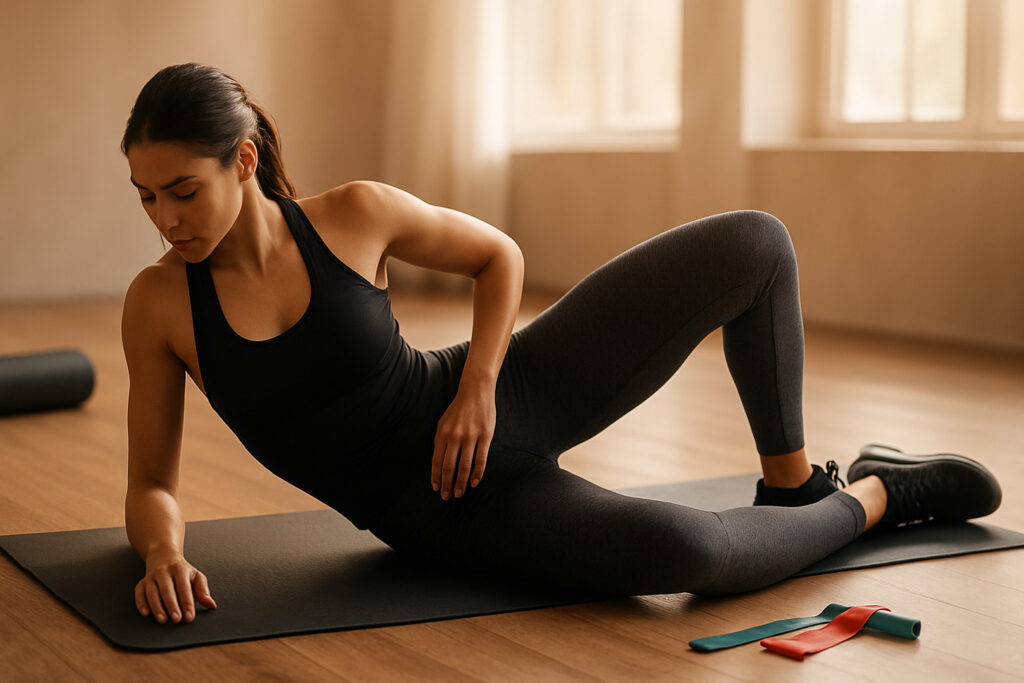
The gluteal muscles include the gluteus maximus, gluteus medius, and gluteus minimus. The gluteus maximus is the largest and outermost muscle, helping with hip extension and rotation. The gluteus medius and minimus help with hip movement and rotation. Knowing about these muscles allows us to see their importance.
Functional Importance in Daily Activities
The gluteal muscles are crucial for daily tasks such as walking, running, and climbing stairs. They help with:
- Hip extension: necessary for standing up or climbing stairs.
- Hip stability: key for balance and injury prevention.
- Pelvic alignment helps maintain proper posture and reduce back pain.
Targeted glute exercises can improve hip mobility and reduce the risk of knee pain. Adding hip mobility exercises to your routine can also improve glute function and flexibility.
Exercise 1: Glute Bridges – The Foundation of Glute Reactivation
The glute bridge is a top glute-activation drill. It’s a simple yet powerful exercise for strengthening the glutes. It’s great for those who sit a lot.
Step-by-Step Instructions
To do a glute bridge, lie on your back with knees bent and feet flat, hip-width apart. Slowly lift your hips up, squeezing your glutes at the top. Hold for a moment, then lower back down.
Focus on using your glutes to lift your hips, not just your lower back.
Common Mistakes to Avoid
A common mistake is using your lower back instead of your glutes. To avoid this, engage your core and squeeze your glutes. Also, make sure to lift your hips high enough to form a straight line from your knees to your shoulders.
Progressions for Increasing Difficulty
To make glute bridges harder, try single-leg bridges or add weights. Single-leg bridges lift one leg off the ground. Adding weights, such as a barbell or dumbbells, across your hips increases the challenge.
Glute bridges can also be part of a routine with other lower back pain relief exercises. This can help ease discomfort and improve lower back health.
Exercise 2: Clamshells – Targeting the Often Neglected Gluteus Medius
The clamshell exercise is key for targeting the gluteus medius. This muscle is often overlooked but crucial for hip stability and mobility.
Proper Form and Technique
To do the clamshell exercise correctly, lie on your side with your knees bent and your feet together. Make sure your hips are aligned, and your body is straight from head to heels. Engage your core and lift your top knee up towards the ceiling, keeping your feet together.
Hold for a moment, then lower your knee. Focus on controlled movements to get the most out of the exercise.
Feeling the Right Muscles Working
When doing the clamshell exercise, focus on the sensation in your gluteus medius. You should feel it working as you lift your knee. If you don’t feel it, check your form and relax other muscles so your gluteus medius can do the work.
Variations for Different Fitness Levels
The clamshell exercise can be adjusted for different fitness levels. Beginners can use a resistance band around their knees for more challenge. Those who are more advanced can use more resistance or do the exercise on a stability ball.
| Fitness Level | Variation |
|---|---|
| Beginner | Bodyweight or light resistance band |
| Intermediate | Moderate resistance band |
| Advanced | High resistance band or stability ball |
Adding the clamshell exercise to your routine can significantly improve glute activation and hip mobility. It’s a great addition to any workout plan, focusing on the often-overlooked gluteus medius.
Exercise 3: Bird Dogs – Coordinating Glutes with Core Stability
Bird dogs are an excellent exercise for working your glutes and core together. They are key to an intense fitness routine. This exercise boosts your glutes and improves your core, helping with posture and injury prevention.
Execution Guidelines
To do bird dogs right, start on your hands and knees. Your hands should be shoulder-width apart, and your knees hip-width apart. Lift your right arm and left leg, keeping them straight, then go back to the start. Do the same on the other side.
Keep your core stable to engage your glutes effectively.
Tips for Maximum Glute Engagement
To get the most out of bird dogs, squeeze your glutes when lifting. Keep your core tight to support your back and keep a straight line from head to heel. Don’t arch your back or let your hips drop, as this lessens the exercise’s effect.
Adding Challenges as You Progress
When you get better at bird dogs, try harder versions. Hold the lifted position for a few seconds before starting over. Or, do more reps. You can also change the arm or leg movements to work your glutes from different angles.
| Exercise Variation | Repetitions | Benefits |
|---|---|---|
| Standard Bird Dog | 10-15 per side | Engages glutes and core |
| Bird Dog with Hold | 5-10 per side | Increases time under tension for glutes |
| Bird Dog with Alternating Arms/Legs | 15-20 total | Enhances coordination and glute activation |
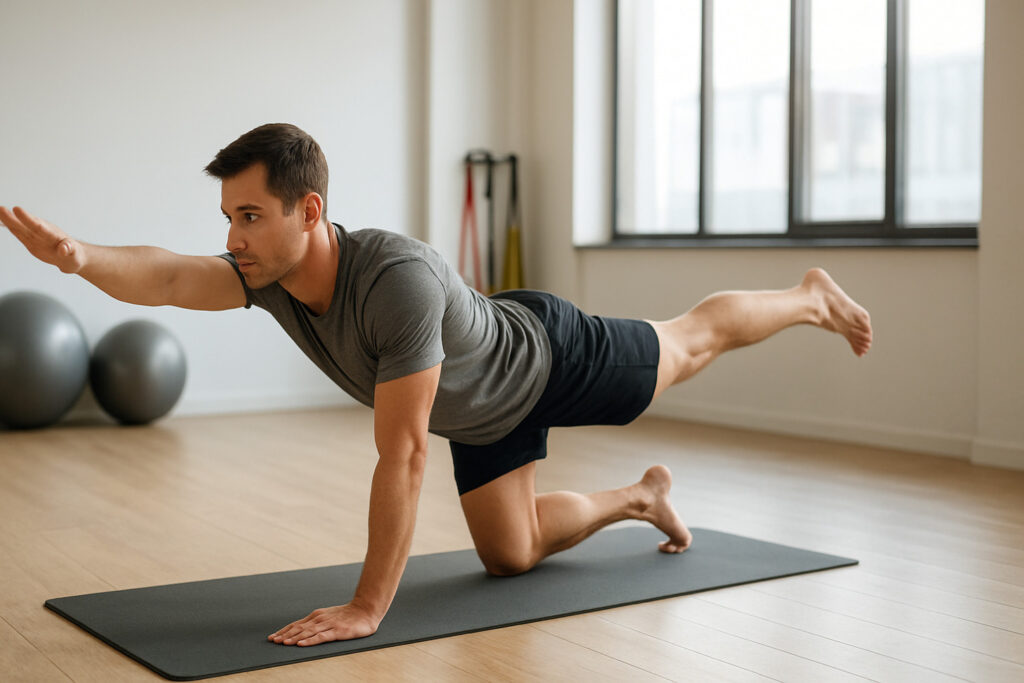
Adding bird dogs to your workout routine can strengthen your glutes and improve core stability. This exercise is a must-have for anyone looking to boost lower-body strength and stability.
Exercise 4: Lateral Band Walks – Functional Glute Activation
Lateral band walks are a simple yet powerful exercise. They can significantly improve glute strength and hip mobility. This exercise targets the gluteus medius, a key muscle for hip stability and proper walking.
Equipment Needed and Setup
To do lateral band walks, you need a resistance band. Loop it around your legs, just above the knees. The band should challenge your glutes without hurting or affecting your form.
Proper Movement Patterns
Start by standing with your feet shoulder-width apart, with the band around your legs. Bend your knees a bit and lean forward slightly, keeping your back straight. Step to one side, keeping the band tight, then bring the other foot to meet it, still holding the band tight. Keep moving in this way for the number of reps you want, then switch sides.
Integrating Into Daily Routine
You can add lateral band walks to your daily routine. Do them as part of your warm-up or cool-down during workouts. For desk workers, this exercise is a great break to counter the effects of prolonged sitting.
| Benefits | Description |
|---|---|
| Glute Activation | Strengthens the gluteus medius for improved hip stability |
| Hip Mobility | Enhances range of motion and reduces stiffness |
| Functional Training | Prepares glutes for daily activities and athletic performance |
Adding lateral band walks to your fitness routine can lead to significant improvements in glute strength and lower-body function.
Implementing Your Daily Glute Activation Routine for Desk Workers
Regular glute activation can change your life if you sit for long periods. Simple exercises can improve your posture, reduce pain, and enhance your overall health.
Morning vs. Evening Activation Strategies
Timing is crucial for glute activation. You can do your exercises in the morning to start your day right or in the evening to relax. Morning sessions can boost your posture and energy. Evening sessions can help you relax and prepare for tomorrow.
“Consistency is key for glute activation,” says fitness expert Jane Smith. “Choose morning or evening, but make it a habit.”
Micro-Breaks for Office Workers
Micro-breaks are a must for desk jobs. Short breaks to stretch and activate your glutes can significantly reduce the adverse effects of sitting. Try glute squeezes or chair squats at your desk.
Combining with Other Exercise Programs
Glute activation complements other exercises to boost fitness. It can improve your performance in yoga, Pilates, or weightlifting. Listen to your body and adjust your workouts as needed.
By adding a daily glute activation routine, desk workers can improve their health and comfort. Start small and increase the intensity over time. You’ll soon wake up your glutes and save your knees.
Conclusion: Reclaiming Your Glute Function for Better Movement and Less Pain
Your glutes are key to keeping your knees and lower back healthy. They help prevent pain. Adding knee pain exercises and lower back pain relief exercises to your day can make a big difference.
Try glute bridges, clamshells, bird dogs, and lateral band walks. These exercises wake up your glutes and improve your body’s movement. Doing these exercises daily can help your posture, ease knee pain, and reduce back pain.
Make sure to do these exercises every day. They’re great for anyone who sits a lot. Start now and see how your glutes and health improve.