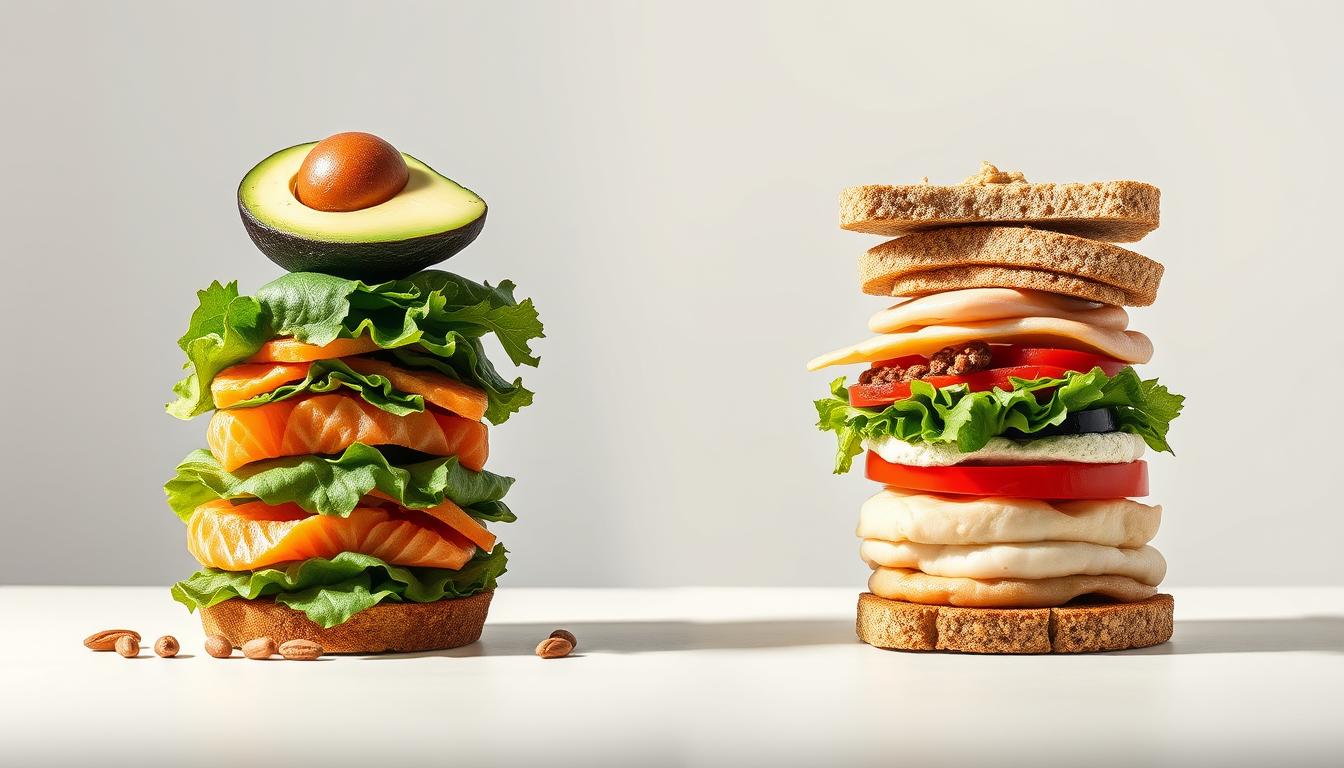
Keto Diet: The Good, Bad, and Ugly
Welcome to our guide on the keto diet! This diet is well-known for its low-carb approach. It aims to put your body in a state called ketosis. This means your body burns fat for energy rather than carbs. Many people are interested in this diet because it helps with weight loss and might improve health and fitness.
Yet, the keto diet has its own set of pros and cons. We’ll look at what’s good, bad, and the not-so-nice parts of following keto. This way, you can decide if it’s the right choice for you.

Key Takeaways:
- The keto diet is a popular weight loss approach that focuses on low-carbohydrate intake to induce ketosis.
- It can be effective for rapid weight loss and improved body composition in the short term.
- However, it comes with challenges such as the keto flu, potential nutrient deficiencies, and sustainability concerns.
- Consulting with a healthcare professional or dietitian is essential before starting any new diet, including the keto diet.
- A balanced approach to weight loss, incorporating exercise and lifestyle changes, is key to long-term success.
The Benefits of the Keto Diet.
The keto diet is a popular choice for many looking to lose weight. It involves eating low carbs to start ketosis. In this state, your body burns fat for energy instead of carbs. This change can help people lose weight and get healthier.
Keto diets are great for losing weight fast, especially in the beginning. When you eat fewer carbs, your body starts using its fat stores. This leads to quick fat loss and a better body shape.
The keto diet might also help with health issues. It could help with epilepsy and type 2 diabetes by keeping blood sugar levels stable. This can make you feel better overall.
Focusing on fat for energy keeps your energy level steady all day, unlike carbs, which can make your energy spike and crash. Fat can give you better focus, clear thinking, and more lasting energy.
Eating more fats can also make you feel full longer. This means you might not want to snack as much. Feeling full can help you follow the diet for a long time, leading to better health and weight loss.
But the keto diet isn’t for everyone. Some people feel sick as they start because of the “keto flu.” Also, you have to be careful to get all the proper nutrients since your dietary restrictions limit what you can eat.
The benefits of the keto diet, including weight loss, improved body composition, stabilized blood sugar levels, and sustained energy, make it an appealing option for those seeking a sustainable approach to health and fitness.
Before trying the keto diet, it’s wise to talk to a doctor or dietitian first. Especially if you have health issues or take medicines, they can help you see if this diet is proper for you.
The Challenges of the Keto Diet.
Starting a keto diet can be tough. You may face many obstacles as you try to lose weight. It’s crucial to know these hurdles and learn how to overcome them. This knowledge is key to making your keto journey a long-term success.
Keto Flu: A Temporary Hurdle
At the start, you might deal with something called the “keto flu.” This happens as your body gets used to eating fewer carbs and enters a state of ketosis. You could feel tired, get headaches, feel dizzy, or be moody. But these feelings will go away once your body adapts, usually within a week.
“We must overcome the temporary discomfort of the keto flu to unlock the incredible benefits of this diet.”
Water Weight: A Misleading Loss
When you first start the keto diet, you might lose weight quickly. But this is often just water weight, not fat loss. It might feel good to see the scale drop, but this isn’t the real progress. Real weight loss takes time. It’s about burning fat, not just losing water.
Constipation: The Fiber Factor
Eating less carbs on keto can sometimes lead to constipation. This is because the diet tends to be low in fiber. Fiber helps keep your digestive system healthy. To fight constipation, prioritize foods like fruits, veggies, and whole grains. You might also need to use supplements or other tactics to stay regular.
Sustainability: Striving for Long-term Success
One big challenge with keto is sticking to it over time. It can be hard because the diet is very limiting in terms of what you can eat. Avoiding too many foods might make you feel like you’re missing out. It’s crucial to find a way to enjoy the diet and still lose weight in the long run.
To make the keto diet work, you need to be determined and open to change. Each challenge, whether it’s the keto flu, water weight, or maintaining progress, can be managed. By tackling these hurdles, we pave the way for a successful weight loss journey with the keto diet.
Potential Health Risks.
The keto diet is known for weight loss. But it’s also linked to some health concerns. Eating a lot of saturated fat can increase the risk of heart disease.
It cuts out essential food groups like whole grains and fruits. These groups have fiber and vitamins our bodies need. Taking these away can cause health problems.
The keto diet is high in fat, including saturated fat, which has been associated with an increased risk of heart disease. Restricting certain food groups can also lead to nutritional deficiencies, as important nutrients may be missed.
It’s crucial to find a balance between losing weight and keeping your heart healthy. Yes, the keto diet might help you lose weight fast. But think about the long-term effects on your heart and the lack of essential nutrients.
Before starting any diet, think about your health needs. Talk with a doctor or a dietitian first. They can help you make a plan that’s good for losing weight and staying healthy.
| Health Risks of the Keto Diet | Saturated Fat | Heart Health | Nutritional Deficiencies |
|---|---|---|---|
| Increased intake of saturated fat | Associated with an increased risk of heart disease | ||
| Restriction of certain food groups | May lead to nutritional deficiencies |
A Balanced Approach to Weight Loss.
Getting to our weight loss goals involves balance. It’s about enjoying a mix of healthy foods to keep us on track. We should aim to eat enough protein, lots of fruits and veggies, and whole grains. This keeps us feeling good and healthy.
At the heart of weight loss is moderation. This means we can eat our favorite foods in small amounts. It’s not about strict diets but about how much we eat. If we pay attention to our hunger and fullness, we can enjoy our meals without overeating.
Protein is a must for losing weight and staying strong. Foods like chicken, fish, tofu, and beans are excellent sources of protein. They keep us full and help our bodies repair and grow. Make sure to include protein with every meal and snack for the best results.
Fruits and vegetables are key to a healthy diet. They’re full of vitamins, fiber, and other good stuff. Eating a variety of them guarantees that we get all the nutrients we need. Whether it’s salads, smoothies, or snacks, fruits and veggies make eating well fun.
Don’t forget about whole grains. Foods like oats, brown rice, and whole wheat bread give us energy and keep us full. They’re a wise choice, adding essential nutrients to our diet. Whole grains help prevent us from feeling hungry all the time.
Focusing on balance makes weight loss easier and more sustainable. It’s about the right foods, not too little, not too much, and good habits for life.

The Benefits of a Balanced Approach to Weight Loss
| Benefits | Description |
|---|---|
| Long-term sustainability | A balanced approach ensures that our weight loss efforts are maintainable over time, preventing the dreaded cycle of yo-yo dieting. |
| Improved overall health | By focusing on nutrient-dense foods, we provide our bodies with essential vitamins, minerals, and antioxidants, supporting our overall well-being. |
| Increased energy levels | Choosing wholesome foods and avoiding extreme dietary restrictions can help us maintain consistent energy levels throughout the day. |
| Enhanced satiety | Protein, fiber, and healthy fats found in a balanced diet promote feelings of fullness, reducing the likelihood of overeating or unhealthy snacking. |
| Positive mindset | A balanced approach promotes a healthy relationship with food and fosters a positive mindset, empowering us to make lasting lifestyle changes. |
The Role of Exercise.
Exercise is key to managing weight and staying fit. It works best with a good diet. Doing both aerobic exercises and strength training helps a lot.
The Benefits of Exercise
Regular exercise is excellent for keeping you healthy and helping you lose weight. It burns calories and helps your body use fat for energy. Plus, it makes your muscles stronger, which speeds up your metabolism. This makes it easier to burn fat.
- Improved Weight Management: Exercise can help keep the weight off and keep your muscles strong. This makes it easier not to gain weight back.
- Enhanced Cardiovascular Health: Being physically active keeps your heart healthy and lowers bad cholesterol and blood pressure. It also prevents heart disease.
- Increased Fitness Levels: Exercise makes you stronger and more flexible. That means you can do daily things more easily and enjoy being active.
Types of Exercise
It’s good to do different kinds of exercises. This works out more of your muscles and helps you get fitter.
- Aerobic Exercise: Things like fast walking, running, or swimming get your heart going. You should do at least 150 minutes of this a week.
- Strength Training: Lifting weights or using your body weight makes your muscles and bones stronger. Try to do this twice a week.
Making Exercise a Habit
To keep moving, find exercises you like and can do regularly. Here are some tips:
- Set Realistic Goals: Start with small goals and work up. This keeps you from getting discouraged.
- Find Activities You Enjoy: Pick activities that are fun for you. This could be anything from dancing to sports or classes.
- Make it a Priority: Set aside time for exercise like it’s something essential. This helps keep you on track.
- Stay Consistent: Aim to move a lot and work your muscles each week. Keep a steady schedule.
- Stay Motivated: Team up with someone, keep track of your progress, and reward yourself. This helps you stay excited about exercising.
Exercise is good for more than just losing weight. It keeps your whole body healthy and happy. So, keep moving and stay well!
Supporting Weight Loss with Lifestyle Changes.
Reaching weight loss goals involves more than just eating right and exercising. Other lifestyle changes are key. They greatly improve our health and help us manage our weight. These lifestyle shifts are essential for staying fit.
Prioritizing Quality Sleep
Good sleep is crucial for staying at a healthy weight. It keeps our hormones in check, reducing our appetites and our cravings. Be sure to get 7-9 hours of sleep each night, and stick to a steady bedtime. Make your bedroom a calm, cool, and dark place to sleep better.
Managing Stress Levels
Stress is a serious issue in losing weight. When we’re stressed for a long time, our body makes more cortisol. This can lead to fat building up around our stomachs. To help, try deep breathing, meditation, or engaging in fun activities that relax you. These things can stop you from eating when you’re not hungry and can help you lose weight.
Staying Hydrated
Drinking enough water is vital for weight control. Water helps you feel full, speeds up your digestion, and aids in burning fat. You should drink at least 8 cups of water each day. Also, it’s a good idea to swap out sugary drinks for water. This cuts down on the calories you drink. Keeping hydrated supports your efforts to lose weight.
“Lifestyle changes like sleep, stress management, and hydration are often what’s missing from weight loss plans. Taking good care of our bodies and minds is critical for hitting our goals and keeping them.”
| Lifestyle Changes | Key Benefits |
|---|---|
| Prioritizing Quality Sleep | Regulates hormones, reduces cravings, improves overall well-being |
| Managing Stress Levels | Prevents emotional eating, lowers cortisol levels, supports weight loss |
| Staying Hydrated | Controls appetite, boosts metabolism, enhances fat burning |
The Keto Diet and Diabetes.
The keto diet is being looked at as a way to help control diabetes. It shows promise, but more research is needed to confirm this.
For some people with diabetes, the keto diet could make blood sugar and insulin better. The diet is low in carbs, which can lower blood sugar and insulin needs. This works well for those with type 2 diabetes or who are insulin resistant.
But, using the keto diet for diabetes should be done carefully with a doctor or dietitian. Diabetes care is personal, and significant dietary changes should be supervised.
Starting the keto diet means watching blood sugar very closely. You might need to adjust your medicine as your glucose drops. A doctor should help lower medication to prevent low blood sugar.
“The keto diet can be good for some people with diabetes. But it’s not right for everyone. Working with a healthcare team is best to ensure your diet and health needs match.”
Consider if you can stick with the keto diet long term. It’s hard to keep up, and sticking to it is key for benefits. Think about how it fits with your life and health goals.
To decide if the keto diet is proper for you, understand the risks and rewards. Talking openly with doctors is crucial for a plan that helps with blood sugar and health.
The Role of Regular Monitoring
Keep track of your blood sugar often, especially if you try the keto diet. Everyone’s response is different. It’s vital to tweak your diet based on your own readings and what doctors say.
Talking to diabetes experts is a must for safe and effective keto diet use. They offer advice, keep an eye on your progress, and give tips for managing diabetes on a keto diet.
Currently, the keto diet in diabetes care is an active area of study. It might be helpful, but following it requires careful planning and advice from healthcare pros. They’re there to customize your diabetes diet and ensure it’s safe and works well for you.
Personalization and Consultation.
The keto diet is not a one-size-fits-all deal. Everyone has different health needs. So, it’s vital to personalize your diet for the best outcomes and health.
Talking to a dietitian or a health expert helps customize your keto diet to fit you. They’ll take your food likes, goals, and any health issues you have into consideration.
“A personalized approach to the keto diet ensures that it is safe, effective, and sustainable for each individual.”
Experts help you see how the keto diet affects your health and life. They guide you over diet hurdles and make sure the plan is right for you.
A dietitian or health professional gives continued help as you stick with your keto plan. They keep an eye on your progress and suggest any changes needed.

How a consultation with a dietitian or healthcare professional can benefit you:
- Personalized guidance tailored to your individual needs and health status
- Expert knowledge and advice on the keto diet’s safety and effectiveness
- Assistance in navigating challenges and potential risks
- Ongoing support and accountability throughout your journey
Changing your diet is a big step. Getting advice from an expert makes sure the keto diet is safe and right for you. It helps you reach your health and weight goals.
Remind yourself, your path to health is special. With a professional by your side, you can face your keto journey boldly and successfully.
Long-Term Weight Management.
Achieving and keeping a healthy weight takes more than just quick fixes. It’s about making fundamental changes and sticking to them. We truly believe in focusing on long-term weight management with lifestyle changes and behavior modification. This is a key part of your journey to losing weight and keeping it off.
Sustainable weight management begins with building healthy habits. Daily walks or workouts help with losing weight and getting fitter. It’s important to pick activities you like and can do regularly. This will make your changes last.
Choosing healthy foods also plays a significant role. Eat plenty of lean proteins, whole grains, fruits, and veggies. This gives your body the energy it needs and helps with weight control. But, it’s also okay to enjoy treats in moderation.
“Making small, sustainable changes to our daily routines can have a profound impact on our weight loss journey.”
Changing how we think about food is as important as what we eat. Techniques like eating slowly, watching how much we eat, and handling stress can help keep the weight off. They are all part of long-term weight management.
Making Progress with Lifestyle Changes
It’s crucial to spot and change habits that might stop weight loss. Managing stress or getting enough sleep can help you avoid eating for the wrong reasons. These are vital for keeping your weight in check.
Having friends or family who support you is very important. They can cheer you on and keep you on track. A strong support network can make a big difference as you work to lose weight.
The Benefits of Behavior Modification
Changing how we act can bring good results beyond just losing weight. It can help us understand our eating habits and build skills to stay fit. This is why behavior modification is so necessary.
Keeping an eye on what you eat and do, and how you feel about it, can be really powerful. It helps you see what’s working and what’s not. Knowing yourself is key to making fundamental changes.
| Behavior Modification Strategies | Benefits |
|---|---|
| Stress Management Techniques | Reduction in emotional eating |
| Mindful Eating | Improved portion control and food satisfaction |
| Self-Monitoring | Increased awareness of eating patterns and triggers |
| Social Support | Encouragement and accountability |
Use behavior changes with healthy living to keep your weight steady. Remember, it’s more than your weight on a scale. It’s about living in a way that makes you happy and healthy.
Next, we will look at how the keto diet and diabetes are connected. Let’s see how this diet affects blood sugar and insulin. Come with us to learn more.
Monitoring and Adjustments.
Checking our progress is key when it comes to dieting. It helps us see how effective our plan is and adjust as needed. We should watch our weight, body size, and how we feel to make sure we’re doing well.
It’s smart to keep an eye on our weight over time. This shows if our diet is really helping us lose weight. But daily weight changes are regular, so look at the bigger picture.
Measuring our bodies helps us understand more than just what the scale says. It shows changes in things like fat and muscle. This is important, especially if we exercise a lot.
Feeling good is as important as losing weight. How energetic we are and our mood can tell us a lot about our well-being. If our diet makes us tired or unhappy, it might need tweaking.
Adjusting our diet needs careful thought. If we stop losing weight, we might need to change our food or how much we eat. This might mean eating less, moving more, or changing what we eat.
Getting advice from a dietitian or doctor can be very helpful. They can give us plans that are just for us. This makes sure we diet safely and achieve our goals.
Each person’s diet path is different. We might have to try other things to find what works. So, keep an eye on things, adjust when you need to, and get help if you’re unsure.
| Monitoring Indicators | Why It’s Important |
|---|---|
| Weight | Reflects overall progress and helps assess the effectiveness of the diet |
| Body Measurements | Provides insights into changes in body composition beyond just weight loss |
| Overall Well-being | Assesses energy levels, mood, and satisfaction with the diet |
Conclusion.
The keto diet has clear benefits for weight loss and health. But it can be risky if not done carefully. It’s crucial to be cautious and aware of the challenges it poses.
To stay healthy long-term, a balanced approach is key. This involves making lasting changes. Focus on eating a variety of nutritious foods. Stay active and manage stress. Sleep and drink enough water, too.
Before starting the keto diet, talking to a health expert is smart. They will guide you to follow the diet safely. They’ll make sure it works for you as an individual.
It’s essential to pick a health and fitness plan that you can keep up with. Choose something that supports your well-being over time. This is the real key to success.
FAQ
What is the keto diet?
The keto diet is a way of eating to lose weight. It focuses on eating a few carbs to enter ketosis. In this state, the body burns fat for fuel instead of carbs.
Does the keto diet promote weight loss?
Yes, it helps with significant weight loss, especially at first. It makes the body burn fat quickly. This also betters how the body looks and feels.
Are there any potential health benefits of the keto diet?
Research shows it might help some health problems. These include type 2 diabetes and epilepsy.
What is the “keto flu”?
The “keto flu” happens when you start the diet. You might feel like you have the flu. But these symptoms are not from a virus.
Is the initial weight loss on the keto diet sustainable?
The first weight you lose is usually water, not fat. Worrying about keeping this weight off is common. The diet is rigorous, which might be hard to do for a long time.
Are there any challenges to consider when following the keto diet?
Yes, there are a few challenges. These include the “keto flu” at the start and adjustments to water weight loss. The diet can also lead to constipation and might be hard to keep up with.
Are there any potential health risks associated with the keto diet?
Eating a lot of fat, nasty fat, might not be suitable for the heart. Cutting out some food groups might also make it hard to get all the nutrients you need.
What is a balanced approach to weight loss?
Balance means being moderate in how you eat and choosing a variety of nutrient-rich foods. It focuses on enough protein and includes a lot of fruits, veggies, and whole grains.
Does exercise play a role in weight management?
Exercise is key for keeping fit and managing weight. It works best when done with a good diet. Together, they help with losing weight and staying healthy.
What lifestyle changes can support weight loss?
Sleeping well, handling stress, and drinking enough water are all important. They help your body work well and can support losing weight.
Can the keto diet be beneficial for individuals with diabetes?
It might help some with diabetes control their blood sugar. But more study is necessary to make sure it’s safe and helpful for everyone with diabetes.
Is it important to personalize the keto diet?
Yes, the keto diet, like any diet, should fit your unique body and health needs. Talking to a dietitian can help. They can make the diet right for you.
How can long-term weight management be achieved?
To keep weight off, you must change your lifestyle for the long term. This means making healthy habits part of your daily life.
How should progress be monitored during weight loss?
Always keep an eye on how you are doing. Check your weight, measurements, and how you feel. It helps figure out what’s working, and if you need to change anything.