

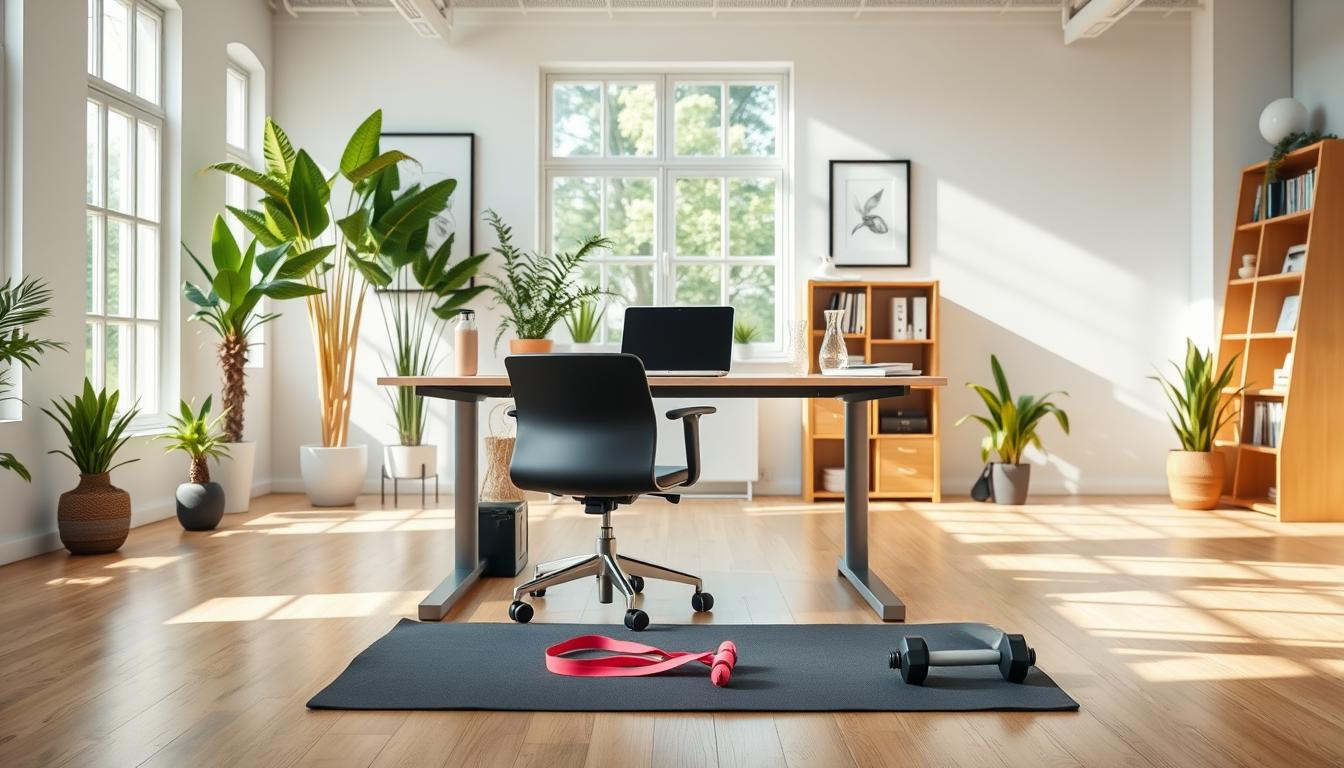
Staying physically active is key, even if you’re not a fitness fan. Most jobs require us to sit for hours at a desk. This can make us very inactive.
Non-Exercise Activity Thermogenesis (NEAT) refers to the energy we expend in daily life, not just through exercise. Increasing your NEAT can help you stay healthy and reach your fitness goals.
Adding simple desk exercises and micro-workouts to your day can help you increase your daily steps. You can do this without leaving your office. It’s a great way to boost your health and well-being.
Key Takeaways
- Understand the concept of NEAT and its benefits
- Learn simple ways to boost your physical activity at work
- Discover micro-workouts that can be done at your desk
- Find out how to track your progress and stay motivated
- Get ready to take your workplace fitness to the next level
The Hidden Dangers of Office Inactivity
Prolonged sitting is common in today’s office jobs. But it’s not good for your health. Sitting for long periods can lead to serious health problems.
The Health Risks of Prolonged Sitting
Sitting for too long can make you more likely to get obese, develop diabetes, or have heart disease. Research has shown that it can change how your body uses insulin and fats. A sedentary lifestyle can also lead to back pain, poor posture, and reduced mobility.
Why Traditional Exercise Isn’t Enough
Exercise is key to staying healthy, but it’s not enough to counteract the harm caused by excessive sitting.
“Sitting is the new smoking,” says Dr. James Levine, a renowned expert on non-exercise activity thermogenesis (NEAT).
Even if you exercise regularly, sitting for long periods can still harm your health. This is because traditional exercise doesn’t make up for all the sitting.
To minimize these risks, it’s essential to move more throughout the day, including at work. This way, you can avoid the harmful effects of prolonged sitting and stay healthier.
Understanding NEAT: Your Secret Weapon Against Sedentary Work
NEAT, or Non-Exercise Activity Thermogenesis, is a great way to counteract the effects of prolonged sitting. It’s about the energy you use doing things that aren’t formal exercise. This includes small movements, such as fidgeting or walking to the copier.
What is Non-Exercise Activity Thermogenesis?
NEAT is about the calories burned during daily activities that aren’t sleeping, eating, or working out. It includes the energy you use at work, during leisure, and in daily movements. For example, if you have a job that keeps you moving or if you like to fidget, you’re burning NEAT calories.
How NEAT Impacts Your Daily Calorie Burn
NEAT can significantly impact the number of calories you burn each day. Studies show that individuals with higher levels of NEAT tend to weigh less and have better health. For instance, someone who stands or walks a lot can burn significantly more calories than someone who sits for extended periods.
| Activity | Calories Burned per Hour |
|---|---|
| Sitting | 80-100 |
| Standing | 150-200 |
| Walking | 300-400 |
Adding more NEAT activities to your day can help you burn more energy. This can also boost your metabolic health.
Setting Realistic Movement Goals for Office Workers
Starting a more active office life begins with knowing your current activity level. You need to set the right step goals. First, track your daily steps for a week to understand your baseline.
Determining Your Current Activity Baseline
Start by tracking your daily steps for a week. Use a fitness tracker, pedometer, or a smartphone app. This will help you find your average step count.
Use this data to set realistic step goals. For example, if you average 3,000 steps a day, aim to increase it by 10% each week.
Creating Achievable Step Goals Without Leaving Your Desk
After finding your baseline, set achievable step goals. Try to increase your steps by a little each day. For instance, take more steps during commercial breaks or stand up and stretch every hour.
Set a goal to add 500 steps to your daily routine. This could be achieved by pacing during phone calls or engaging in desk exercises. As Stephen Covey said, “The key is not to prioritize what’s on your schedule, but to schedule your priorities.”
Setting realistic step goals helps you progress without feeling overwhelmed. Start with slight increases. This will help you reach your step goals.
Strategy #1: Transform Your Workspace for Constant Movement
Making your workspace more active can significantly help you stay more active during the day. Simple changes can transform your office into a space where you can easily achieve your step goals.
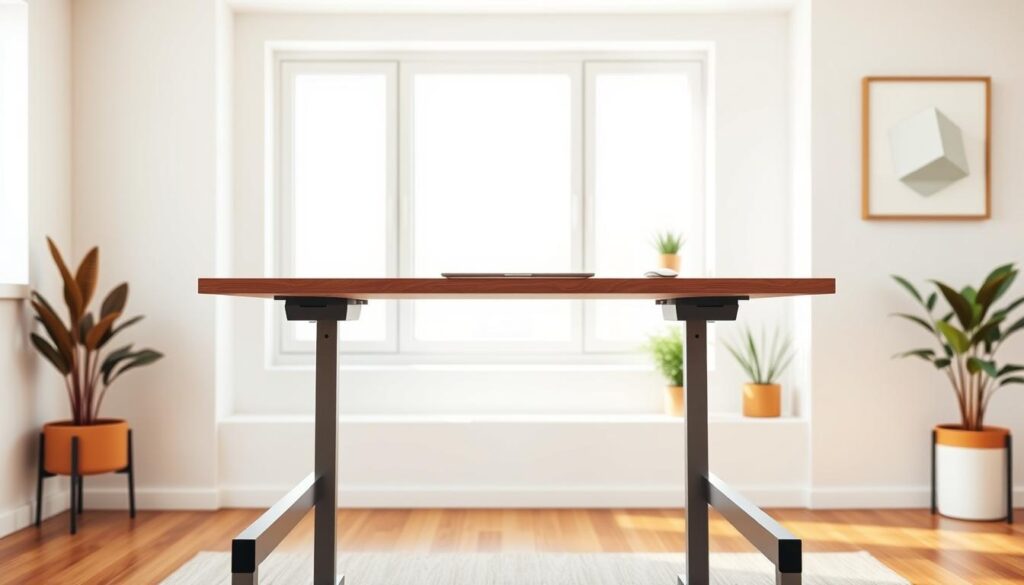
Standing Desk Solutions for Every Budget
Standing desks are great for increasing physical activity. They allow you to switch between sitting and standing, which is beneficial for your health.
DIY Standing Desk Options
On a budget? Try a DIY standing desk. Use boxes or a riser to lift your monitor and keyboard for a quick standing spot.
Commercial Standing Desk Recommendations
Looking for something more official? Commercial standing desks are out there—Varidesk and Stand Steady offer adjustable, ergonomic models.
Under-Desk Movement Equipment
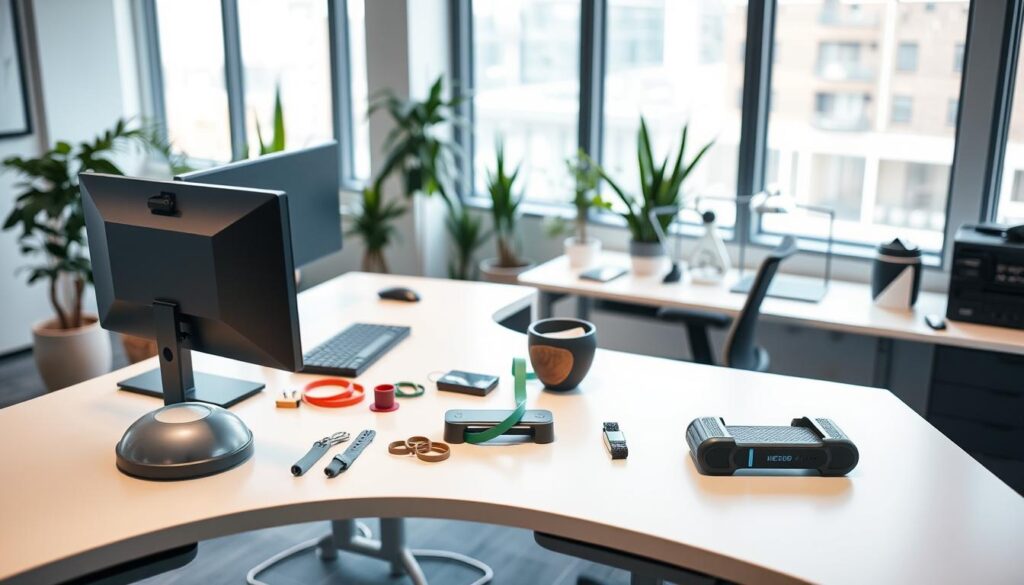
Under-desk gear lets you move while sitting. It’s a sneaky way to get more active.
Under-Desk Ellipticals and Cycles
Under-desk ellipticals and cycles are small and fit under your desk. They let you pedal or move your legs while you work.
Balance Boards and Wobble Cushions
Balance boards and wobble cushions work your core and help you improve your balance and coordination. They also improve your posture and reduce stiffness.
Ergonomic Adjustments That Encourage Movement
Ergonomic tweaks can also get you moving more. By setting up your workspace for good posture and comfort, you’ll naturally move more.
Adjust your monitor, keyboard, and chair to create an ergonomic workspace. This will encourage you to move more.
Strategy #2: Meeting and Call Opportunities for Stealth Steps
You can make phone calls and meetings more active with simple steps. By moving around during these times, you can increase your steps without having to leave your desk.
Standing and Pacing During Phone Conversations
Standing and pacing during calls can add steps to your day. It also keeps you focused and productive. Try setting up a “walking call zone” in your office.
Creating a Designated “Walking Call Zone”
Choose a spot in your office for pacing during calls. It could be around your desk or down the hallway. A dedicated area helps you stay focused and active.
Tracking Call-Based Steps
Use a fitness tracker to count your steps during calls. This shows how active you are and encourages you to move more. Many apps can track your steps and offer insights.
Implementing Walking Meetings
Walking meetings are an excellent way to add steps to your daily routine. They’re ideal for conversations with colleagues or clients while on the move.
In-Person Walking Meeting Protocols
For walking meetings, pick a safe and easy route. Ensure the topic aligns with the walking setting. Everyone should wear comfy shoes and drink water.
Virtual Walking Meeting Techniques
Virtual meetings can also be walking meetings. Participants can walk while on calls. Use apps that let you move freely during calls.
Subtle Movements During Video Conferences
Even in video calls, you can move a bit. Tap your feet, stretch, or shift your weight. These small actions can help you stay active and focused.
| Movement Strategy | Benefits | Tips for Implementation |
|---|---|---|
| Standing and Pacing During Calls | Increased steps, improved focus | Create a designated walking zone, and use a fitness tracker |
| Walking Meetings | Boosts creativity, increases steps | Choose a safe route, wear comfortable shoes |
| Subtle Movements During Video Conferences | Stay engaged, adds to daily steps | Tap your feet, stretch your legs, shift your weight |
These strategies turn meetings and calls into chances for physical activity. They help you meet your step goals without leaving your office.
Strategy #3: Desk Exercise Routines That Boost Your Step Count
You can boost your daily step count without leaving your desk. Desk exercises are simple, effective, and easy to incorporate into your workday.
Seated Movements to Combat Stiffness
Seated movements keep you active at work. They reduce stiffness and improve blood flow.
Leg Extensions and Marches
Leg extensions lift your legs straight out. Seated marches are marching in place while sitting. Both work your leg muscles and increase movement.
Core Engagement Techniques
Engaging your core while sitting is easy. Tighten your abs or do seated twists. These strengthen your core and improve your posture.
Standing Exercises Between Tasks
Standing exercises let you stretch and move during breaks. They help you avoid sitting too long.
Calf Raises and Desk Push-Ups
Calf raises are done on a step or curb. Raise on your tiptoes. Desk push-ups are modified push-ups against your desk.
Mini Squats and Lunges
Mini squats: Stand with feet apart, then lower slightly. Lunge step out with one foot, lowering until the back knee almost touches the ground.
Implementing Timed Movement Intervals
Use timed intervals for desk exercises. Set a timer for every 30 minutes. Take a few minutes to stretch or do seated exercises.
As Dr. James Levine, a renowned expert in non-exercise activity thermogenesis (NEAT), once said,
“Sitting is the new smoking.” Regular movement, even in small amounts, can significantly improve your health.
Strategy #4: Micro-Workouts, NEAT, Desk Exercise, Active Breaks, and Increasing Daily Steps During Downtime
Turning downtime into movement is a big win for office workers. Simple exercises can boost your activity without leaving your desk. This way, you can easily meet your step goals.
Waiting Time Movement Opportunities
Waiting for the printer, coffee, or microwave is a chance to move. Try toe taps, calf raises, or leg swings instead of standing still.
Printer, Coffee, and Microwave Exercises
While waiting, do leg lifts or shoulder rolls. These small actions can help loosen up your body.
Line-Standing Movements
Waiting in line? Use it to perform ankle rotations or stretch your arms overhead. It’s a great way to stay active.
Transforming Regular Breaks into Step Opportunities
Breaks are more than rest time. They’re chances to move. Take a short walk or do some jumping jacks.
Maximizing Bathroom and Water Breaks for Movement
Bathroom and water breaks are daily. Use them to move by taking the stairs or walking to another floor for a drink.
Strategy #5: Creating a Movement-Friendly Office Culture
Creating a culture that supports movement in the office can significantly enhance employee well-being and job satisfaction. It encourages physical activity, boosting health, productivity, and morale.
Developing Team Step Challenges
Team step challenges are an excellent way to encourage employees to move. They can be tailored to fit your office’s vibe.
Setting Up Competitive Step Programs
Competitive step programs can be highly motivating. By forming teams and tracking progress, you create a fun and competitive atmosphere that encourages everyone to be more active.
Non-Competitive Movement Initiatives
Not every office is into competition. Non-competitive activities, such as group walks or stretching sessions, can also promote movement without the stress of a contest.
Normalizing Movement in Your Workplace
To move a part of your culture, it’s essential to incorporate it into your daily life. This means standing during meetings or taking breaks to stretch.
Including Remote Workers in Movement Activities
With more people working from home, it’s essential to include remote workers in movement activities. Virtual step challenges or online fitness classes can make them feel part of the movement culture.
By employing these strategies, you can create an office environment where everyone can remain active, regardless of their work location.
Tracking and Measuring Your Workplace Movement Success
To get the most out of workplace movement, tracking your progress is key. By monitoring your daily activities, you can identify your habits and pinpoint areas for improvement. This helps keep you motivated to hit your step goals.
Best Fitness Trackers for Office Step Counting
Choosing a suitable fitness tracker is crucial for accurately tracking your steps. Fitbit Charge and Garmin Vivosmart are top picks. They accurately track your steps and are easy to wear all day.
Apps That Monitor Non-Exercise Movement
Movement tracking apps also offer great insights into your daily activity. Google Fit and Apple Health track your steps and other movements. They provide a comprehensive view of your daily activities.
Setting Up Movement Reminders and Alarms
Setting movement reminders can really help you stay active. Use a fitness tracker or a smartphone app to remind you to move. This helps maintain your activity level throughout the day.
Conclusion: Small Movements, Significant Results
You don’t need to leave your office to reach your step goals. Small changes in your daily routine can significantly enhance your health and fitness. This is true even if you’re stuck at a desk all day.
There are many ways to make a big difference. You can change your workspace to be more active. Or, you can help make your office a place where everyone moves more. These simple steps can really add up and contribute to your overall health.
Begin with minor changes, like taking more steps during phone calls. Or try using a standing desk. As you become accustomed to these habits, you can continue to add more. This will lead to significant improvements in your fitness and health.
By controlling how much you move, you can still improve your health, even if you spend a lot of time sitting. It’s all about making small changes that add up over time.
Really insightful post — Your article is very clearly written, i enjoyed reading it, can i ask you a question? you can also checkout this newbies in classied. iswap24.com. thank you
Really insightful post — Your article is very clearly written, i enjoyed reading it, can i ask you a question? you can also checkout this newbies in classied. iswap24.com. thank you