

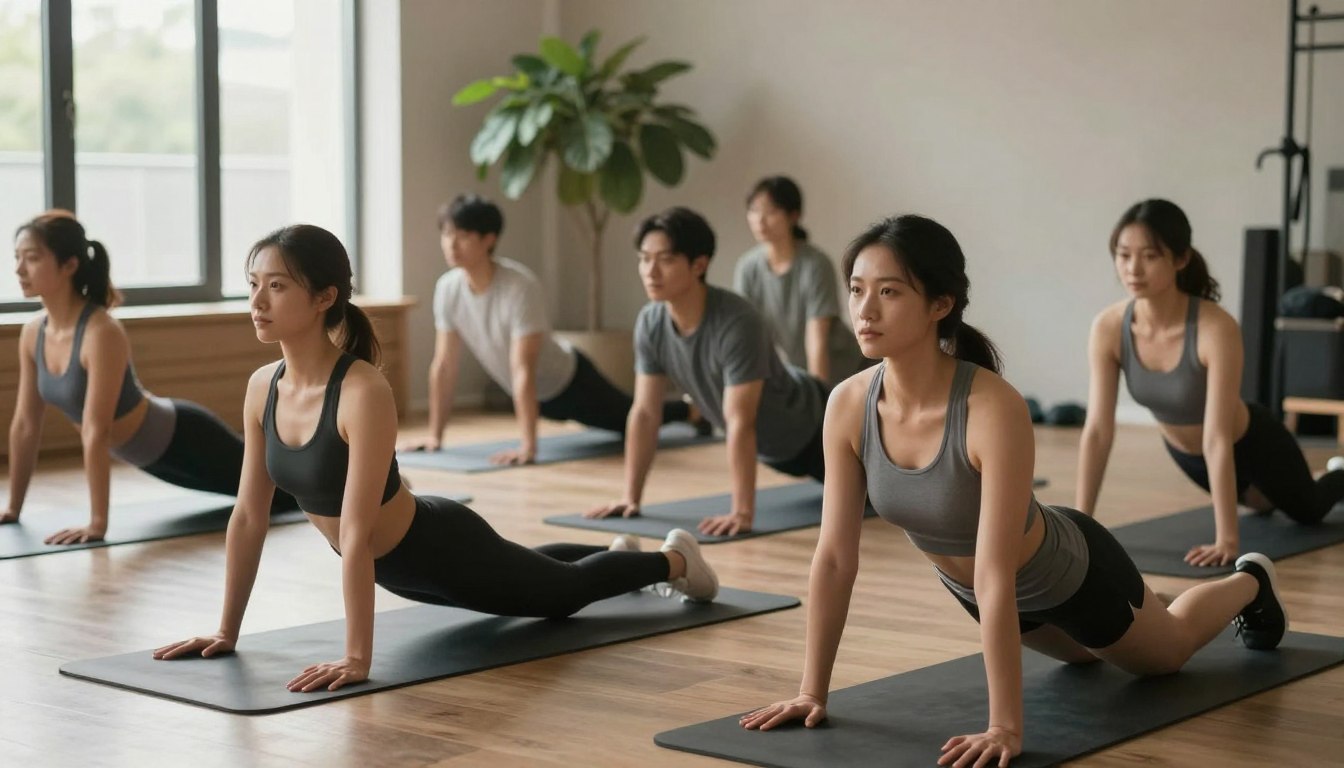
You’ve probably heard that isometric training can improve your joints. But what is it, and how does it help?
Isometric exercises involve contracting your muscles without moving your joints. This functional fitness builds strength and bone density without harming your joints too much.
A recent study showed that isometric wall squat exercises can lessen pain in adults with knee osteoarthritis. Adding isometric exercises to your routine may reduce joint pain and improve mobility.
Key Takeaways
- Isometric exercises can help build strength without excessive joint strain.
- Functional fitness is enhanced through isometric training.
- Isometric wall squat exercise can reduce pain sensitivity in knee osteoarthritis.
- Incorporating isometric exercises can improve joint mobility.
- Isometric training is a valuable addition to a pain-free joint routine.
The Hidden Power of Static Training
Static training is becoming more popular for its special benefits in building low-impact strength. It’s different from traditional exercises because it involves contracting muscles without moving the joints. This makes it a gentler option for those with joint issues.
What Makes Isometric Exercises Unique
Isometric exercises are special because they can boost muscle strength without the usual wear and tear. This is great for people who want to get stronger without hurting their joints.
- They can be done anywhere without any special equipment.
- They are a low-risk choice for people recovering from injuries.
- They can easily fit into your current workout routine.
The Science Behind Muscle Tension Without Movement
The power of isometric exercises comes from their ability to generate muscle tension without joint movement. Studies show that this tension can greatly improve muscle strength. Fitness experts say, “Isometric training can be as effective as dynamic exercises in building strength, with the added benefit of reduced joint stress.”
Here are some key science points about isometric exercises:
- Muscle fibers are activated to generate force.
- Neural adaptations occur, enhancing muscle recruitment patterns.
- Blood flow and oxygen delivery are improved during static holds.
Understanding Isometric Training: The Foundation of Joint-Friendly Exercise
Isometric training is simple yet effective. It involves contracting your muscles without moving your joints. This exercise is popular because it strengthens muscles without hurting joints.
Definition and Mechanics of Static Holds
Isometric exercises, or static holds, contract muscles without joint movement. When you do an isometric exercise, you engage your muscles to hold a position or resist a force. This type of exercise is unique because it doesn’t shorten or lengthen muscle fibers, unlike dynamic movements.
The mechanics of isometric training rely on muscle tension without joint movement. This is great for people with joint pain or recovering from injuries. It helps them keep or improve muscle strength around the joint without extra stress.
How Isometrics Differ from Dynamic Exercises
Isometric exercises are static, unlike dynamic exercises that move joints. Dynamic exercises, like running or weightlifting, can stress joints, leading to wear and tear. On the other hand, isometric exercises strengthen muscles with minimal joint impact, making them effective for injury prevention and joint pain management.
Knowing the difference between isometric and dynamic exercises helps you choose the right exercises for your needs and goals.
The Joint-Protective Benefits of Static Holds
Static holds are a special kind of exercise that strengthens muscles while protecting joints. They are getting more attention because they can make muscles stronger without the stress of heavy lifting.
Why Your Joints Love Isometric Contractions
Isometric contractions are beneficial for your joints because they work muscles without causing joint damage from movement. When you do an isometric exercise, you’re making your muscles support your joints. This makes your joints more stable and reduces the risk of injury.
One major benefit of isometric training is that it strengthens the muscles around the joint without the stress of large movements. This is very helpful for people with joint problems or those recovering from injuries.
Benefits of Isometric Contractions for Joints:
- Enhanced muscle strength around the joint
- Improved joint stability
- Reduced risk of injury
- Minimal wear and tear on the joint
Research on Isometrics and Pain Reduction
Studies show that isometric exercises can really help reduce pain in people with knee osteoarthritis. A study found that people who did isometric training had less pain than those who didn’t.
“Isometric exercise training is a promising adjunct or alternative to traditional dynamic exercise for individuals with knee osteoarthritis, offering a low-impact means of improving muscle function and reducing pain.”
The table below summarizes findings from several studies on isometric exercises and pain reduction.
| Study | Population | Outcome |
|---|---|---|
| Study 1 | Knee Osteoarthritis Patients | Significant reduction in pain sensitivity |
| Study 2 | Healthy Adults | Improved muscle strength and reduced pain perception |
| Study 3 | Individuals with Chronic Pain | Decrease in chronic pain symptoms |
These studies show that isometric exercises can be an effective way to manage pain and maintain joint health.
Building Incredible Strength Without Movement
Isometric exercises are a special way to build strength without harming your joints. They focus on holding a muscle contraction without moving their limbs. Adding isometric exercises to your workout can boost your strength and endurance.
The Neurological Advantage of Isometrics
Isometric training boosts muscle strength by improving neuromuscular coordination. When you do an isometric exercise, you’re not just making your muscles stronger. You’re also training your nervous system to use more muscle fibers efficiently. This helps you get stronger faster as your body learns to use the right muscles more effectively.
Maximum Muscle Activation with Minimal Wear and Tear
Isometric exercises are great because they work your muscles hard without hurting your joints. Unlike dynamic movements that can cause injury, isometric holds are safer. They’re perfect for those who want to get stronger without risking joint damage.
Bone Density and Isometric Exercise: The Connection
Isometric exercises can boost your bone density. They are a low-impact strength training option. Studies show that isometric training helps bones grow, making it a joint-friendly exercise option.
How Static Training Stimulates Bone Growth
Research shows that resistance training, such as isometric exercises, boosts bone growth. It does this by making muscles and bones work harder. This effort signals to the body to strengthen bones, potentially increasing bone density.
Isometric training does this without the stress of high-impact exercises. This makes it perfect for those worried about their joints.
Isometrics for Osteoporosis Prevention
For those at risk of osteoporosis, isometric exercises are very helpful. They improve bone density, lowering the chance of fractures. It’s key to talk to a doctor before starting any new exercise, especially if you have health issues.
Essential Isometric Exercises for Your Entire Body
Static holds can target many muscle groups, helping build strength. Isometric exercises are great for improving muscle activation and physical stability.
Upper Body Isometrics
Upper-body isometric exercises are effective for strengthening the arms, shoulders, and chest. Here are some examples:
- Wall Push: Stand with your feet shoulder-width apart and push against a wall with your hands at shoulder height.
- Doorway Chest Press: Place your hands on either side of a doorway and press outward.
- Towel Pull: Wrap a towel around a stable object and pull on both ends to engage your back and arm muscles.
These exercises are easy to do anywhere and need little equipment. They’re great for home workouts or when you’re traveling.
Core Strengthening Static Holds
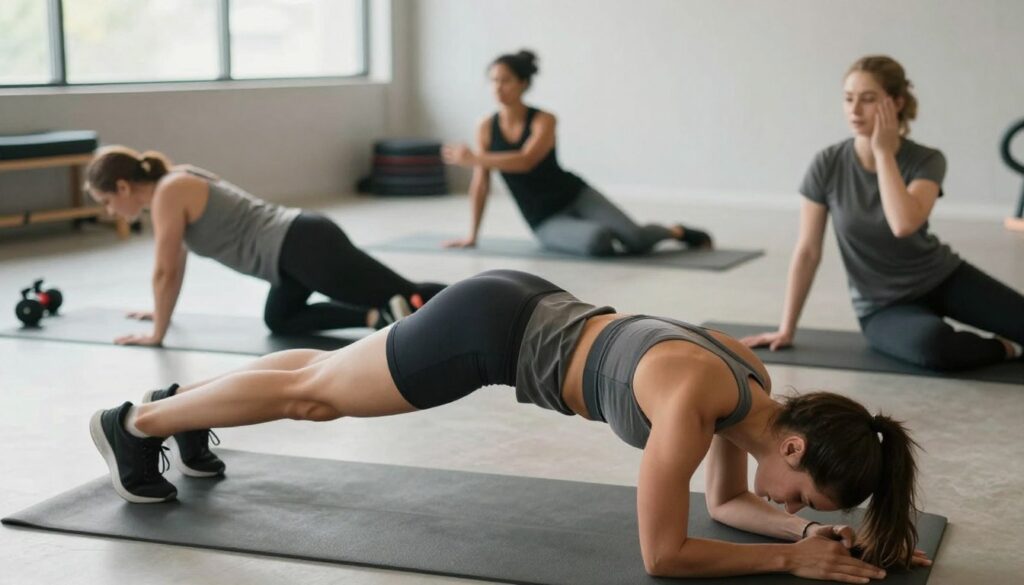
A strong core is key to stability and balance. Isometric exercises like planks, side planks, and hollow holds target your core muscles.
- Planks: Hold a position with your hands under your shoulders and toes on the ground, engaging your core and maintaining a straight line from head to heels.
- Side Planks: Lie on your side with your feet stacked and hands under your shoulders, lifting your hips off the ground.
- Hollow Hold: Lie on your back with your arms extended overhead and legs straight, lifting your shoulders and legs off the ground.
Lower Body Isometric Powerhouses
Isometric exercises can also strengthen your lower body. Here are some examples:
- Wall Sits: Stand with your back against a wall and slide down into a seated position, holding for as long as possible.
- Glute Bridge Hold: Lie on your back with your knees bent and feet flat on the ground, then lift your hips into a bridge position and hold.
- Split Squat Hold: Stand in a lunge position and hold for 30 seconds, engaging your leg muscles.
These exercises are great for improving strength and stability in your legs and glutes.
Equipment-Free Isometric Training: Exercises Anywhere, Anytime
Isometric training lets you work out anywhere, anytime, without any equipment. This makes it ideal for those with busy schedules or who prefer not to go to the gym. You can use your body weight or household items to create resistance.
Bodyweight-Only Isometric Techniques
Bodyweight isometric exercises help build strength without equipment. Try planks, wall sits, and glute bridges to work multiple muscle groups at once. For example, planks strengthen your core, while wall sits build leg strength.
These exercises can be adjusted to fit your fitness level. This makes them great for everyone.
Using Household Items for Resistance
You can also use household items to add resistance to your workouts. For example, use a towel or rope for isometric rows or shoulder presses against a door. “The key is to find creative ways to challenge your muscles using items you already have at home.”
As a fitness expert says, “Using household items can add variety to your workout and help prevent plateaus.”
Adding these techniques to your routine lets you enjoy isometric training without expensive equipment or gym memberships.
Mastering Proper Form: Technique Guidelines for Safe Isometric Training
Proper technique is key to successful isometric training. It ensures you get the most benefit without compromising your safety. Focus on proper form, breathing, and intensity to maximize the benefits of isometric exercises.
Breathing Patterns During Static Holds
Breathing naturally is important during isometric exercises. Avoid holding your breath to prevent tension and dizziness. Instead, exhale during the contraction and inhale during relaxation. This helps maintain steady blood flow and oxygen delivery.
Finding the Right Intensity Level
Intensity in isometric training is about the right muscle engagement. Start with a moderate intensity and increase as you get stronger. Aim to challenge your muscles without causing strain.
Duration and Recovery Guidelines
For effective isometric training, balance exercise time with rest. Typically, hold each exercise for 5-10 seconds. Then, take 2-3 minutes of rest between sets for the same muscle group. This balance helps you work your muscles well without overdoing it.
| Exercise | Duration | Rest |
|---|---|---|
| Plank | 30-60 seconds | 2-3 minutes |
| Wall Sit | 30-60 seconds | 2-3 minutes |
| Glute Bridge Hold | 10-30 seconds | 2-3 minutes |
By following these guidelines, you can make sure your isometric training is safe and effective. It will help improve your functional fitness.
Creating Your Low-Impact Strength Routine
Creating a personalized isometric training program is easier than you think. It’s a great way to build strength without harming your joints. By following a structured approach, you can make a low-impact strength routine that fits your fitness level and goals.
Beginner’s Introduction to Isometric Training
If you’re new to isometric exercises, start with simple static holds like wall sits and planks. Start with shorter durations (20-30 seconds) and gradually increase the time as you get stronger. Focus on proper form and breathing to get the most out of your workout.
Intermediate Progression Strategies
Once you’ve mastered the basics, you can make your isometric training more challenging. Try single-leg squats or advanced plank variations. Adding different muscle groups and varying the intensity will keep your workouts interesting and prevent plateaus.
Advanced Isometric Protocols
For those looking to advance their isometric training, consider more complex exercises or increased resistance. Use resistance bands or weights to increase the challenge of your static holds. Also, try different tempos and varying the time under tension to boost your strength gains.
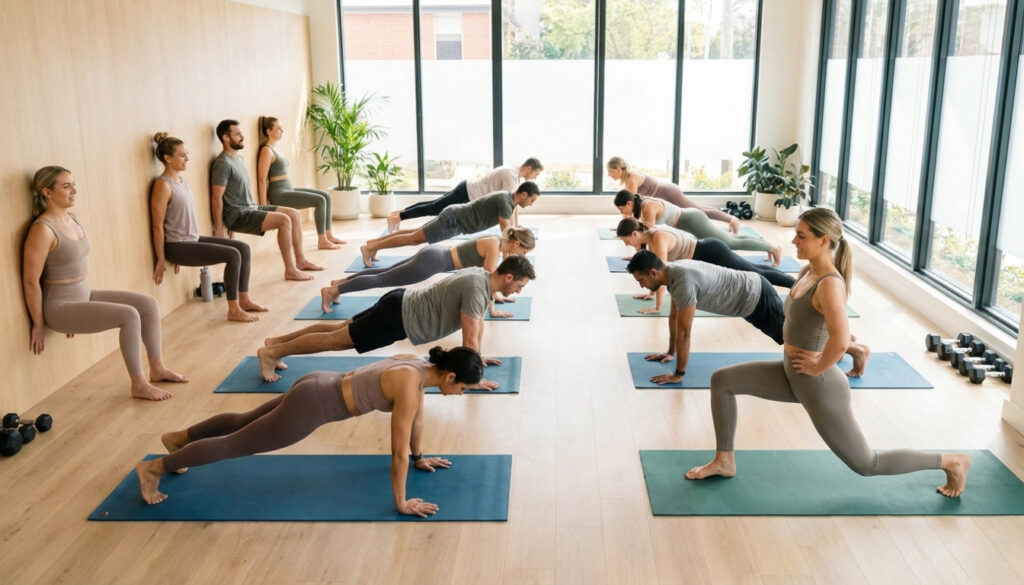
By tailoring your isometric training routine to your fitness level and goals, you can enjoy the benefits of low-impact strength training. Whether you’re a beginner or an advanced athlete, isometric exercises are versatile and effective for improving your strength and stability.
Combining Isometrics with Other Exercise Modalities
You can improve your workout by incorporating isometric exercises alongside other types. Isometric training complements many exercises to improve fitness and support recovery.
Isometrics as Warm-up and Recovery Tools
Isometric exercises are great for warming up or cooling down. They prepare your muscles for more without straining your joints. This makes them perfect for joint-friendly exercise routines.
Using isometrics before a workout prepares your muscles for greater effort. Afterward, they help with recovery by improving blood flow.
| Exercise Modality | Isometric Integration | Benefits |
|---|---|---|
| Dynamic Workouts | Pre-workout isometric warm-ups | Enhanced muscle activation |
| Rehabilitation | Isometric exercises for specific muscle groups | Improved strength without excessive joint stress |
Integrating Static Holds into Dynamic Workouts
Adding isometric holds to your dynamic workouts can make them more interesting and challenging. For instance, a wall sit can enhance your lower-body workout. A plank hold can make your core routine more intense.
Isometric Training for Special Populations
Isometric training is great for seniors and athletes. It’s low-impact and ideal for those who can’t do high-impact activities. This could be because of injury or age.
Seniors and Joint-Friendly Exercise
Seniors can keep or boost their strength with isometric exercises. Bodyweight exercises such as wall sits and static lunges are effective. They help muscles function more effectively and improve movement.
Rehabilitation Applications
In rehab, isometric training is key for injury recovery. It enables muscles to work without movement. For instance, it strengthens the knee muscle without moving the knee.
| Rehabilitation Benefit | Description |
|---|---|
| Muscle Strengthening | Isometrics help strengthen muscles without moving the joints. |
| Pain Reduction | Static exercises can reduce pain by strengthening the muscles around the affected area. |
| Improved Stability | Isometric training enhances joint stability, crucial for recovery. |
Athletes and Performance Enhancement
Athletes gain from isometric training, too. It boosts strength and endurance. Plank holds and isometric leg press improve core and leg strength. This leads to better performance.
Conclusion: Embracing the Silent Strength of Isometrics
You now know how isometric exercises can change your fitness and joint health. Adding static holds to your workout can make you stronger and more resilient. This is because isometrics improve your functional fitness.
Isometric exercises are great for building strength without putting too much strain on your joints. They help make your bones stronger and can reduce pain. You can do them anywhere, anytime, without needing special equipment. Learning the right form and technique unlocks their full benefits.
Think about adding isometric exercises to your fitness plan. With regular practice, you’ll feel the silent strength of isometrics. This will lead to a healthier, more resilient body. Embracing isometric training will help you achieve your fitness goals and stay fit for life.

Thi is a great article no doubt about it, i just started following you and i enjoy reading this piece. Do you post often ? we have similar post on the german best freelancer platform called https://webdesignfreelancerdeutschland.de/ you can check it out if you want. Thank you