

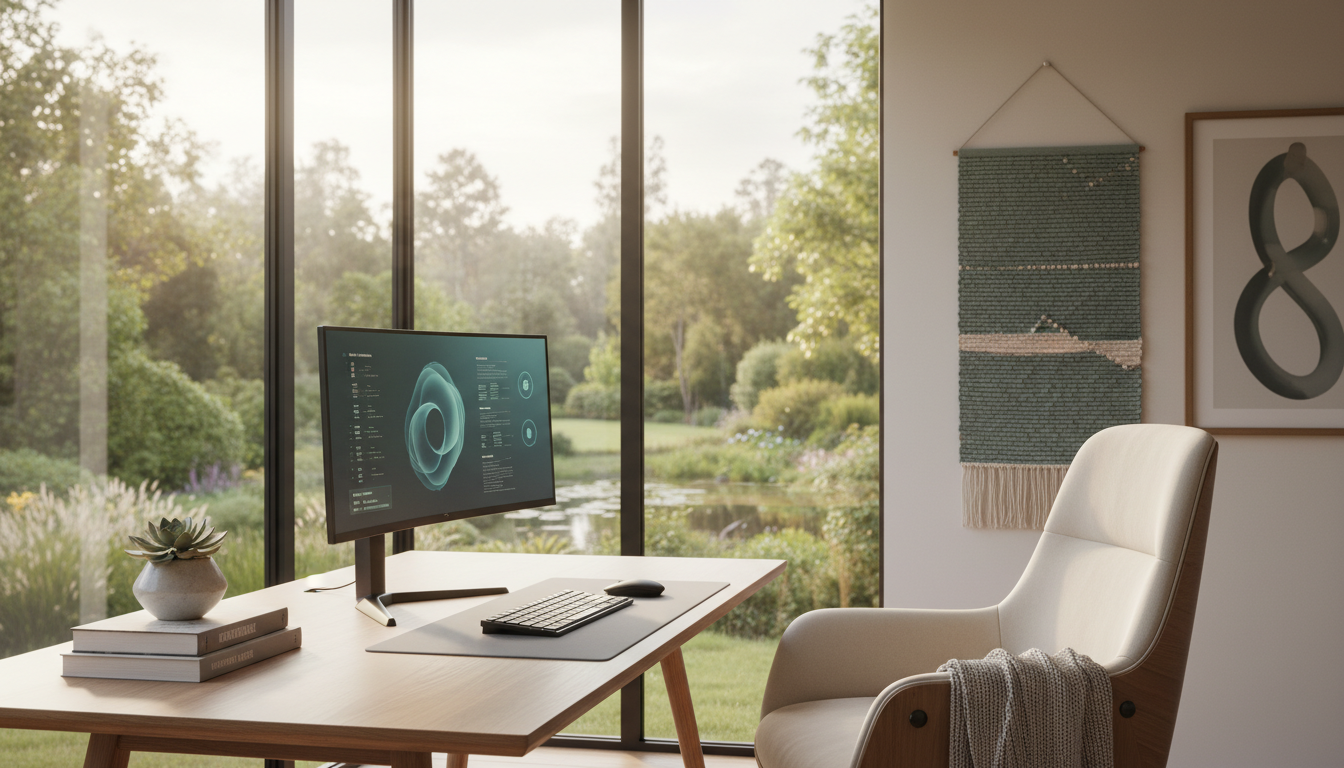
Creating a space that supports cognitive optimization is key in today’s fast-paced world. Studies show that well-designed buildings and public spaces can improve mental health. By designing your workspace, you can reduce distractions and improve your workflow.
Your environment greatly affects your ability to focus. By using environmental design principles, you can make a space that encourages calm and clear thinking. This idea aligns with the “PhearNot” philosophy, which emphasizes controlling our surroundings to improve health.
Key Takeaways
- Well-designed spaces can improve mental health and clarity.
- Curating your physical space can reduce visual noise and boost productivity.
- Applying environmental design principles can create a calm and focused environment.
- The “PhearNot” mindset supports taking control of your surroundings for better well-being.
- A well-designed workspace is crucial for maintaining focus and cognitive optimization.
Embracing the PhearNot Philosophy Through Your Physical Space
Using PhearNot at home or at work can boost focus and calm. It’s about making a space that helps you think clearly and be brave. Every detail should help you feel calm and focused.
What PhearNot Means for Your Environment
Adopting PhearNot makes your workspace distraction-free and clear-minded. It’s not just about looks; it’s about being productive and peaceful. Biophilic design, with its natural elements, is key. It reduces stress and boosts cognitive performance, aligning well with PhearNot.
To bring PhearNot into your space, think about these steps:
- Add natural elements such as plants, wood, and stone.
- Keep decor simple to avoid too much visual noise.
- Make sure your space is tidy and organized.
Breaking Free from Fear-Based Clutter
Fear-based clutter is stuff you keep because of fear. It disrupts your focus. Getting rid of fear-based clutter means understanding why you keep things and letting go of what’s unnecessary.
To declutter, ask yourself:
- What am I holding onto because of fear?
- How does this clutter affect my mind?
- How can I clear out these items for a cleaner space?
How Physical Order Creates Mental Courage
A tidy space helps you focus and feel brave. When your space is organized, you feel in control. This boosts your courage to face challenges.
“The state of your space can significantly influence your mental state. By creating a more organized and clutter-free environment, you’re taking a crucial step towards enhancing your mental clarity and courage.”
By following the PhearNot philosophy, you can make a space that supports your mental health. It helps you stay calm and focused.
The Neuroscience of Environmental Design and Mental Clarity
The science behind how we design our spaces shows how much it affects our minds. Our brains can focus and learn better when we create the right environment.
Environmental design is more than just making things look good. It’s about making a space that helps our brains work better. Studies show that being around nature can boost our thinking and mood. This underscores the importance of incorporating natural elements into our surroundings.
How Visual Noise Hijacks Your Attention
Clutter can significantly disrupt our focus and productivity. When our space is messy, our brains get overwhelmed by too much information. This makes it tough to concentrate.
Visual distractions can range from messy desks to excessive decoration. Reducing these distractions helps us stay focused.
The Cognitive Load of Disordered Spaces
Messy spaces put extra work on our brains. This is because our brains have to sort through a lot of unnecessary stuff.
| Environmental Factor | Cognitive Impact |
|---|---|
| Cluttered Space | Increased Cognitive Load |
| Natural Light | Improved Cognitive Function |
| Visual Noise | Decreased Focus |
Why Your Brain Craves Environmental Simplicity
Simple environments are not just nice to look at; they’re essential for our brains. A simple space makes it easier for our brains to focus on what’s important.
By making our spaces simpler, we’re not just cleaning up. We’re also making our minds clearer and helping us focus better.
Step 1: Audit Your Current Space for Focus Killers
Start by checking your space to improve focus and productivity. Clutter can make you stressed and less productive. Knowing your space’s state helps you see what needs fixing.
Conducting Your Room-by-Room Visual Noise Assessment
Walk through each room, noting any distractions. Visual noise includes clutter, bright colors, and too much decor. List each room and its distractions.
Your living room might have a cluttered coffee table. Your workspace could have papers and open tabs on your computer.
Identifying Hidden Distraction Triggers
Look for hidden distraction triggers beyond obvious clutter. These can include:
- Phone or computer notifications
- Background noise from TVs, radios, or devices
- Uncomfortable seating or bad lighting
Make a note of these as you check your space. Think about how they affect your focus.
Documenting Your Current Mental Clarity Baseline
It’s key to know how your space affects your mind. Rate your mental clarity from 1 to 10. Think about your stress, focus, and calm.
| Room | Visual Distractions | Hidden Triggers | Mental Clarity Rating |
|---|---|---|---|
| Living Room | Cluttered coffee table, too much decor | TV background noise | 6 |
| Workspace | Papers, computer tabs | Phone notifications | 4 |
| Bedroom | Cluttered dresser, bright colors | Uncomfortable bedding | 5 |
By understanding your current mental state and the distractions around you, you can begin making changes. This will help improve your focus and productivity.
Step 2: Clear the Physical Foundation for Mindfulness at Home
To start mindfulness at home, you need a clean space. A tidy area helps you focus better and stay calm.
The Ruthless Curation Process Explained
The curation process involves selecting and organizing your home items to create calm. Get rid of things you don’t need, are broken, or distract you.
Start by sorting items into three groups: keep, donate/sell, and discard. Be strict to make your space perfect for mindfulness.
Sorting Systems That Protect Your Focus
Good sorting systems keep your space clean. Choose storage that looks good and works well.
- Use labeled containers for storing items.
- Implement a “one in, one out” policy to prevent clutter buildup.
- Keep frequently used items accessible.
Creating Your Essential-Items-Only Workspace
Your workspace should help you work better. Remove anything that might distract you.
| Workspace Element | Purpose | Benefit |
|---|---|---|
| Minimal decor | Reduce visual distractions | Improved focus |
| Ergonomic furniture | Enhance comfort during work | Increased productivity |
| Good lighting | Improve visibility and mood | Better work quality |
With an essential-items-only workspace, you’ll focus better and be more mindful every day.
Step 3: Design Dedicated Zones for Deep Work and Reflection
To boost your focus and mindfulness, it’s key to have specific areas for work and rest. Studies show that dedicated spaces can increase productivity and satisfaction. By setting up different zones, you can better control your mind and focus.
Setting Up Your Focus Sanctuary
Your focus sanctuary is for deep work, where you can focus without distractions. Pick a quiet spot with little noise. Make sure it’s tidy and organized to keep your mind clear.
Choose furniture that supports long hours of work. Also, adjust the lighting to improve concentration.
Carving Out Your Mindfulness Corner
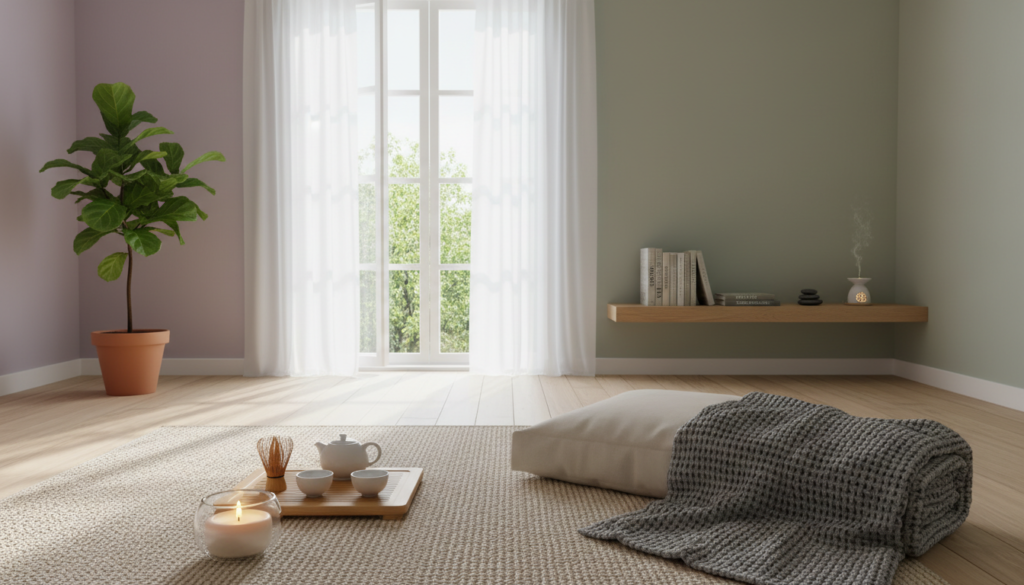
A mindfulness corner is for meditation and thinking. It should be calm and peaceful. Use comfortable chairs and soft colors to create a serene atmosphere.
Adding plants or a water feature can further enhance the relaxation.
Building Transition Spaces Between Mental States
Transition spaces help you move from work to rest. They can be simple, like a hallway with calming art or a cozy reading spot. These areas help you switch tasks and states of mind, boosting your productivity and reducing stress.
By setting up these zones, you create a space that supports your work and mindfulness. This leads to a more balanced and fulfilling life.
Step 4: Apply Color Psychology for Cognitive Optimization
Color psychology can change how you feel in your space. The colors around you affect your mood and focus. By choosing the right colors, you can improve your environment for your mind.
Selecting Wall Colors That Enhance Mental Clarity
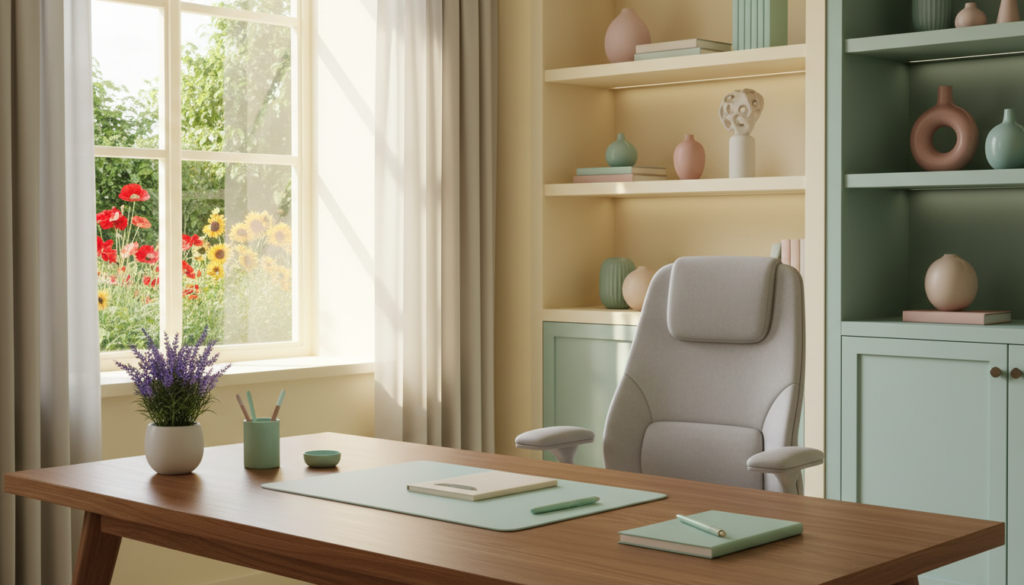
Choosing wall colors can be tough. But some colors help you feel calm and clear-minded. Soft blues and pale greens are great because they calm your mind.
Think about the light in your room and how colors look at different times. Light blue appears brighter in bright rooms. A softer green works better in dimmer areas. Try out different shades to see what works best.
Strategic Use of Calming Blues and Greens
Blues and greens are calming, making them ideal for relaxation or focus. Blue makes you feel serene, and green brings balance. Using these colors wisely can improve your mental health.
For example, a soothing blue in your bedroom helps you relax. A muted green in your office boosts focus. Lighter shades lift your mood, while darker shades ground you.
| Color | Psychological Effect | Best Use |
|---|---|---|
| Soft Blue | Promotes relaxation and calmness | Bedrooms, meditation rooms |
| Pale Green | Enhances balance and growth | Workspaces, living areas |
| Light Gray | Provides neutrality and clarity | Hallways, kitchens |
Avoiding Overstimulating Color Combinations
Colors can significantly improve your space, but avoid using too many. Too many colors can make you tired and less productive. Stick to the 60-30-10 rule for a balanced look.
This rule helps you pick colors that look good and support your mental health. Aim for a space that feels good and helps you focus.
Step 5: Engineer Your Lighting for Sustainable Living and Focus
Optimizing your lighting is key to focus and sustainable living. The right lighting in your space can boost productivity and well-being.
Maximizing Natural Light in Your Workspace
Natural light lifts your mood and boosts productivity. Move your furniture near windows to get more of it. Use sheer curtains to control light and avoid glare on screens.
Studies show natural light improves mood and productivity. It’s vital for your workspace.
Installing Task Lighting for Eco-Friendly Deep Work
Task lighting is crucial when natural light is lacking or at night. It helps you focus on tasks without eye strain. Choose energy-efficient LED lights for focused lighting.
Place your task light to the right to reduce eye strain and improve concentration.
Creating Evening Lighting Routines for Spiritual Reflection
Adjust your lighting as evening comes to signal a calm. Warm lighting promotes relaxation and spiritual reflection. Dimmable lights or smart systems can change brightness and color to mimic a sunset.
This helps your body adjust to night and prepares for rest.
By carefully planning your lighting, you support focus and sustainable living. Whether it’s natural light, task lighting, or evening routines, each change improves your space.
Step 6: Position Furniture to Support Flow and Concentration
To improve your focus, arrange your furniture wisely. The way you set up your workspace can either help or hurt your productivity. By choosing the right furniture layout, you can create a space that boosts mental clarity and reduces distractions.
Optimal Desk Orientation for Distraction Resistance
The direction your desk faces is key to staying focused. Placing your desk away from busy spots or distractions helps you stay on track. Here are some tips for desk orientation:
- Avoid facing windows directly to minimize the temptation to gaze outside.
- Position your desk to have a clear view of the door, but not directly in line with it.
- Keep your workspace away from noisy areas or distractions.
Arranging Seating for Meditation and Contemplation
Having a special spot for mindfulness can boost your mental health. When setting up a meditation area, keep these points in mind:
- Choose a quiet, peaceful area of your home.
- Use a cushion or chair that supports good posture.
- Minimize clutter and distractions around your meditation space.
Creating Ergonomic Setups That Enable Extended Focus
Using ergonomic furniture can improve comfort and productivity. Here’s how to set up an ergonomic space:
- Ensure your chair is at a height that allows your feet to rest flat on the floor or on a footrest.
- Position your monitor directly in front of you, at a distance of about 20-25 inches, and at a height that allows you to gaze slightly downward.
- Keep your keyboard and mouse close to your body to avoid reaching forward.
By following these tips, you can make a workspace that boosts your productivity and well-being. The goal is to create an environment that supports flow and concentration.
Step 7: Build Habit Stacking Systems Into Your Environment
Your environment shapes your habits. Let’s see how to make it better. By implementing habit stacking, you can make good habits automatic and improve your focus.
Placing Visual Cues for Routine Organization
Visual cues are great for sticking to routines. Place reminders in key spots to stay on track. For example, a note on your fridge can remind you to take vitamins every morning.
Effective visual cues can be simple, such as a Post-it note, or advanced, such as a smart alarm. They should be easy to see and linked to the desired habit.
Using Environmental Triggers to Automate Mindfulness
Environmental triggers help automate mindfulness. For example, a meditation cushion in a quiet spot can trigger mindfulness. This creates a space for mindfulness.
Linking specific places to your habits can automate them. This makes it easier to keep up with them without overthinking.
Removing Objects That Prompt Distracted Behavior
Some objects can lead to distractions. It’s important to remove or limit these to stay focused.
If social media apps on your phone distract you, consider removing them. Or use an app that blocks social media when you work.
By choosing your environment wisely and removing distractions, you can significantly improve your focus. This helps keep your routine productive.
Step 8: Control Your Acoustic Environment for Mental Clarity
Improving your workspace for better focus means managing the sounds around you. The right sounds can help you stay focused, while the wrong ones can distract you. By controlling these sounds, you can make your space better for your mind and work.
Installing Sound Barriers Using Eco-Friendly Materials
Sound barriers are a great way to manage your acoustic space. Eco-friendly materials not only block noise but also help the planet. Think about using:
- Recycled fabric sound panels
- Bamboo or cork acoustic tiles
- Plants like peace lilies or snake plants can absorb sound
These items can block noise and reduce distractions. For example, a sound-absorbing panel near your desk can reduce echo and background noise.
Adding White Noise or Nature Sounds Strategically
Adding white noise or nature sounds can also help. These sounds can cover up distracting noises, making your environment more focused. You can:
- Use a white noise machine or app
- Play nature sounds through a sound system
- Put a small fountain or water feature for calming sounds
Research shows that certain noises, like rain or ocean waves, can improve your thinking and work. Try different sounds to see what works best for you.
“The right sound can transform a space, making it more conducive to concentration and creativity.”
Designating Silence Zones for Deep Reflection
Creating quiet areas is also key to deep thinking and mental clarity. Find places where silence is important and:
- Make these areas phone-free and conversation-free
- Use signs or special decor to show they are quiet zones
- Encourage quiet thinking and reflection
By having spaces for both work and quiet, you can improve your mental clarity and well-being.
Step 9: Establish Digital Boundaries in Your Physical Space
To boost your productivity, you must set clear digital boundaries. In today’s world, distractions are everywhere. Creating a space for focus requires more than just organizing.
Creating Phone-Free Zones for Focus Hacks
Setting up phone-free zones is a great way to improve your focus. By banning phones in certain areas, you reduce distractions. Keep your workspace or reading area phone-free to work more effectively.
Benefits of Phone-Free Zones:
- Less digital distractions
- Better focus and concentration
- More creativity
Managing Cables and Tech Clutter for Visual Peace
Keeping cables organized is not just for looks; it helps your workspace feel less cluttered. Use cable organizers or zip ties to keep things neat.
| Cable Management Tips | Benefits |
|---|---|
| Use cable organizers | Reduces visual clutter |
| Label your cables | Eases identification and access |
| Limit the number of devices | Decreases digital overwhelm |
Positioning Screens to Minimize Temptation
Where you put your screens affects your productivity. Place your computer or TV so it’s hard to scroll or watch non-work stuff.
For example, putting your TV in a corner or against a wall makes it less tempting to watch when you should be working.
By using these tips, you can make a space that helps you stay focused and productive. It supports your well-being and work goals.
Step 10: Maintain Your Calm Architecture With Daily Rituals
Daily rituals are key to keeping your space calm. By establishing consistent habits in your day, you keep your workspace peaceful and organized. This helps your mind stay clear and boosts your well-being.
Implementing the Five-Minute Evening Reset
The Five-Minute Evening Reset is a simple yet powerful ritual. It involves spending a few minutes each evening tidying up. This clears your mind and gets your space ready for tomorrow.
Steps for the Five-Minute Evening Reset:
- Put away any items that are out of place
- Quickly wipe down surfaces
- Straighten up furniture and cushions
- Take a deep breath and visually inspect your space
Conducting Weekly Space Reviews for Sustained Mental Clarity
Weekly space reviews keep your area clutter-free and organized. This means setting aside time each week to check your space. You’ll find areas to improve and make changes as needed.
| Aspect to Review | Action Items |
|---|---|
| Clutter and Organization | Sort items, declutter, organize |
| Surface Cleanliness | Dust, wipe down surfaces |
| Furniture Arrangement | Adjust layout for optimal flow |
Adapting Your PhearNot Environment as Your Life Evolves
As your life and priorities change, so should your environment. You might need to rearrange your space, update decor, or add new habits. This keeps your space supporting your mental clarity and well-being.
By paying attention to your changing needs and making adjustments, you can keep your PhearNot environment supporting your well-being.
Conclusion
By following the steps in this article, you can make your living and work spaces better. They will help you stay focused and mindful. Studies show that a good environment can boost your mental health and happiness.
Start by checking how your space is set up. Then, make areas for deep work and thinking. Use colors, light, and furniture smartly to keep your mind clear.
Keep your space calm with daily habits. You’ll see how good design helps your focus and mindfulness. This leads to a more balanced and happy life. Taking charge of your space means you’re caring for your mind.


Hi there to all, for the reason that I am genuinely keen of reading this website’s post to be updated on a regular basis. It carries pleasant stuff.
thank your for this article, keep up the good work