Are you tired of strict diets that leave you hungry? Many people try low-carb or low-fat plans but don’t see lasting results. Instead, focus on the power of roughage to transform your results.
A high-fiber diet helps you feel full while eating foods you truly enjoy. This lifestyle change works by utilizing specific nutrients to keep your appetite in check.
Tanya Zuckerbrot created the F-Factor Diet to highlight this simple secret. It combines lean proteins with specific plants to create satiety without total deprivation.
By prioritizing fiber for weight loss, you can finally move past the cycle of hunger. This approach feels sustainable because it integrates easily into your daily life. You do not need to give up your favorite beverages to see real progress.
Key Takeaways
- Focus on roughage rather than just cutting carbs or fats.
- High intake of certain plant nutrients promotes a feeling of fullness.
- The F-Factor Diet emphasizes lean proteins alongside complex plants.
- Sustainability comes from not depriving yourself of favorites.
- This method helps break the common cycle of constant hunger.
- Tanya Zuckerbrot’s approach allows for a more flexible lifestyle.
Why Fiber Changes Everything About Weight Loss
Fiber has a big impact on weight loss. It offers a natural way to lose weight. Unlike other foods, fiber changes how our bodies process food and absorb nutrients.
Fiber is the part of plant foods that our bodies can’t digest. It acts as a barrier to glucose absorption. This slows the release of sugar into the bloodstream. It helps stabilize energy levels and prevent blood sugar spikes.
Moving Beyond the Low-Carb and Low-Fat Debate
The debate over low-carb vs. low-fat diets has been ongoing. But fiber is often overlooked. A diet without enough fiber can make losing weight harder. Fiber supports gut health and helps manage weight better.
The Missing Link in Modern Weight Loss Approaches
Many weight-loss plans focus on cutting out certain foods or avoiding processed products. But they often ignore the importance of whole, fiber-rich foods. Adding prebiotic foods and high-fiber options can improve weight loss.
What Makes Fiber Different From Other Diet Trends
Fiber is special because of its many benefits. It helps you feel full and supports gut health by feeding good bacteria. This helps in losing and keeping off weight while improving overall health.
Understanding fiber’s unique benefits can help you make better diet choices. Eating more fiber-rich foods and paying attention to your fiber intake can lead to lasting weight loss.
The Science Behind Fiber’s Weight Loss Power
Fiber plays a key role in weight loss by managing blood sugar and hunger. Soluble fiber turns into a gel in your stomach. This gel slows digestion, making it harder for your body to quickly absorb fat and sugar.
How Fiber Acts as a Physical Barrier to Glucose Absorption
Fiber acts as a barrier, slowing down glucose absorption. This is important because it affects your insulin response. Quick glucose absorption leads to a big insulin release.
By slowing down the absorption of glucose, fiber helps keep your blood sugar stable. This prevents energy crashes and hunger.
Preventing Insulin Spikes That Trigger Fat Storage
Eating fiber-rich foods helps prevent insulin spikes that lead to fat storage. Insulin helps control blood sugar, but too much can signal the body to store fat. Fiber prevents these spikes, helping your body store less fat.
This is key for weight loss because it keeps your metabolism stable and prevents overeating due to energy crashes.
Eliminating Energy Crashes and Constant Hunger
Fiber’s effect on glucose absorption also stops energy crashes and constant hunger. It keeps your blood sugar stable, so your energy stays steady. This means you don’t need quick energy fixes like sugary snacks.
This not only helps with weight loss but also improves your metabolic health. It makes it easier to keep weight off over time.
Understanding the Two Types of Dietary Fiber Benefits
To lose weight, knowing about dietary fiber is key. There are two main types: soluble and insoluble fiber. Both are important for losing weight and keeping it off. They help your health and weight goals in different ways.
Soluble Fiber: Creating Gel-Like Fullness
Soluble fiber turns into a gel in your stomach when mixed with water. This gel slows down digestion. It makes you feel full longer.
Foods high in soluble fiber include oats, nuts, seeds, and fruits like apples and berries. Eating these can help you eat less and stay on track with your diet.
Insoluble Fiber: Powering Your Digestive Health
Insoluble fiber doesn’t dissolve in water. It makes your stool bulkier and helps you go to the bathroom regularly. You can find it in whole wheat, veggies, and whole grains.
It keeps your digestive system healthy. This helps your body process food better, supporting your weight loss.
Why Both Types Are Essential for Weight Loss
Both soluble and insoluble fiber are important for weight loss. Soluble fiber helps control hunger and reduces calorie intake. Insoluble fiber keeps your digestive system working right.
Together, they help you lose weight and stay healthy. Eating a mix of both types is the best way to use their benefits.
Eating a variety of fiber-rich foods can help you reach your weight loss goals. Knowing how soluble and insoluble fiber works can help you create a strong weight-loss plan. This plan can be both lasting and effective.
How Fiber for Weight Loss Works Through Natural Satiety
Fiber helps you feel full longer, making weight loss easier. Adding high-fiber foods to your diet helps you avoid overeating. This supports your goal of losing weight.
High-fiber foods are more filling than low-fiber ones. Fiber works in several ways to make you feel full.
Increasing Food Volume Without Adding Calories
Fiber makes food more filling by adding volume without extra calories. Foods like vegetables and fruits are bulky. They make you feel full quickly.
For instance, a big salad with greens, veggies, and a fiber-rich dressing is very filling. It’s low in calories but keeps you satisfied. This way of eating can help you eat fewer calories while feeling full.
Slowing Digestion for Hours of Satisfaction
Fiber slows down digestion, especially soluble fiber. It forms a gel in your stomach. This slows down how fast food leaves your stomach.
A study showed that soluble fiber is great at reducing hunger. It makes you feel full for hours.
| Type of Fiber | Effect on Satiety | Duration of Satisfaction |
|---|---|---|
| Soluble Fiber | Highly effective at reducing hunger | Several hours |
| Insoluble Fiber | Moderately effective | A few hours |
Reducing Your Appetite Without Willpower
Fiber naturally makes you feel full, without needing willpower. When you’re full, you snack less and eat less at meals.
This natural feeling of fullness can cut down your calorie intake. It helps you lose weight. Plus, it’s a lasting way to eat, not just a quick fix.
Eating a variety of high-fiber foods helps you keep a healthy weight. Knowing how fiber works can help you make better diet choices. It supports your weight loss goals.
The Gut Health Revolution: Fiber as Prebiotic Food
The gut health revolution is changing how we think about losing weight. Fiber is key in this shift. It’s becoming clear how important fiber is for our health.
Fiber feeds the good bacteria in your gut, keeping it healthy. This is vital because your gut bacteria affect your health, including your weight.
Feeding Your Beneficial Gut Bacteria
Eating fiber-rich foods feeds the good bacteria in your gut. This is called prebiotic activity. Prebiotics are parts of food that help good bacteria grow in your intestines. This helps keep your gut microbiome balanced.
A balanced gut microbiome is key to good digestion, immune function, and mental health. An unbalanced gut can lead to health problems, like weight gain.
How Your Microbiome Controls Fat Storage and Burning
Your gut microbiome affects how your body stores and burns fat. Studies show it can influence your metabolic rate and fat storage. A diverse and balanced gut microbiome is linked to a healthier weight and better metabolic health.
Certain gut bacteria can change how your body uses energy from food. Eating fiber helps support these beneficial bacteria, which aid in maintaining a healthy weight.
The Connection Between Gut Health and Metabolism
Gut health is closely linked to your metabolic rate. A healthy gut microbiome can boost your metabolism, helping your body better process nutrients. On the other hand, an imbalance can slow it down, making weight loss harder.
Fiber supports a healthy gut microbiome, which is crucial for a strong metabolism. Adding fiber-rich foods to your diet can help with weight loss and metabolic health.
Reducing Inflammation That Blocks Weight Loss
Chronic inflammation can stop weight loss. It can mess with your body’s metabolic functions. But a healthy gut microbiome, supported by fiber, can reduce inflammation.
Fiber helps create a balanced gut environment, reducing inflammation. This makes it easier to lose weight by improving metabolic health and fat burning.
Achieving Blood Sugar Stability for Effortless Weight Control
Fiber is key to stable blood sugar, making weight loss easier. Eating fiber-rich foods supports digestive health and helps control blood sugar. Unstable blood sugar can lead to cravings, energy dips, and weight gain.
Understanding the Low-Glycemic-Index Effect of Fiber
The glycemic index (GI) shows how quickly foods raise blood sugar levels. Foods high in soluble fiber have a lower GI. This is because they slow down the digestion and absorption of carbs.
Soluble fiber’s role is crucial. It creates a gel-like barrier in the digestive system. This barrier slows down gastric emptying and reduces glucose absorption into the bloodstream. You get more stable blood sugar levels, which helps with weight management.
Breaking Free From Sugar Cravings and Energy Swings
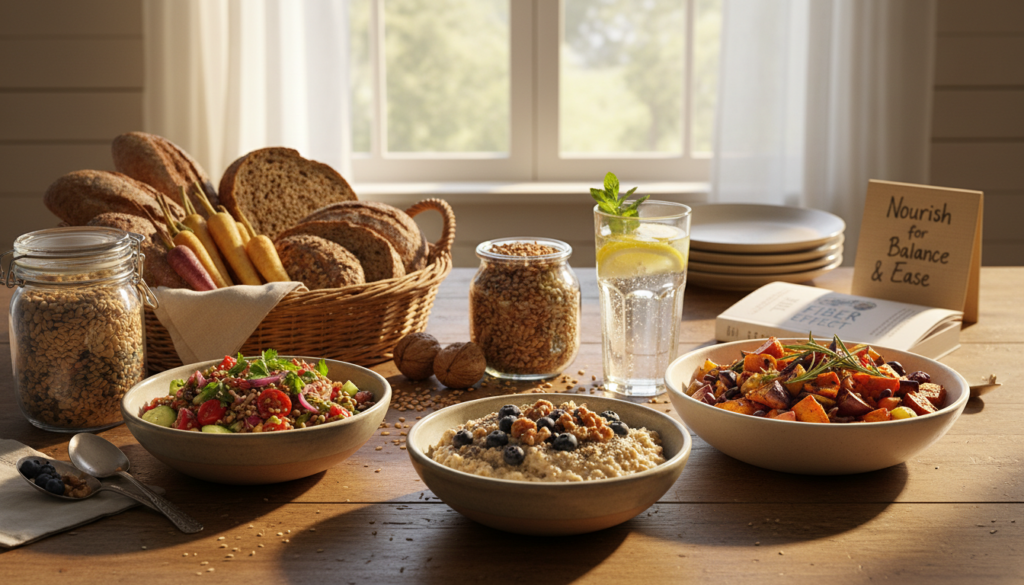
Stable blood sugar means fewer sugar cravings and energy crashes. Fiber slows the release of glucose into the bloodstream. Adding more fiber to your diet helps avoid blood sugar fluctuations.
Here’s a comparison of how different foods affect blood sugar levels:
| Food | Glycemic Index | Fiber Content (grams) |
|---|---|---|
| White Bread | 70-80 | 2-3 |
| Whole Wheat Bread | 30-40 | 6-8 |
| Oatmeal | 40-50 | 4-6 |
Protecting Your Long-Term Metabolic Health
Stable blood sugar is good for weight loss and metabolic health. Chronic blood sugar instability can lead to insulin resistance and type 2 diabetes. A diet rich in fiber helps regulate blood sugar.
Long-term benefits of a high-fiber diet include improved insulin sensitivity and reduced risk of metabolic syndrome. Eating fiber-rich foods supports your metabolic health and sets you up for a healthier future.
Building Your High Fiber Diet: Implementation Steps
To add more fiber to your diet, follow these easy steps. A high-fiber diet is key to digestive health. It helps with weight management and lowers the risk of health problems.
Assess Your Current Fiber Intake Honestly
Start by knowing how much fiber you eat now. Experts say you should have 14 grams of fiber for every 1000 kcal. Keep a food diary or use an app to track your fiber for a week.
Set Your Daily Fiber Target
After tracking, set a daily fiber goal. Aim for 25-38 grams, based on your age, sex, and calorie intake. For adults, 30 grams is a good starting point. Gradual increases are easier on your stomach.
Increase Fiber Gradually Over Two Weeks
Don’t jump too high in fiber too fast. It can cause bloating and gas. Increase your fiber by 2-3 grams every few days over two weeks.
Balance Soluble and Insoluble Sources
A good high-fiber diet has both soluble and insoluble fiber. Soluble fiber, like that in oats and fruits, makes you feel full. Insoluble fiber, in whole grains and veggies, helps with bowel movements. Mixing both types enhances the benefits of dietary fiber.
Pair Fiber Increases with Adequate Water Intake
Also, drink more water as you increase your fiber intake. Fiber absorbs water, and enough water prevents constipation. Drink 8-10 glasses of water daily, depending on your activity and climate.
By following these steps, you can easily start a high fiber diet. It’s all about making small, informed changes that you can keep up with.
The Ultimate Guide to Fiber-Rich Foods
Adding the right fiber-rich foods to your diet can make losing weight easy. A high fiber diet helps with weight loss and boosts health. It provides important nutrients and supports digestion.
Vegetables: Your Highest-Volume Fiber Sources
Vegetables are packed with fiber-rich foods. Eating a variety of veggies can really up your fiber intake. Here are some top fiber-rich veggies:
- Broccoli (1 cup cooked = 5.1 grams of fiber)
- Carrots (1 cup cooked = 3.7 grams of fiber)
- Brussels Sprouts (1 cup cooked = 5.6 grams of fiber)
- Artichokes (1 medium = 7.2 grams of fiber)
These veggies are not just high in fiber. They’re also rich in vitamins and minerals, making them a great addition to your diet.
Fruits That Maximize Fiber and Micronutrients
Fruits are also great for fiber. They add natural sweetness to your meals or snacks. Here are some high-fiber fruits:
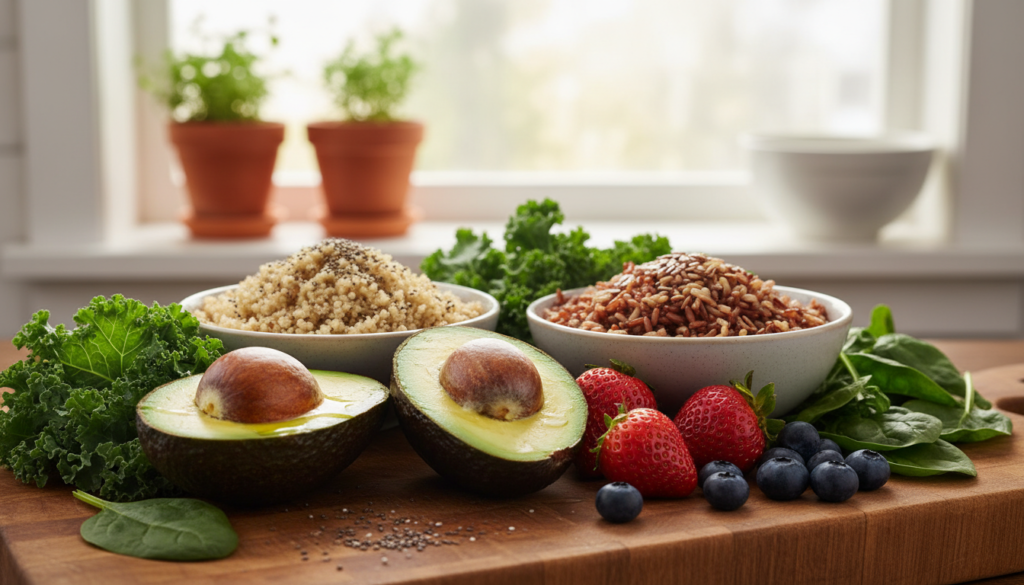
- Avocados (1 medium = 10 grams of fiber)
- Bananas (1 medium = 3.1 grams of fiber)
- Apples (1 medium = 4.5 grams of fiber)
- Berries (1 cup = 3-4 grams of fiber)
These fruits are not only high in fiber. They’re also full of antioxidants and other important nutrients.
Whole Grains and Legumes for Sustained Energy
Whole grains and legumes are key to a high fiber diet. They give you lasting energy and support your health. Here are some examples:
- Quinoa (1 cup cooked = 5.2 grams of fiber)
- Brown Rice (1 cup cooked = 3.5 grams of fiber)
- Lentils (1 cup cooked = 15.6 grams of fiber)
- Chickpeas (1 cup cooked = 12.5 grams of fiber)
These foods are full of fiber, protein, and complex carbs. They’re perfect for keeping you energized and helping with weight management.
Nuts, Seeds, and Prebiotic Foods to Include Daily
Along with veggies, fruits, whole grains, and legumes, prebiotic foods like nuts and seeds are vital. They help your gut health and add more fiber. Here are some examples:
- Almonds (1 ounce = 3.5 grams of fiber)
- Chia Seeds (1 ounce = 10.6 grams of fiber)
- Flaxseeds (1 ounce = 7.8 grams of fiber)
Adding these foods to your daily diet can improve digestion and support weight loss.
Avoiding Common Fiber Diet Mistakes
Starting a high-fiber diet can be tricky. Knowing the common mistakes can be very helpful. Fiber is key to losing weight and staying healthy, but some errors can slow you down or cause discomfort.
Dangers of Increasing Fiber Too Rapidly
Jumping into a high-fiber diet too fast can cause bloating and discomfort. It’s better to gradually add more fiber over the course of weeks. This lets your gut adjust.
“A sudden fiber boost can upset your stomach,” a Journal of Nutrition study warns. Start small and watch how your body reacts.
Why Water Intake Is Non-Negotiable
Drinking enough water is vital with a high-fiber diet. Fiber needs water to move through your body. Without it, you might get constipated or even have a bowel blockage.
Make sure to drink 8-10 glasses of water daily. This helps fiber move smoothly. Drink water based on how much fiber you eat.
Choosing Whole Foods Over Fiber Supplements
Fiber supplements are easy, but they miss out on nutrients. Whole foods have fiber, vitamins, and minerals that work together for health.
Try to eat a variety of whole, fiber-rich foods, such as fruits, veggies, whole grains, and legumes. They give you fiber and important nutrients for health.
Timing Your Fiber Intake for Maximum Digestive Health
When you eat, fiber matters. Eating it evenly throughout the day keeps your gut healthy and avoids discomfort.
Think about spreading out your fiber intake in meals and snacks. Eat a fiber-rich breakfast, veggies with lunch, and fruits or nuts between meals.
Conclusion
Adding fiber to your diet can really help with weight loss. It slows digestion, makes you feel full, and boosts gut health. This makes it easier to manage your weight and keeps your blood sugar stable, lowering your disease risk.
Eating more fiber can also lower your risk of heart disease. Focus on foods like veggies, fruits, whole grains, and legumes. These foods are great for your body and overall health.
By choosing whole foods over processed ones, you’re on the right path. This simple change can lead to better weight management and a healthier gut. It’s a big step towards a healthier, happier you.