

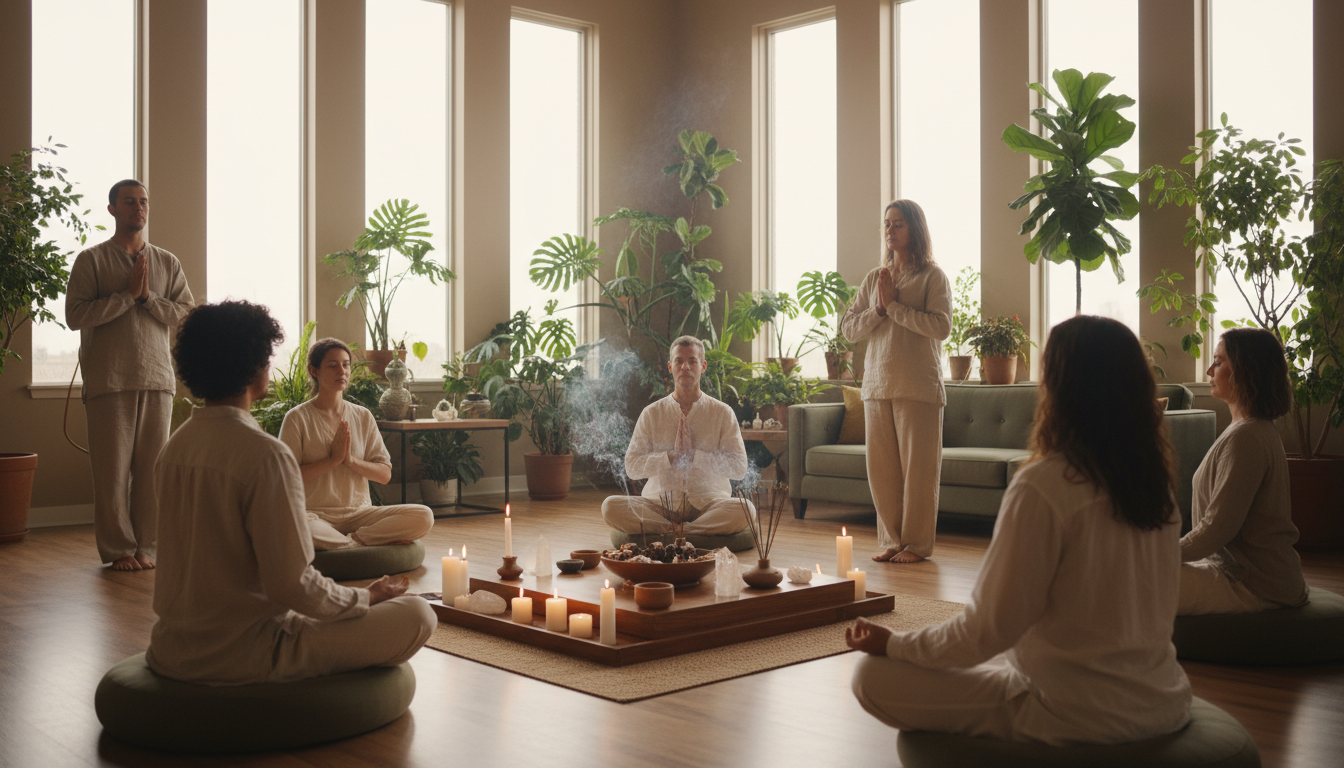
Start a journey to find your inner self with meditation techniques. Quiet your ego and connect deeply within. This path leads to self-discovery and harmony.
Experts such as Deepak Chopra and Tara Brach discuss mindfulness and guided visualization. They show how these can bring inner peace. Their words have inspired many to seek spiritual awakening.
Adding these practices to your day can deepen your inner peace and connection. This guide will outline various meditation techniques and practices. It aims to help you reach your goals.
Key Takeaways
- Discover the benefits of meditation techniques for spiritual awakening
- Explore the role of mindfulness and guided visualization in achieving inner peace
- Learn from renowned experts like Deepak Chopra and Tara Brach
- Cultivate a deeper sense of inner peace and connection through daily practice
- Unlock the power of meditation to quiet your ego and foster self-discovery
The Path to Inner Connection
The journey to inner connection is a life-changing path. It opens your eyes to your true potential. As you start this journey, you learn what spiritual awakening really means.
What Spiritual Awakening Really Means
Spiritual awakening is about finding your true self beyond the physical world. It shows us that life is more than just material things. Deepak Chopra describes it as a journey of self-discovery, leading to a deeper understanding of yourself and the universe.
How Meditation Quiets the Ego
Meditation is key to quieting the ego and helping you connect with your inner self. Through mindfulness meditation, you can watch your thoughts without judgment. This leads to a deeper understanding of yourself.
The Science Behind Meditation and Consciousness
Research shows that meditation alters brain activity, potentially affecting consciousness. Studies show that regular meditation increases gray matter in regions linked to attention and emotion regulation.
Creating Your Sacred Meditation Space
Creating a peaceful environment for meditation is key to deepening your practice. Your meditation space should be a sanctuary that promotes relaxation and calms the mind.
Essential Elements for a Peaceful Environment
The ambiance of your meditation space is crucial. Consider which elements create a serene atmosphere.
Light, Sound, and Scent Considerations
Lighting: Soft, natural light is best. If that’s not possible, candles or dimmable lamps can create a warm glow. Avoid harsh lighting that can cause discomfort.
Sound: A quiet space is essential. You can use soundproofing materials or play calming music/sounds to mask background noise.
Scent: Add calming scents, such as lavender, via essential oils or incense. This enhances the sensory experience.
| Element | Ideal Condition | Tips |
|---|---|---|
| Light | Soft, Natural | Use candles or dimmable lamps |
| Sound | Quiet | Soundproofing or calming music |
| Scent | Calming | Lavender essential oils or incense |
Tools and Props to Enhance Your Practice
Various tools and props can enhance your meditation experience. These may include meditation cushions, blankets, or guided meditation apps.
- Meditation cushions or chairs for comfort
- Blankets or shawls for warmth
- Guided meditation apps or calming music playlists
By thoughtfully designing your meditation space, you can create an environment that supports your spiritual journey and deepens your practice.
Preparing Your Mind and Body
To meditate well, you need to get your mind and body ready. This means finding a comfy meditation pose and setting clear goals for your session.
Finding Your Comfortable Meditation Posture
Your meditation pose is key to staying focused and feeling good. You can sit in many ways, depending on what feels right for you.
Chair, Cushion, and Floor Positions
Try out different seats:
- Meditate in a chair with your feet on the ground
- Use a cushion on the floor for back support
- Sit on the floor with your legs crossed
Pick the pose that lets you relax and keep your back straight.
| Meditation Position | Benefits |
|---|---|
| Chair | Supports back, great for beginners or those with back issues |
| Cushion on Floor | Helps keep good posture, feels grounded |
| Directly on the floor | Improves flexibility, traditional for many meditations |
Setting Powerful Intentions
Before you start meditating, decide what you want to get out of it. What do you aim to achieve? Having intentions helps guide your meditation and provides a clear path.
Crafting Personal Affirmations
Make affirmations that match your goals. To calm yourself, say, “You are calm and centered.”
Spiritual Awakening Meditation: Core Principles
The path to spiritual awakening starts with meditation. It helps you focus on your inner self. You move from the outside world to your inner being.
The Journey from External to Internal Awareness
This shift is key to spiritual awakening. It takes you from the surface of your mind to its depths. Deepak Chopra says, “Meditation is not about stopping thoughts, but about witnessing them.” Witnessing your thoughts lets you detach and find your true self.
Observing Thoughts Without Judgment
Learning to watch your thoughts without judgment is vital. This practice helps you see your mind clearly. Tara Brach talks about radical acceptance in meditation. She says to accept everything without resistance.
The Witness Consciousness Technique
The witness consciousness technique helps you observe thoughts without getting caught up in them. It lets you see your mind clearly. This technique brings peace and understanding to your inner world.
Using the witness consciousness technique in meditation can lead to deep insights. It helps you understand yourself better.
Mindfulness: Present-Moment Awareness
Mindfulness helps you live more in the now. It reduces stress and boosts your happiness.
Body Scan Meditation Practice
Body scan meditation is a great way to practice mindfulness. You focus on your body, starting from your toes to your head.
Step-by-Step Guide
- Find a quiet spot to lie down or sit.
- Close your eyes and breathe deeply.
- Focus on your toes, noticing sensations and thoughts without judgment.
- Move your attention up your body, noticing each part.
- If you find tension, breathe into it and relax.
Mindful Observation Exercises
Observation exercises also help with mindfulness. They use your senses to ground you in the present.
Using the Five Senses
- Sight: See the colors, shapes, and textures around you. Observe without judgment.
- Sound: Hear the sounds, noticing their pitch, tone, and volume.
- Smell: Notice any scents or odors, their intensity and character.
- Taste: Savor the flavors and textures if you’re eating or drinking.
- Touch: Feel the sensations in your body, like your feet on the ground or an object’s texture.
| Sense | Observation |
|---|---|
| Sight | Notice colors, shapes, and textures. |
| Sound | Listen to pitch, tone, and volume. |
| Smell | Pay attention to scents and odors. |
Adding these mindfulness practices to your day can make you more aware and appreciative of the present.
Heart-Centered Visualization for Compassion
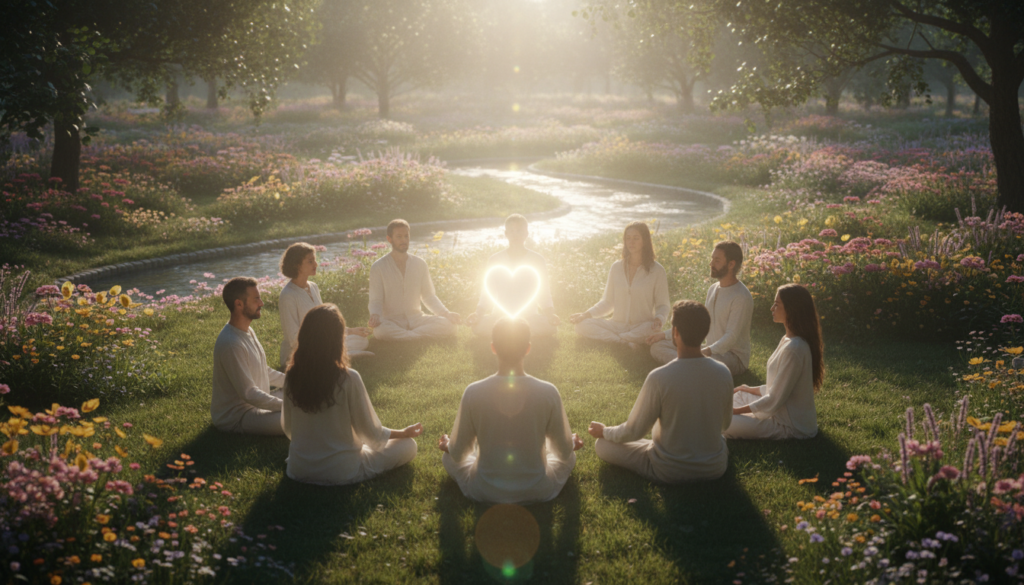
Heart-centered visualization is an effective way to cultivate compassion and loving-kindness. It helps you feel better emotionally and connect deeper with others.
Opening the Heart Chakra
The heart chakra, or Anahata, is all about love, compassion, and empathy. To open it, use heart-centered visualization. Picture a bright, green light in your chest growing with each breath.
Visualization Techniques
Start by finding a quiet spot to meditate. Close your eyes and breathe deeply. See a warm, loving light start from your heart.
As you inhale, imagine this light growing in your chest. When you exhale, picture any negativity leaving.
Loving-Kindness Meditation Practice
Loving-kindness meditation, or Metta meditation, builds love, compassion, and kindness. It starts with yourself and then spreads to others.
Extending Compassion to Self and Others
In loving-kindness meditation, start with “May I be happy, may I be healthy, may I be at peace.” Then, wish these things for others, including those you find hard to get along with.
“Love and compassion are necessities, not luxuries. Without them, humanity cannot survive.” –
Adding heart-centered visualization and loving-kindness meditation to your day can make your heart more compassionate. This leads to a more loving and harmonious life.
The Power of Mantra Chanting
Mantra chanting is a powerful way to change your inner world. It involves repeating sacred sounds or phrases. This helps quiet your mind, focus your intentions, and connect with a higher power.
Selecting Your Personal Mantra
Choosing a personal mantra is a big step. Your mantra should match your goals and be easy to remember.
Traditional and Modern Mantras
Traditional mantras like “Om Mani Padme Hum” have been used for centuries. Modern mantras offer a fresh take. Pick a mantra that fits your goals or choose a sound that feels special to you.
Techniques for Effective Chanting
To make the most of mantra chanting, practice regularly. Here are some tips to improve your chanting:
- Focus on your breath: Match your chanting with your breathing for a deeper experience.
- Use rhythm: Find a rhythm that feels natural and comfortable.
- Pay attention to your intention: Set a clear goal before you start chanting.
Rhythm, Breath, and Focus
Using rhythm, breath, and focus can boost your chanting. Try different rhythms and breathing to find what suits you best.
As you add mantra chanting to your spiritual routine, you’ll see its power. Regular practice quiets your mind, deepens your spiritual bond, and brings inner peace.
Guided Visualization for Spiritual Insight
Guided visualization lets you step beyond the ordinary and connect with your inner self. It’s a powerful way to reach higher states of consciousness. This helps you understand your spiritual side deeply.
Journey Meditation Techniques
Journey meditation is a form of guided visualization. It takes you on an inner journey to meet your higher self. You imagine yourself in a peaceful place where you get guidance and wisdom.
Meeting Your Higher Self
In journey meditation, you imagine meeting your higher self. This is your highest potential and wisdom. This meeting can give you insights into your life’s purpose and spiritual path.
Accessing Inner Wisdom and Guidance
Guided visualization is great for accessing inner wisdom. It helps quiet your mind and focus on your inner self. This way, you tap into a deep well of knowledge and intuition that guides you.
Interpreting Symbolic Messages
Guided visualization often reveals symbolic messages that need interpretation. These symbols can mean a lot to you, offering insights into your subconscious and emotions. Learning to understand these messages can help you better understand yourself and your spiritual journey.
With regular practice, guided visualization can be a powerful tool for spiritual growth and self-awareness. It can open new dimensions of your inner world. It helps you connect more deeply with your spiritual essence.
Transformative Breathwork Practices
Transformative breathwork practices are a powerful tool for cultivating calm and energy awareness. They help you navigate your spiritual path with greater ease. By mastering various breathing techniques, you can significantly enhance your meditation practice and overall well-being.
Deep Breathing Exercises for Calm
Deep-breathing exercises are a fundamental component of breathwork. They are designed to calm the mind and soothe the body. One effective technique is the 4-7-8 Breathing Technique, also known as the “Relaxation Breath.”
4-7-8 Breathing Technique
To practice this technique, inhale through your nose for a count of 4. Hold your breath for a count of 7. Then, exhale through your mouth for a count of 8. This specific rhythm can help slow down your heart rate and promote relaxation.
Advanced Pranayama for Energy Awareness
For those looking to advance their breathwork practice, Pranayama techniques offer numerous benefits. Pranayama is an ancient yogic practice that focuses on controlling the life force through breath control.
Alternate Nostril Breathing
One powerful Pranayama technique is Alternate Nostril Breathing. This practice involves closing one nostril and inhaling through the other. Then, switch to exhale through the opposite nostril. It helps regulate breathing and calm the nervous system.
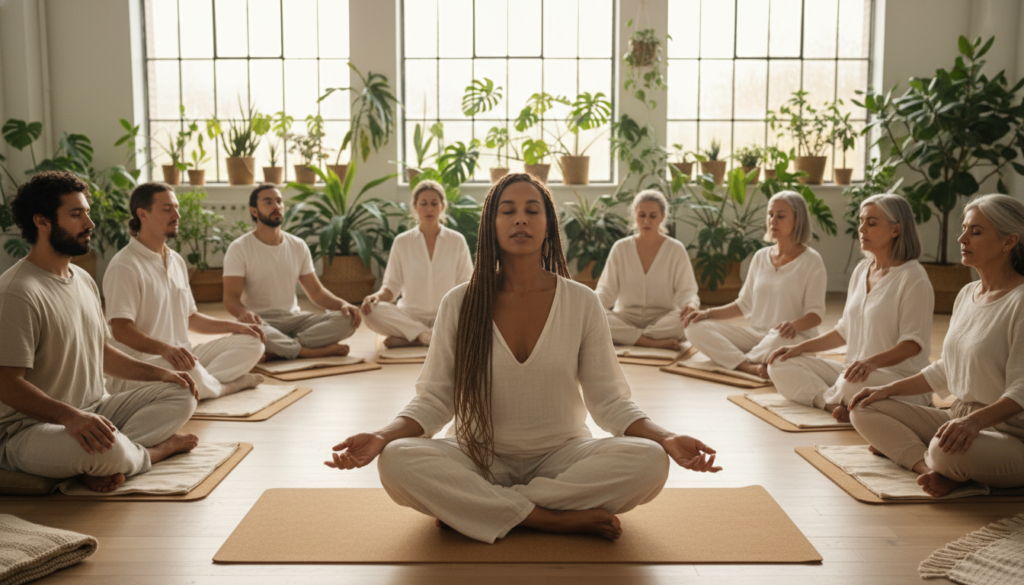
By incorporating these transformative breathwork practices into your daily routine, you’ll cultivate a deeper sense of calm and energy awareness. This supports your journey towards spiritual awakening.
The Benefits of Consistent Practice
Regular meditation can change your life. It helps you find yourself, connect with something greater, and unite your mind and body. As you continue with meditation, you’ll see its significant effects.
Self-Realization and Authentic Living
Meditation helps you understand yourself better. This lets you live more genuinely. You’ll make choices that match your true values and goals.
Divine Connection and Spiritual Insight
Meditation builds a divine connection. It gives you insight into life and your role in it. This connection makes you feel connected to everyone.
Mind-Body Unity and Holistic Wellness
Regular meditation brings your mind, emotions, and body together. This leads to overall health and energy.
| Benefits | Description | Outcome |
|---|---|---|
| Self-Realization | A deeper understanding of oneself | Authentic living |
| Divine Connection | Spiritual insight and unity | Interconnectedness |
| Mind-Body Unity | Harmonization of mental, emotional, and physical states | Holistic wellness |
Embracing regular meditation unlocks these benefits and more. It leads to a more fulfilling and meaningful life.
Overcoming Challenges in Your Meditation Journey
It’s normal to face challenges in meditation. But there are ways to get past them. Learning to handle these obstacles is key to your spiritual growth.
Dealing with Restlessness and Distractions
Restlessness and distractions are common in meditation. To beat them, use mindfulness techniques. Focus on your breath or a mantra to keep your mind in the present.
Working Through Emotional Releases
Meditation can stir up hidden emotions. It’s important to be compassionate and patient with yourself. Let yourself feel and process these emotions. It’s a natural part of healing.
Maintaining Consistency in Your Practice
Staying consistent is crucial for meditation benefits. Set a regular practice schedule and keep to it. Even a few minutes a day can make a big difference.
By tackling these common challenges, you can improve your meditation. And keep moving forward on your spiritual journey.
Conclusion: Embracing Your Spiritual Awakening
Starting your journey of spiritual awakening through meditation opens a new world. Deepak Chopra and Tara Brach share how meditation can change your life. It helps you understand yourself more deeply.
Meditation techniques can bring you peace and connect you with your inner self. Regular practice helps quiet your mind and understand your thoughts better. It also lets you tap into your inner wisdom.
This journey may change how you see things, making you more aware and true to yourself. Meditation is a key tool on this path, helping you grow.
Begin your meditation practice today to explore your spiritual side. With effort and dedication, you’ll gain a deeper understanding of yourself and the world.
i enjoy reading your article, such a great piece, keep up the good work, webdesign freelancer deutschland is the best webdesign freelacing service in Germany, you can check it out. Thank you