

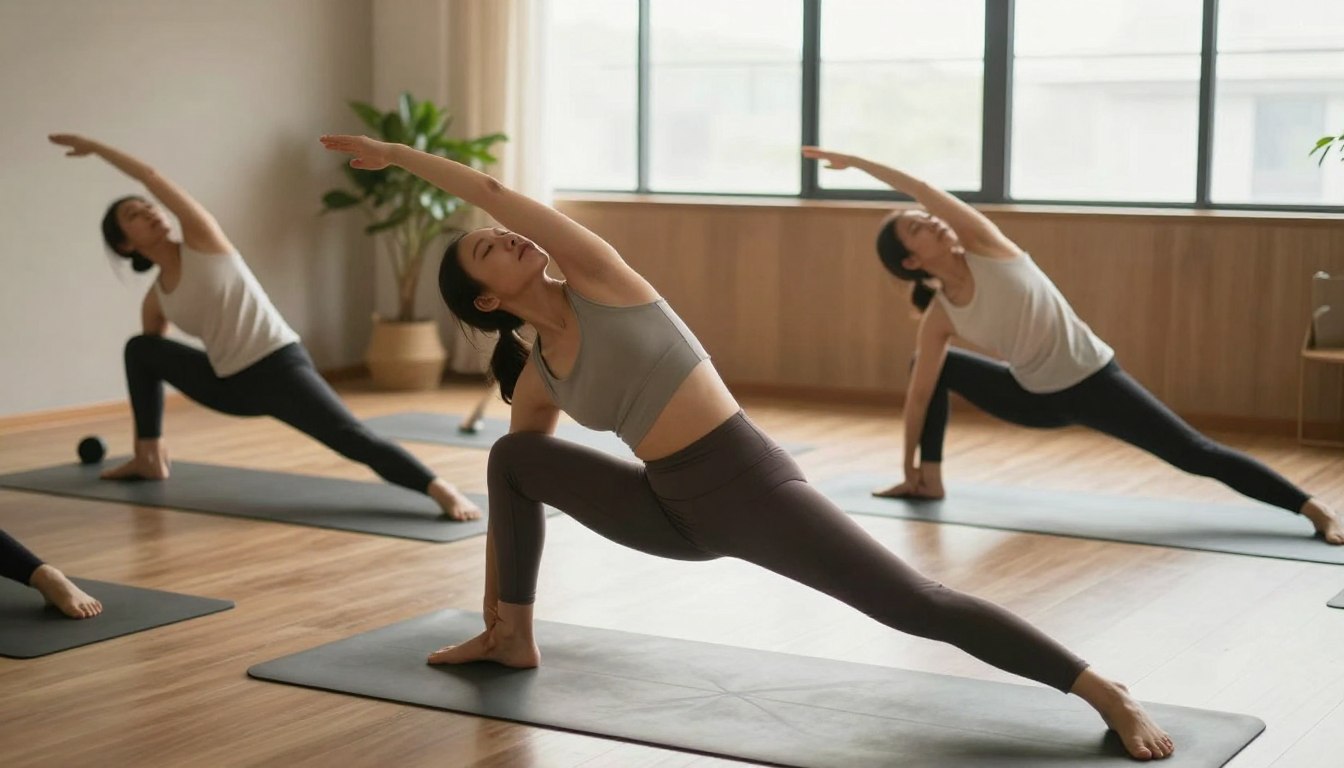
Sitting for long periods can harm your hips and lower back. Your hip flexors can become tight from too much sitting. Dr. Joey Masri, an orthopedic physical therapist, says lifestyle affects muscle flexibility and joint health.
This can cause lower back pain and less mobility. But simple stretches can help. We’ll show you three easy stretches you can do at home or at work to improve hip flexibility and ease discomfort.
Key Takeaways
- Prolonged sitting can lead to tight hip flexors and lower back pain.
- Simple stretches can improve hip flexibility and reduce discomfort.
- Incorporating daily stretches can enhance overall mobility.
- Three effective stretches can be done at home or in the office.
- Improving hip flexibility can lead to better posture.
The Silent Damage of Prolonged Sitting
Desk jobs have become common, and our bodies are paying the price. Sitting for long periods is a big part of modern life. It tightens and shortens our hip flexors, leading to lower back pain and reduced mobility.
How Modern Lifestyles Keep Us Seated
Today, many jobs keep us sitting for hours. This sedentary lifestyle is typical, whether at work, during travel, or at home. Dr. Joey Masri advises, “To fight this, be more active. Include strength training, get your steps in, and mix up your movements every day.”
The Physical Toll on Your Body
Sitting for too long harms our bodies. Tight hip flexors can cause lower back pain and mess up our posture. Regularly doing mobility exercises and hip flexor stretches can help. Adding more movement to our day can reduce the risk of chronic pain and improve our health.
Understanding Hip Anatomy: Why Sitting Hurts
Understanding how the hip works is essential to understanding why prolonged sitting can cause pain. The hip is a ball-and-socket joint that allows us to move freely while supporting our weight. It’s surrounded by muscles, tendons, and ligaments that enable movement.
The Hip Flexor Muscle Group
The hip flexor muscles, like the iliacus, psoas major, and rectus femoris, are key to hip movement. They run from the hip bones to the thighs, helping us lift and bend our legs. If these muscles get tight or weak, it can make moving harder and more painful.
- The iliacus and psoas significantly help flex the hip joint.
- The rectus femoris helps flex the hip and extend the knee.
- Tight hip flexors can lead to poor posture and back pain.
What Happens When You Sit for Hours
Sitting for long periods can tighten the hip flexor muscles. When you sit, your hip flexors shorten, which can reduce their flexibility and strength. This can lead to muscle imbalances, where some muscles work too much and others too little, resulting in pain and reduced mobility.
Some effects of sitting too long include:
- Less hip mobility because of tight hip flexors.
- Higher chance of lower back pain.
- Poor posture from muscle imbalances.
The Connection Between Tight Hip Flexors and Lower Back Pain
If you’re feeling pain in your lower back, tight hip flexors might be the reason. Tight hip flexors can cause an anterior pelvic tilt. This tilt changes your posture and strains your lower back, leading to chronic pain.
It’s essential to understand how this works to find relief. Tight hip flexors pull your pelvis out of its natural position. This affects your lower back area.
The Anterior Pelvic Tilt Problem
An anterior pelvic tilt happens when your hip flexors are too tight. This tilts your pelvis forward. It can cause your lower spine to curve unnaturally, straining your spinal discs and muscles.
Signs include:
- Lower back pain that gets worse during the day
- Poor posture, especially when standing or walking
- Tightness or discomfort in the hip flexor area
How Hip Tension Radiates to Your Spine
Tension in your hip flexors doesn’t just stay in one place. It can spread to your spine, causing more problems. When your pelvis tilts forward, your lower back curves more, known as lordosis.
This can put pressure on your spinal discs, facet joints, and muscles. It leads to pain and discomfort. Doing hip mobility drills can help ease this tension and improve your posture.
By stretching and exercising your hip flexors, you can reduce lower back pain. This also improves your posture.
Signs Your Hips Need Attention
Tight hips can show up in different ways. It’s essential to know the signs. If you sit for long periods at work, your hips may be tight. Sitting for too long can start small but get worse if ignored.
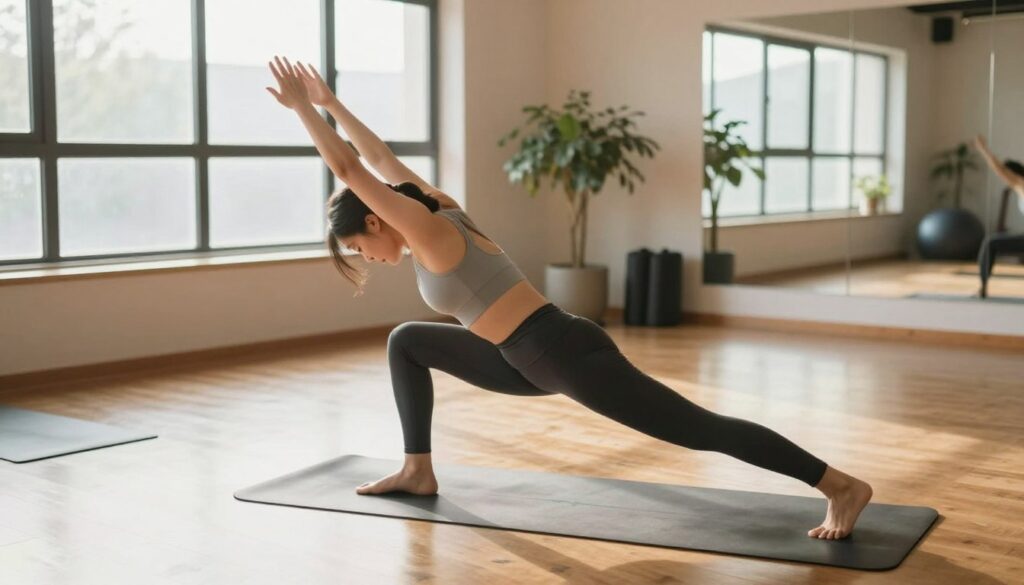
Physical Symptoms of Hip Tightness
Physical signs are a big clue that your hips need help. You might feel:
- Pain or stiffness in the hip area
- Discomfort that spreads to the lower back or knees
- A feeling of tightness or restricted movement
Dr. Kelly Starrett, a well-known physical therapist, says tight hip flexors can cause lower back pain and bad posture. These signs mean your body is trying to tell you something.
Movement Limitations You Might Notice
Tight hips can also make it hard to move. You might notice:
- You can’t move your hips as much
- Simple actions like squatting or bending are tough
- You hear a clicking or snapping sound when moving your hips
These issues can really affect your daily life. It’s crucial to listen to your body and fix these problems quickly to avoid more serious issues.
By paying attention to these signs and taking action, you can improve your hip mobility. This can also lower the chance of other problems.
Benefits of Regular Hip Mobility Work
Adding hip mobility exercises to your daily routine can significantly improve your health. Spending time on mobility exercises brings many benefits. These can make your life better in many ways.
Immediate Relief Effects
One quick benefit of hip mobility work is feeling less tight and tense. Regular mobility exercises can reduce muscle strain. This helps you feel more relaxed and comfortable immediately.
Long-term Posture and Movement Improvements
Regular hip mobility work can also improve your posture and movement over time. It boosts your flexibility and lowers injury risk. This can lead to better posture, less back pain, and smoother movements.
Some long-term benefits include:
- Increased flexibility and range of motion
- Improved posture and reduced risk of back pain
- Enhanced athletic performance and overall mobility
By making mobility exercises a regular part of your routine, you can enjoy these benefits. This leads to a healthier, more active life.
Preparing for Your Hip Mobility Routine
Before starting your hip mobility routine, think about the best time and place. Dr. Joey Masri suggests starting with simple stretches. These include the pigeon pose, couch stretch, and adductor rockback.
When to Stretch for Maximum Benefit
Timing is key for desk job stretches. Stretching after prolonged sitting can ease tension. It’s also good to wake up in the morning to help your body adjust. And in the evening, to unwind before sleep.
Creating a Comfortable Environment
Your environment affects how well your sedentary office stretches work. Choose a quiet, comfy spot where you can pull without interruptions. A yoga mat or a non-slip surface can help prevent injuries and improve stretching.
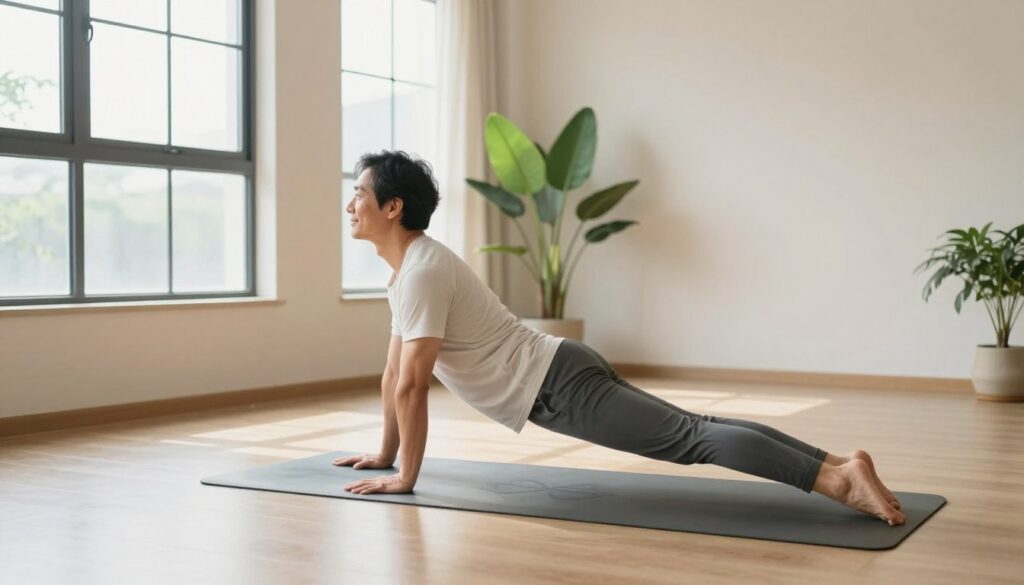
Stretch #1: The Modified Couch Stretch for Tight Hip Flexors
The modified couch stretch is an effective way to loosen tight hip flexors from prolonged sitting. It targets the hip flexor muscles, which tighten from prolonged sitting.
Step-by-Step Instructions
To do the modified couch stretch right, follow these steps:
- Stand in front of a couch or a sturdy chair, making sure it won’t move.
- Put one knee on the sofa and the other foot in front of you, making a 90-degree angle.
- Slowly lean forward, keeping your back straight, until you feel a stretch in your hip.
- Hold this stretch for 30 seconds to relax your hip flexor.
- Switch legs and repeat on the other side.
Common Mistakes to Avoid
When doing the modified couch stretch, watch out for these common mistakes:
- Incorrect Posture: Don’t lean forward with a rounded back. Keep your back straight and core tight.
- Insufficient Depth: Not leaning far enough may not adequately stretch your hip flexor. Make sure you’re stretching comfortably.
- Poor Alignment: Your front knee should be directly above your ankle to reduce stress on the knee.
Modifications for Different Fitness Levels
The modified couch stretch can be adjusted for different fitness levels:
- Beginners or those with tightness can start with less depth or use a lower surface.
- More advanced people can deepen the stretch by leaning further or using a higher surface.
- Those with knee issues can use a cushion or padding under their knee for comfort.
Adding the modified couch stretch to your daily routine can significantly improve hip mobility and ease tight hip flexors. Regularly doing this stretch can maintain flexibility and reduce the risk of lower back pain caused by tight hip flexors.
Stretch #2: The Seated Figure-Four Hip Opener
To boost your hip mobility, add the seated figure-four hip opener to your daily stretches. It’s great for those who sit a lot, focusing on the hip flexors and external rotators.
Step-by-Step Instructions
Here’s how to do the seated figure-four hip opener right:
- Sit on the floor with your legs straight out in front of you.
- Bend your right knee and cross your right ankle over your left thigh, just above the knee.
- Place your right hand on the floor behind you for support.
- Gently press your right knee towards the floor, feeling the stretch in your right hip.
- Hold the stretch for 30 seconds to 1 minute.
- Repeat on the other side by crossing your left ankle over your right thigh.
Common Mistakes to Avoid
Watch out for these common mistakes in the seated figure-four hip opener:
- Don’t let your back arch or hunch, as it can harm your spine.
- Avoid pressing too hard on the knee, which can be painful or harmful.
- Make sure to keep your ankle flexed to get the most out of the stretch.
Modifications for Different Fitness Levels
There are ways to adjust the seated figure-four hip opener for different fitness levels:
| Fitness Level | Modification |
|---|---|
| Beginner | Use a strap or towel to gently pull the knee toward the floor, reducing the stretch’s intensity. |
| Intermediate | Perform the stretch as described, holding for 30 seconds to 1 minute. |
| Advanced | Deepen the stretch by leaning slightly forward, increasing the stretch in the hips and glutes. |
Adding the seated figure-four hip opener to your routine can enhance hip flexibility and counteract the effects of prolonged sitting. Always breathe deeply and smoothly while stretching to maximize benefits.
Stretch #3: The Modified Pigeon Pose for Deep Hip Mobility
Let’s explore the modified pigeon pose for improved hip mobility. It’s great for those with tight hip flexors. It improves hip flexibility and eases discomfort from prolonged sitting.
Step-by-Step Instructions
To do the modified pigeon pose right, follow these steps:
- Start by kneeling on your mat with your right knee bent at 90 degrees in front of you.
- Slide your left leg back, keeping it straight, and lower your hips towards the ground.
- Make sure your right ankle is in line with your left knee, and your right knee is directly above your right ankle.
- Slowly lower your torso forward, stretching your hip flexors and glutes.
- Hold the stretch for 30 seconds and then switch sides.
Common Mistakes to Avoid
When doing the modified pigeon pose, avoid common mistakes. They can reduce the stretch’s effectiveness or cause injury.
- Don’t let your front knee extend past your ankle, as it can strain your knee.
- Keep your back leg straight to stretch your hip flexors better.
- Move slowly and control your movements to avoid bouncing or jerking.
Modifications for Different Fitness Levels
The modified pigeon pose can be adjusted for different fitness levels. This way, everyone can benefit from the stretch.
| Fitness Level | Modification |
|---|---|
| Beginner | Use a block or strap to support your front leg and reduce the stretch’s depth. |
| Intermediate | Do the stretch as described, focusing on proper alignment. |
| Advanced | Deepen the stretch by lowering your torso further or using a deeper knee bend. |
Adding the modified pigeon pose to your daily routine can significantly improve hip mobility. It also helps reduce the adverse effects of prolonged sitting. Always listen to your body and adjust the stretch as needed.
Implementing Your Daily Desk Job Stretches for Improved Hip Mobility
Adding a daily stretching routine can improve hip mobility and overall health, especially if you sit a lot. It’s key to fit these stretches into your daily schedule at the best times.
Morning Routine Options
Begin your day with some gentle stretches to get your blood flowing and muscles ready. Start with the Modified Couch Stretch or the Seated Figure-Four Hip Opener. These help loosen your hip flexors and glutes.
Midday Movement Breaks
Short breaks to stretch can reduce the harm of prolonged sitting. Try the Modified Pigeon Pose or a simple hip circle exercise. These keep your hips flexible and relaxed.
Evening Recovery Protocol
It’s vital to recover after a day of sitting. Do a detailed stretching routine in the evening. Focus on the stretches you’ve learned. This eases tension and readies your body for tomorrow.
Tracking Your Progress
To see how well your stretches are working, track your progress. Use a simple table like the one below to follow your improvements over time.
| Date | Stretching Routine | Notes on Mobility |
|---|---|---|
| Day 1 | Modified Couch Stretch, Seated Figure-Four | Noted improvement in hip flexibility |
| Day 7 | Added Modified Pigeon Pose | Reduced lower back pain |
| Day 14 | All three stretches | Significant improvement in overall mobility |
Conclusion: Your Path to Freedom from Hip and Back Pain
By incorporating the stretches from this article into your daily routine, you can improve hip mobility and reduce lower back pain. Regular stretching can significantly enhance your comfort and movement.
Starting your journey to improve hip mobility requires consistency. Make stretching a daily habit. Soon, you’ll see the benefits. With patience, you can find lasting relief from hip and back pain.
Begin your journey to a more comfortable, active life. Start stretching today. Feel the positive effects on your lower back pain and overall health.

Really insightful post — Your article is very clearly written, i enjoyed reading it, can i ask you a question? you can also checkout this newbies in seo. thank you