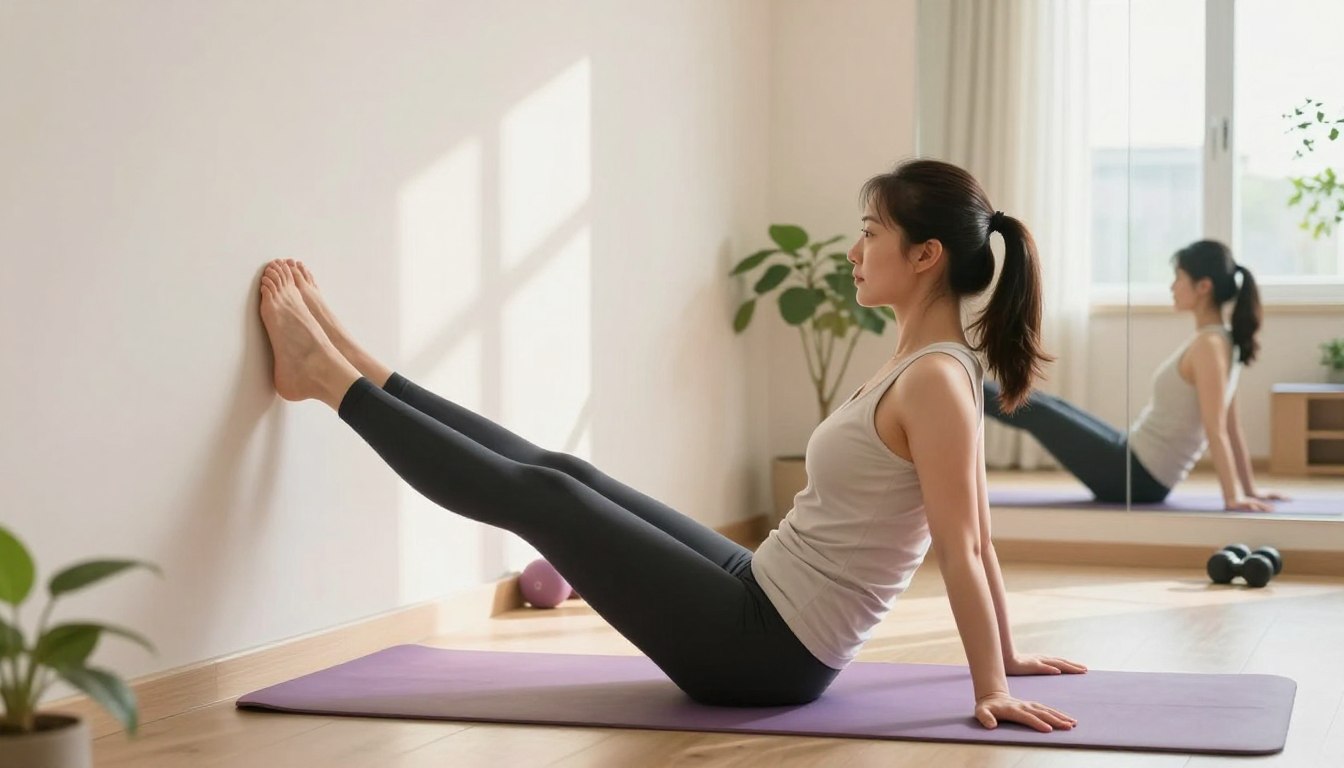
Have you thought about adding a wall to your Pilates routine? It can be a big help, especially if you have little space or joint issues.
Using a wall helps you engage your deep core muscles and improve your posture stability. It’s a great way to start, even if you’re new to Pilates.
Just 10 minutes a day can make a significant difference in your strength and mobility. This article presents a simple, low-impact workout you can do at home.
Key Takeaways
- Discover how Wall Pilates can improve your core strength and overall fitness.
- Learn a simple 10-minute routine to get you started.
- Understand the benefits of using a wall for support and resistance.
- Explore how this low-impact workout can be adapted for different fitness levels.
- Find out how to incorporate Wall Pilates into your home fitness routine.
What Makes Wall Pilates Different
Wall Pilates uses the wall for support and resistance. This makes it different from traditional Pilates. It helps engage your core and improve stability in a unique way.
The Wall as Your Support System
The wall is key in Wall Pilates. It helps keep your body in the right position. This is ideal for beginners or those with mobility issues, as it helps prevent injuries.
How Wall Resistance Works
Wall resistance is a big part of Wall Pilates. It provides a gentle yet effective workout. By pushing against the wall, you strengthen your core and improve stability.
The Science Behind Stability Training
Stability training is at the heart of Wall Pilates. It helps your body stay balanced and in control. Studies show it boosts core strength, lowers injury risk, and improves physical performance.
| Benefits | Description |
|---|---|
| Improved Core Strength | Wall Pilates engages your core muscles, enhancing overall strength and stability. |
| Low-Impact Exercise | This method is gentle on joints, making it suitable for individuals with joint concerns or those recovering from injuries. |
| Enhanced Posture | By strengthening core muscles, Wall Pilates can improve your posture and reduce the risk of back pain. |
Wall Pilates combines core stability training with low-impact exercise. It’s ideal for those looking to get fit without straining their bodies.
Benefits of Wall Pilates for Core Stability
Wall Pilates offers many benefits, such as improved posture and a lower risk of injury. It’s also great for people of all fitness levels. By doing Wall Pilates, you can strengthen your core muscles. These muscles are key to good posture and staying stable.
Improved Posture and Alignment
Wall Pilates improves posture by strengthening your spinal muscles. Core stability exercises in Wall Pilates help you stand straighter. This means less pain and discomfort for you.
Reduced Risk of Injury
Wall Pilates uses support and resistance to help you work on your core. This way, you can strengthen your core without hurting yourself. It’s perfect for those recovering from injuries or who prefer low-impact exercises.
Accessibility for All Fitness Levels
Wall Pilates is easy for everyone to do. It doesn’t matter if you’re new to fitness or very experienced. Wall Pilates variations can be adjusted to suit your level. It’s a great choice for a low-impact workout that targets your core.
Who Should Try Wall Pilates?
Wall Pilates is great for many people because it’s easy on the body. It’s perfect for those who want a workout that’s not too hard.
Beginners to Fitness
Wall Pilates is ideal for beginners or anyone seeking a gentle workout. It helps you build strength and flexibility without causing injury.
Those with Joint Concerns
If you have joint problems, Wall Pilates is a good choice. It helps strengthen muscles around your joints without adding stress.
Rehabilitation Candidates
Wall Pilates is also good for people in rehab. It’s a safe way to build strength and improve mobility.
Busy Individuals with Limited Time
Even if you’re really busy, Wall Pilates can help you stay fit. It’s a quick, easy way to stay active.
Setting Up Your Wall Pilates Space
Creating a good Pilates space is key to a safe and effective workout. You need to pick the right wall, have the right equipment, and ensure the area is safe and distraction-free.
Finding the Right Wall
Look for a sturdy wall with enough room around it. Avoid walls with fragile decorations or windows. The wall must be strong enough to hold your weight without getting damaged.
Essential Equipment
Wall Pilates doesn’t need much, but a good mat and comfy clothes are must-haves. You might also want a wall Pilates guide or app for help.
Creating a Safe Environment
Make sure the floor is clear, and the area is well-lit. Having a mirror to check your form is a plus. Here’s a quick checklist:
| Checklist | Yes/No |
|---|---|
| Sturdy wall | |
| Clear space around the wall | |
| Good quality mat | |
| Well-lit area |
Proper Form and Technique Fundamentals
Learning Wall Pilates starts with understanding the basics of form and technique. It’s key to focus on a few important elements to get the most from your practice.
The Pilates Breath
The Pilates breath is a key part of Pilates, including Wall Pilates. It’s about deep, controlled breathing that engages your core and keeps you focused. This breath helps improve your core stability and strength.
Neutral Spine Position
Keeping your spine neutral is vital in Wall Pilates. This means your spine should be straight, not too curved or arched. A neutral spine helps spread out the forces of the exercises, reducing injury risk and making the workout more effective.
Engaging Your Core Correctly
Correctly engaging your core is crucial for core stability training in Wall Pilates. This means engaging your transverse abdominis to support your spine and maintain proper form during exercises.
Body Alignment Against the Wall
Proper body alignment against the wall is key to getting the most from Wall Pilates. Make sure your body is aligned with the wall, with your spine, shoulders, and hips in line. This helps you maintain proper form and achieve the best results from each exercise.
By focusing on these basic principles, you can have a safe and effective Wall Pilates practice. It will enhance your Pilates practice, strengthening your core and overall health.
Warm-Up Exercises Before Your Wall Pilates Routine
Before starting your Wall Pilates routine, it’s key to warm up. Simple exercises can boost blood flow, enhance flexibility, and lower injury risk.
Standing Roll Down at the Wall
Stand with your feet shoulder-width apart, a foot from the wall. Roll down slowly, keeping your knees bent, and let your arms hang. Roll back up and repeat for 30 seconds.
Wall Angels for Shoulder Mobility
Stand with your back against the wall and feet apart. Hold your arms at a 90-degree angle. Move them up and down against the wall, keeping shoulders relaxed. Do this for 30 seconds, focusing on smooth movements.
Gentle Pelvic Tilts
Stand with your back against the wall and feet apart. Tilt your pelvis up and then down slowly. Repeat for 30 seconds, staying relaxed.
Mindful Breathing Preparation
Stand comfortably with your back against the wall. Close your eyes and breathe deeply. Inhale through your nose, fill your lungs, and exhale slowly through your mouth. Do this for 1 minute, letting yourself relax and focus.
| Warm-Up Exercise | Duration | Benefits |
|---|---|---|
| Standing Roll Down | 30 seconds | Improves flexibility, reduces injury risk |
| Wall Angels | 30 seconds | Enhances shoulder mobility |
| Gentle Pelvic Tilts | 30 seconds | Prepares the lower back for exercises |
| Mindful Breathing | 1 minute | Relaxes the mind and body |
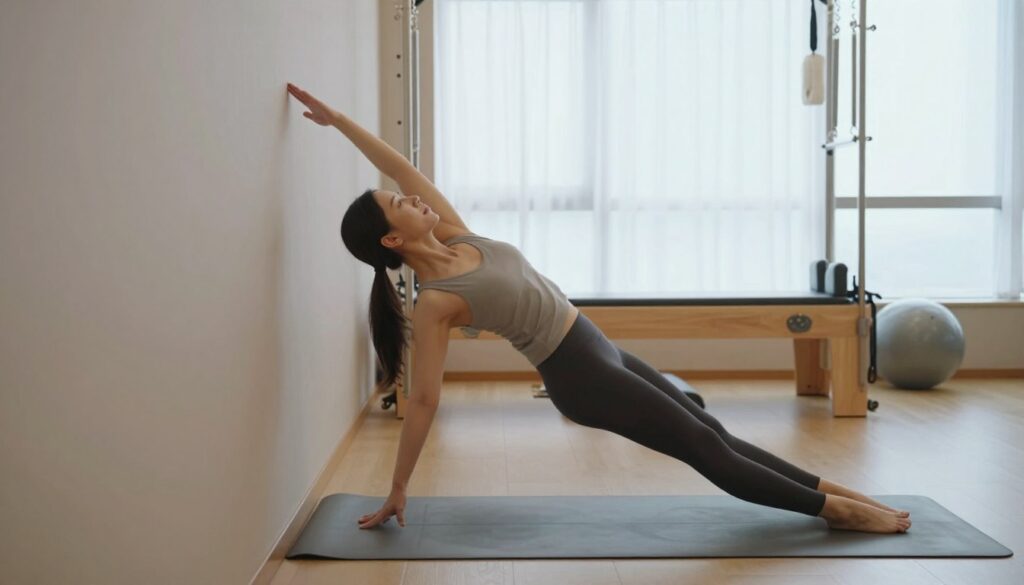
A 10-Minute Wall Pilates Routine, Core Stability, Low Impact Workout, Home Fitness
Discover a low-impact way to improve your core stability at home with Wall Pilates. This 10-minute routine is simple, effective, and fits any fitness level.
Wall Plank (2 minutes)
The wall plank is a key exercise in Wall Pilates. It targets your core and boosts stability. Here’s how to do it:
- Proper Hand Placement: Place your hands on the wall at shoulder height, ensuring your arms are straight.
- Engaging the Core: Activate your core muscles by drawing your navel towards your spine.
- Modification Options: For a more challenging version, take a step back from the wall. For a simpler version, place your forearms against the wall.
Wall Slides (2 minutes)
Wall slides improve upper-body flexibility and strength while engaging your core.
- Maintaining Back Contact: Keep your back in contact with the wall throughout the exercise.
- Proper Descent Technique: Slowly slide your arms down the wall, keeping them straight, and then return to the starting position.
- Breathing Pattern: Inhale as you lower your arms, and exhale as you raise them.
Wall Roll-Downs (2 minutes)
Wall roll-downs are great for improving spinal flexibility and strengthening your core.
- Articulating the Spine: Roll down through your spine, vertebra by vertebra, keeping your knees slightly bent.
- Breathing Pattern: Inhale to prepare, and exhale as you roll down.
- Common Adjustments: If you experience any discomfort, adjust your pace or depth.
Wall Leg Lifts (2 minutes)
Wall leg lifts target your lower abdominal muscles and help improve balance.
- Stabilizing the Pelvis: Engage your core to maintain pelvic stability.
- Controlled Movement: Lift one leg a few inches off the ground, hold for a moment, and then lower it back down.
- Progression Options: Increase the height of your lift or add more repetitions as you get stronger.
Wall Push-Aways (2 minutes)
Wall push-aways work on your chest and shoulder muscles while maintaining core engagement.
- Proper Arm Alignment: Ensure your arms are straight and at shoulder height.
- Core Engagement: Keep your core muscles activated throughout the exercise.
- Safety Considerations: Avoid pushing too hard against the wall to prevent strain.
By adding this 10-minute Wall Pilates routine to your daily routine, you can boost your core stability and fitness. Always listen to your body and adjust the exercises to fit your comfort and fitness level.
Common Mistakes to Avoid in Wall Pilates
Wall Pilates is great when done right. But there are mistakes to watch out for. Knowing these can help you practice safely and improve your core strength.
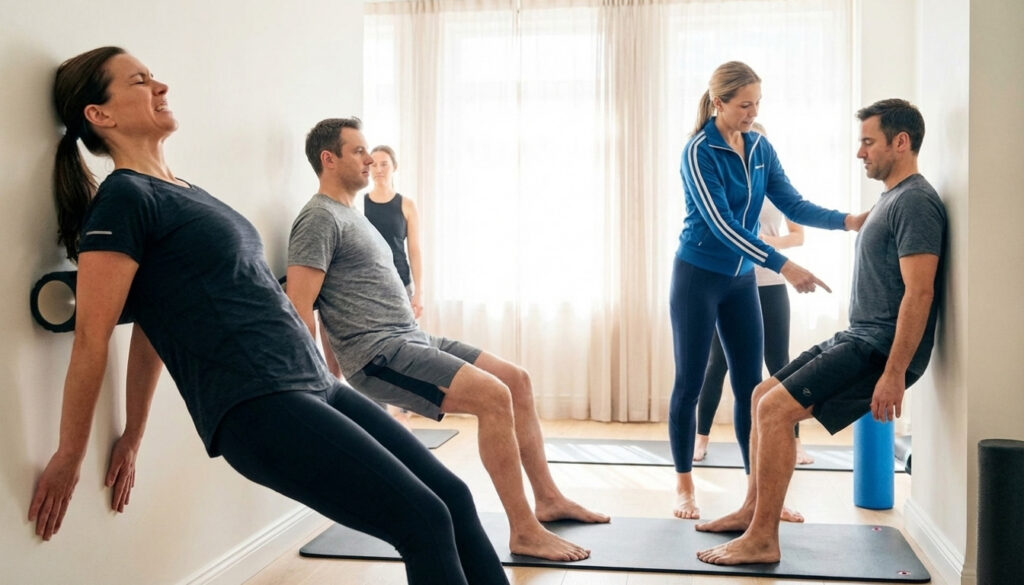
Holding Your Breath
One big mistake is holding your breath. It’s key to breathe right to control your movements and engage your core. Try to exhale when you’re working hard and inhale when you’re relaxing. This keeps your movements smooth and prevents strain.
Arching Your Back
Arching your back can cause pain or injury. To avoid this, keep your spine straight and engage your core. This protects your back and helps you work the right muscles.
Tensing Your Shoulders
Tensing your shoulders can lead to strain and reduce the effectiveness of your practice. Instead, relax your shoulders and keep them down. This helps you move more smoothly and control your movements more effectively.
Rushing Through Movements
Rushing through movements can hurt the quality of your practice. To get the most out of Wall Pilates, move slowly and control your movements. This way, you’ll use your core right and improve your flexibility.
By recognizing these common mistakes and avoiding them, you can improve your Wall Pilates. You’ll get stronger, improve your posture, and reduce your risk of injury.
- Practice mindful breathing to avoid holding your breath.
- Maintain a neutral spine to prevent arching your back.
- Relax your shoulders to avoid tensing up.
- Focus on slow, controlled movements.
Progressing Your Wall Pilates Practice
To improve your Wall Pilates, increase the time, add resistance, and try new exercises. As you improve, challenge yourself further to reach your fitness goals.
Adding Time to Exercises
Start by adding 10-15 seconds to each exercise. For example, if you do a Wall Plank for 2 minutes, try 2 minutes and 15 seconds next time. This helps you build endurance.
Incorporating Small Equipment
Using small equipment, such as resistance bands or light dumbbells, can make your routine more challenging. Resistance bands provide constant tension, which helps your muscles work more effectively. Start with light weights and increase as you get stronger.
Advanced Wall Pilates Variations
When you’re good at the basics, try more advanced moves. For example, modify the Wall Plank by lifting one leg or adding a push-up. These changes work your core and other muscles, giving you a better workout.
Creating a Weekly Schedule
Staying consistent is crucial in Wall Pilates. Create a weekly plan to sustain the challenge. Aim for 3-4 sessions a week, with rest days in between. Mix up your exercises and variations to avoid getting bored and stuck.
By following these steps and staying dedicated, you’ll see real progress in your Wall Pilates. You’ll reach your fitness goals in no time.
Tracking Your Progress and Results
To get the most out of Wall Pilates, tracking your progress is key. Seeing how far you’ve come motivates you to keep going. It also helps you tweak your routine for even better results.
Physical Markers of Improvement
There are many ways to measure your improvement. You might notice you’re more flexible, stand taller, or feel stronger in your core. As you stick with Wall Pilates, you’ll notice changes in your body and in how stable you feel.
Keeping a Wall Pilates Journal
Keeping a Wall Pilates journal is a great way to track your progress. Write down your exercises, how many times you do them, and any challenges you face. This lets you look back and see how far you’ve come. It also helps you set realistic goals and celebrate your wins.
Setting Realistic Goals
Setting realistic goals is important for a successful Wall Pilates practice. Having clear, achievable goals keeps you motivated and focused. Break down big goals into smaller, easier ones to track your progress better.
Celebrating Small Victories
Celebrating your achievements, no matter how small, is crucial. Acknowledge your progress and treat yourself for reaching milestones. This boosts your confidence and keeps you motivated to continue your Wall Pilates journey.
Conclusion
Wall Pilates is a special way to boost your core strength and fitness. It uses the wall for support and resistance. This makes it a low-impact workout that’s easy to start and effective.
Wall Pilates is great because it helps your core get stronger and lowers injury risk. It’s perfect for anyone looking for a gentle yet challenging workout. Whether you’re new to fitness or want to mix things up, Wall Pilates is a great choice.
Adding Wall Pilates to your routine can make a big difference. You’ll see a stronger, more stable core and feel better overall. Remember, staying consistent and patient are important. This low-impact workout will help you reach your fitness goals.