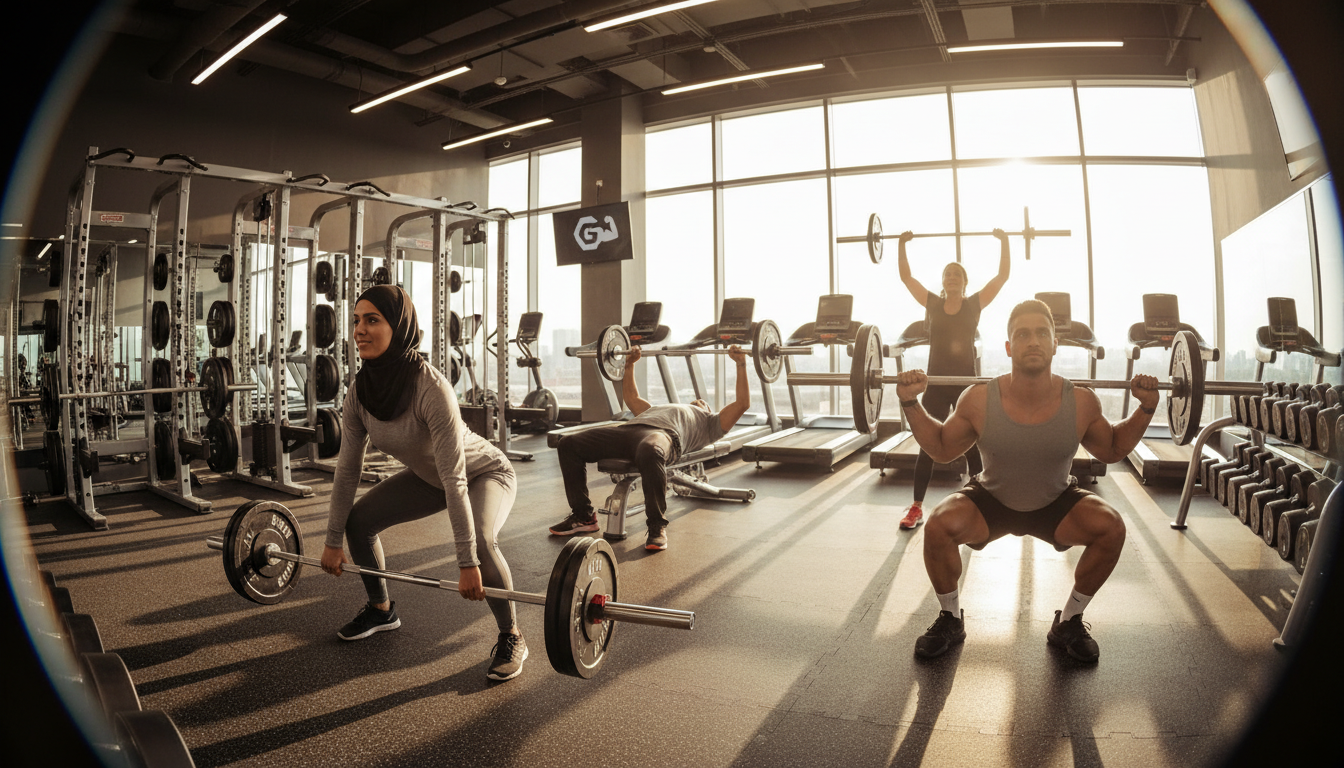
You’ve probably heard about the Big Five exercises. They are squats, deadlifts, bench press, overhead press, and pull-ups. These are essential for muscle growth and maintaining fitness.
These exercises target multiple muscles simultaneously. This makes them very effective. To get the best results, it’s important to maintain a consistent workout routine and use progressive overload.
Consistency, proper nutrition, and adequate rest are also crucial. By adding the Big Five exercises to these habits, you can see big improvements in muscle and health.
Key Takeaways
- Focus on the Big Five exercises for efficient muscle growth.
- Consistency is key to a successful workout routine.
- Progressive overload is essential for challenging your muscles.
- Adequate nutrition supports muscle recovery and growth.
- Recovery is crucial for allowing your muscles to heal.
Why The Big Five Are Essential for Strength Training and Muscle Building
To build more muscle, it’s key to focus on compound movements. These exercises engage multiple muscles simultaneously. This makes them effective for building muscle throughout your body.
The Science Behind Compound Movements
Exercises like squats, deadlifts, and bench presses engage many muscle fibers. This action triggers a big hormonal response. Hormones like testosterone and growth hormone help your muscles grow and heal.
Efficiency in Training: Maximum Results with Minimal Exercises
Adding compound exercises to your workout routine can deliver better results with fewer exercises. They work on multiple joints and muscles simultaneously. This means you don’t need to do as many single-muscle exercises.
| Exercise | Primary Muscles | Secondary Muscles |
|---|---|---|
| Squats | Quadriceps, Hamstrings, Glutes | Core, Lower Back |
| Deadlifts | Hamstrings, Glutes, Lower Back | Core, Traps |
| Bench Press | Chest, Shoulders, Triceps | Core |
By focusing on these compound exercises, you can make your workouts more effective. You’ll see better results in less time.
Building Your Foundation: What Makes These Exercises Superior
It’s important to understand why the Big Five exercises are effective for muscle growth and strength. They work well because they engage multiple muscle groups at once and boost hormone levels.
Muscle Recruitment and Hormonal Response
The Big Five—squats, deadlifts, bench press, overhead press, and pull-ups—are top because they work many muscles. This means they trigger a significant hormonal surge, including increases in testosterone and growth hormone. These hormones support muscle growth and repair.
Functional Strength vs. Isolation Training
The Big Five exercises are different from single-muscle workouts. They build strength for real-life activities and sports. They’re better for building overall strength and muscle than single-muscle exercises.
Long-Term Progress and Sustainability
The Big Five exercises are great for both short and long-term gains. They keep your muscles growing and getting stronger over time. Sticking with these exercises helps avoid hitting a plateau and keeps your progress going.
Adding the Big Five to your workouts can really boost your muscle and strength gains. Understanding their benefits helps you develop a better, more effective training plan.
Mastering the Squat: The King of Lower Body Development
Squats are the top exercise for the lower body. They work many muscles at once. This makes them key for building leg strength and muscle.
Proper Squat Form and Technique
To get the most from squats, learn the right form. Stand with your feet apart, lower down until your thighs are parallel, and push back up. The right form prevents injuries and boosts the exercise’s benefits.
Muscles Targeted: Quads, Glutes, Hamstrings, and Core
Squats work many muscles at once. They target the quads, glutes, hamstrings, and core. This makes squats great for building the lower body.
| Muscle Group | Primary Function During Squat |
|---|---|
| Quadriceps | Knee extension |
| Glutes | Hip extension |
| Hamstrings | Knee flexion and hip extension |
| Core | Stabilization of the torso |
Common Mistakes and How to Avoid Them
Common squat mistakes include not going deep enough and allowing the knees to pass the toes. To avoid these, focus on controlled movements and proper alignment.
Depth Issues and Solutions
Make sure your thighs are parallel to the ground for proper depth. If you struggle, try mobility exercises to improve your range.
Knee and Back Position Corrections
Keep your knees in line with your toes and avoid arching your back. Strengthening your core and improving flexibility can help you maintain proper posture.
“The squat is a king among exercises, but only if done correctly. Proper form and technique are paramount.” – A renowned fitness expert.
Squat Variations for Different Goals
There are many squat variations, like back squats, front squats, and sumo squats. Each targets muscles differently. Trying different variations can help you reach specific training goals, such as increased strength or muscle.
Deadlift Fundamentals: Building Your Posterior Chain
To build a strong posterior chain, learning the basics of deadlifts is key. The deadlift works many muscles at once, like your back, glutes, and hamstrings.
Correct Deadlift Setup and Execution
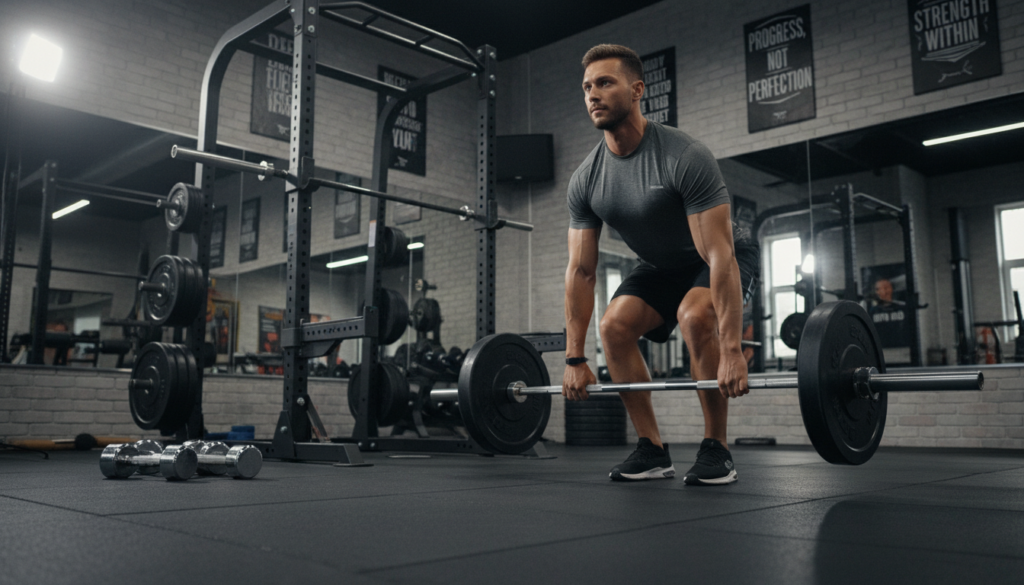
Getting the setup right is vital for a good deadlift. Stand over the barbell with your feet shoulder-width apart. Your toes should point straight ahead or slightly outward. Bend at the hips and knees, keeping your back straight, and grip the barbell with an overhand or mixed grip.
Make sure your shoulders are down and away from your ears. This helps keep your back stable.
Key steps for execution include:
- Lifting the barbell by hinging at the hips and knees, keeping it close to your shins.
- Standing up straight, squeezing your glutes, and pushing your hips back.
- Lowering the barbell by hinging at the hips, keeping control throughout the movement.
Targeting the Back, Glutes, and Hamstrings Effectively
The deadlift targets the posterior chain well. To fully engage these muscles, use a full range of motion and maintain proper form. Squeeze your glutes at the top and keep your back straight.
Safety Considerations and Injury Prevention
When doing deadlifts, safety comes first. Start with a weight that allows you to maintain proper form. Gradually add more weight as you get stronger. Always warm up before lifting and consider wearing a weightlifting belt for extra support.
Conventional vs. Sumo: Choosing Your Stance
The stance you pick for deadlifts impacts the muscles worked and how the exercise feels. Conventional deadlifts with a narrower stance primarily target the back and hamstrings. Sumo deadlifts, with a wider stance, work the glutes and quads more.
| Deadlift Type | Stance Width | Primary Muscles Targeted |
|---|---|---|
| Conventional | Narrower | Back, Hamstrings |
| Sumo | Wider | Glutes, Quads |
Deciding between conventional and sumo deadlifts depends on your comfort, goals, and any injuries. Try both stances to see which suits you best.
Bench Press Mastery: Developing Upper Body Strength
To get the most out of your upper body, mastering the bench press is key. It works your chest, shoulders, and triceps. This makes it a must-have in any workout plan.
Bench Press Technique for Maximum Chest Development
Start with the right setup for the bench press. Lie on the bench with your eyes under the bar. Hold it wider than your shoulders.
Engage your core and squeeze your shoulder blades together for stability. Lower the bar to your chest, then push it up fully.
Engaging the Chest, Shoulders, and Triceps
For the best results, focus on controlled movements. Keep your elbows at a 45-degree angle as you lower the bar. This spreads the work across your chest, shoulders, and triceps.
Grip Width and Its Effect on Muscle Activation
Changing your grip width can change which muscles you work. A wider grip works your chest more. A narrower grip focuses on your triceps and shoulders.
Try different grip widths to see which best suits your goals.
Using Spotters and Safety Equipment Properly
Always put safety first with the bench press. Use a spotter for heavy lifts. Get to know your bench’s safety features, like safety racks or spotter arms.
These steps help avoid injuries and keep your workouts safe.
Mastering the bench press and applying these tips will boost your upper-body strength.
Overhead Press: Building Impressive Shoulder Development
The overhead press is a key exercise for strong shoulders. It works the shoulders from different angles. This is crucial for supporting various movements and activities.
Standing vs. Seated Overhead Press Technique
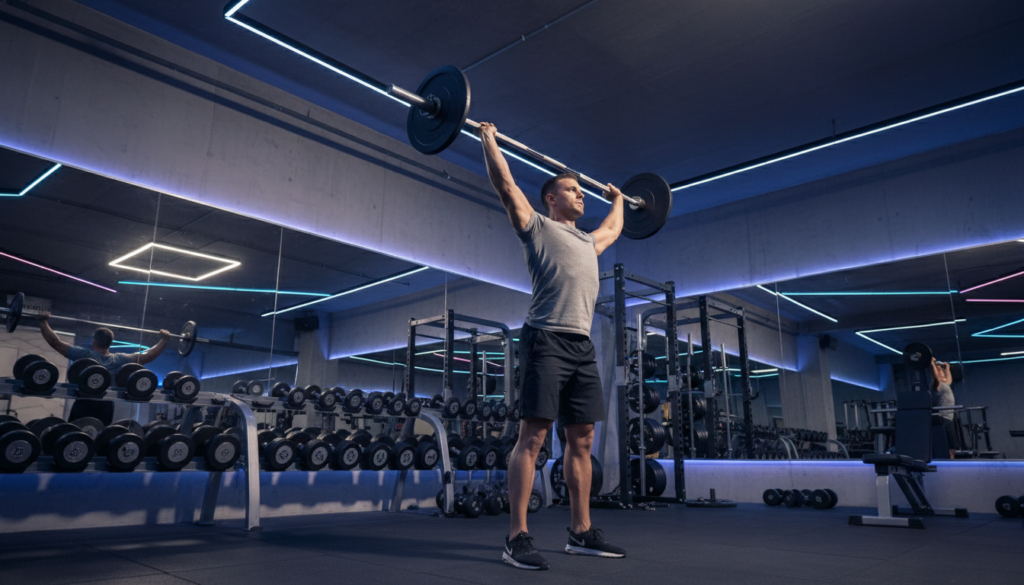
There are two ways to do the overhead press: standing and seated. Standing helps engage your core and legs more effectively, making it more functional. Seated focuses more on the shoulders, with less lower body involvement.
Shoulder Health and Injury Prevention
Keeping your shoulders healthy is important when doing overhead presses. Use the right form and don’t lift too much weight to avoid injuries. Always warm up before and cool down after to prevent muscle strain.
Core Engagement During Overhead Movements
Engaging your core is crucial during overhead presses. It adds stability and helps transfer force from your lower body to your upper body. This keeps your form right and boosts the exercise’s effectiveness.
Progression Strategies for Stubborn Shoulders
If your shoulders are hard to work, try these strategies: slowly increase the weight, adjust the grip width, or try different presses, such as dumbbell presses. Always listen to your body and adjust your workout to avoid overdoing it.
Pull-Ups and Rows: The Key to a Powerful Back
Pull-ups and rows are key to a strong back. They work the latissimus dorsi, trapezius, and rhomboids. This helps build a muscular upper body.
Proper Technique for Pull-Ups
To master pull-ups, start with the right technique. Hang from the bar with your hands shoulder-width apart. Pull your shoulder blades down and up until your chin clears the bar. Slowly lower back down to finish one rep.
Tips for beginners: If full pull-ups are tough, try assisted pull-ups. Use a resistance band or a partner for help.
Row Variations and Their Benefits
Rows are vital for back strength. There are bent-over rows, seated rows, and inverted rows. Each targets different muscles, keeping your workouts varied.
- Bent-over rows focus on the latissimus dorsi and trapezius.
- Seated rows target the middle and upper back.
- Inverted rows work the lats, biceps, and shoulders.
Building Lat Width and Thickness
To widen and thicken your lats, mix pull-ups and rows. Wide-grip pull-ups and rows are best for the lats. Adding these to your routine will broaden and thicken your back.
Scaling Options for Different Fitness Levels
Pull-ups and rows can be adjusted for all fitness levels. For pull-ups, use machines or bands for help. For rows, change the weight or grip width to suit your needs.
Progressive Overload: The Fundamental Principle for Continuous Growth
The secret to getting stronger in strength training is progressive overload. This idea is key for growing stronger and gaining muscle. It means you slowly add more weight or resistance to your workouts. This challenges your muscles and helps them grow more.
Methods to Implement Progressive Overload
There are many ways to use progressive overload. Here are a few:
Weight Increases
Adding more weight to your lifts is a simple way to challenge your muscles. For example, if you squat 100 pounds for 3 sets, try 105 pounds next time.
Rep and Set Manipulation
Doing more reps or sets can also help. Say you bench press 3 sets of 8 reps. Try 3 sets of 10 reps or add another set next time.
Tempo and Rest Period Adjustments
Changing how fast you lift or how long you rest can also challenge your muscles. Lift slower or rest less between sets to make your workout harder.
Tracking Progress Effectively
It’s important to track your workouts to see if you’re getting stronger. Write down the weights, reps, and sets you do. This helps you see where you need to push harder.
| Exercise | Weight | Reps | Sets |
|---|---|---|---|
| Squat | 100 lbs | 8 | 3 |
| Bench Press | 80 lbs | 10 | 3 |
| Deadlift | 120 lbs | 8 | 3 |
Breaking Through Plateaus
Plateaus happen, but you can get past them. Try changing your workout or focusing on different muscles. You can also add more weight or reps. Sometimes, just changing how you grip or stand can challenge your muscles in new ways.
By using progressive overload, you can keep growing stronger and gaining muscle in your workouts.
Nutrition and Recovery: Fueling Your Muscle Growth
To grow muscles, you need a complete plan. This includes good nutrition, effective workouts, and enough rest. The Big Five exercises are key to strength and muscle. But what you eat and how you recover are just as important.
Protein Intake for Muscle Building
Protein is essential for fixing and growing muscles. You should eat 1-1.5 grams of protein per pound of body weight every day. This helps your muscles recover after hard workouts, especially squats and deadlifts.
Caloric Needs Based on Body Goals
Your calorie intake should match your fitness goals. If you want to get bigger, eat more calories than you burn. But, don’t eat too much to avoid gaining too much fat.
The Importance of Sleep Quality
Sleep is vital for muscle repair and growth. Your body fixes and builds muscles while you sleep. So, aim for 7-9 hours of quality sleep each night. Bad sleep can slow down your muscle growth by messing with important hormones.
Active Recovery Techniques
Active recovery methods can also help your muscles. Try foam rolling, stretching, and light cardio on rest days. These activities reduce soreness and improve blood flow, helping your muscles recover.
By focusing on nutrition and recovery, you can build a solid fitness plan. Remember, growing muscles takes time and effort. Stay consistent and patient.
Creating Your Compound Exercise Program for Maximum Results
To get the most out of your workouts, a solid compound exercise program is key. It ensures you hit all major muscle groups effectively. This way, you use your gym time wisely.
Sample Weekly Training Splits
Start with a weekly split that covers the Big Five exercises. You could spend three days on squats and deadlifts, one on bench press, and the last on overhead press and pull-ups. Or, try a four-day split to spread the Big Five over more days.
Balancing Volume and Intensity
It’s important to balance how much you do and how hard you do it. Lift enough weight to grow your muscles, but keep your form right. Also, do enough sets and reps to tire your muscles, but don’t overdo it.
Incorporating Assistance Exercises
While the Big Five are essential, don’t forget about assistance exercises. They help fix weaknesses and balance your muscles. For example, rows can help if you struggle with pull-ups.
Adjusting Your Program as You Progress
As you get stronger, your program must change to keep challenging you. You might lift more weight, do more sets or reps, or rest less between sets. Always check and tweak your program to keep making progress.
Conclusion: Embracing the Power of the Big Five for Long-Term Success
You now know how important the Big Five exercises are. They include squats, deadlifts, bench press, overhead press, and pull-ups or rows. Adding these to your workout routine sets you up for long-term success.
The Big Five exercises are key to your strength and muscle-building journey. They work many muscles at once, helping you build strength efficiently. Focusing on these exercises leads to better functional strength and progress over time.
For lasting success, consistency and patience are crucial. You also need to increase the weight you lift, eat right, and rest well. Combining these with the Big Five exercises will help you reach your fitness goals.
Embracing the Big Five exercises and a solid training plan puts you in control. Start adding these exercises to your routine. You’ll be on your way to lasting success.