Most people focus on what they eat, but when they eat is just as vital to their health. Your brain uses light to set your master schedule. But your organs need food to set their own peripheral clocks.
Recent chronobiology research reveals that your liver and pancreas work best in daylight. Eating late at night forces these organs to work against their natural circadian rhythm.
This misalignment causes metabolic timing confusion. Even with healthy foods, your body may struggle with insulin sensitivity. Ignoring these biological clocks can mess up how your system uses energy.
Understanding these internal systems is key to better health. By syncing your meals with your body’s needs, you can better manage insulin levels. These peripheral clocks are the hidden gatekeepers of your long-term wellness.
Key Takeaways
- Your body uses light for the master clock and food for organ-specific timing.
- Eating late at night can cause significant internal misalignment.
- Healthy macros do not guarantee efficiency if your internal schedule is off.
- Organs like the liver and pancreas have their own unique daily cycles.
- Aligning your meals with your natural rhythm improves overall health outcomes.
Understanding the Architecture of Your Internal Timekeeping
Your health is tied to a complex system inside you. It divides energy use and repair by time of day. This intricate system keeps your body in sync with the world around you.
The Master Clock vs. Peripheral Clocks
The heart of your biological clock is the suprachiasmatic nucleus (SCN) in your brain. It gets light info from your eyes to set your main circadian rhythms. It’s like a conductor, leading the rest of your body in rhythm.
But there’s more. Peripheral clocks are in your liver, heart, and muscles, too. They control cell activity independently. The SCN sets the pace, and these clocks adjust for your body’s needs.
How Circadian Rhythm Biology Governs Cellular Function
The circadian system maintains balance through a feedback loop. When it’s working right, your cells do their best work at the right times. This circadian regulation helps avoid health problems and keeps you strong.
But if your biological rhythms get out of sync, it can stress your body. Knowing how your biological clocks work helps you support your body’s natural rhythm. Keeping this balance is key to staying healthy.
| Feature | Master Clock (SCN) | Peripheral Clocks |
|---|---|---|
| Primary Location | Hypothalamus | Organs and Tissues |
| Main Input | Light/Dark Cycles | Nutrient/Food Cues |
| Function | Global Synchronization | Local Metabolic Control |
| Timekeeping Mechanism | Central Pacemaker | Tissue-Specific Oscillators |
The Role of Peripheral Clocks in Metabolic Regulation
A network of peripheral clocks works hard to keep your metabolism in check. These timekeepers are in almost every tissue, helping your body keep in sync with the day-night cycle. They make sure your organs are ready for the day’s needs before they happen.
This complex system is key to maintaining stable energy levels. When your body’s systems are in sync, it uses food and energy wisely. This is a core part of chronobiology that affects how you digest food.
Identifying the Liver and Pancreas as Metabolic Pacemakers
The liver and pancreas are key players in the molecular clock network. They act as metabolic leaders, adjusting their work in response to when you eat. Their timing affects how your body handles sugars and fats.
When these organs work well, they help your body match its metabolism to your eating schedule. Consistent meal times help them better prepare for digestion and nutrient storage. This cellular timekeeping is crucial for avoiding metabolic problems and keeping you healthy for the long term.
Molecular Clock Mechanisms and Gene Expression
The core of this system is a complex molecular clock mechanism. Cells use a loop involving proteins like CLOCK and BMAL1 to keep time. These biological clock genes regulate other genes at different times of day.
This creates specific gene expression patterns that control when certain metabolic tasks happen. By regulating clock-controlled genes, your body ensures that enzymes and hormones are produced when needed. This precise timing helps your cells maintain metabolic circadian rhythms, keeping your body stable even when things change outside.
How Food Intake Acts as a Zeitgeber for Your Organs
Every time you eat, you send a message to your body’s clocks. While many focus on sleep, eating at the same time is key for your body. It tells your liver and pancreas when to work best.
Keeping a regular eating schedule helps your body work better. It makes your energy use more efficient. This is because your body knows when to expect food.
The Science of Metabolic Timing
The timing of metabolism is about more than just calories. It’s about eating when your body is ready. Your organs have time-sensitive processes that affect how you use energy.
Eating at the right time boosts your time-dependent metabolism. Here are some benefits:
- Improved glucose regulation and insulin response.
- Enhanced mitochondrial efficiency in the liver.
- Better synchronization of biological clocks across different organ systems.
- Reduced strain on digestive enzymes during late-night hours.
Distinguishing Light Cues from Nutrient Cues
Your body uses light and food in different ways to keep time. Light controls your brain’s clock, but food affects your organs.
This system lets your body adjust to changes in light. It keeps your time-sensitive metabolism steady.
| Feature | Light Cues | Nutrient Cues |
|---|---|---|
| Primary Target | Central Master Clock | Peripheral Metabolic Organs |
| Main Input | Retinal Photoreceptors | Macronutrient Intake |
| Biological Role | Sleep-Wake Regulation | Energy Homeostasis |
Understanding these signals helps you manage your biological timing. It trains your body to expect food. This prevents metabolic confusion that can lead to weight gain and fatigue.
The Mechanics of Insulin Sensitivity and Circadian Rhythms
Your body’s glucose processing changes throughout the day. It’s not a fixed state, but a dynamic one ruled by internal timing. Knowing these changes helps support your body’s natural insulin regulation.
Insulin Secretion Rhythm Throughout the Day
Your pancreas has a precise insulin secretion rhythm that matches your daily activities. In the early hours, it prepares for the day’s energy needs by releasing more insulin after eating. This is balanced by glucagon, keeping blood sugar stable between meals.
This balance ensures your cells get the right fuel at the right time. If this rhythm is off, managing glucose becomes hard. Keeping a steady insulin secretion regulation is key to metabolic health.
Why Insulin Sensitivity Fluctuates with Your Biological Clock
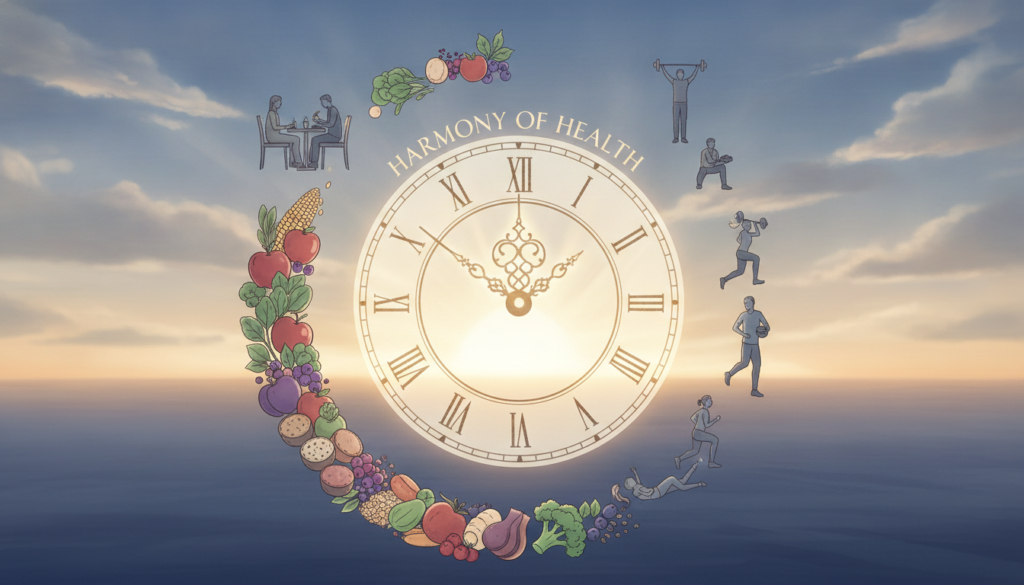
Your insulin sensitivity peaks in the morning, making it the best time to eat carbs. As the day goes on, your cells become less responsive to insulin, a key regulator of the circadian rhythm. This is why eating late can cause bigger blood sugar spikes than eating earlier.
Understanding how insulin sensitivity is regulated helps you make better eating choices. Eating big meals when you’re most sensitive reduces your pancreas’s work. This uses your circadian rhythms to improve how your body handles calories.
| Metabolic Factor | Morning State | Evening State |
|---|---|---|
| Insulin Sensitivity | High | Low |
| Glucose Tolerance | Optimal | Reduced |
| Cellular Response | Efficient | Sluggish |
| Primary Goal | Energy Intake | Rest and Repair |
The Consequences of Eating Late at Night
Eating late at night disrupts your circadian rhythms. It makes your body work when it should rest. This leads to metabolic confusion and disrupts your body’s natural balance.
Metabolic Confusion and Desynchronization
Your body has biological timing circuits for eating during the day. Eating late disrupts your circadian rhythm because your body’s clocks are out of sync. This makes your body rely on stress signals rather than natural cues for energy.
Time-sensitive processes help maintain your weight and energy levels. Eating late messes with these processes. This can lead to big problems with how your body handles and stores fuel.
Why Clean Macros Cannot Override Biological Timing
Some think eating healthy food at night is okay. But time-dependent metabolism is controlled by your internal clock, not just food quality. Even healthy food is harder to digest at night because your insulin sensitivity is lower.
Your insulin secretion rhythm slows down in the evening. This makes it hard for your body to clear glucose from your blood. Your body is not ready to handle a lot of calories before sleep. Relying only on food quality ignores the fact that your time-sensitive metabolism is key.
| Feature | Early Eating Window | Late Night Eating |
|---|---|---|
| Insulin Sensitivity | High | Low |
| Metabolic Efficiency | Optimal | Impaired |
| Fat Storage Risk | Minimal | Increased |
| Organ Recovery | Supported | Disrupted |
Analyzing the Impact of Circadian Disruption on Health
Modern life often forces you to live against your natural biological clock. This creates a state of constant internal friction. When your daily habits clash with your internal physiology, your body struggles to maintain metabolic homeostasis.
This persistent conflict is the hallmark of circadian rhythm disruption. It has become increasingly common in our 24/7 society.
Recognizing these connections is the first step toward mitigating the risks. By understanding how your circadian system functions, you can better appreciate why your body demands consistency. Ignoring these biological signals forces your organs to work overtime, leading to long-term health complications.
Linking Chronobiology Research to Metabolic Disorders
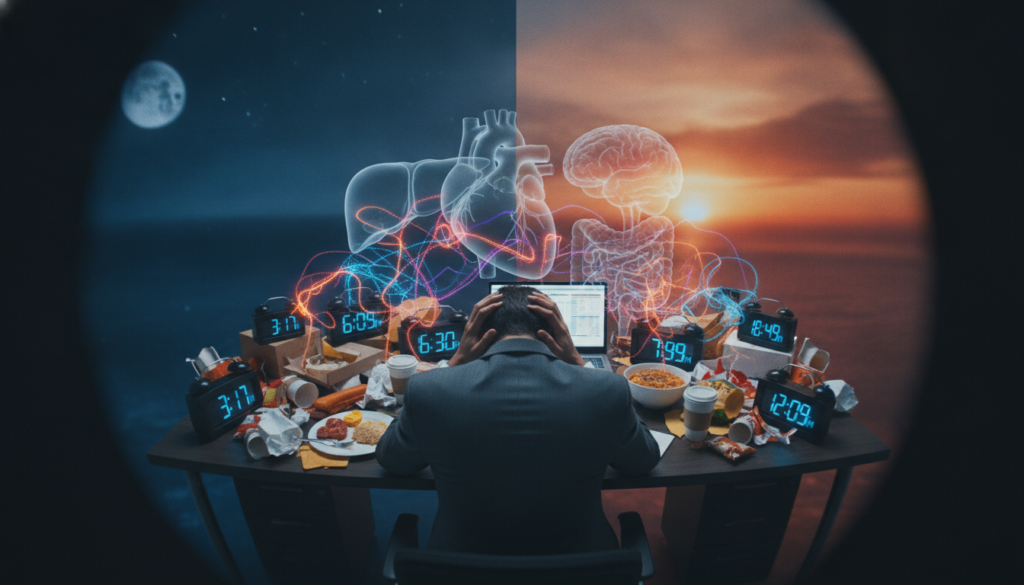
Extensive chronobiology research has established a clear link between irregular schedules and metabolic disorders. Studies show that shift work and social jetlag are strongly associated with obesity and cardiovascular disease. These lifestyle factors act as stressors that disrupt your natural circadian rhythm.
When your internal rhythms fight against your external schedule, your metabolic regulation suffers. This is not just about feeling tired. It’s about how your cells process energy. Chronic stress on your circadian biology can lead to systemic inflammation and impaired organ function.
The Connection Between Diabetes and Circadian Rhythms
The relationship between diabetes and circadian rhythms is critical in modern medicine. Research shows that when your internal clock is out of sync, your body becomes less efficient at managing blood glucose levels. This inefficiency is a primary driver in the development of type 2 diabetes.
Maintaining healthy circadian rhythms in health is vital for insulin sensitivity and glucose metabolism. If you frequently eat late at night or maintain an erratic sleep schedule, you disrupt the delicate balance of your circadian rhythm biology. Protecting your internal timing is a proactive strategy for long-term metabolic health and disease prevention.
Implementing Time-Restricted Feeding for Clock Alignment
Your body needs regular food cues to keep its molecular clock network in check. Eating within a set time helps your cells stay healthy. This ensures your body works well all day long.
Aligning Your Eating Window with Your Molecular Clocks
The molecular clock mechanism works best with regular signals. Eating at the same time helps your body’s natural rhythms. This is key to your organs functioning properly.
Changing your eating times can mess up your molecular oscillators and your digestion. Time-restricted feeding keeps your body’s temporal gene expression in sync. This simple change boosts your health.
Practical Strategies for Time-Controlled Feeding
Starting time-controlled feeding is easy. Pick an 8 to 10-hour window that fits your day. This helps your molecular clock genes stay stable.
Being consistent is key. Skip late-night snacks to avoid disrupting your circadian rhythm. Here’s how to plan your day for the best results.
| Strategy | Primary Benefit | Target Mechanism |
|---|---|---|
| Consistent Windows | Improved metabolic rate | Molecular clock network |
| Early Feeding | Enhanced insulin sensitivity | Daily timekeeping in cells |
| No Late Snacking | Reduced inflammation | Timekeeping mechanisms |
| Hydration Focus | Supports cellular health | Gene expression patterns |
Optimizing Your Daily Metabolic Synchronization
Your body works like a complex orchestra, needing a steady rhythm from your daily habits. When you give your body predictable cues, your organs work best. This physiological synchronization is key to long-term health and energy.
Synchronizing Your Biological Clock Systems
Your biological clock systems are everywhere in your body, not just in your brain. They need outside signals to stay in sync with your main clock. By managing your metabolic timing, you help your organs work together.
When your systems are in sync, your body uses energy better. This circadian regulation of metabolism helps your cells know when to store or use energy. Without it, your metabolic pathways get mixed up, leading to poor nutrient use.
“The rhythm of life is written in the cells, and our daily choices are the ink that defines our metabolic health.”
The Importance of Consistent Meal Timing
Being consistent is the best way to synchronize your body clock. Eating at the same time each day helps your time-dependent metabolism stay stable. This is crucial for improving your circadian rhythms and metabolic health through time-restricted eating.
The table below shows how consistent habits help your internal health:
| Action | Benefit | Impact |
|---|---|---|
| Consistent Breakfast | Jumpstarts metabolism | High |
| Regular Lunch | Maintains energy | Medium |
| Early Dinner | Supports recovery | High |
Adopting time-controlled feeding lets your body know when to expect food. This predictability boosts your time-sensitive metabolism and avoids metabolic fatigue from irregular eating. By focusing on the timing of feeding, you help your metabolic processes thrive.
In the end, biological clock regulation is about a lasting routine. Whether you follow time-restricted feeding or just stick to regular meal times, being consistent is key. Your metabolic synchronization relies on the signals you give your body every day.
Navigating the Challenges of Modern Chrono-Nutrition
Dealing with chrono-nutrition is tough in today’s fast-paced world. Your molecular clock is always influenced by factors outside you. But work and social life often make it hard to eat on time. It’s key to find a balance for your health.
Overcoming Social and Environmental Barriers
Our world often pushes us to eat at odd hours, which can lead to health problems. You might feel pressure to eat late or work odd shifts. These can mess with your metabolic regulation and gene expression regulation.
To fight this, set clear rules for when you eat. Even if plans change, try to stick to small, healthy meals. This helps keep your molecular clock mechanisms in check.
Adjusting Your Schedule for Better Metabolic Homeostasis
Getting your body in sync is doable with a bit of planning. Small changes in when you eat can make a big difference. Eating in sync with your body’s natural rhythm helps it use calories more effectively.
Here are some tips to keep your metabolism healthy:
- Prioritize consistency: Eat at the same times every day to keep your molecular oscillators stable.
- Plan ahead: Have healthy food ready to avoid late-night junk that messes with metabolic pathways.
- Listen to your body: Pay attention to when your temporal gene expression feels out of sync.
By adopting these habits, you can manage a busy life. Keeping your metabolic circadian rhythms in check is crucial for your body’s health. Staying consistent is the best way to achieve lasting wellness.
Monitoring Your Body for Signs of Clock Misalignment
When your biological clock is off, your body sends clear signals. These signs can be small changes in your energy or how you digest food. Learning to recognize these signs helps maintain your physiological synchronization and health.
Recognizing Symptoms of Temporal Organization Issues
Common signs of circadian rhythm disruption include feeling tired all the time and difficulty regulating blood sugar. You might find your insulin sensitivity changes without reason, making it hard to keep energy steady. These problems often come from issues with your cellular timekeeping.
Feeling tired in the afternoon or having trouble sleeping at night? It might mean your biological timing circuits are off. Not paying attention to these signs can lead to bigger metabolic disorders. Watching how you feel after eating is key to keeping your temporal organization in balance.
Using Feedback Loops to Adjust Your Metabolic Routine
Listen to your body to fine-tune your metabolic processes. If you see signs of bad insulin regulation, try eating at different times. Small, steady changes in when you eat can help synchronize your biological clock.
The table below shows common signs of being out of sync and what they mean for your body:
| Symptom | Potential Cause | Recommended Action |
|---|---|---|
| Mid-day energy crash | Poor insulin secretion rhythm | Adjust meal timing earlier |
| Difficulty falling asleep | Circadian system desync | Limit light exposure at night |
| Unstable blood sugar | Reduced insulin sensitivity | Tighten your eating window |
| Digestive discomfort | Disrupted timekeeping mechanism | Maintain consistent meal hours |
By recognizing these signs, you take charge of your biological clock. Your body always gives you clues about how it’s doing. Using this info lets you make changes that help your metabolic health and physiological synchronization in the long run.
Conclusion
Mastering your internal biology starts with choosing when you eat. By focusing on chrononutrition, you help your molecular clock function more effectively. This way, your cells use nutrients more efficiently throughout the day.
Keeping regular meal times helps your body better sync up. Eating at the same time every day affects your genes. This improves how your body handles insulin and glucagon, keeping everything in balance.
Research shows that clock genes are key to staying healthy. Eating at the right times can keep your genes stable. This lowers the risk of diseases and boosts your overall health.
Begin by paying attention to your body’s natural rhythm today. Even small changes in your routine can help. By being mindful of what and when you eat, you can improve your health and vitality.