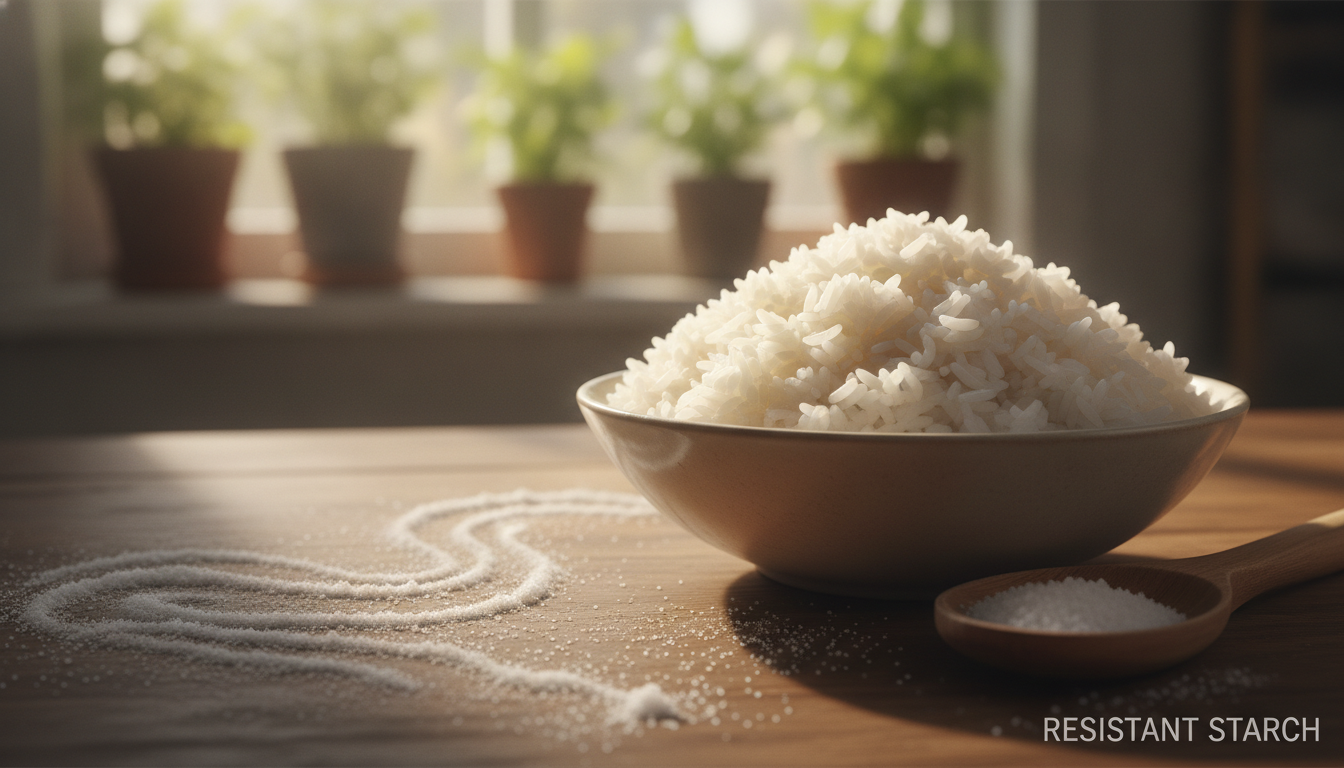
Did you know your favorite pantry staple can boost your health? By changing how you cook, you can turn simple grains into a health powerhouse. This creates resistant starch, a special fiber that feeds your good bacteria.
Learning how to make resistant starch is easy and rewarding. Cooling cooked grains changes their structure, helping keep your blood sugar stable. This is great for anyone wanting to boost their gut microbiome health naturally.
Adding this habit to your daily routine is simple. By mastering the cooling method, you make white rice resistant starch a health asset. Small changes in cooking can greatly improve your health.
Key Takeaways
- Cooling cooked grains creates a beneficial fiber that aids digestion.
- This method helps prevent sharp spikes in blood sugar.
- A healthy gut relies on diverse fibers to thrive and function properly.
- You can easily prepare these meals ahead of time for convenience.
- Consistent consumption supports long-term metabolic balance and wellness.
Understanding the Science of Resistant Starch
The secret to better metabolic health often lies in the hidden chemistry of the foods you eat every day. By adjusting how you prepare your grains, you can unlock unique nutritional properties that benefit your body. This transformation relies on the fascinating way your system handles different forms of carbohydrates.
What is Resistant Starch?
Resistant starch is a type of carbohydrate that behaves differently than the starches you might be used to. Unlike typical carbs that break down into sugar quickly, this form resists digestion in your small intestine. Because it passes through your system largely intact, it functions much like dietary fiber.
This unique quality means resistant starch digestion doesn’t cause the same rapid spikes in blood glucose levels. Instead, it travels to the large intestine, where it acts as a prebiotic to feed your beneficial gut bacteria. Understanding these resistant starch types helps you make smarter choices for long-term wellness.
The Role of Retrogradation in Starch Transformation
The magic happens during retrogradation, which occurs when you cool cooked starches. When rice is freshly boiled, its starch molecules are loose and easily accessible to digestive enzymes. As the rice cools, these glucose chains reorganize into a tightly packed, crystalline structure.
This structural change makes resistant starch resistant to digestion, effectively locking energy away from immediate metabolic uptake. By mastering the retrogradation process, you can turn a simple side dish into a functional food that supports your health goals. The following table highlights how different starch structures compare in your body.
| Starch Category | Digestion Speed | Primary Benefit |
|---|---|---|
| Rapidly Digestible | Very Fast | Immediate Energy |
| Slowly Digestible | Moderate | Sustained Energy |
| Resistant Starch | None (Fermented) | Gut Microbiome Support |
The Nutritional Benefits of White Rice Resistant Starch
Changing how you prepare white rice can boost your metabolic health. By making white rice resistant starch, you turn a simple dish into a health powerhouse. This change improves the grain’s structure, offering resistant starch health benefits for your well-being.
Impact on Blood Sugar and Insulin Response
Regular rice breaks down quickly, causing blood sugar spikes. But this cooling method makes it a lower-glycemic-index rice. It digests slowly, providing steady energy and better blood sugar control.
This slow digestion also reduces the need for an insulin response after meals.
“The way we prepare our food is just as important as the food itself when it comes to managing metabolic markers.”
Supporting a Healthy Gut Microbiome
Resistant starch is a strong prebiotic food. It reaches the colon and feeds good bacteria in your gut. This is key for gut microbiome health.
A healthy gut produces acids that fight inflammation in your body.
Calorie Reduction and Metabolic Health
One surprising benefit of resistant starch is its effect on calorie intake. Your body can’t fully digest this starch, leading to less calorie absorption during resistant starch digestion. This is great for those looking to lose weight and improve metabolic health.
This simple change supports your body’s balance. It’s not just about eating; it’s about nourishing your body. Whether managing resistant starch-resistant diabetes or seeking resistant starch weight loss, this method is backed by science.
Preparing Your Rice for Maximum Starch Conversion
Learning how to prepare healthy rice is key to unlocking its nutritional benefits. By changing starch molecules, you make simple grains into healthy carbs that help your body. Good kitchen habits are the first step to successful starch modification.
Selecting the Right Type of White Rice
Not all grains react the same to cooling. For the best results, pick high-quality, long-grain white rice. It has the right mix of amylose and amylopectin for white rice resistant starch.
Avoid pre-cooked or instant rice. High-quality, standard white rice is better. It keeps its structure during cooking and cooling, giving you more nutritional benefits.
The Importance of Cooking Methods
How you cook resistant starch affects its structure. Start by boiling rice in water. Adding a small amount of healthy fat, like coconut or olive oil, helps. This fat makes the starch harder to digest.
After cooking, let the rice cool down completely. Then, refrigerate it for at least 24 hours. This allows the starch to crystallize fully, which is crucial for resistant starch cooking methods.
| Preparation Step | Action Required | Goal |
|---|---|---|
| Grain Selection | Use long-grain white rice | Structural integrity |
| Cooking Phase | Add 1 tsp of healthy oil | Starch binding |
| Cooling Phase | Refrigerate for 24 hours | Retrogradation |
| Final Result | Reheat or serve cold | Resistant starch |
By following these resistant starch cooking techniques, your rice becomes a healthy fuel source. Sticking to these steps helps preserve these benefits for longer. Treat your kitchen like a lab to make simple ingredients into health boosters.
Step-by-Step Guide on How to Make Resistant Starch
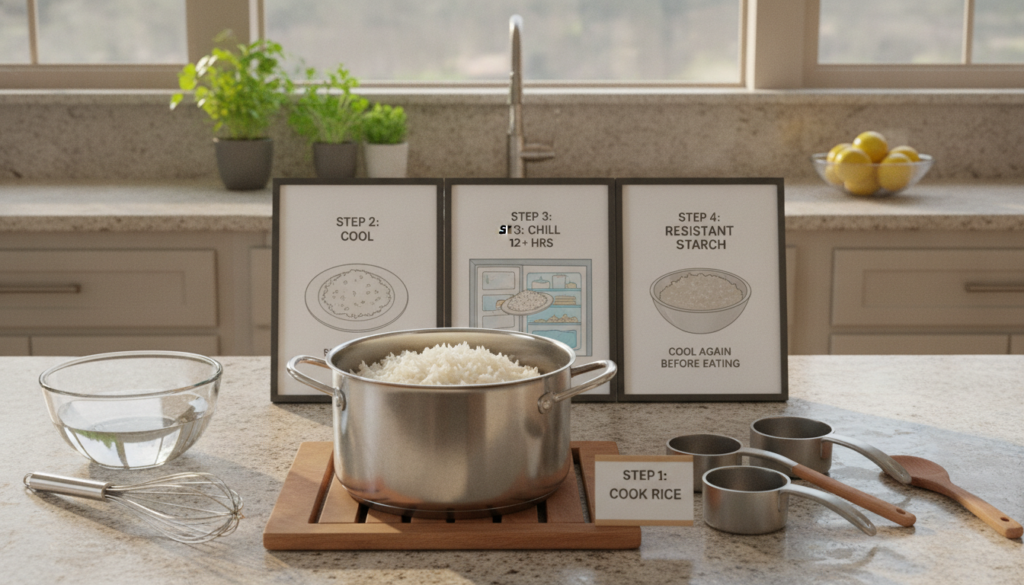
Making resistant starch at home is easy and takes just a few steps. You can turn regular white rice into a healthier option. This white rice resistant starch method is simple and can be done in any kitchen.
Cooking and Adding Healthy Fats
To start your resistant starch rice recipe, boil water as usual. Before adding rice, mix in a teaspoon of coconut oil or olive oil. This step is key because the fat helps the starch during cooking.
The oil coats the starch granules, making them harder to digest. After cooking, fluff the rice with a fork. Make sure it’s fully cooked before moving on.
The Cooling and Refrigeration Process
Once the rice is cooked, cooling it is crucial. Let it reach room temperature before refrigerating. This slow cooling is vital for properly cooking resistant starch.
Put the rice in an airtight container to keep it fresh. Once cool, refrigerate it. Skipping this step can ruin the starch’s transformation.
Why 24 Hours is the Magic Number
Why is 24 hours so important for this resistant starch recipe? It’s the time needed for starch molecules to change. This change, called retrogradation, helps reduce calorie absorption.
Waiting a full day ensures more starch becomes resistant to digestion. This habit can support resistant-starch weight loss. Remember, consistency is key, so plan your meal prep well.
The Role of Fats in Starch Modification
Getting the right resistant starch mix often depends on the fats you pick for healthy rice preparation. Many focus only on cooling time. But adding certain fats during boiling can change how starch acts. These fats protect the starch structure during cooling.
Using Coconut Oil for Enhanced Results
Adding a teaspoon of coconut oil to boiling water is a smart move. This saturated fat makes the rice grains more resistant to digestion. When you make coconut oil rice, you coat the starch granules. This helps them form a tighter, more crystalline structure in the fridge.
“Incorporating healthy fats into your cooking process is not just about flavor; it is a functional step toward improving the metabolic impact of your carbohydrates.”
Benefits of Olive Oil in Rice Preparation
Olive oil is a great choice if you want a different taste. Using olive oil in rice preparation adds a heart-healthy boost. The monounsaturated fats in olive oil keep the rice’s structure intact during heating and cooling.
| Fat Type | Primary Benefit | Flavor Profile | Best Use |
|---|---|---|---|
| Coconut Oil | High Stability | Slightly Sweet | Starch Modification |
| Olive Oil | Heart Health | Savory/Neutral | Daily Cooking |
| Ghee | High Smoke Point | Rich/Nutty | High Heat |
The best choice depends on your taste and diet goals. Both support resistant starch formation. Adding a small amount of fat to your water can improve blood sugar control.
Managing Your Rice After the Cooling Phase
After cooling your rice for 24 hours, it’s ready to support your gut microbiome health. Proper handling from now on keeps these benefits for your meals. This is key to not losing the white rice resistant starch you worked hard to create.
Reheating Without Losing Nutritional Value
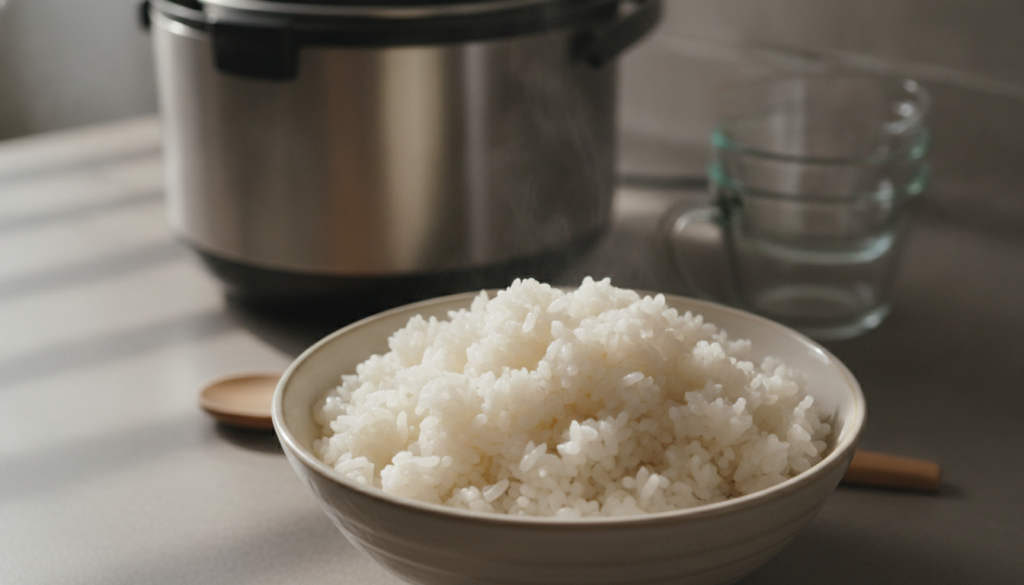
Many fear that reheating will ruin the changes in the rice. But the benefits of reheated rice are safe because the starch molecules are strong. You can warm your rice without losing most of its health benefits.
The starch molecules in the rice stay together even when heated. To keep the rice’s texture best, use a little water or broth when reheating. Just a gentle warm-up is enough to enjoy your meal.
Proper Storage Techniques for Long-Term Use
Storing your rice right is key for safety and quality. Move your cooled rice to an airtight container after the 24-hour cooling period. This stops the rice from drying out or picking up bad smells from your fridge.
For the best results, store your rice in the coldest part of your fridge. It will stay fresh and safe for up to four or five days. If you have more rice than you can eat in that time, freeze it for later. Consistent storage habits mean you always have healthy, starch-rich rice for your meals.
Common Myths and Facts About Resistant Starch
It’s key to know the truth about resistant starch. Many myths surround it, but the facts matter. Learning how to make resistant starch is useful, but it doesn’t turn food into something it isn’t.
Does This Make Rice a Low-Carb Food?
Some think cooling rice makes it low-carb. But the carb content stays the same. This method, however, makes the rice’s carbs easier to digest.
This change helps control blood sugar better. It’s not about cutting carbs but making them work better for you. It’s great for those who love rice but want to manage their energy.
Comparing Resistant Starch to Regular Starch
Resistant starch vs regular starch shows a big difference in digestion. Regular starch quickly turns into glucose, causing a blood sugar spike. Resistant starch, on the other hand, acts like fiber and feeds good bacteria in your gut.
Many resistant-starch foods offer this benefit. But cooling white rice makes it one too. This avoids the energy crashes from high-glycemic meals. Here’s a table showing the main differences to guide your diet choices.
| Feature | Regular Starch | Resistant Starch |
|---|---|---|
| Digestion Speed | Rapid | Slow/Delayed |
| Blood Sugar Impact | High Spike | Moderate/Stable |
| Gut Health | Minimal Effect | Supports Microbiome |
| Caloric Availability | Fully Absorbed | Partially Fermented |
Integrating Resistant Starch Rice into Your Diet
Adding modified rice to your meals can boost your metabolic health. By cooking your grains to increase fiber, you make a simple side dish into a key part of your resistant starch diet. This change lets you enjoy tasty flavors while working towards better health.
Creative Ways to Serve Cold or Reheated Rice
You don’t have to eat plain rice to get its benefits. A resistant starch rice recipe can be very flexible. It’s great as a base for grain salads with fresh herbs, cucumbers, and vinaigrettes. The rice stays firm, perfect for cold dishes.
For a warm meal, gently warm your rice in a skillet with a bit of water or broth. This keeps the rice moist without making it too easy to digest. You can add it to vegetable stir-fries or use it in protein bowls. These healthy carbohydrate choices are easy to fit into your meals.
Balancing Your Plate for Optimal Metabolic Health
Changing your rice is just the start. It’s also about how you put your whole plate together. Adding prebiotic foods like onions, garlic, or asparagus helps your gut. Pairing these with proteins and healthy fats makes a meal that keeps your energy up all day.
The table below shows how different ways of serving rice can affect your meals and digestion.
| Serving Method | Best Use Case | Nutritional Focus |
|---|---|---|
| Cold Salad | Lunch or Picnic | High fiber and freshness |
| Lightly Reheated | Dinner Stir-fry | Sustained energy release |
| Grain Bowl | Meal Prep | Balanced macronutrient profile |
| Rice Porridge | Comfort Breakfast | Gentle digestion support |
By focusing on resistant starch recipes, you make better food choices. Being consistent is key to better digestion and blood sugar control. Start small, try new things, and enjoy the journey to a healthier body.
Conclusion
Turning white rice into resistant starch is easy and can make a big difference. This method helps improve your metabolism and digestive health.
You now know how to make resistant starch at home. These foods are a natural choice instead of processed ones. You can add them to your diet without spending a lot on supplements.
Resistant starch does more than just aid digestion. It’s a key to lasting health. Small cooking changes can greatly improve your energy.
Try making resistant starch with your favorite rice today. Share your success with others who want to improve their health. Your first step to better health is just a meal away.