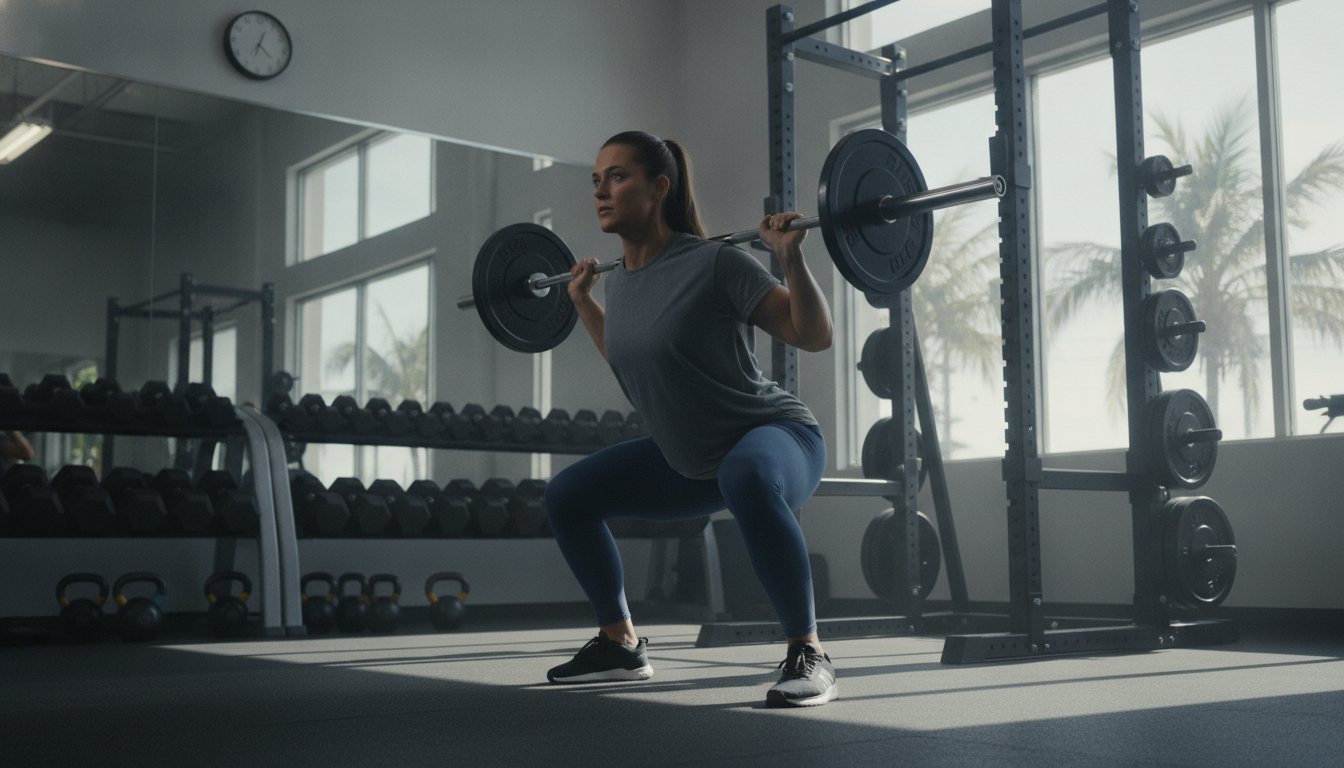
If you want to change your body, you need to go all in. The 20-rep breathing squats method is a legendary way to build big legs. It tests your mental strength too.
This brutal routine keeps the barbell on your back the whole time. You do reps while taking deep breaths to keep your oxygen up. It’s a tough leg-mass workout that demands perfect form and focus.
Learning this squat breathing technique makes a simple workout into a life-changing experience. You’ll learn to keep your core tight under pressure. This helps keep you safe as you finish the last reps. Get ready for a 10-rep max challenge that pushes you to new limits in just three minutes.
Key Takeaways
- Use about 55–60% of your one-rep load to finish the set.
- Never put the bar down; keep it on your shoulders for the whole workout to grow more.
- Take two to three deep breaths between the first ten reps to fight fatigue.
- For the last ten reps, take three to five breaths to stay calm.
- Tighten your core to protect your spine throughout the exercise.
20-rep squats, breathing squats, leg mass workout, 10-rep max challenge, squat
Turning a 10-rep max into a 20-rep challenge can lead to amazing results. It’s not about doing a long, high-rep set until you can’t do more. Instead, it’s a rest-pause style method that keeps you under the bar for a long time.
By focusing on breathing at the top of each rep, you keep the set stable. This time-efficient leg workout makes your body adapt to intense loads. You keep the bar on your back the whole time.
What Makes Breathing Squats Different From Standard High-Rep Squats
High-rep sets often use momentum to reach their goal. But breathing squats make every rep a heavy effort. You’re not just moving weight; you’re managing your breathing and pressure.
This method offers a unique leg-training approach that combines heavy loads with long time under tension. Since you never rack the bar, your muscles stay ready. This creates a metabolic demand that standard sets can’t match.
How Paused Breaths Extend a Ten-Rep Set to Twenty Reps
The secret is the controlled pause at the top. For the first ten reps, take two to three deep breaths while standing tall with the bar.
As you get tired in the last ten reps, take three to five deep breaths. This deliberate pause lets you recover enough to keep your form. You’re tricking your body into doing double the work without putting the bar down.
Why This Two- to Three-Minute Set Builds Size, Conditioning, and Grit
This method is a powerful way to build mental toughness. It tests your will as much as your strength. When you’re tired, the choice to keep going is yours.
It’s also great for barbell squats for size and conditioning. By pushing through two to three minutes of tension, you stimulate growth and improve your heart health. It’s the ultimate tool for those who want the best results quickly.
Choose the Right Load Before You Start
Your success in this high-intensity routine depends on choosing the right load. Effective strength training needs a balance between intensity and keeping perfect form. Pick a weight that lets you breathe well to set yourself up for long-term success.
Use 55–60% of Your One-Rep Max as the Starting Range
To find your ideal starting weight, calculate 55% to 60% of your one-rep max (1RM). Or, use the weight for a standard ten-rep set. This range is perfect for hypertrophy squats, offering enough challenge without being too hard.
Turn Your Standard Ten-Rep Max Into a Twenty-Rep Challenge
Try to make a ten-rep weight into a tough twenty-rep set. Use deep, rhythmic breathing between reps. Never rerack the bar; keep it racked to build metabolic stress, which is key for muscle building.
Why You Must Favor a Manageable Load Over a Maximal Weight
It’s tempting to use heavy weights, but it can hurt your form. Choose a weight that keeps your core tight and depth consistent. This makes your leg strength training effective, not just a test of strength.
When to Reduce the Weight for Your First Attempt
If your breathing gets shaky or form slips before ten reps, the weight is too heavy. Start lighter to get the breathing right. Increase the weight later when you can do twenty reps smoothly.
How Experienced Lifters Can Progress the Load Safely
Even experienced athletes should be patient. Only add a little more weight after mastering the current load. This approach avoids burnout and keeps your muscle-building squats effective over time.
| Strategy | Load Selection | Primary Goal |
|---|---|---|
| Conservative | 50% of 1RM | Form Mastery |
| Standard | 55-60% of 1RM | Hypertrophy |
| Advanced | 65% of 1RM | Peak Intensity |
Set Up the Rack, Bar, and Training Environment
A great squat session starts before you lift the barbell. A safe, efficient space is key to a good lower-body workout. Organizing your area helps you focus on the squat.
Position the Bar and J-Hooks for a Controlled Unrack
Position your J-hooks so you can unrack the bar with a slight bend in your knees. You shouldn’t have to stand on your tiptoes. Precision here is vital to avoid wasting energy before starting.
Choose a Stable Stance, Foot Angle, and Squat Depth
Your stance should feel natural and stable for effective quad exercises. Stand with your feet wider than shoulder-width apart. Point your toes outward at a comfortable angle. This helps you reach the right depth while staying balanced.
Use Safety Pins, Spotters, and a Clear Walkout Path
Set safety pins below your lowest squat depth to protect you. If training with a partner, make sure they’re ready to help. Also, clear the floor of any plates or collars for a safe leg day workout.
Why You Should Never Attempt the Set Without an Exit Plan
High-volume training is tough but can lead to muscle growth. But fatigue can make your form slip. A safe exit plan is crucial for these challenging lower-body exercises.
Brace Your Core and Establish Reliable Squat Form
Before lifting the bar, set up a strong foundation. This is crucial for any lower body exercise, especially with high-rep sets. By making your body rigid, you protect your spine and help your muscles handle the weight better.
Create Full-Body Tension Before the First Rep
Start by gripping the bar hard and pulling your shoulder blades together. Stand with your feet firmly on the ground, imagining you’re spreading it apart to engage your glutes. Take a deep breath and tense your core as if ready for a punch.
Maintain a Braced Torso While Breathing Between Repetitions
For high-volume squats, keep your core tight even when breathing. Don’t let your rib cage drop or your spine curve as you breathe deeply. Maintaining internal pressure helps keep the weight stable while you breathe.
“Discipline is the bridge between goals and accomplishment. In the squat rack, that bridge is built one braced breath at a time.”
Control the Descent, Drive Through the Floor, and Lock Out Safely
Lower yourself slowly and control the bar path. At the bottom, push through your heels to go up, finishing strong. This focus on technique is key for hypertrophy training and progress.
| Phase | Action | Focus Point |
|---|---|---|
| Unrack | Full-body tension | Rigid core |
| Descent | Controlled tempo | Depth consistency |
| Drive | Explosive power | Heel pressure |
| Lockout | Safe extension | Glute engagement |
Keep Your Knees, Hips, and Bar Path Consistent Under Fatigue
As you do different squat variations, fatigue can mess with your form. Fight to keep your knees over your toes and hips in line with your shoulders. A straight bar path shows discipline, even when it’s hard.
Recognize Form Breakdown That Requires You to Stop
Be honest with yourself about your limits in strength training squats. If your chest drops, knees cave, or depth varies, stop. Poor form is not strength; it’s a path to injury that can stop your progress.
Perform the First Ten Repetitions With Two to Three Breaths
The first ten reps of your heavy squat routine are key. They help you save energy for the tougher part of the set. It’s not about pushing too hard, but finding a rhythm for hypertrophy training.
Begin With Smooth, Continuous Repetitions
Begin with smooth, controlled movements. Keep a steady pace to hit your depth well. Think of each rep as a warm-up for the harder ones ahead.
Take Two to Three Deep Breaths Without Reracking the Bar
Stand tall after each rep and hold the bar. Breathe deeply through your nose, then exhale slowly. This helps stabilize your heart rate before the next rep.
Use Each Breathing Pause to Restore Bracing and Focus
Use these pauses to re-engage your core. A strong core is crucial, especially when tired. Mental clarity here keeps you focused on the twenty-rep goal.
“The difference between a good set and a great set is the ability to maintain composure when the weight feels heavy and the lungs are burning.”
Keep the Bar on Your Back Throughout Every Pause
Don’t try to rerack the bar during pauses. Keeping the weight on your traps or rear deltoids keeps you tense. This high-rep squat method is key for leg growth.
Avoid Turning Early Repetitions Into Unnecessary Maximal Efforts
Don’t try to show off in the first ten reps. Pushing too hard early can hurt your form later. Pacing yourself is the best way to finish strong.
Finish the Final Ten Repetitions With Three to Five Breaths
When you hit the tenth repetition, your muscle-building squats become a test of will. You’re not just moving weight; you’re managing your body’s needs. This part needs focus to keep your technique sharp.
Shift Into Deliberate Breathing as Fatigue Builds
Your body will need more oxygen as you get tired. Switch to deep, controlled breathing. This keeps your blood oxygenated and your nervous system ready for the next effort.

Use Three to Five Deep Breaths to Prepare for Each Rep
Don’t rush the top position. Take three to five deep breaths with the bar on your back. This resets your core and keeps you stable during the squat workout.
Maintain Depth, Tempo, and Core Pressure During the Hardest Repetitions
Even when your muscles are screaming, keep moving fully. Keep your tempo steady and avoid quick drops. Consistency is the key to getting the most from this workout.
“The difference between a good lifter and a great one is the ability to maintain perfect form when the body wants to quit.”
Break the Last Ten Reps Into Manageable Mental Targets
To stay focused, break the last ten reps into two parts. Focus on reps eleven to fifteen, then reset for the last five. This makes the toughest squat exercises feel doable.
Know the Difference Between Productive Strain and Unsafe Failure
Know the Difference Between Productive Strain and Unsafe Failure If you feel dizzy, have joint pain, or can’t keep your spine straight, stop right away. Use the table below to check your performance during these tough reps.
| Indicator | Productive Strain | Unsafe Failure |
|---|---|---|
| Breathing | Heavy but controlled | Gasping or hyperventilating |
| Movement | Slow, steady tempo | Uncontrolled shaking or dropping |
| Pain | Muscular fatigue/burn | Sharp, localized joint pain |
| Focus | High mental engagement | Loss of spatial awareness |
Use Squat Breathing Technique to Build Mental Toughness
You can turn a tough squat set into a mental challenge by controlling your body’s signals. It’s not about pushing through pain, but staying calm when you feel tired. By using special breathing in your leg exercises, you make a physical task into a mental test.
Control Panic When Your Legs and Lungs Begin to Burn
When you feel the burn, it’s natural to panic or hurry. But use your breath to focus and slow your heart. This hypertrophy leg training trick helps you avoid bad form and quitting early.
Turn Each Breathing Pause Into a Focused Commitment to the Next Rep
Every pause between reps is a chance to reset. See it as a time to prepare for the next effort, not a break. This way, every rep in your strength training routine has purpose and skill.
Develop Mental Toughness Without Sacrificing Technical Discipline
Mental toughness means knowing when to push and when to stop. Keep your form right, and use safety gear when needed. This focus is key for a dedicated leg day athlete who values both strength and safety.
Use a Simple Cue Such as “Breathe, Brace, Drive”
Use a simple phrase like “Breathe, Brace, Drive” to stay focused. It guides you through a safe and strong rep. This helps keep your mind on the task, not the pain.
Finish the Set Without Reracking the Bar Prematurely
Try to do all twenty reps by managing your breath. Staying under the bar and finishing the set shows true mental strength. Your ability to stay focused shows your mental toughness.
Manage Recovery After This High-Volume Leg Workout
Finishing a tough workout is just the start. How you recover is key to your progress. After a high-volume resistance training session, your body needs time to adapt and heal. A good recovery plan helps you get the most from your fitness routine.

Rerack the Bar Safely and Regain Controlled Breathing
Don’t just drop the weight after your last rep. Move the bar forward until it hits the rack uprights. Slowly lower it onto the J-hooks, making sure it’s safe before letting go.
After racking the bar, stay standing or sit down to keep your heart rate steady. Take deep, calm breaths to help your body recover. Never rush off right away, as your blood pressure might still be changing.
Use a Cooldown to Reduce Lightheadedness and Excessive Fatigue
A gentle cooldown is crucial to avoid feeling dizzy. Walk slowly around the gym for five to ten minutes. This helps your muscles clear waste and keeps blood flowing well.
Schedule Adequate Recovery Before Your Next Heavy Leg Day
Intense workouts need time for your body to recover. Give yourself at least 48 hours before another heavy leg day. On rest days, light activities like walking help keep you moving without overdoing it.
| Recovery Phase | Action Item | Primary Benefit |
|---|---|---|
| Immediate | Controlled Breathing | Stabilize Heart Rate |
| Short-Term | Light Walking | Reduce Fatigue |
| Long-Term | 48-Hour Rest | Muscle Growth |
Support Muscle Growth With Food, Fluids, and Sleep
Your muscles need the right food to recover from a tough leg day routine. Eat a meal with protein and carbs within two hours of working out. Drinking enough water and sleeping well are also essential for recovery.
Watch for Persistent Knee, Hip, Back, or Breathing Symptoms
Muscle soreness is normal, but sharp pain is not. If you have ongoing joint or back pain, review your squat form. If you have unusual chest pain, trouble breathing, or neurological issues, see a doctor right away.
Progress the Routine Without Losing Its Purpose
Getting better at leg training is all about progression. With high-volume training, it’s easy to add too much weight too fast. But it’s better to grow slowly and steadily, keeping your form perfect.
Repeat the Same Load Before Adding Weight
Make sure you can handle the current weight before adding more. You should do all twenty reps with perfect form. If you can’t keep up, stick with the same weight next time.
Progress With Small Increases Only After Completing All Twenty Reps
When you master a weight, add a little bit more. Try to increase by 2.5 to 5 pounds each time. This way, you build strength without overdoing it.
Track Breaths, Form, Tempo, and Recovery Between Sessions
Tracking more than just the weight is key. Keep a journal to watch your high-rep leg exercises closely. Pay attention to breaths, tempo, form, effort, and recovery.
- Breath count: Note how many breaths you took during the first and second halves of the set.
- Tempo: Record your descent speed and pause duration.
- Form quality: Rate your technical proficiency on a scale of one to ten.
- Perceived effort: Document how difficult the set felt compared to previous attempts.
- Recovery: Track how long it takes for your heart rate and breathing to return to normal.
Use Breathing Squats as a Focused Leg-Day Tool Rather Than Daily Volume
These strength training squats are very hard on your body. Use them for a few weeks at a time, not every day. Your muscles need time to heal and get stronger.
Modify the Challenge for Your Training Age and Current Conditioning
Your training should match your level and fitness. Beginners should start with lighter weights and focus on breathing. More experienced lifters might need to do these exercises less often to keep up with recovery.
Conclusion
To turn a 10-rep max into a 20-rep challenge, you need more than strength. You must commit to pausing for deep breaths after each rep. Using 55 to 60 percent of your max weight is ideal for growth without losing form.
Start with two to three deep breaths between the first 10 reps. Then, take three to five breaths for the last 10 reps. Keep the barbell on your shoulders. This breathing helps keep your core tight and your body tense.
Focus on control and safety, not just lifting heavy. A good session means keeping good depth and posture for two to three minutes. Respecting the equipment and the weight helps you grow your legs and improve your heart health.
This method also builds mental toughness for your fitness journey. Consistency is key to lasting progress. Track your workouts, rest well, and get ready to challenge yourself even more on your next leg day.