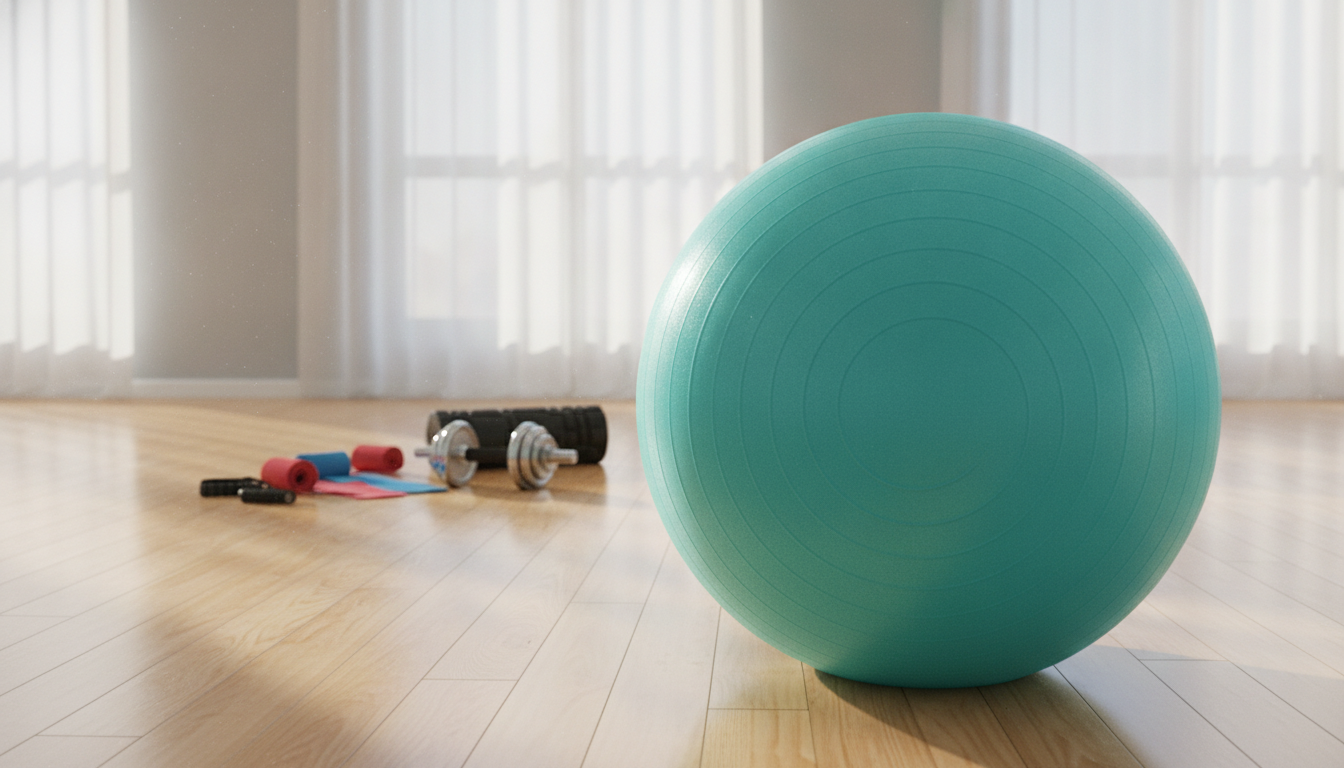
Are you seeking a simple way to add more movement to your day? An exercise ball is a versatile, affordable tool that helps people at every level improve their physical health. It can build core strength, increase your range of motion, and offer many home workout options.
Everyone can benefit from adding an exercise ball to their lifestyle. Balance and functional movement can help your body feel and perform better. This guide explains how to choose the right gear, exercise safely, and add these movements to your training plan.
Key Takeaways
- These tools are highly effective for building core strength and improving posture.
- They are accessible for beginners and advanced users alike.
- You can use them to enhance flexibility and overall body mobility.
- Proper technique is essential to prevent injury and maximize results.
- Integrating these movements into your routine adds variety to your workouts.
Exercise ball, stability ball, Swiss ball, fitness ball, exercise ball exercises: Why They Remain Relevant
The stability ball stays popular because it turns standard movements into full-body challenges. Called a Swiss ball or fitness ball, it makes muscles work harder to maintain balance. Instability recruits stabilizing muscles that fixed machines often leave unused.
What current fitness guidance emphasizes about stability training
Modern fitness experts favor functional movements that support real-world activities. Current guidance says that stability ball exercises are essential for building core endurance and proprioception. On an unstable surface, your nervous system constantly adjusts to keep you upright.
This feedback improves body awareness and joint control. These workouts teach efficient movement under pressure, not just muscle growth. Many trainers use these tools to improve posture and lower the risk of common injuries.
Who can benefit from adding a fitness ball?
This fitness ball suits almost every fitness level. Beginners use it to improve seated posture or perform gentle stretches that ease lower back tension. Advanced athletes use it to make push-ups and planks harder.
- Beginners: Use the ball for foundational core bracing and balance practice.
- Intermediate users: Add the ball to bodyweight circuits to increase intensity.
- Advanced athletes: Incorporate the ball for explosive movements and complex stabilization drills.
How stability-ball training complements traditional workouts
Treat these tools as supplements to your routine, not replacements for heavy lifting. A barbell builds raw strength, while exercise ball exercises add variety and target smaller stabilizer muscles. This balanced approach keeps training well-rounded and sustainable.
| Training Goal | Traditional Method | Stability Ball Benefit |
|---|---|---|
| Core Strength | Floor Crunches | Increased Muscle Activation |
| Balance | Static Standing | Dynamic Proprioception |
| Flexibility | Static Stretching | Enhanced Spinal Mobility |
| Posture | Chair Sitting | Active Core Engagement |
Adding a Swiss ball to weekly sessions creates a more dynamic challenge for your muscles. This variety keeps workouts engaging and helps you overcome plateaus. Ultimately, the goal is a body that is strong and ready for daily life’s unpredictable demands.
Exercise Ball Benefits for Strength, Balance, and Everyday Movement
An exercise ball workout can build your core strength and improve overall stability. Its unstable surface makes your muscles work harder to stay in control. These benefits can help you use this tool effectively during training.
Building core strength through instability
When you do core exercises on an unstable surface, your body recruits more muscle fibers to stay balanced. Research suggests ball crunches can increase muscle activation compared with traditional floor exercises. This demand builds core strength by working major muscles and deep trunk stabilizers.
Improving balance, coordination, and proprioception
Regular balance exercises on a fitness ball train your nervous system to respond quickly when your center of gravity shifts. This process improves your proprioception, your body’s ability to sense its position in space. Over time, better coordination improves control during athletic movements and daily activities.
Supporting functional fitness and posture
A strong core supports functional fitness, helping you move with ease and efficiency. Using a ball may correct common postural imbalances by encouraging a neutral spine and active midsection. Stronger upright-support muscles may make good posture easier to maintain throughout the day.
Adding low-impact challenge to home workouts
A stability ball workout can raise training intensity without placing too much stress on your joints. Because the ball is soft and pliable, it provides a forgiving surface for many movements. It suits home routines for people seeking a low-impact, effective muscle challenge.
Limitations and realistic expectations
A ball is a useful tool, but it is not a magic fitness solution. Use it as one part of a well-rounded program with sound nutrition and progressive training methods. This equipment alone cannot replace varied exercises or a balanced lifestyle.
| Training Goal | Primary Benefit | Intensity Level |
|---|---|---|
| Core Stability | Deep muscle activation | Moderate |
| Balance Training | Improved proprioception | Low to Moderate |
| Functional Movement | Better posture | Low |
| Strength Building | Increased resistance | High |
How to Choose the Right Exercise Ball Size and Type
Fitness balls differ, so the right size matters for safety and comfort during a home workout. The right equipment supports proper alignment for effective posture exercises and mobility exercises.
Matching ball diameter to height and intended use
Choose a ball diameter that matches your height. When seated, your knees should form a 90-degree angle; poor sizing can harm form and limit training.
45-centimeter balls for shorter users and targeted exercises
These smaller balls suit people under 5 feet tall. They also support targeted core work and specific stretches.
55-centimeter balls for many average-height adults
If you are between 5’1″ and 5’8″, choose a 55-centimeter ball. It provides a stable base for most general fitness routines.
65- and 75-centimeter balls for taller users
People over 5’9″ should choose a 65-centimeter or 75-centimeter ball. Larger balls help keep the hips from dropping below the knees, supporting spinal health.
| User Height | Recommended Ball Size | Primary Use |
|---|---|---|
| Under 5’0″ | 45 cm | Targeted core/Pilates |
| 5’1″ – 5’8″ | 55 cm | General fitness |
| 5’9″ – 6’2″ | 65 cm | Strength training |
| Above 6’2″ | 75 cm | Full body routines |
Choosing between a stability ball, physio ball, and balance ball
People often use these names interchangeably, and each ball creates instability that engages muscles. Check labels for uses such as physical therapy or high-intensity athletic training.
Checking materials, weight capacity, inflation, and burst resistance
Choose burst-resistant materials, so the ball deflates slowly if punctured. Check its weight capacity for your body weight and any added resistance.
- Weight Capacity: Ensure the ball is rated for at least 300 pounds.
- Inflation: Use the included pump and measure the diameter to avoid over-inflation.
- Surface: Look for a non-slip texture to maintain grip during intense movements.
Adjusting firmness for strength, mobility, and seated exercises
Adjust the ball’s firmness to match your goals. A firmer ball works well for strength training because it supports resistance movements.
A slightly softer ball often suits flexibility exercises and seated work. It adds comfort and support during a full-body workout with frequent position changes.
Exercise Ball Safety Before Every Workout
A safe workout starts before your first repetition. Whether you choose low-impact exercise or high-intensity movements, safety should come first. Prepare your space to prevent accidents and stay focused.
Inspecting the inflatable exercise ball and workout space
Before you begin, inspect your workout equipment for signs of wear. Look for punctures, deep scratches, or thin spots that could make the ball burst. Even during advanced athletic training, a damaged ball is a serious safety hazard.
Remove sharp objects and debris from the floor. Make sure you have enough room to move without hitting furniture or walls. A clean, open area helps you stay focused during your session.
Positioning the ball on a stable, non-slip surface
Stability helps make every session safer. Place your ball on a flat, non-slip surface, such as a rubber gym mat or carpeted floor. Do not use it on slick hardwood or tile, where it could slide and cause a fall.
Using walls, a chair, or a spotter during beginner exercises
If you are starting out, use external support when needed. Many beginner exercises are safer near a sturdy wall or heavy chair. A stable object can help you regain balance if you feel unsteady.
For complex movements, consider using a spotter. A partner can support you and help you maintain proper form. This added security builds confidence as you learn new skills.
“The most effective way to improve your stability is to ensure your environment is secure before you ever sit down on the ball.”
Maintaining breathing, alignment, and controlled movement
Proper breathing supports core engagement and overall stability. Never hold your breath during movements, because this can raise blood pressure and reduce control. Take steady, rhythmic breaths throughout each repetition.
Keep your spine neutral and your shoulders relaxed for good alignment. Use slow, controlled movements instead of fast, jerky ones. Moving with purpose protects your joints and makes your workout more effective.
Recognizing when to stop and seek professional guidance
Listening to your body is an important part of adult fitness. Stop immediately if you feel sharp pain, dizziness, or lose your balance. Resting and resetting is safer than pushing through discomfort that could cause injury.
If you are unsure about your form or have underlying health conditions, seek guidance from a certified trainer or physical therapist. They can provide personal feedback to keep your routine safe and effective. Maintaining healthy fitness means knowing and respecting your limits.
| Safety Factor | Action Required | Frequency |
|---|---|---|
| Ball Integrity | Check for tears or leaks | Every session |
| Surface Grip | Ensure non-slip mat usage | Before starting |
| Support Access | Verify wall or chair proximity | During setup |
| Physical State | Monitor pain and fatigue | Throughout workout |
Core Exercises With an Exercise Ball
Using a gym ball makes basic core exercises more challenging. Its unstable surface makes deep abdominal muscles work harder to keep you balanced. This training supports functional movement and better body control.
Seated ball bracing for foundational core stability
Sit tall on your core stability ball with both feet flat. Tighten your deep abdominal muscles as if preparing for a gentle punch. Hold the tension, keep your spine neutral, and breathe steadily.
Supine abdominal crunches with the ball behind the back
Place the balance ball beneath your middle and lower back for support. Put your hands behind your head, then slowly curl your torso upward. Focus on your abs; the ball allows more motion than floor crunches.
Dead bugs with the ball held between the hands and knees
Lie on your back and hold the workout ball between your hands and knees. Press your lower back firmly into the floor as you extend the opposite arm and leg. Stay focused so the ball remains still throughout the movement.
Forearm plank with shins supported on the stability ball
Place your shins on the ball and hold a forearm plank. Keep your body straight from head to heels. The core workout ball tests your balance and keeps your core from letting it roll away.
Ball rollouts for anti-extension strength
Kneel in front of the ball and rest your forearms on top. Roll it forward slowly by extending your arms, while keeping your back flat. This exercise builds anti-extension strength in your lower back and abdomen.
Hip lifts and hamstring curls for the posterior core
Lie on your back with your heels resting on the ball. Lift your hips toward the ceiling to work your glutes, then pull your heels toward you. This gym ball exercise targets your entire posterior chain.
How beginners can reduce range of motion and leverage
- Perform movements near a wall for extra support.
- Limit the distance you roll or extend during exercises.
- Keep the ball partially deflated to increase the surface area and stability.
How experienced exercisers can increase time under tension
- Slow down the tempo of each repetition to three seconds per phase.
- Add a pause at the point of maximum contraction.
- Increase the number of repetitions or sets to further fatigue the muscles.
Stay consistent when training with a balance ball. Use controlled technique, not speed, to target your core muscles. A core stability ball or standard workout ball can build a stronger, more resilient midsection.
Best Stability Ball Exercises for the Legs and Upper Body
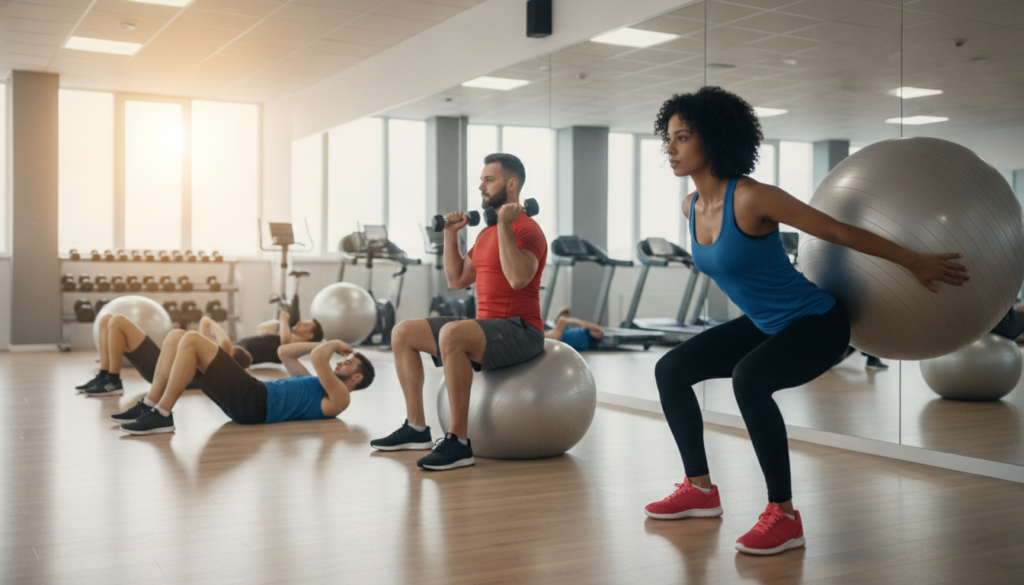
Stability training works beyond your midsection and supports total-body conditioning. A yoga ball changes leverage and makes stabilizing muscles work harder. These moves build functional strength and improve coordination.
Wall squats with the exercise ball behind the back
Place the ball between your lower back and a flat wall for a supported squat. This position supports spinal alignment while working your quadriceps and glutes. The ball rolls with you and provides consistent support through each movement.
Stability-ball hamstring curls and glute bridges
Lie on your back with your heels on the ball for glute bridges. Lift your hips toward the ceiling to engage your posterior chain. Pull your heels toward your glutes to add curls and create demanding core ball exercises for your hamstrings.
Single-leg balance drills for lower-body control
Stand on one leg with the ball in front of you or against a wall for light support. These drills improve proprioception and ankle stability. You will notice the gym ball helps as smaller stabilizer muscles work to keep you upright.
Ball-supported push-ups for chest, shoulders, and core
Place your hands on the ball in a plank to perform push-ups. This variation makes your chest and shoulders work harder to maintain balance. It is one of the most effective fit ball exercises for upper-body endurance.
Incline push-ups using a stable exercise ball setup
For an easier variation, place your hands on a stable surface and your feet on the ball. This position shifts focus to your upper chest and shoulders. Fully inflate the ball to give your feet a stable base.
Seated overhead presses and resistance-band rows
Sit tall on the ball and press dumbbells overhead to engage deep stabilizers. You can also anchor a resistance band to a door and row while seated. These moves help you maintain an upright posture, which is essential for core stability exercises.
How to combine ball exercises with dumbbells and bodyweight movements
You do not need to replace traditional strength training to see results. Use the ball to add variety to your existing balance ball workouts. For example, follow heavy dumbbell squats with ball-supported bridges to fatigue muscles from different angles.
Balance, Mobility, and Flexibility Exercises With a Fitness Ball
The best exercise ball can improve flexibility and body awareness, not just strength. Use its supportive surface to challenge balance while gently lengthening tight muscles. These routines favor slow, controlled progress over speed or intensity.
Seated weight shifts for balance and body awareness
Sitting on the ball makes small stabilizer muscles work to keep you upright. Shift your weight slowly from side to side, then front to back, to improve alignment. This simple practice adds balance ball exercises to your daily routine.
Pelvic tilts and gentle spinal mobility
Pelvic tilts can release lower-back tension. While seated, rock your pelvis forward and backward to create a smooth wave through your spine. This movement supports natural posture and prepares your body for more challenging core exercises with the ball.
Supported hip-flexor and hamstring stretches
The ball gives your limbs support during deep stretches while still yielding gently. Place one foot on the ball for hip-flexor stretches in a lunge, or rest your heel on it for hamstrings. The ball safely supports your joints through the full range of motion.
Chest-opening stretches over the Swiss ball
Lying over the ball opens your chest and shoulders more than a flat floor can. Your upper back rests on its curve, helping chest muscles lengthen and shoulders move back. This is one of the most effective gym ball exercises for countering long hours at a desk.
Thoracic rotation and posture exercises
Better thoracic mobility supports healthy movement and pain-free breathing. With your hands behind your head, slowly rotate your torso from side to side while seated on the ball. This controlled move loosens the upper back and supports spinal health.
Adapting mobility exercises for adults with limited range of motion
Fitness should be accessible to everyone, whatever their starting point. If mobility is limited, use a wall for support or choose a slightly larger, softer ball. Modify these stability ball workouts by reducing movement depth until you feel comfortable and secure.
| Exercise Type | Primary Benefit | Difficulty Level |
|---|---|---|
| Seated Weight Shifts | Balance & Awareness | Beginner |
| Pelvic Tilts | Spinal Mobility | Beginner |
| Chest Openers | Posture Correction | Intermediate |
| Thoracic Rotation | Upper Back Health | Intermediate |
How to Build an Effective Exercise Ball Workout
Transform your fitness journey with a balanced routine built around your inflatable exercise ball. This plan targets muscles safely through core exercises with exercise ball movements that challenge your stability.
Beginner exercise ball workout for core stability and confidence
Warm-up, breathing, and seated activation
Start each session with five minutes of light movement to prepare your joints. Sit tall on the ball, engage your abdominals, and breathe deeply to stabilize your spine.
Core, lower-body, and balance exercise sequence
Use basic movements to gain the main benefits of using a stability ball. Perform seated weight shifts, wall squats, and gentle pelvic tilts to build support.
Recommended repetitions, rest periods, and progression
Complete two to three sets of 10 to 15 controlled repetitions for each movement. Beginners should value form over speed and rest 60 seconds between sets.
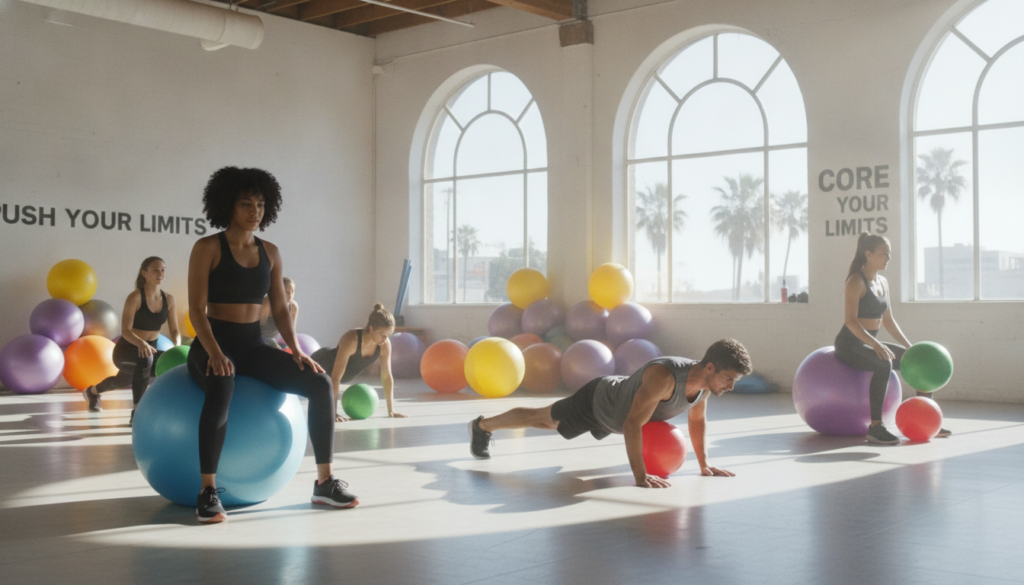
Intermediate stability ball workout for full-body strength
Pairing compound movements with core exercises
When confident, add more complex core exercise ball routines to your schedule. Combine push-ups with knee tucks to work your upper body and midsection together.
Using tempo, longer holds, and unilateral variations
Slow your tempo or hold a plank for an extra 10 seconds to challenge your body. Single-leg bridges make your body work harder to balance on the inflatable exercise ball.
Combining stability-ball exercises with strength training
Add these movements to your weightlifting sessions. Use the ball as a bench for dumbbell presses or support for rows. This instability makes your core work harder during traditional exercise ball workouts.
Adding exercise ball work to cardio and low-impact routines
Add short bursts of ball work to low-impact cardio sessions to keep your heart rate elevated. These transitions improve coordination and keep your joints mobile throughout the workout.
Planning recovery and weekly training frequency
Consistency matters, but recovery also supports long-term progress. Train two to three times per week, with at least one rest day between intense workouts. This schedule helps you gain the benefits of exercise ball training.
- Listen to your body: Adjust intensity if you feel fatigue or discomfort.
- Track your progress: Note your repetitions and hold times to measure improvement.
- Stay hydrated: Proper fluid intake supports muscle function and recovery.
Conclusion
Adding a versatile tool to your home gym can improve your physical health. Learning how to choose an exercise ball can help you build a lasting routine. These affordable tools offer great value for every fitness level.
You can use stability ball exercises to challenge your muscles in new ways. With proper form, these movements improve balance and functional strength. Inspect your equipment often to keep your training space safe.
Effective core workouts need consistency and controlled progress, not sudden intensity. A physio ball can support recovery or add variety to strength training. Combine it with cardio and mobility work for balanced, long-term wellness.
Master basic movements before trying complex routines. Steady improvement brings the best results over time. Share your progress and experiences as you add these tools to daily life.