Italian walking methods for fitness range from relaxed social strolls to coached sport walking and guided workouts. You can choose culture, cardio, or group exercise. Moderate-intensity activity means effort that makes you breathe harder while you can still talk, but not sing.
These practices suit different needs and fitness levels. An Italian evening stroll may be about seeing neighbors, while a class can add planned movement and coaching. The names also reflect Italian fitness trends and a social tradition, not a single set of rules. The passeggiata centers on an unhurried public stroll, not a pace or workout target.
If you are new to walking, start with the option you find appealing and manageable. Build a regular habit before trying faster steps or a guided class. Treat the names as different starting points, not one standardized routine.
Key Takeaways
- La Passeggiata is a social evening stroll, not a set fitness routine.
- Fitwalking gives you a sport-focused walking technique to practice.
- Camminata Metabolica is a guided outdoor workout with varied movements.
- Camminata Biodinamica focuses on postural awareness.
- Metodo WAL pairs walking with learning.
- Choose a pace and format that suit your current ability.
What Are Italian Walking Methods for Fitness?
Think of Italian walking as a family of practices, not one prescribed gait or workout. The name alone does not tell you the pace, effort, or setting.
Beginners can start Italian walking methods for fitness with an easy social stroll before adding technique or a coached class. Italy’s Ministry of Health treats physical-activity promotion as work across health, education, sport and culture, transport, and urban planning.
Choose first between a social habit, a technique to practice, and a guided class.
That broad approach includes movement in daily settings as well as organized exercise. Your Italian walking method might be a casual outing, a sport-focused session, or an instructor-led group workout.
Everyday movement and social rituals
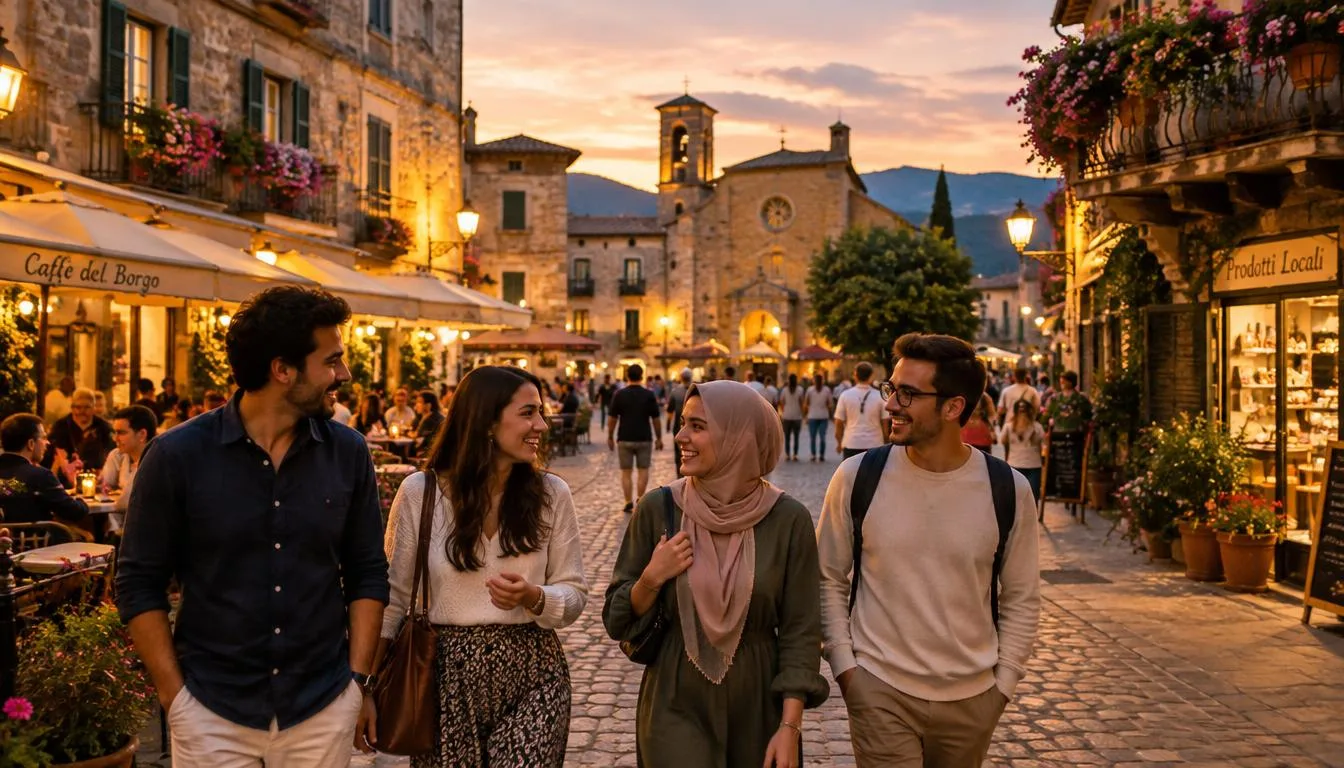
La Passeggiata is an everyday social ritual, not a workout with fixed steps. The Italian lifestyle can include regular walking as part of time spent in public places and with other people.
For beginners, an easy Italian culture stroll can make walking feel less like a task. Its pace and distance can change with your route and company.
Structured walking and guided workouts
Fitwalking is a sport-oriented technique, while Camminata Metabolica uses instructor-led group exercise. Camminata Biodinamica centers on postural awareness, and Metodo WAL combines walking and learning.
Power walking in Italy may bring to mind brisk movement, but each practice has its own aim and format. A name does not promise a particular intensity or health result.
Some practices require technique or coaching; others grow from everyday routines. Choose first between a social habit, a technique to practice, and a guided class.
How La Passeggiata Makes Walking Social
La Passeggiata is less about reaching a pace target than about sharing an unhurried evening in public. Its meaning comes from the social ritual, not a standardized workout.
A slow Italian evening stroll can help you build a movement habit, but it does not automatically count as moderate-intensity activity. The tradition centers on community, dressing well, and enjoying the piazza.
A first-person account of La Passeggiata describes the evening stroll as a social tradition built around presence and community.
Try these simple ways to make the outing feel natural:
- Pick a walkable route through a town center.
- Invite a friend, family member, or neighbor to join you.
- Keep the pace relaxed enough for easy conversation.
- Enjoy the piazza and the chance to dress well.
This is not a passeggiata technique or walking technique guide with set posture and gait mechanics. You can treat the outing as mindful walking and a joint-friendly exercise habit, while remembering that a leisurely pace may not raise effort enough for a fitness target.
Postural walking and a focus on posture and gait mechanics may suit a different goal than a social stroll. La Passeggiata’s value lies in its relaxed public setting, rather than a prescribed stride.
Keep the stroll social and conversational rather than forcing it into a pace target.
Fitwalking Technique: Build a Strong Heel-to-Toe Stride
Fitwalking turns ordinary walking into a deliberate technique built around a controlled heel-to-toe stride. Form comes first, so learn the movement before you try to walk faster.
Maurizio and Giorgio Damilano founded Fitwalking in 1999. The sport walking technique uses straight posture, alternating arm and foot movements, and continuous contact between one foot and the ground.
Align your body and place each foot
Keep your torso upright and your body aligned as you move. Each advancing foot lands heel first, then rolls toward the toes.
Keep your leading leg bent as the foot reaches forward. This foot strike technique supports a smooth stride without turning each step into a long reach.
At first, practice on a flat path where you can focus on balance and control. A steady walking posture matters more than chasing a fast step cadence.
Coordinate your arms, hips, and pace
Let your arms move in time with your legs. Fitwalking permits an exaggerated hip swivel and arms that spread from the elbows and cross the body, but neither move is mandatory.
Build coordination at a pace you can control. This power walking technique differs from a relaxed walk because you use deliberate form and steady movement, not simply a faster speed.
The supplied description of the sporty practice gives a pace of 6+ km/h for 40+ minutes. Fitwalking’s stated pace and duration describe that practice, not a starting requirement for every beginner.
When you try Fitwalking, use comfortable walking shoes and a level route. Stop if your stride feels strained, then return to an easier pace and smaller steps.
Practice the gait slowly before increasing speed.
Camminata Metabolica and Other Italian Walking Practices
A Camminata Metabolica session is a guided outdoor group workout that mixes walking with dance and boxing movements. The class blends several kinds of movement instead of following one walking style.
The name “metabolica” does not guarantee a specific metabolic change or weight-loss result. The workout also draws on rehabilitative techniques and aesthetic gymnastics for its core exercises.
What a Camminata Metabolica class involves
Classes take place outdoors in parks, where a trainer guides the group through wireless headsets. You can hear instructions while you move through the exercises.
The FBand is a rigid rope with two handles. Instructors use it for exercises intended to improve posture and strengthen muscles.
This F-Band workout is one feature of a wider session, not the whole class. Walking, dance, boxing, and core movements all help shape the group format.
Before taking part, check that the class suits your current ability and that you can follow the trainer’s directions. A guided workout can feel quite different from walking on your own.
Postural awareness and walking while learning
Camminata Biodinamica is a postural-awareness practice. It focuses on how you hold and move your body while walking.
Metodo WAL is a walking-and-learning practice, also described as walk and learn. The name reflects combining movement with learning, without requiring a single class format.
These options differ from a standard walking workout plan. Camminata Biodinamica emphasizes postural awareness, while Metodo WAL pairs walking with learning.
Check that the instructor explains FBand setup and offers alternatives before you join.
How Much Walking Supports Better Health?
For adults, the standard weekly target is at least 150 minutes of moderate aerobic activity, 75 minutes of vigorous activity, or a combination. Spread it out across the week where practical.
Moderate-intensity activity lets you talk while breathing harder, but not sing. Brisk walking at 2.5 miles per hour or faster counts as moderate activity.
| Weekly target | Walking example | How to spread it | Intensity note |
|---|---|---|---|
| Moderate: 150 minutes | Brisk walking at 2.5 mph or faster | Across the week, where practical | Talk, but not sing |
| Vigorous: 75 minutes | Vigorous aerobic activity | Across the week, where practical | Conversation becomes difficult |
| A combination: 150 moderate minutes, 75 vigorous minutes, or an equivalent mix | Moderate and vigorous activity | Across the week, where practical | Use the talk test for effort |
The adult weekly activity target allows moderate activity, vigorous activity, or a combination. Any activity can count, and any amount is better than none.
Meet a weekly aerobic-activity target
Use the talk test instead of relying on heart rate zones alone. Brisk walking provides low-impact cardio, and regular sessions can help you build aerobic endurance and conditioning.
A brisk walk for 30 minutes a day, five days a week, can reduce the risk of several age-associated diseases. That is a general finding, not a promise about what one person will experience.
What regular walking is associated with
Regular physical activity is associated with lower all-cause and cardiovascular-disease mortality, plus benefits across other areas:
- Mortality and cardiovascular health.
- Metabolic and cerebrovascular health.
- Cognitive health.
- Mental well-being and sleep.
Walking is also associated with reduced risk or severity of type 2 diabetes, cognitive impairment, and dementia. Research links walking with better mental well-being, sleep, and longevity in older adults.
How higher activity levels compare
Worldwide, one in four adults and three in four adolescents ages 11-17 do not meet activity recommendations. Adults who are not active enough have a 20-30% higher risk of death than adults who meet activity recommendations.
In one analysis, 300-599 minutes of moderate activity each week was associated with 26%-31% lower all-cause mortality risk and 28%-38% lower cardiovascular-disease mortality risk than doing less. Those are associations, not guaranteed personal results.
Start with a weekly target that matches your current capacity, then build gradually.
Build a Repeatable Walking Workout
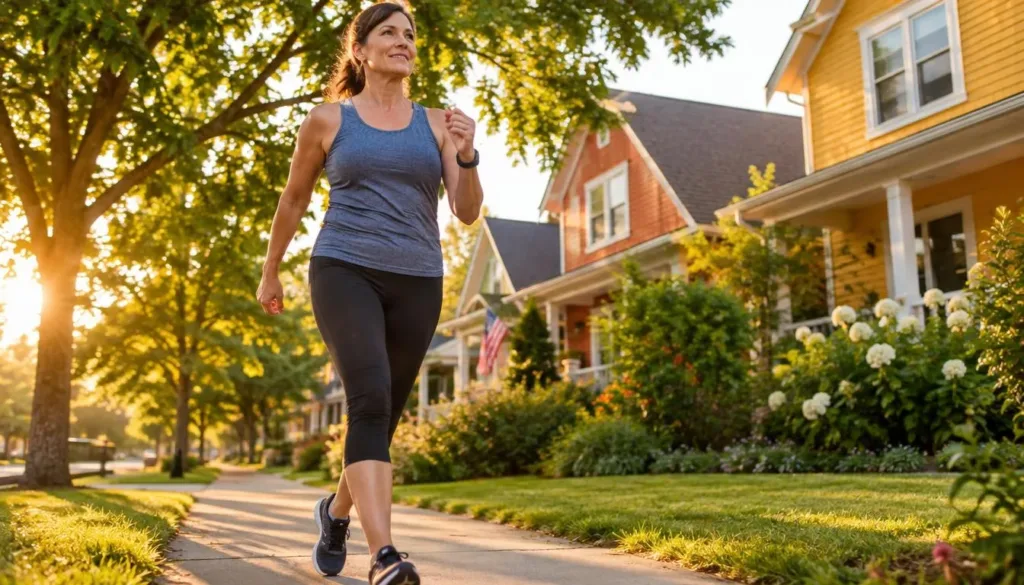
A useful walking workout has an easy start, a purposeful middle, and an unhurried finish. Keep the plan flexible so it can fit your route and current fitness.
A common rule of thumb is 5-10 minutes of easy walking to warm up and another 5-10 minutes to cool down. Use effort, not one fixed pace or heart-rate zone, to shape the middle.
Try this four-step sequence, then adjust it to feel manageable:
- Choose a safe, walkable route.
- Start with 5-10 minutes of easy walking.
- Add comfortable brisk intervals with easier recovery pacing between them.
- Finish with 5-10 minutes at an easy pace.
The talk test can help you judge effort. At moderate effort, you can talk but not sing; at vigorous effort, conversation becomes difficult.
Brisk walking intervals and interval walking let you vary effort without holding one speed throughout. Keep each brisk stretch comfortable, then let your breathing settle during the recovery pace.
Stairs, hills, errands on foot, and carrying groceries up an incline can add movement throughout the day. These are practical options, not uniquely Italian exercises.
You can pair walking with resistance exercise as part of a broader routine. A walking workout plan can also include a rest day when you need more time to recover.
Record how the effort felt after each session and adjust the next one.
Can Walking Help With Weight Loss?
Walking can support a weight-loss effort, but no distance or pace guarantees a particular number on the scale. It adds activity and energy use, while weight change also reflects your overall routine.
Walking alone does not promise a fixed calorie burn or amount of weight loss. Food intake, personal circumstances, and other activity can affect your results.
A 15-week study followed 25 healthy postmenopausal women. Participants walked 4.8 km four days per week at either 6.6 km/h or 5.5 km/h, expending 300 kcal per session.
The study found total body fat loss through walking at all tested speeds. Increased exercise energy use at either speed produced equivalent declines in visceral fat.
The 15-week walking study describes results for those participants. One study does not establish an ideal pace for everyone or prove the same result will happen for you.
A group walking workout may help you stick with regular sessions. A walking partner or scheduled class can make it easier to show up, especially when you enjoy the social side.
For walking for weight loss, think about how each session fits into your week, not just the calorie estimate on a device. Food choices and your wider activity routine also matter.
Recovery pacing and recovery days can help you maintain a comfortable routine. Mobility exercises may also fit your plan, though the best mix depends on your needs and schedule.
Use body-weight trends over time rather than a single session’s calorie estimate.
Scenic Walking Routes in Italy to Try
Italy offers routes from short, accessible trails to long walks through lakeside, historic, and coastal scenery. Compare the details before choosing a route for your outing.
Distance and time vary widely, so match each route to your experience and the day’s conditions. The four routes below vary in length and include stated access details.
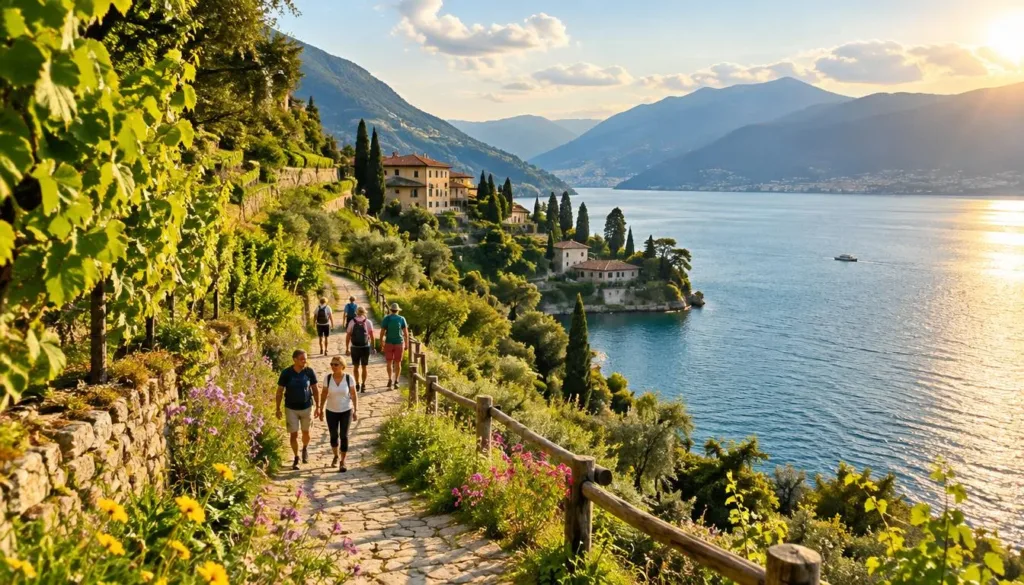
Four routes from lakeside paths to historic trails
| Route | Distance | Approximate time | Stated suitability or route detail |
|---|---|---|---|
| Greenway of Lake Como | About 10 km | About 3.5 hours | Seven legs, Colonno to Griante |
| Appian Way, Rome to Castelli Romani | About 20 km | Not stated | Suitable for families |
| Germoplasma Trail, Etna Park | 1.153 km | About one hour | Accessible to disabled people |
| Path of the Gods, Agerola to Nocelle | 8 km | About 4.5 hours | Route from Agerola to Nocelle |
Match route length and access to your outing
Check current access and weather, then consider the route length alongside your experience. A long trail may take more time and energy than a short park path.
Wear footwear suited to the surface and bring what your outing requires. Walking poles, including Nordic walking poles, are optional tools, not a requirement for these routes.
Italy offers many outdoor fitness settings, but each route has its own demands. Route planning should include trail walking safety and a clear idea of how far you want to go.
Check current route access and weather before setting out.
Some paths list access details, but that doesn’t mean every route suits every fitness level. Choose based on the route information and your own experience.
Conclusion
The best starting style is the one that fits your interests and is easy to return to. Consistency matters more than chasing perfect technique or a specific step-count goal.
Choose the practice you are most likely to repeat, then judge progress by regular activity. Keep cadence, step length, balance training, and posture alignment comfortable as you walk.
Pick one route, check that your shoes feel supportive, and schedule your first walk. Adjust your pace and routine as you learn what works for you.
Choose one practice and put your first walk on this week’s calendar.