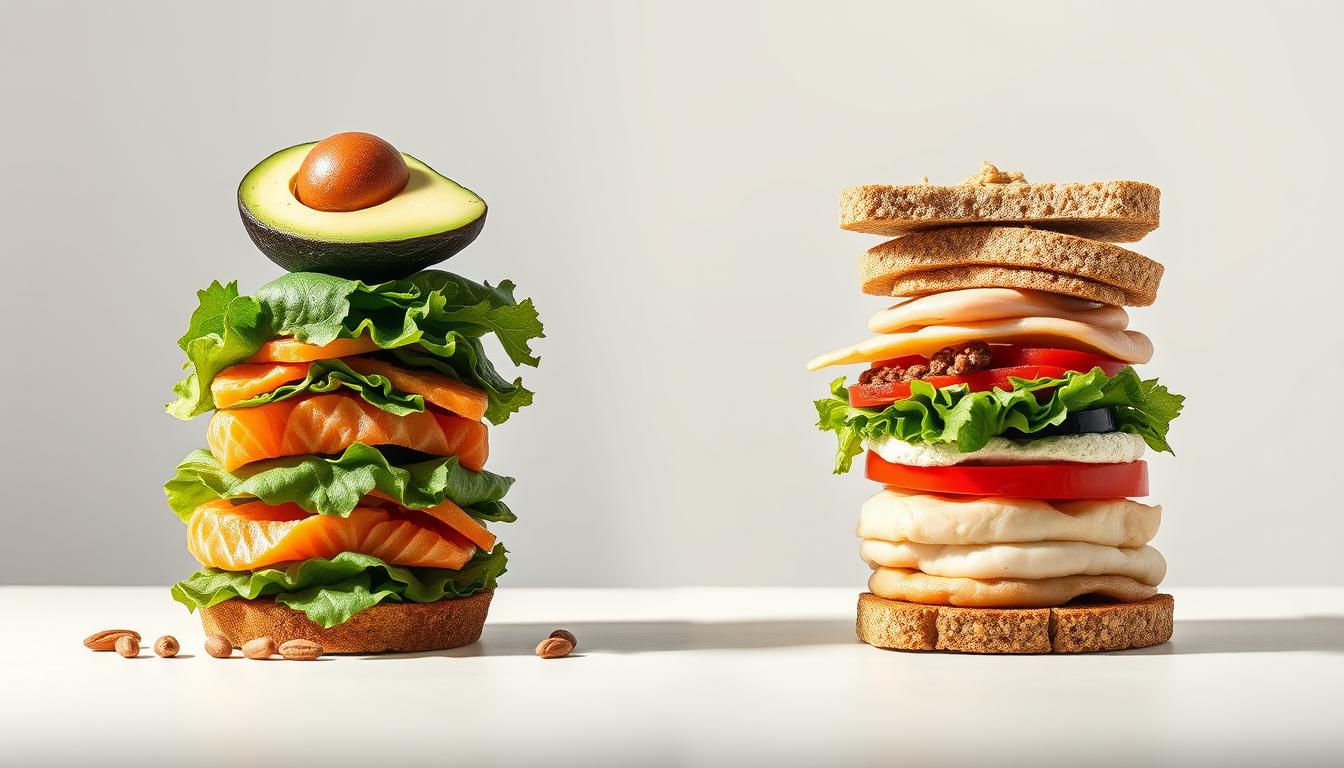
The Portfolio Diet is a flexible plant-based eating pattern that combines several cholesterol-lowering foods, making it a practical option if you want to improve heart health without centering your plan on weight loss. It focuses on cholesterol management, not weight loss, and can suit vegetarian or vegan preferences. Results vary, and this pattern can complement Mediterranean-style eating.
It may support your heart-healthy meal planning, but it cannot replace prescribed treatment. You can use it to focus meal planning on whole foods without following a strict menu. Treat the eating pattern as a way to support your heart health, not as a promise of a particular lipid result.
Key Takeaways
- The Portfolio Diet combines plant foods linked with lower LDL cholesterol.
- It emphasizes cholesterol management rather than weight loss.
- You can adapt it to vegetarian, vegan, or Mediterranean-style meals.
- Results differ from person to person, and prescribed treatment still matters.
- Start with changes you can keep up over time.
How the Portfolio Diet Targets LDL Cholesterol
Plant foods contain no dietary cholesterol, but several plant-based foods can help lower LDL through different routes. Plants contain phytosterols, compounds that resemble cholesterol and can reduce how much cholesterol your body absorbs.
The Portfolio Diet combines five food groups with different effects: plant protein, nuts, viscous fiber, plant sterols, and plant monounsaturated fats. Viscous fiber is a type of soluble fiber that forms a gel and can bind bile acids in the digestive tract.
Think of the Portfolio Diet as a combination of small, complementary food changes rather than one food acting alone.
When viscous fiber binds bile acids in the intestine, the liver uses cholesterol to make more bile acids. That process can help lower circulating LDL cholesterol.
Plant sterols are one part of the pattern, not a magic ingredient. Plant protein and unsaturated fats also support a cholesterol-lowering diet, while nuts add more than one useful nutrient to meals.
Plant foods contain phytosterols rather than dietary cholesterol. This distinction can help you read food labels and make plant-based choices without worrying that vegetables, beans, or fruit add cholesterol to your diet.
Each food group offers a different route, so the pattern does not depend on a single “cholesterol-flushing” food. Think of the Portfolio Diet as a combination of small, complementary food changes rather than one food acting alone.
A Plant-Based Approach to Lowering Cholesterol: The Five Food Groups
The five food groups give you a flexible structure: you can build the components into your usual meals. Small choices can add up when they make your usual meals more plant-based.
Use the targets as a guide, not a rigid menu. Alberta Health Services lists daily amounts for several key components, while the broader pattern allows different foods and recipes.
Soy, Beans, and Other Plant Proteins
Tofu, tempeh, and edamame make easy soy protein choices. Add them to stir-fries, grain bowls, soups, or salads. Beans and lentils also provide plant-based protein and can replace meat in chili, tacos, pasta sauce, or curry.
Alberta Health Services recommends at least 30 g of soy protein daily, or three servings with about 10 g each. That is a specific soy target, not the whole protein goal. A broader Portfolio Diet target is about 50 g of plant protein daily from soy, beans, and other plant foods.
Check package labels because protein varies by product and serving. For example, tofu types differ, and a serving of soy milk may contribute differently from a serving of edamame.
Nuts and Seeds
Almonds, walnuts, pistachios, peanuts, and other nuts work as snacks or toppings. Nut butters can spread on whole-grain toast or stir into oatmeal. Chia, flax, pumpkin, and sunflower seeds add crunch to cereal, yogurt, and salads.
Alberta Health Services recommends at least 30 g of nuts daily. A small handful can sit beside fruit, while chopped nuts are an easy addition to breakfast. Choose plain or lightly salted options to limit added salt.
Nuts and seeds can add calories quickly, so use a serving that fits your needs. They are useful ingredients, not a required snack at every meal.
Oats, Barley, and Other Viscous Fiber Foods
Oats and barley are useful sources of soluble fiber. Oat beta-glucan, a type of viscous fiber, is found in oat bran and rolled oats. Barley works in soups, grain salads, and warm side dishes.
Other options include psyllium, apples, berries, okra, and eggplant. You can stir psyllium into a drink or mix berries into cereal. Read the product directions for psyllium, since serving sizes differ.
Alberta Health Services recommends at least 10 g of soluble viscous fiber daily, with five or more servings that each provide 2-3 g. Check food labels to see how much a serving contributes.
Plant Sterols in Foods and Fortified Products
Small amounts of plant sterols occur naturally in many plant foods. Nuts, seeds, oils, fruit, and beans all contain them, but typical servings usually don’t provide the concentrated amounts used in cholesterol-lowering studies.
Alberta Health Services recommends 1,000-2,000 mg of plant sterols daily. Fortified foods, such as some spreads, drinks, or yogurt-style products, commonly help you reach this target. Check the label for the amount per serving and follow its serving directions.
Natural foods still matter, but they are not a substitute for a fortified product when you are aiming for that concentrated amount. The sterol content can vary by product.
Unsaturated Plant Oils and Other Monounsaturated Fats
Olive, canola, and soybean oils provide unsaturated fats for cooking and dressings. Avocado offers another plant source of monounsaturated fat. These foods can replace higher-saturated-fat options in your usual meals.
Use olive oil for salad dressings or roasting vegetables, and canola or soybean oil for many stovetop dishes. Avocado can top grain bowls or replace a creamy spread in sandwiches.
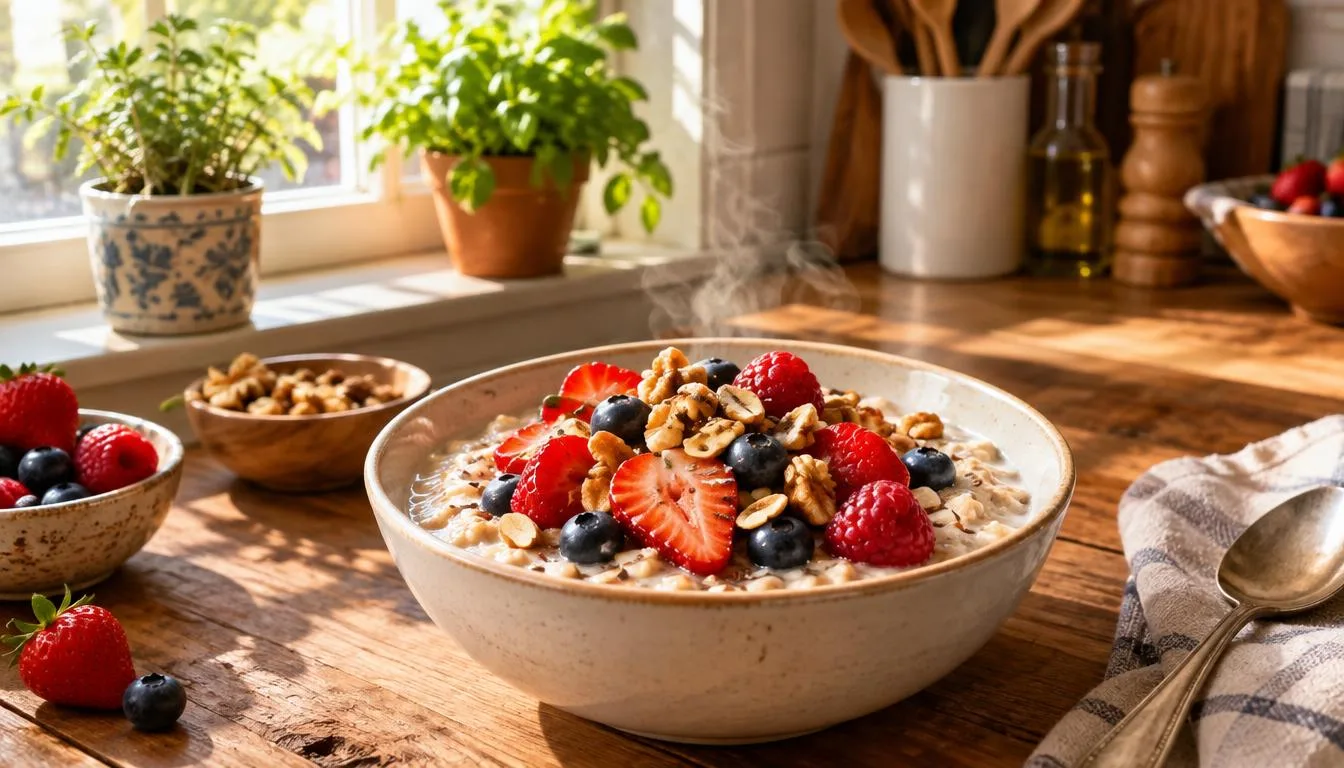
These are practical ingredients, not a reason to pour extra oil into meals. Keep portions in line with your appetite and energy needs. A bowl of oatmeal with soy milk, berries, and nuts is one practical way to combine several components of the pattern.
What the Research Shows About LDL and Heart Risk
The strongest evidence supports lower LDL and other risk markers, while long-term cohort studies link closer adherence with lower cardiovascular risk. Trials and cohorts answer different questions: trials test short-term changes, while cohorts track health over time.
Randomized trials measure risk factors, not a guaranteed result for you. The Portfolio Diet Score (PDS) is an adherence measure used in research to describe how closely people follow the pattern.
LDL Changes in Randomized Trials
A meta-analysis found LDL cholesterol was 17% lower with the Portfolio Diet than with a low-saturated-fat diet. Non-HDL cholesterol was 14% lower, and apolipoprotein B was 15% lower.
One controlled trial found a 29% LDL reduction with the diet and a 31% reduction with 20 mg of lovastatin. A similar LDL change in one trial does not establish the diet as a substitute for medication.
| Evidence type | Participants or follow-up | Portfolio Diet result | Comparison/result |
|---|---|---|---|
| Meta-analysis | Several randomized trials | LDL 17% lower | Non-HDL 14% lower; apolipoprotein B 15% lower |
| Controlled lovastatin trial | One controlled trial | LDL 29% lower | 20 mg lovastatin lowered LDL 31% |
| 2011 dietetic-input trial | 351 participants; 6 months | LDL fell 13.8% or 13.1% | Low-fat control diet: LDL fell 3.0% |
Cardiovascular Outcomes in Long-Term Cohorts
Long-term cohort studies link closer adherence to lower heart risk. In three U.S. cohorts followed for up to 30 years, the highest PDS quintile had 14% lower risks of cardiovascular disease, coronary heart disease, and stroke than the lowest quintile.
Each 25-percentile increase in PDS was linked to an 8% lower risk of total cardiovascular disease. A 2025 analysis of 14,835 adults followed for 22 years found 16% lower cardiovascular disease mortality and 18% lower coronary heart disease mortality in the highest PDS tertile.
In that analysis, an 8-point higher PDS was associated with 12% lower cardiovascular disease mortality. Cohort findings cannot prove that diet alone caused the difference. Read the cohort percentages as associations, not as an individual forecast.
Build Portfolio Diet Meals With Simple Swaps
A useful Portfolio Diet meal starts with a plant protein or whole grain, then adds one or more of the other featured foods. You can adapt familiar meals instead of learning a new recipe for every day.
The classic food targets were developed for a 2,000-calorie intake. Your portions and choices may need to fit your own energy needs and preferences.
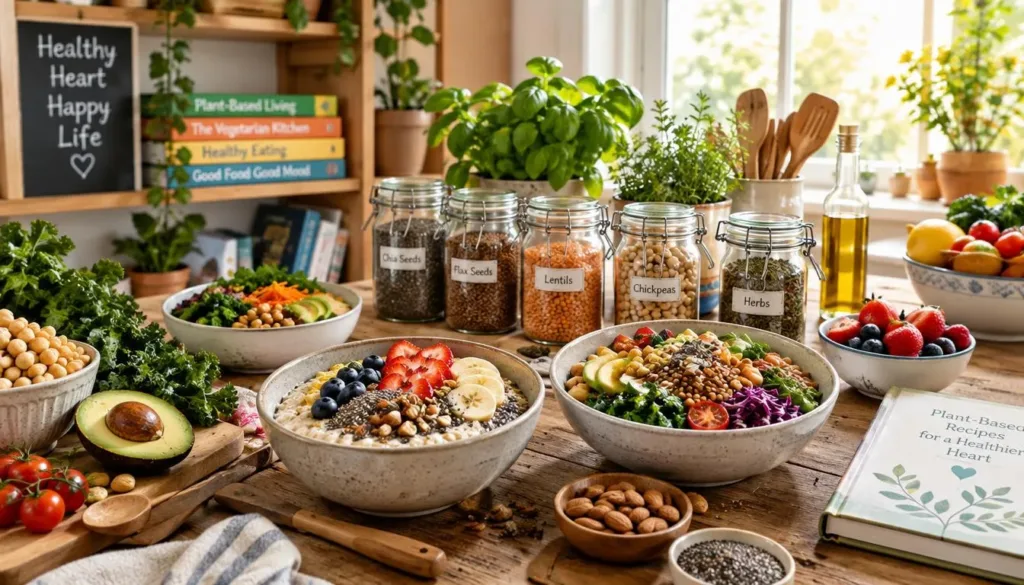
A seven-day vegetarian meal plan to lower cholesterol can be a flexible framework rather than a strict schedule. Rotate oatmeal or oat bran with fruit, soy milk, nuts, or seeds at breakfast. At lunch and dinner, use beans, lentils, tofu, or tempeh, and choose fruit, hummus, or a small serving of nuts for snacks.
| Meal or occasion | Instead of | Try |
|---|---|---|
| Breakfast | Sweet pastry | Oatmeal with soy milk, fruit, and nuts |
| Snack | Chips | Fruit, hummus, or a small serving of nuts |
| Soup or stew | Meat-heavy broth | Lentil soup or bean and tofu stew |
| Main dish | Meat-centered plate | Tempeh with vegetables and whole grains |
| Cooking fat | Butter | Olive or canola oil |
Use oatmeal and legumes in different combinations through the week. A bean soup one day and a tofu bowl the next can keep meals varied without changing the overall approach.
These four planning moves can make the week easier:
- Batch-cook legumes for quick meals.
- Keep frozen edamame on hand.
- Prepare a grain-and-bean base for bowls.
- Portion nuts ahead for snacks or toppings.
The meal framework is an example, not a seven-day promise about lipid test results. Pick two repeatable swaps for your first week instead of redesigning every meal at once.
Which Foods Should You Limit or Swap?
If you have high LDL, start by replacing frequent sources of saturated fat rather than trying to eliminate every food associated with cholesterol. The replacement matters: unsaturated fats can lower heart disease risk when they replace saturated fat.
The American Heart Association recommends less than 6% of daily calories from saturated fat, or about 13 g or less at 2,000 calories. High saturated-fat intake can raise LDL, which increases heart disease and stroke risk.
| Food to cut back on | Possible swap | Why it helps |
|---|---|---|
| Fatty or processed meat | Beans or tofu | Often reduces saturated fat |
| Butter | Olive or canola oil | Replaces saturated fat with unsaturated fat |
| Full-fat dairy | Lower-saturated-fat alternative | Can lower saturated fat per serving |
| Frequent egg-based meals | Soy or legumes when LDL is high | Can reduce dietary cholesterol in those meals |
| Coconut or palm oil | Olive or canola oil | Provides more unsaturated fat |
There is no universal list of ten worst foods to avoid if you have high cholesterol. The useful priority is often how often high-saturated-fat foods appear and what replaces them.
A large egg contains about 200 mg of dietary cholesterol. The American Heart Association says healthy adults can include up to one whole egg daily, and older adults with healthy cholesterol can have two.
Two eggs a day may not suit every person with high LDL. People with high LDL should consider both saturated fat and dietary cholesterol, including what else they eat during the day.
Bananas contain no dietary cholesterol and generally do not need to be avoided for cholesterol alone. Coffee is different: unfiltered coffee can raise LDL in some people, while paper-filtered coffee is a better choice if coffee appears to affect their results.
High-fat meat, eggs, butter, and full-fat dairy are major dietary sources of cholesterol. Check the grams of saturated fat per serving on labels and compare the products you actually buy.
How to Add Fiber and Plant Sterols Safely
Add fiber slowly, and treat concentrated plant sterols differently from the small amounts found in ordinary plant foods. Gradual changes are easier to manage and may limit mild gas or bloating.
Drink 9-12 cups (2.25-3 L) of fluid daily as you increase fiber. Your needs can vary, so a clinician can help if a health condition affects your fluid intake.

Increase Soluble Fiber Gradually
Add soluble fiber from oats and beans gradually. Start with oatmeal at breakfast, add beans to soup, or include berries with a snack.
Psyllium is another option, but use the product directions and take it with enough fluid. A sudden jump in fiber can cause mild gas or bloating, so space new foods across meals.
Fiber from several foods can fit into ordinary meals. For example, oats at breakfast and beans at lunch spread the change across the day.
Use Plant Sterol Products With Care
Small amounts of dietary plant sterols occur naturally in nuts, seeds, oils, fruit, and beans. Typical Western intake is up to about 300 mg daily and can reach 600 mg among vegetarians, amounts generally below those in fortified products.
Fortified foods provide plant sterols in concentrated amounts. Some products and supplements contain plant sterols and stanols, but “plant-based” does not automatically mean risk-free.
Randomized trials have not established the long-term safety or cardiovascular benefits of plant sterols and stanols. Check with a clinician if a condition or medication could affect your choice. If a fortified product or supplement is part of your plan, check its sterol amount and discuss its suitability with your clinician.
How Quickly Can You See a Cholesterol Change?
Seven days is enough to begin changing your meals, but it is too soon to promise a specific LDL reduction. Diet changes take time to show up in blood tests, and your response may differ from trial results.
Portfolio Diet trials have measured changes in risk factors over 4 weeks to 6 months. A 12-month study of 66 participants reported LDL 14% lower at three months and 12.8% lower at one year.
A vegan diet may support lower LDL when it replaces foods high in saturated fat. A vegan label alone does not guarantee a cholesterol-lowering pattern, since foods and cooking fats still matter.
Your starting cholesterol, how closely you follow the changes, and other health factors can affect the result. A single week can help you set a routine, but it cannot predict your lipid panel results.
Use these checkpoints during your first month:
- Choose consistent food swaps you can repeat.
- Record how often you include the key food groups.
- Keep prescribed medication unchanged unless your prescriber advises otherwise.
- Arrange follow-up testing with your clinician.
Use a clinician-guided lipid test, not day-to-day impressions, to judge whether your plan is working.
Track Your Progress With a Lipid Panel
A lipid panel is the practical way to check whether your eating changes are affecting your blood fats. One number alone is not the full picture, so review the full set of results.
A standard lipid panel measures total cholesterol, LDL cholesterol, HDL cholesterol, and triglycerides. The results help your clinician assess your lipid profile alongside other health factors.
Know What Your Test Measures
Total cholesterol combines several kinds of cholesterol in your blood. LDL cholesterol is a key measure linked with plaque buildup, while HDL cholesterol helps carry cholesterol away from the blood vessels.
Triglycerides are a type of blood fat. Their level adds useful context to heart health, especially when considered alongside LDL and HDL rather than on its own.
The Portfolio Diet Score is a research measure of adherence, not a score you need to calculate perfectly at home. It has six components, each scored from 1 to 5, for a total range of 6-30.
Personalize Targets With a Clinician or Dietitian
Review lipid panel results and personal targets with a clinician or registered dietitian. Their guidance is especially useful if you have high LDL, high triglycerides, diabetes, or a family history of heart disease.
Your goals may depend on your full health picture, not only one test result. A dietitian can also help tailor a heart-healthy eating pattern to your food preferences and health needs.
Consider asking these questions at an appointment:
- Which result matters most for my risk?
- When should I repeat the lipid panel?
- Should my medication change?
- Which food changes fit my preferences and health needs?
Bring your results and a brief record of your usual meals to the appointment so the advice fits your actual routine.
How the Portfolio Diet Fits With Mediterranean Eating and Medication
You can combine the Portfolio Diet’s LDL-focused food choices with many parts of a Mediterranean-style eating pattern. The patterns overlap around legumes, nuts, whole grains, and healthy oils.
The Portfolio Diet places greater emphasis on foods linked to lower LDL. Its PDS correlated 0.78-0.81 with the Alternate Mediterranean diet score and 0.65-0.77 with DASH.
If you are vegetarian with high cholesterol and high triglycerides, discuss your full lipid panel and the quality of your carbohydrate and fat choices with a clinician or dietitian.
Ground flaxseed, chia, and walnuts are plant sources of omega-3 ALA. They can fit into meals, but they should not be treated as a proven way to lower triglycerides.
The Portfolio Diet is not a proven substitute for prescribed statins or other medication.
It can be adapted to vegetarian and vegan eating, but that does not make it a statin alternative. Keep prescribed medication unchanged until the clinician managing your cholesterol recommends a change.
Conclusion
The Portfolio Diet works best as a repeatable pattern of plant-based choices, not a short-term cholesterol fix. Gradual, sustainable changes are more useful than chasing a rapid result.
Choose one or two swaps that fit your meals, then review the plan with a clinician or dietitian against your lipid results. Your results can help guide what to keep, adjust, or discuss.
Choose one food swap this week and ask your clinician when to review your lipid panel.