

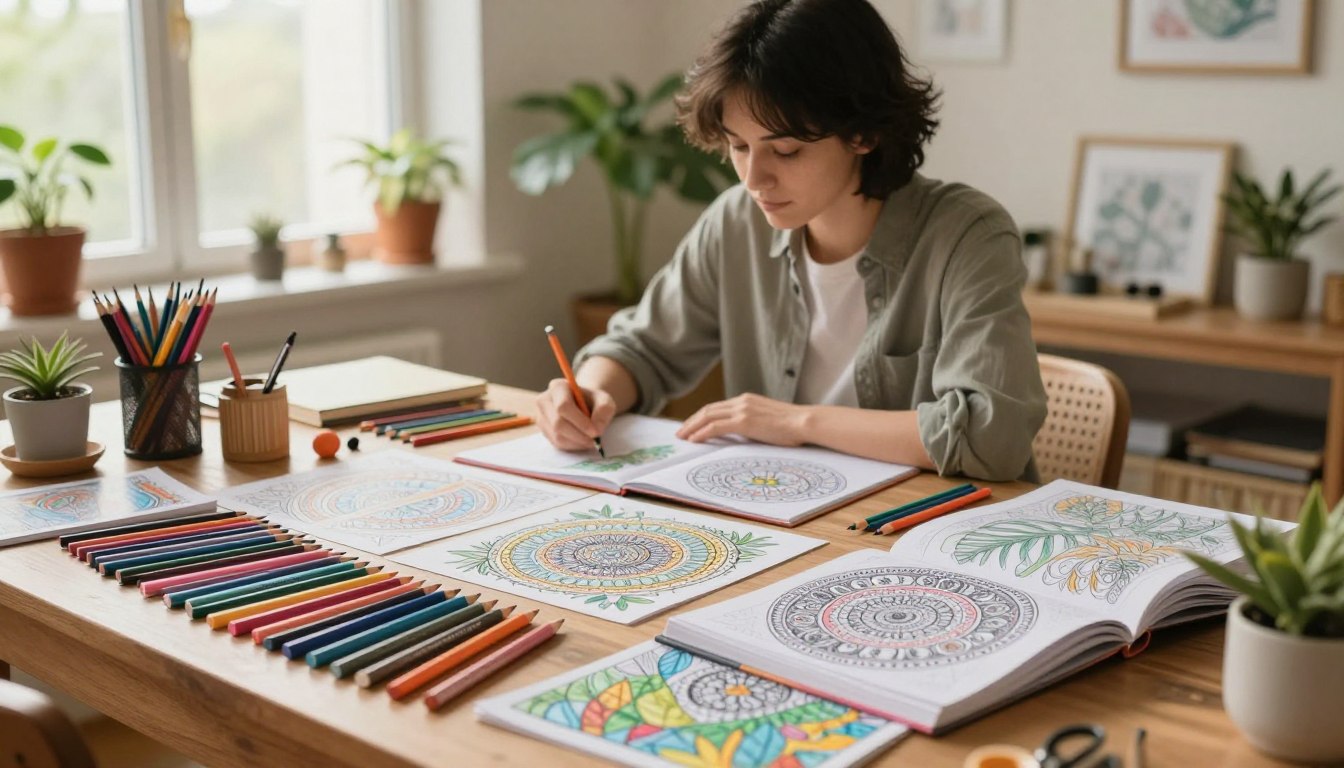
Ever felt like your mind is too much to handle? Inspirational art is a special way to calm down. It combines soothing visuals with uplifting messages to help you find balance.
When you create with inspirational art, you use parts of your brain that help you relax. It helps quiet your worries and brings peace. By focusing on detailed designs and positive words, you move into a calm, meditative state.
This activity does more than calm you down. It also helps you grow professionally. As you learn about the link between inspirational art and feeling good, you’ll find new ways to find peace and clarity.
Key Takeaways
- Combining art with positive affirmations can enhance emotional balance.
- Focusing on creative activities can induce a meditative state.
- Inspirational art can be a tool for personal growth and resilience.
- Engaging in creative expression can reduce stress and anxiety.
- Cultivating a positive mindset through art can improve overall well-being.
The Modern Mind’s Dilemma: Finding Peace in a Chaotic World
The modern world is full of demands and constant connection. This can make us feel overwhelmed and disconnected from ourselves. Stress and anxiety are common problems for many.
The Constant Noise of Modern Life
Constant notifications and endless scrolling surround us. This can leave us feeling drained and disconnected. The fast pace of life makes finding calm hard. Stress relief through art is a valuable tool against this.
Why Traditional Meditation Can Be Challenging
Traditional meditation is good, but it’s tough for many. It’s hard to sit still and quiet the mind in today’s world.
Common Barriers to Sitting Meditation
There are several barriers to effective meditation. These include:
- Restlessness and difficulty staying still
- A racing mind that’s hard to quiet
- Lack of time or a suitable quiet space
Knowing these challenges helps us find other ways to relax.
| Challenge | Traditional Meditation | Coloring as an Alternative |
|---|---|---|
| Restlessness | Difficult to stay still | Engages hands, promotes calm |
| Racing Mind | Hard to quiet thoughts | Focuses on colors, patterns |
| Lack of Time/Space | Requires dedicated time and space | Can be done anywhere, anytime |
Exploring alternatives like coloring can help us find new ways to relax and reduce anxiety.
The Science Behind Mindfulness Coloring and Its Benefits
Mindfulness coloring can change your mental health. It mixes creativity with mindfulness to lower stress and boost well-being.
How Color Affects Your Brain
Colors strongly influence our emotions and brain activity. Each color can trigger different emotions, from calm to energizing. Coloring is more than making art; it changes your brain’s state.
Coloring’s steady motion calms the amygdala, as meditation does. This can make you feel less anxious and stressed.
The Psychology of Focus and Flow States
Coloring can put you in a flow state. This is when you’re fully into the activity. You focus more, enjoy it more, and forget worries.
Research on Art Therapy and Stress Reduction
Studies show that art therapy, such as coloring, reduces stress. Creating art lowers cortisol, heart rate, and blood pressure. Coloring can improve your mental health.
Start with a mindfulness coloring book. These books help you focus and relax.
Adult Coloring Benefits: More Than Just a Creative Hobby
Exploring adult coloring reveals many benefits beyond creativity. It’s known for its calming effects, which is why it’s so popular. Adult coloring benefits include reduced stress and anxiety, improved focus, and increased creativity.
Immediate Effects on Anxiety and Stress
Adult coloring quickly calms the mind and lowers stress. By focusing on stress-relief coloring pages, you can set aside daily worries. This mindfulness helps you stay in the moment, letting go of tension and promoting relaxation.
Long-term Impact on Mental Well-being
Adult coloring also has a long-term impact on mental well-being. Regular use of calming coloring sheets can keep anxiety and stress low. It also helps you understand yourself better and manage your emotions.
Case Studies and Success Stories
Numerous case studies and success stories demonstrate the positive effects of adult coloring. For example, participants in coloring workshops report feeling more relaxed and centered. These stories prove coloring can be a valuable tool for mental health.
Adding adult coloring to your routine can provide these benefits. It’s excellent for reducing stress, improving focus, or just enjoying a creative activity. The advantages of adult coloring are clear.
Coloring as a “Moving Meditation”: Why It Works
Coloring can be a powerful way to practice ‘moving meditation.’ It helps you focus your mind every day. As you color, you’re being mindful and creative simultaneously.
The Advantage of Active Mindfulness
Unlike traditional meditation, coloring allows you to move while you meditate. This is great for those who can’t sit still for long. It makes mindfulness more accessible.
How Hand-Eye Coordination Creates Mental Focus
Coloring needs your hands and eyes to work together. This focus helps your mind stay sharp. It makes you fully engaged in the moment.
Comparing Traditional and Moving Meditation
Both types of meditation have their own perks. Here’s a quick look at the main differences:
| Characteristics | Traditional Meditation | Moving Meditation (Coloring) |
|---|---|---|
| Physical Activity | Minimal to none | Active engagement |
| Mental Focus | Focus on breath or mantra | Focus on coloring and creativity |
| Accessibility | Requires stillness and silence | Can be done anywhere with materials |
Knowing the differences between traditional and moving meditation helps you pick what works best for you. It’s a step towards clearer thinking and peace.
Bypassing Your Fight-or-Flight Response Through Art
By focusing on the intricate patterns and colors, you can start to bypass your fight-or-flight response. This response is usually triggered by stress. It increases your heart rate and blood pressure.
Understanding Your Nervous System’s Reactions to Stress
Your nervous system has two main ways to react to stress. The sympathetic (fight-or-flight) and parasympathetic (rest-and-digest) are the two. When stressed, your sympathetic nervous system kicks in. Coloring can help shift this balance by engaging your creative side and promoting relaxation.
How Creative Focus Activates the Parasympathetic System
The structured nature of coloring engages both your logic-focused cerebral cortex and your creative side. This fosters a state of relaxed focus. It can reduce brainwave activity associated with stress and activate your parasympathetic nervous system.
Recognizing the Shift from Stress to Calm
As you color, look for signs of relaxation:
- Slower breathing
- Reduced muscle tension
- A sense of calmness
These signs show your parasympathetic system is taking over. It helps you manage stress better.
By incorporating coloring into your self-care routine, you gain a powerful tool for stress relief through art. It also boosts your emotional hygiene.
Emotional Hygiene: Clearing Mental Clutter Through Coloring
Coloring is a special way to manage your emotions. It allows you to reflect on your feelings without being judged. This helps you accept yourself more.
Identifying Emotional Patterns While Coloring
When you color, you might see patterns or themes in your work. These can show what you’re feeling inside. For example, the colors you pick might show your mood. The shapes you draw could mean different things about your life.
- Please pay attention to the colors you gravitate towards and how they make you feel.
- Notice if you tend to create sharp angles or smooth curves, as this can indicate your emotional state.
- Reflect on whether your coloring is meticulous and detailed or loose and expressive.
Processing Difficult Feelings Through Color and Form
Coloring can help you deal with challenging emotions. It allows you to express your feelings healthily. This can help you understand and work through them.
Creating a Regular Emotional Maintenance Practice
To get the most from coloring, make it a regular part of your life. Set aside time each week to color. This helps you keep up with emotional reflection and expression.
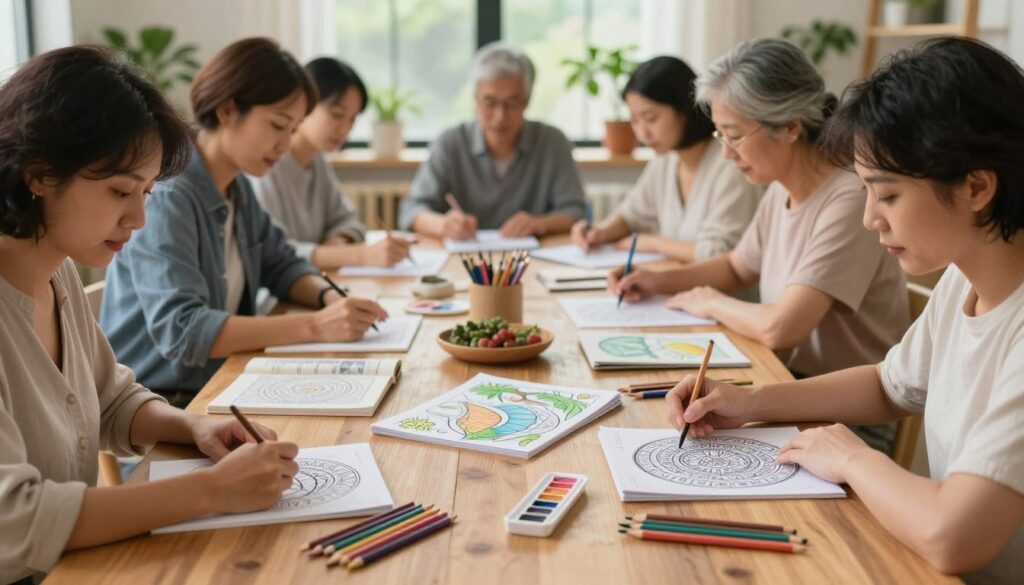
By coloring regularly, you can better manage stress. This leads to a more fulfilling life.
Inspirational Affirmations: Enhancing Your Coloring Practice
Adding inspirational affirmations to your coloring can make it more meaningful. It helps you connect with yourself more deeply. This mix also boosts positive thinking and personal growth.
Selecting Meaningful Phrases for Your Journey
Choosing the right affirmations is key. Consider your goals and challenges, and select phrases that motivate you. For example, if you need more confidence, say “I am capable and strong.”
Techniques for Combining Words and Images
There are many ways to blend affirmations with your coloring. You can write them alongside your art, include them in the designs, or create dedicated pages for them. Try different fonts and colors to make your affirmations stand out.
Creating Your Own Affirmation-Based Coloring Pages
To make your own pages, pick affirmations that mean a lot to you. Then, design pages with the affirmation and an image or pattern. Use mandalas or nature-inspired designs that align with your affirmation’s message. As you color, reflect on the affirmation’s meaning and let it have a profound impact on you.
Keep doing this, and you’ll see how affirmations make your coloring more impactful. You’ll gain awareness and inner peace.
Step-by-Step Tutorial: Your First Mindful Coloring Session
Your first mindful coloring session is a chance to quiet your mind. It’s time to set aside distractions and focus on the present. Remember, it’s not about making a masterpiece. It’s about finding mindfulness and inner peace.
Setting Up Your Space and Materials
Find a quiet, comfy spot to sit without distractions. Collect your tools: colored pencils, markers, or crayons, and a coloring book or sheet that speaks to you. Make sure your space is well-lit and welcoming.
Beginning the Practice with Intention
Before you start, take a few deep breaths to calm down. Set an intention for your session, such as finding calm or exploring creativity. This intention will help you stay focused.
Maintaining Presence Throughout Your Session
Start coloring and focus on the sensations in your hands and the colors you’re using. If your mind drifts, gently bring it back to the task at hand. Coloring is a form of meditation in action, keeping you present.
Closing Your Practice Mindfully
When you’re done, take a moment to reflect. Notice how you feel and the colors you’ve used. Slowly open your eyes and take a deep breath. Carry this calm with you.
By following these steps, you’ll dive deep into mindfulness coloring. You’ll benefit from it and move closer to inner peace.
Spiritual Growth Through Mindfulness Coloring
Coloring can unlock deeper spiritual awareness and tranquility.
It creates a sacred space for self-reflection. This allows you to connect deeply with your inner self.
Opening to Insights and Intuitive Messages
Mindful coloring engages your inner self. It brings out insights and intuitive messages. As you focus, your subconscious can communicate.
This helps you see patterns and emotions you might not notice otherwise. It leads to a deeper understanding of yourself.
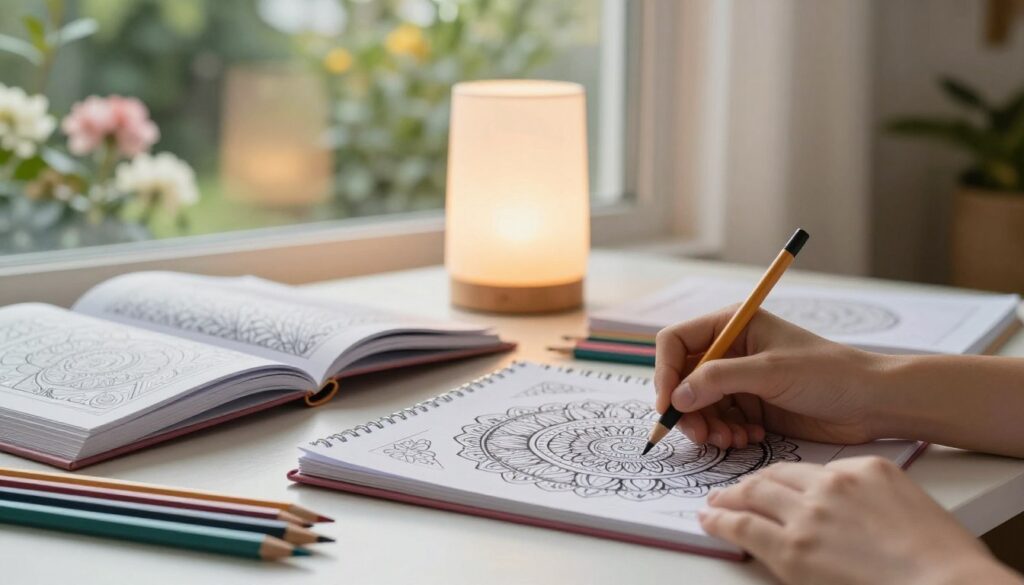
Using Coloring as a Portal to Higher Awareness
Coloring can be meditative. It helps you move beyond immediate worries. You connect with greater awareness.
This can deepen your understanding of yourself and your role in the world. Regular mindfulness coloring promotes spiritual growth and peace.
Integrating Spiritual Insights into Daily Life
It’s key to apply the insights from coloring to your daily life. Reflect on your experiences, journal your thoughts, or be more mindful in your daily activities.
This brings tranquility and clarity to your daily life. It leads to a more balanced and fulfilling life.
Troubleshooting Common Challenges in Your Practice
Starting your mindfulness coloring journey can bring up challenges. But remember, it’s a powerful way to care for yourself. It helps you accept things as they are and feel better emotionally.
Overcoming Perfectionism and Self-Judgment
One significant challenge is feeling the need to be perfect. But mindfulness coloring isn’t about making perfect art. It’s about being kind to yourself and noticing your thoughts and feelings without judgment.
When you start to judge yourself, take a deep breath. Focus on the colors you’re using and the moment you’re in.
Maintaining Consistency When Life Gets Busy
Sticking with mindfulness coloring can be challenging when life gets busy. Try to make it a regular part of your day, even if it’s just a few minutes. You can also use coloring books or apps that you can take with you.
Adapting Your Practice During Difficult Times
When things get really tough, be kind to yourself. You might need to make your coloring simpler or use calming colors. Just focus on the color’s feel on the paper.
By facing and solving these common problems, you can make your mindfulness coloring even more powerful. It becomes a deeper way to take care of yourself.
Creating a Sustainable Coloring Routine for Long-term Growth
Building a lasting coloring habit can significantly reduce stress and anxiety. Adding coloring to your daily routine boosts your mental health.
Morning Pages: Starting Your Day with Clarity
Start your day with coloring to set a positive mood. This morning practice, called “morning pages,” clears your mind and prepares you for the day.
Midday Reset: Using Coloring for Stress Management
Take a break midday for a coloring session. It helps manage stress and keeps you focused.
Evening Wind-Down: Preparing for Restful Sleep
Use color before bed to calm your brain and signal it’s time to sleep. This can enhance your sleep quality.
Tracking Your Progress and Benefits
Keep a journal to track your coloring and benefits. It keeps you motivated and shows the positive effects on your mental health.
| Time of Day | Benefits | Tips |
|---|---|---|
| Morning | Clarity, positivity | Start with simple designs |
| Midday | Stress relief, focus | Use bright, uplifting colors |
| Evening | Relaxation, better sleep | Choose calming colors and patterns |
Consistent coloring can lead to long-term benefits, such as reduced anxiety and improved mental health.
Conclusion: Transforming Your Mind One Color at a Time
As you’ve learned, mindfulness coloring is a powerful tool. It helps transform your mind and boosts your well-being. By incorporating it into your daily routine, you can feel happier and clearer in your thinking.
Using inspirational art can quiet your mind and help you grow. The science shows it reduces anxiety and stress. It also brings calm and focus.
By making mindfulness coloring a part of your self-care, you can feel better overall. So, why not start your journey today? Discover how color can change your life for the better.
FAQ
What is mindfulness coloring, and how does it differ from regular coloring?
What are the benefits of adult coloring for mental health?
How can I incorporate inspirational affirmations into my coloring practice?
What if I’m not good at coloring or drawing? Will I still benefit from mindfulness coloring?
How can I make mindfulness coloring a sustainable part of my daily routine?
Can mindfulness coloring be used as a tool for spiritual growth?
What if I find it challenging to maintain a consistent mindfulness coloring practice?
Can I use mindfulness coloring as a replacement for traditional meditation?
Recommended Resources
Note: This section contains affiliate links. If you click and make a purchase, we may receive a small commission at no extra cost to you.
High-quality coloring books to help you further your mindfulness journey.
- Inspirational Quotes Adult Coloring Book: 21 Motivational Words That Will Inspire You with Good Vibes, Positive Affirmations, and Stress Relaxation
- Positive Affirmations Coloring Book: 25 Pages of Inspirational Words to Build Your Confidence, Self-Esteem, Improve and Enhance Your Mindset
- Inspirational Adult Coloring Book: 25 Motivational Quotes That Will Inspire You with Good Vibes, Positive Attitude, and Stress Relaxation
? 90 minutes of pure bliss. Lost track of time completely. A dreamy ending.
There is definately a lot to find out about this subject. I like all the points you made
I very delighted to find this internet site on bing, just what I was searching for as well saved to fav
Nice post. I learn something totally new and challenging on websites
I like the efforts you have put in this, regards for all the great content.
Focused solely on my back and neck, exactly what I needed. Targeted and terrific. A focused ending.