What you eat can support your mental well-being, but it cannot replace care from a mental health professional. Food may help you support your mood as part of a wider plan, but it should not be a stand-alone treatment.
The relationship works both ways: symptoms can change your appetite, energy, and ability to prepare meals. Emotional eating, food insecurity, and daily demands can also shape what you eat. The gut-brain axis is the two-way communication network through which the digestive system and brain exchange signals, including through nerves, immune activity, and microbial products. It is one link, not an explanation for every mood change. Nutritional psychiatry studies how food and mental health may connect. A useful starting point is a change that feels manageable in your real life, not a rigid set of food rules.
Key Takeaways
- Food can support mental well-being, but it does not replace mental health care.
- Mood and eating can affect each other in both directions.
- Research on eating patterns shows links, not guaranteed results for you.
- Food access, health needs, and your relationship with food matter.
- Small, realistic changes can be easier to sustain than strict rules.
What Research Can and Cannot Show
Diet quality matters to mental health because the brain depends on the same nutrients and energy that keep the rest of your body functioning. Healthy eating can support body processes linked with mood, but studies do not show that food cures depression.
Nutritional psychiatry studies biological links between food and mental health. A 2022 review selected 356 sources from 3,473 literature-search records, then drew on 110 sources for its final review. Diet quality and depression risk can be linked without proving that diet caused a person’s symptoms. The review describes research on food patterns, nutrients, and mental health as a growing field.
Population-level links are clues about patterns, not a prediction of what one meal will do to your symptoms.
Low mood can disrupt appetite, sleep, shopping, and meal preparation. Eating patterns may also affect your energy and general well-being, creating a two-way relationship rather than a simple cause.
Healthy eating supplies nutrients used in brain and body processes, which helps explain why diet and mental health matter together. A broad 2022 review of nutrition and mental health examined links between diet, lifestyle, and mental health. It presents nutrition as possible support, not a substitute for care.
Research can describe group patterns, but it cannot tell you what a single food will do. Treat population-level associations as clues about patterns, not a prediction of what one meal will do to your symptoms.
Eating Patterns Linked With Mood Outcomes
Eating patterns built around plants, whole grains, legumes, and healthy fats are the most practical way to think about nutrition and mood research. Overall patterns matter more than a single food, and no named diet guarantees better mental health.
Meta-analyses have linked Mediterranean, DASH, and MIND patterns with up to 20% lower depression risk. That finding is an association, not an individual prediction or a promise of prevention. The patterns share plant foods, but each focuses on different foods.
The Mediterranean eating pattern
The Mediterranean eating pattern centers on vegetables, fruit, legumes, whole grains, healthy fats, and fish. It includes few ultra-processed foods, while leaving room to adapt meals to local ingredients and preferences.
In a 12-month randomized trial, Beck Depression Scale scores fell by 20.6 points in the Mediterranean diet intervention group. Scores fell by 6.2 points in the control group. A group result from one trial cannot guarantee the same change for you.
How DASH and MIND patterns compare
The DASH pattern includes fruits, vegetables, whole grains, and legumes. The MIND pattern combines plant-forward eating with brain-health-focused choices, including leafy greens and berries.
These patterns are studied in relation to mood and brain health, but they were not designed as stand-alone treatments for depression. Their overlap can help you choose broad ideas without following a strict menu.
| Pattern | Foods emphasized | Mental-health evidence described here |
|---|---|---|
| Mediterranean | Plants, whole grains, legumes, healthy fats, fish | Trial reported lower depression scores over 12 months |
| DASH | Fruits, vegetables, whole grains, legumes | Meta-analyses linked the pattern with lower depression risk |
| MIND | Plant foods, leafy greens, berries | Meta-analyses linked the pattern with lower depression risk |
Choose a pattern you can adapt to your budget, food preferences, and health needs rather than trying to copy a strict menu.
How Diet and Nutrition for Mental Health Support Mood and Energy
A meal with a filling carbohydrate, protein, and produce gives you a practical starting point for steady energy. Balanced meals may help with hunger-related strain, but mood-boosting foods are not a treatment for stress or anxiety.
Carbohydrates provide energy, and whole grains, beans, fruit, and vegetables offer slower-digesting options. Pairing carbohydrates with protein and fat can make meals more sustaining. Protein supplies amino acids your body uses to make neurotransmitters. Tryptophan is used to make serotonin, while tyrosine is used to make dopamine.
A 1993 study systematically lowered participants’ glucose levels. Counter-regulatory hormones, including cortisol, were associated with irritability and anxiety. That finding does not mean blood sugar mood swings explain every anxious or irritable feeling.
- Add a whole-grain or bean-based carbohydrate.
- Include a protein source that suits your meal.
- Add fruit or vegetables when they are available.
- Pair foods you enjoy with a practical source of fiber or healthy fat.
Regular, balanced eating may reduce hunger-related strain for some people, which can support daily stress coping. It cannot replace stress-management care or treatment for anxiety.
If you notice recurring symptoms after long gaps between meals, try a consistent meal routine and discuss persistent concerns with a clinician.
The Gut-Brain Axis and Your Microbiome
Your gut and brain communicate through several routes, and the gut microbiome is one of them. Gut microbes interact with digestion, immune activity, and signals to the nervous system, but they do not explain every change in mood.
Fiber-rich plant foods support gut microbes. Beans, whole grains, fruit, vegetables, nuts, and seeds can add variety to what those microbes use. Tim Spector suggests aiming for around 30 different plants each week, counting grains, nuts, and spices alongside fruit and vegetables. This is an optional variety target, not a proven mood prescription.

A Deakin University study gathered diet information and microbiome samples from 213 women in their third trimester of pregnancy. Researchers followed the mothers and children until the children reached age two.
Greater maternal microbial diversity was associated with fewer depressive, anxious, or withdrawn characteristics in toddlers. The association does not establish that a mother’s diet or microbiome caused a child’s mood. Many factors shape early development, and the finding does not show that changing a microbiome treats a child’s symptoms.
Microbiome and mood research is still developing, so one plant count cannot serve as a health test. Aim for variety across the plants you already eat rather than treating a weekly plant count as a test you can fail.
Nutrients and Omega-3 Evidence
Omega-3 research offers a more specific depression signal than anxiety evidence, but it does not establish a universal supplement dose. EPA and DHA are fish-derived omega-3 fats, and the strongest result described here came from EPA-enriched interventions.
A 2023 meta-analysis of 10 randomized trials included 1,426 adults. EPA-enriched interventions containing at least 60% EPA of total EPA plus DHA reduced depression severity (SMD = −0.36, 95% CI −0.68 to −0.05, p = 0.02). The findings describe trial groups, not a personal dose recommendation.
EPA and depression findings
EPA doses of at least 1 g/day and less than 2 g/day were linked with lower depression severity. The result was SMD −0.43, 95% CI −0.79 to −0.07, and p = 0.02.
Doses of at least 2 g/day were not significantly linked with a therapeutic effect. The result was SMD −0.20, 95% CI −0.48 to 0.07, and p = 0.14. The analysis also found high heterogeneity and funnel-plot asymmetry, which suggested possible publication bias.
| Trial condition | Depression result | Statistical finding |
|---|---|---|
| EPA at least 60% of EPA plus DHA | Reduced severity | SMD −0.36; p = 0.02 |
| EPA 1 to less than 2 g/day | Reduced severity | SMD −0.43; p = 0.02 |
| EPA at least 2 g/day | No significant effect | SMD −0.20; p = 0.14 |
The 2026 Frontiers review on omega-3 fats discusses possible biological roles and notes that results vary across disorders and studies.
What anxiety findings do and do not show
Only one trial found a significant reduction in anxiety severity, using 2.1 g/day of EPA. One trial is not enough to establish a reliable effect, so researchers could not combine anxiety results in a meta-analysis.
Iron, folate, and vitamin B12 deficiencies can matter for health, but symptoms alone cannot diagnose a deficiency. Fatigue or low mood does not prove a B12 deficiency, and supplements do not replace testing or treatment.
Ask a clinician or pharmacist to check supplement safety and interactions before adding a high-dose product.
Drinks, Caffeine, Sugar, and Mood Findings
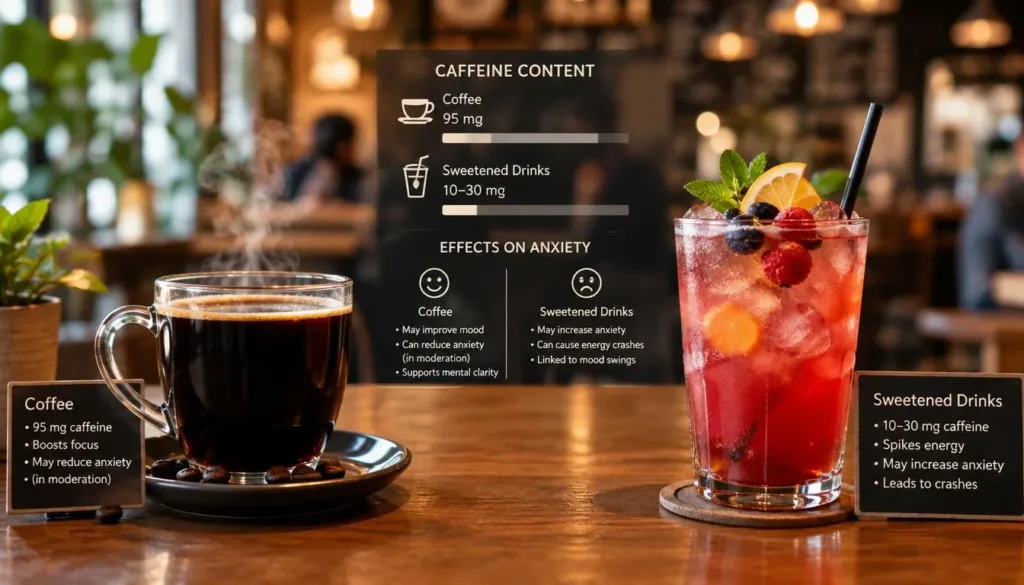
The drink findings are mixed: several sweetened or carbonated drinks were associated with depression, while coffee showed a different pattern. Association does not prove causation, and the findings do not support a one-size-fits-all drink rule.
A 2026 systematic review and meta-analysis included 59 studies with 2,050,716 participants from 22 countries. Most studies were rated moderate quality. Higher overall nonalcoholic beverage intake was associated with depression and anxiety, but the main analysis did not find a significant link with stress.
The results describe associations, not proof that a drink caused depression or anxiety. Most studies were cross-sectional, and prospective and intervention research is needed before making specific beverage recommendations.
| Reported association | Drink findings | What the finding can establish |
|---|---|---|
| Depression | Positive: sugar-sweetened, bubble tea, carbonated, soft, artificially sweetened, and energy drinks; inverse: coffee | Observed links, not cause |
| Anxiety | Bubble tea and carbonated drinks were associated; coffee was not significant | Observed links, not a universal caffeine rule |
| Stress | Main analysis found no significant association | No significant link in the main analysis |
The sugar depression risk findings apply to drink patterns in groups, not to every sweet drink or person. Coffee intake was inversely associated with depression, but that does not show coffee prevents depression.
Caffeine can affect people differently, including through sleep or feelings of anxiety. If caffeine seems to worsen your own anxiety or sleep, discuss a gradual, individualized adjustment rather than assuming the same rule fits everyone.
Processed Foods, Access, and Eating Disorders
The high share of calories coming from ultra-processed foods is a population-level concern, not a reason to blame yourself for what is available or affordable. Access matters, and time, mood, health, and the food environment shape food choice.
National Center for Health Statistics estimates for 2021-2023 found that more than half of the calories American adults consumed came from ultra-processed foods. For children and teens, the share was more than 60%. These industrial formulations are often high in refined ingredients and low in fiber.
Research linking ultra-processed foods with mental health outcomes does not prove they cause your symptoms. Low mood or stress can make convenient comfort foods appealing, while limited access to nourishing options can add stress.
Food insecurity can make general advice hard to follow, even when you understand what might help. U.S. food-support options include:
- SNAP, which helps eligible households buy food.
- WIC, which supports eligible pregnant and postpartum people, infants, and young children.
- School meal programs for children and teens.
- Local food banks that offer food assistance in many communities.
Rigid food rules or advice to restrict foods can harm people with eating disorders. Weight or food concerns that affect daily life call for specialized care, not a stricter plan.
If food rules are increasing fear, distress, or restriction, seek support from a clinician experienced in eating disorders.
Turning Evidence Into an Achievable Care Plan
A workable mental health diet plan is a flexible routine built around foods you can access and enjoy, not a rigid menu. Small steps may support care, but research does not promise the same result for everyone.
In the 12-week SMILES trial, adults with moderate to severe major depressive disorder received nutritional counseling. They had greater symptom improvement and a greater likelihood of remission than a social-support control group. The trial shows that structured counseling can help some adults, not that everyone will respond.
Changes that fit your routine
Start with one change that fits your medical needs, food access, preferences, and relationship with food. Mindful eating means noticing hunger, fullness, enjoyment, and context rather than following a strict rule.
- Choose one repeatable meal or snack improvement.
- Add a fruit, vegetable, bean, or whole grain when accessible.
- Notice how meal timing relates to energy without judgment.
- Review the change after a few weeks and keep what works.
When to involve a dietitian or clinician
A registered dietitian can help with medical needs, suspected deficiencies, limited food access, or an eating disorder history. Dietitian consultation for mental wellness can also help you shape changes around medications and health conditions.
Involve a mental health professional when symptoms persist, disrupt daily life, or need assessment and treatment. A dietitian can work alongside that care, but does not replace mental health treatment.
Bring a short record of symptoms, eating patterns, medications, and questions to your next health care visit.
What Clinical Trials Say About Dietary Treatment
Randomized trials provide some evidence for dietary support in depression, but the results are modest and depend on the population and intervention studied. Trial results do not establish one diet as a treatment for every mood disorder.
A 2025 systematic review included 25 randomized dietary-intervention trials lasting at least three months. Among adults with elevated cardiometabolic risk, calorie-restriction advice had low-certainty evidence of a possible reduction in depressive symptoms.
The estimated effect was small: SMD −0.23, with a 95% CI of −0.38 to −0.09. This result does not establish the same benefit for all adults, and calorie restriction is not a universal mental health treatment.
Dietary-intervention trials for depression and anxiety
The review found that low-fat diets were linked with a very small reduction in depressive symptoms among adults with elevated cardiometabolic risk. The effect was SMD −0.03, with a 95% CI of −0.04 to −0.01, and the evidence had low certainty.
Evidence on anxiety and comparisons with active treatments was limited. Study limitations and clinical or method differences made the results hard to compare. These findings do not prove that a specific diet treats anxiety.
Other interventions and evidence limits
A four-month ketogenic-diet pilot involved 21 adults with schizophrenia or bipolar disorder. Participants received the diet alongside psychiatric care and showed an average 31% improvement on the Clinical Global Impression scale.
The pilot is early adjunctive research, not a reason to start a ketogenic diet or stop medication. It needs more controlled research before firm conclusions can be drawn.
Do not change prescribed care because of a diet study or a promising pilot result.
Effects, risks, and feasibility need individual clinical assessment. A restrictive eating plan may not fit your health needs, daily routine, or relationship with food.
Make treatment changes with your clinician, especially if you are considering a restrictive diet or already take psychiatric medication.
Conclusion
Food can be one useful part of caring for your mental well-being, but it is not the whole plan. Small, sustainable changes may support mood alongside care suited to your symptoms and health needs.
Persistent or severe symptoms deserve professional attention. You do not need to solve them through food choices alone, and asking for help is a practical next step.
Choose one realistic change to discuss with your clinician or registered dietitian, and seek mental health care for symptoms that persist or interfere with daily life.