

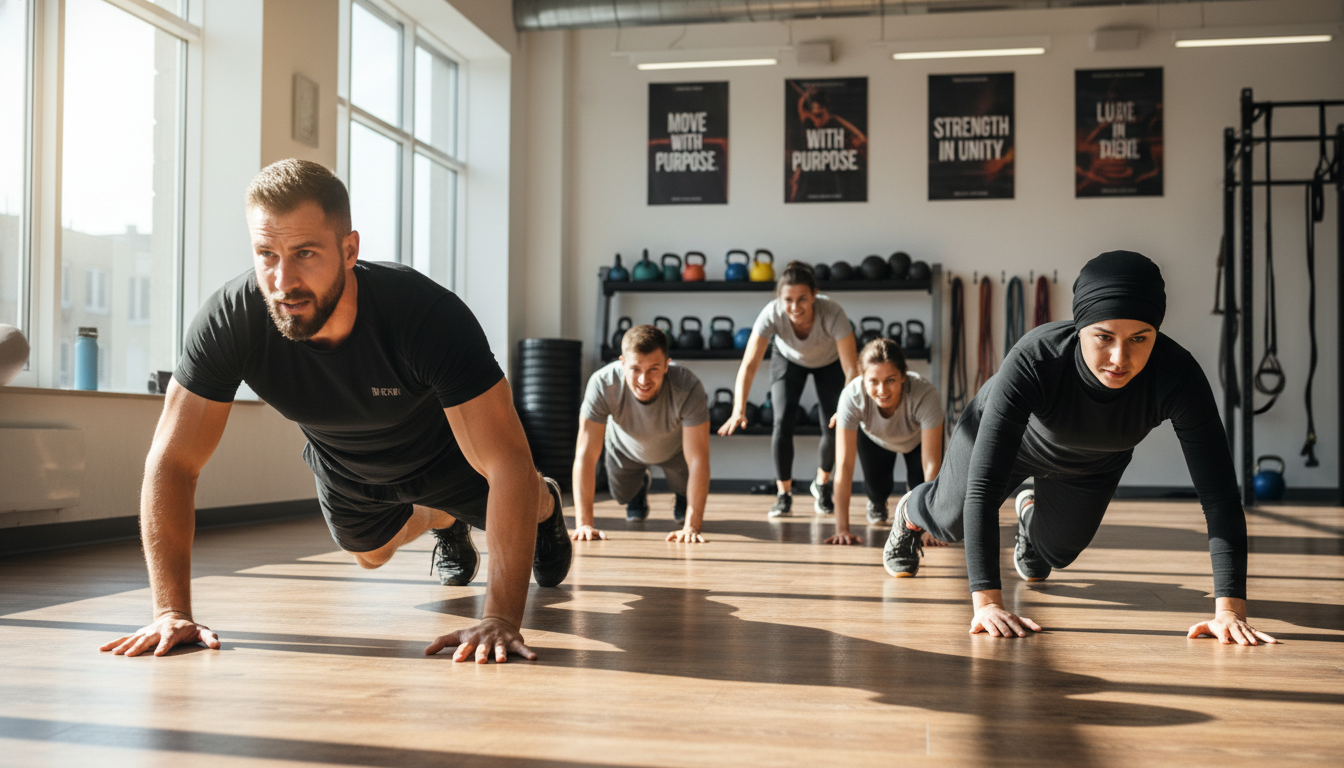
Modern fitness often focuses on heavy lifting or intense cardio. But it often overlooks the most basic human movements. You might feel strong in the gym, but do you move freely in everyday life? Returning to ground-based movement is key for many adults wanting to regain their natural energy.
Adding animal flow exercises to your routine challenges your body in new ways. These movements require using your whole core and coordinating cross-body limbs. This helps you regain lost strength and reconnect your body and mind.
Learning these skills also boosts wrist mobility, which is vital for joint health. When you commit to these basic patterns, you gain a new level of ease. This guide will show you how to master these essential techniques for lasting health and functional longevity.
Key Takeaways
- Crawling serves as a foundational human pattern often missing from modern workouts.
- Integrating primal patterns helps restore natural strength and physical freedom.
- Coordinating limbs through these techniques improves your overall mind-body connection.
- Focusing on joint health is a critical component of mastering these movements.
- Consistent practice leads to better ease of movement in your daily life.
The Evolution of Human Movement and the Ground-Based Movement Paradigm
The human body evolved through complex, multi-planar activity. Yet, modern life has narrowed our physical potential to just two positions: standing and sitting. This shift has created a significant gap in our physical literacy. By embracing a ground-based movement paradigm, you can begin to bridge this gap and restore the capabilities that often fade as we age.
Why Modern Life Limits Your Functional Range
Our contemporary environment prioritizes convenience, which often leads to a sedentary lifestyle. When you spend the majority of your day in a chair, your body loses its ability to express natural movement. This restriction degrades your functional movement patterns over time.
Consider how these common habits impact your physical health:
- Prolonged sitting tightens the hip flexors and weakens the glutes.
- Constant upright posture limits your shoulder mobility and spinal rotation.
- Lack of floor-based activity reduces your overall balance and coordination.
To counteract these effects, you must integrate primal movement training into your daily routine. By moving closer to the earth, you challenge your joints in ways that standard gym equipment simply cannot replicate.
The Neurological Case for Returning to the Floor
Crawling is a fundamental human movement that serves as the foundation for all complex primal movement patterns. When you return to the floor, you engage your nervous system in a way that standing exercises often ignore. This process helps rewire your brain to support more efficient movement patterns.
Engaging in primal movements forces your brain to coordinate limbs in a cross-body fashion. This neurological stimulation is a core component of primal fitness. By practicing these functional movement patterns, you improve your spatial awareness and core stability. Ultimately, adopting a ground-based movement approach is not just about strength; it is about reclaiming the primal movement intelligence that is hardwired into your biology.
Understanding the Neurological Benefits of Cross-Body Coordination
Primal movement patterns connect physical strength with brain health. These exercises do more than just build muscle. They also stimulate your nervous system.
By moving your limbs in sync, you strengthen and make your body more responsive. This is key for a resilient body.
How Crawling Synchronizes Left and Right Brain Hemispheres
Movements like the bear crawl are special because they need cross-body coordination. They make your left and right brain hemispheres work together. This teamwork is crucial for thinking clearly.
When you move your opposite arm and leg at the same time, your brain gets a workout. It learns to better handle spatial information. This strengthens the connection between your brain’s halves. Regular practice boosts focus, memory, and spatial skills.
“Movement is the song of the body, and when we move with intention, we harmonize the mind.”
Developing Neural Pathways Through Locomotor Patterns
Your brain can change and grow with new challenges. By doing specific locomotor patterns, you create new paths in your brain. These primal movements help your body work together as one unit.
Adding cross-body stabilization to your routine keeps your core strong while your limbs move freely. This control is essential for better sports performance. As you get better at these movement patterns, your body will feel more connected and agile.
Preparing Your Body for Primal Movement Training
Before starting primal movement training, make sure your body is ready. Crawling is easy but hard on your joints. Building a solid foundation through mobility training is key to success.
Assessing Your Current Joint Stability
First, check how your body handles weight-bearing positions. Start by placing your hands on the floor in a quadrupod position. Keep your shoulders over your wrists. Pay close attention to any discomfort or limited range of motion in your wrists, elbows, and shoulders.
If you feel sharp pain or instability, slow down. Regular joint mobility exercises help spot these issues early. By tracking your progress, you can safely increase your session time as your stability grows.
Essential Wrist Mobility Drills for Weight-Bearing Success
Your wrists are key when doing ground-based patterns. Doing specific mobility drills daily prepares your connective tissues for the load. Consistency is key to avoiding common injuries.
Try these simple movements to boost your wrist health:
- Wrist Circles: Gently rotate your wrists in both directions to improve blood flow and joint lubrication.
- Palm Extensions: Place your palms flat on the floor with fingers facing your knees, then gently lean back to stretch the forearms.
- Fist Clenches: Open and close your hands rapidly to build strength in the small muscles of the forearm.
These exercises are simple yet effective for beginners. By focusing on joint mobility, you make your body better suited to adaptation. Remember, patience is essential when building the strength needed for advanced movements.
Mastering the Bear Crawl for Bulletproof Shoulders
The bear crawl is key for anyone looking to improve functional fitness through ground-movement drills. These bodyweight exercises help your body move in ways it doesn’t in everyday life. They are crucial for a strong core and shoulders ready for real-world challenges.
Proper Hand Placement and Scapular Engagement
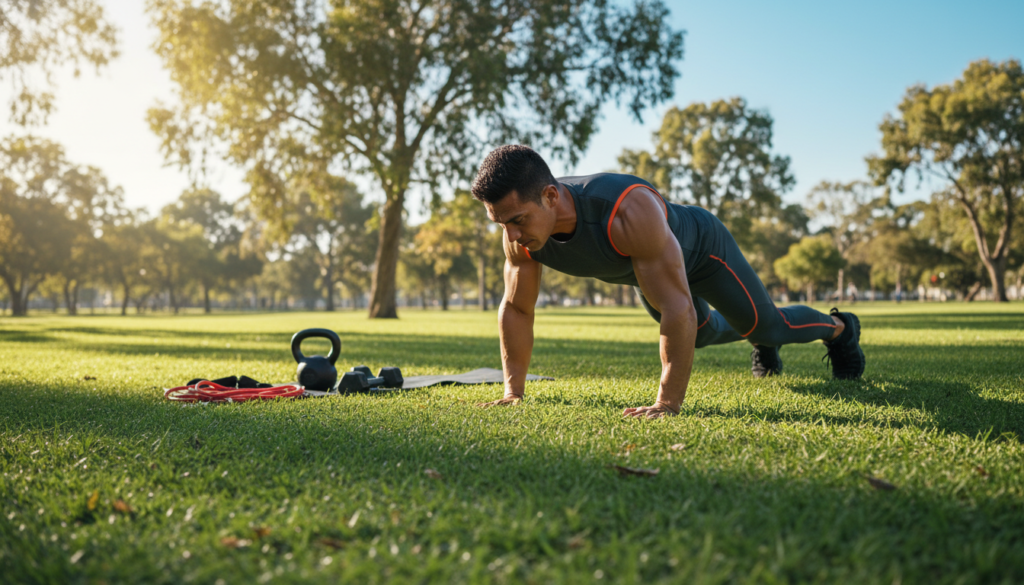
To get the most from your bodyweight training, focus on your hand placement. Place your hands under your shoulders with fingers spread wide. This helps distribute your weight evenly, boosting your bodyweight fitness.
After setting your hands, work on scapular engagement. Push the floor away, rounding your upper back slightly. This active shoulder position helps your muscles, not your joints, support your weight.
Maintaining a Neutral Spine Under Load
A common error in dynamic bodyweight workouts is letting the lower back sag. To avoid this, engage your core muscles throughout. Keeping your hips level with your shoulders keeps your spine neutral, crucial for joint stability.
Imagine your torso as a rigid bridge linking your limbs. By practicing this functional bodyweight training, you protect your spine from strain. Regular focus on these techniques will improve your movement and overall strength.
Unlocking Core Resilience with the Crab Walk
The crab walk is a challenging move that tests your coordination and strength. It’s a key bodyweight exercise that requires your whole body to work together. By lifting your hips and moving like a quadruped, you engage muscles in ways gym machines can’t.
Engaging the Posterior Chain and Glutes
The crab walk is great for working your posterior chain. When you keep your hips up, your glutes, hamstrings, and lower back must stay active. This dynamic tension helps build a strong core that supports your spine every day.
Adding these exercises to your dynamic bodyweight workouts improves your strength and mobility. Your glutes will get stronger, giving you a solid base for more challenging athletic moves. Regular practice keeps your posterior chain strong and ready for heavy tasks.
Avoiding Common Pitfalls in Shoulder Positioning
Many people face shoulder pain due to poor alignment in functional bodyweight training. A common mistake is shrugging your shoulders up toward your ears, straining your upper trapezius. Instead, keep your shoulder blades down and your chest open for bulletproof shoulders.
Another mistake is letting your elbows flare out too much. Keep your hands pointing backward and your elbows slightly tucked to protect your joints. Good form is crucial in bodyweight fitness to avoid injuries and engage more muscles.
Mastering these ground movement drills opens up new physical abilities. Focus on slow, controlled movements to keep your shoulders safe. With time and effort, you’ll gain the stability to move confidently and smoothly.
Integrating Animal Flow Exercises into Your Routine
Transform your workout by embracing ground-based movement. Move away from fixed patterns to explore your body’s full motion. This makes your training a meditative and highly effective way to build agility.
Building Dynamic Movement Sequences
Creating dynamic movement sequences links patterns into a flowing chain. This style of flow training challenges your body and keeps your mind focused.
Adding these movement flow sequences to your routine boosts coordination. Start with two or three bodyweight flow exercises and practice linking them smoothly.
Transitioning Between Ground-Based Positions
Mastering transitions is key to movement flow training. Smooth transitions require control and tension as you move. These movement flow drills help you move efficiently and protect your joints.
Focus on the quality of your movement in these dynamic exercise routines. Slow, deliberate transitions build strength for graceful and powerful movement. Over time, these movement flow exercises will become second nature, allowing you to create your own.
Remember, dynamic stretching is a natural part of this practice. Flowing through different positions lengthens your muscles and improves mobility. This holistic approach keeps your body resilient and ready for challenges.
The Role of Cross-Body Stabilization in Functional Fitness
Cross-body stabilization connects your upper and lower body strength. Your body doesn’t move in separate parts. It uses a network of muscles to move efficiently.
Training these pathways boosts your functional fitness. It keeps your core stable while your limbs do complex tasks. This is how you move powerfully and gracefully every day.
Connecting the Upper and Lower Body
Your body works through diagonal chains. For example, your right shoulder and left hip work together when you walk or climb. Strengthening this cross-body connection helps distribute energy better.
Functional training focuses on these integrated movements. It prepares your body for real-world challenges. Your movements will become smoother and less stressful on your joints.
Improving Balance Through Natural Movement Patterns
Adding natural movement patterns to your routine is key to health. These patterns challenge your balance system. By practicing natural movement, you improve your body’s stability under different conditions.
This training is great for preventing injuries. It makes your stabilizer muscles work harder. This protects your spine and major joints from harm. Here’s a comparison of traditional isolation and integrated movement training.
| Feature | Isolated Training | Cross-Body Functional Training |
|---|---|---|
| Muscle Focus | Single muscle groups | Integrated muscle chains |
| Balance Demand | Low | High |
| Real-World Utility | Limited | High |
| Injury Risk | Moderate | Low |
Advanced Locomotion Training for Strength and Conditioning
To take your locomotion training to the next level, you need to increase intensity and resistance. After mastering the basics, you can push your body to be more athletic. This evolution keeps your workouts challenging and effective.
Increasing Intensity with Speed and Resistance
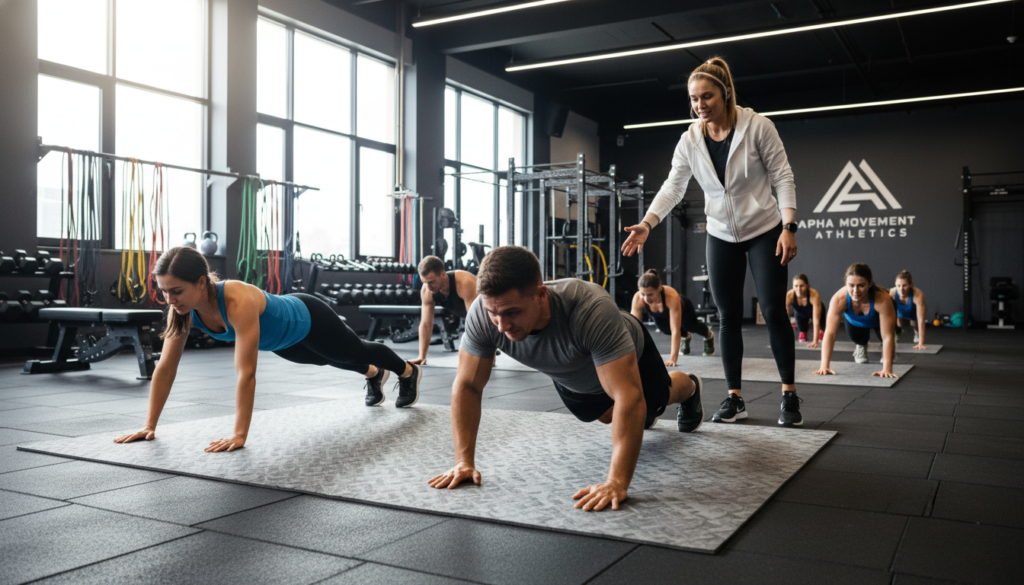
To build explosive strength, move beyond steady-state crawling. Add speed intervals to your natural movement workouts to quicken muscle fiber recruitment. Use a weighted vest or sandbag to boost the workout’s metabolic demand.
Keep perfect form as you speed up. Speed shouldn’t compromise joint stability or spinal alignment. Gradually adding weight makes your workouts more like real-world challenges.
Incorporating Primal Movement into Strength Circuits
Mix a primal movement workout with your gym routine for a full fitness approach. Combine high-intensity crawling with compound lifts for better strength and conditioning. This blend boosts both power and mobility.
Here’s a structure for your next session to enhance movement training results:
| Movement Type | Intensity Level | Primary Benefit | Equipment Used |
|---|---|---|---|
| Basic Crawl | Low | Joint Mobility | Bodyweight |
| Speed Bear Crawl | Medium | Neural Drive | Bodyweight |
| Weighted Crab Walk | High | Posterior Strength | Weighted Vest |
| Circuit Integration | Very High | Metabolic Power | Mixed Weights |
Using these natural movement circuits connects static lifting to dynamic athleticism. This method builds a strong, agile body ready for any challenge.
Safety Protocols for Joint Mobility and Injury Prevention
Keeping your body healthy means focusing on movement training. Crawling is great for your body, but you need to listen to it. Doing joint mobility exercises regularly helps you stay strong and recover well.
Listening to Your Wrists and Shoulders
Your wrists and shoulders are key when you move on the ground. It’s important to know the difference between muscle tiredness and joint pain. If you feel pain, stop right away and check your position.
To keep your joints healthy, do these things every day:
- Do wrist mobility exercises before using your hands.
- Make sure your shoulders are down and stable, not up by your ears.
- Use mobility drills to gradually improve your movement.
- If something hurts, go back to something easier.
Progressive Loading Strategies for Beginners
Think of your practice as a long journey, not a quick race. Progressive loading helps your tendons and ligaments get used to mobility training. Begin with short sessions to build your confidence before you do more.
Here are ways to safely get better at joint mobility exercises:
- Begin with stillness to build stability before moving.
- Focus on moving well, not fast or far.
- Use joint mobility drills on rest days to help recover.
- Record your workouts to see if you’re doing things right.
By doing these mobility exercises, you keep your body strong. Remember, the goal of joint mobility exercises is to improve your life. Be patient, stay consistent, and your body will thank you with more strength.
Designing Your Own Primal Movement Workout
Creating a primal movement workout that fits your needs and goals is empowering. Think of these sessions as movement snacks to keep you active all day. You don’t need a gym to see lasting improvements.
Structuring a Full-Body Flow Session
Begin by picking three to five functional movement patterns that test your mobility and strength. Start with a gentle warm-up to get your joints ready. Then, move into your chosen dynamic movement sequences.
Make sure your movement flow training is smooth and controlled. This keeps your workout effective.
Organize your natural movement circuits by grouping exercises for different muscle groups. For instance, pair a crawling move with a squat to keep your heart rate up. This balanced approach boosts your physical conditioning.
Tracking Progress in Your Movement Practice
Consistency is key to mastering animal flow exercises and other complex patterns. Keep a log to track your movement flow exercises and how you feel. This helps you see which natural movement workouts work best for you.
Here’s a table to help organize your weekly strength and conditioning efforts:
| Day | Focus Area | Intensity Level |
|---|---|---|
| Monday | Upper Body Flow | Moderate |
| Wednesday | Lower Body Mobility | Low |
| Friday | Full Body Integration | High |
| Sunday | Active Recovery | Very Low |
Reviewing your notes helps you adjust your movement flow sequences to stay challenged and engaged. Even short daily sessions add up to big success in primal movement.
Conclusion
Your journey to physical mastery starts with a simple step: returning to the floor. By embracing these primal patterns, you change how your body interacts with gravity and space.
Regular practice lays a strong foundation of functional strength. This strength benefits your daily life in many ways. You don’t just build muscle; you also improve the connection between your brain and limbs.
Begin with short, focused sessions in your living room or a local park. Pay attention to how smoothly you move, not how fast. This approach keeps your joints healthy and boosts your coordination.
Share your progress with others at Animal Flow or similar groups to stay inspired. Your body is designed to adapt and grow through these natural movements. Keep pushing your limits and enjoy the journey to becoming more capable.
The floor is ready for you to start. Move with intention and watch your strength soar.


uv3958