Snacks are not just treats; they can also be super healthy. Eating a handful of heart-healthy nuts every day can greatly improve your heart health. Switching to these nutritious snacks can lead to better overall health.
Research shows that eating nuts regularly can lower LDL cholesterol by 3% to 10%. Walnuts, almonds, pistachios, and Brazil nuts are the best choices. They are full of good fats and fiber that help keep your arteries healthy.
Watch your portion sizes and choose raw or dry-roasted nuts. If you have allergies, talk to your doctor before changing your diet. Eating these nuts for cholesterol management is a tasty way to support heart health.
Key Takeaways
- Daily intake of specific seeds and kernels can reduce bad lipid levels by up to 10%.
- Walnuts and almonds are among the most effective choices for cardiovascular support.
- Portion control remains essential to avoid excessive calorie intake.
- Opt for raw or dry-roasted varieties to avoid added sugars and unhealthy oils.
- Always prioritize a balanced diet alongside these beneficial snacks.
What Clinical Research Shows About Nuts and LDL Cholesterol
If you’re looking for natural ways to improve your lipid profile, clinical research has good news. It shows that nut consumption and cholesterol are closely linked. Scientists have studied how these snacks affect your body’s chemistry for decades.
The reported LDL cholesterol reduction from daily nut consumption
Studies show that eating nuts daily can lower LDL cholesterol. This reduction is about 3% to 10%. It’s a small but significant change.
Replacing unhealthy snacks with nuts can make a big difference. These foods reduce cholesterol by providing healthy fats and fiber. They help keep your heart healthy.
How researchers have evaluated nuts as a cholesterol-lowering food
Researchers use several methods to study nuts’ benefits for cholesterol. They include:
- Controlled feeding studies where participants follow specific diets.
- Large-scale clinical trials tracking lipid changes over several months.
- Systematic reviews and pooled analyses of existing data.
These methods help scientists understand the impact of nuts. They ensure that any improvements in your blood markers are due to nuts.
What the findings mean for your heart health
Improving your lipid profile is key to heart health. Lowering LDL levels reduces plaque buildup in your arteries.
“Regular nut intake is associated with a favorable lipid profile, which serves as a cornerstone for heart-healthy dietary patterns.”
Why a 3% to 10% reduction can matter over time
You might wonder whether a small percentage change matters. For heart health, even a 3% to 10% drop in LDL cholesterol is significant. When done consistently, it lowers your risk profile.
Small, sustainable changes are better than drastic ones. Making nuts a part of your diet is a long-term investment in your health.
What clinical research does not prove about nuts alone
While nuts are great for cholesterol, they’re not a magic cure. Clinical research doesn’t say they can replace medications or a balanced lifestyle.
Nuts work best as part of a comprehensive heart-health plan. Remember, your diet, exercise, and medical advice are key to managing cholesterol.
Nuts for cholesterol, lower LDL cholesterol, cholesterol-lowering foods
Nuts are packed with nutrients that help your heart. They are full of top cholesterol-fighting foods. These small snacks are mighty in protecting your heart.
Unsaturated fats and their effect on LDL cholesterol
Nuts have healthy fats like monounsaturated and polyunsaturated. These fats keep your blood vessels flexible. They also help your heart work well.
Plant sterols that may reduce cholesterol absorption
Nuts have plant sterols. These compounds look like cholesterol. They compete with it in your digestive system.
- They block cholesterol from entering your bloodstream.
- They promote the natural excretion of excess lipids.
- They provide a plant-based defense for your arteries.
Soluble fiber and the digestive removal of cholesterol
Nuts also have soluble fiber. This fiber acts like a sponge in your body. It binds to cholesterol before it’s absorbed.
This fiber carries cholesterol out of your body. This is why cholesterol-lowering nuts are good for your heart.
How nuts can support healthier blood lipid levels
Eating these foods regularly can improve your lipid levels. They provide healthy fats and nutrients. This helps keep your LDL levels in check.
Replacing saturated fats instead of simply adding nuts
To see the best results, use these top cholesterol-fighting foods as a substitute. Adding them to a diet high in saturated fats can lead to weight gain.
Instead, swap processed snacks like chips or cookies for nuts. This change helps you get the benefits of soluble fiber and plant sterols without extra calories.
Why Walnuts Stand Out for Cholesterol and Heart Health
When choosing nuts for heart health, walnuts are often the best option. They have a special fat mix that nutritionists love. Eating them helps keep your heart healthy by balancing your lipids.
How walnuts provide heart-healthy polyunsaturated fats
Walnuts are special because they’re full of good fats. These fats are better for your heart than bad fats. Adding them to your diet helps keep your arteries flexible.
Walnuts, cholesterol levels, and omega-3 fatty acids
Walnuts are great because they have lots of omega-3 fatty acids. These acids help control cholesterol levels. Studies show they can keep your LDL cholesterol low and support heart health.
Ways to add walnuts to meals and healthy snacks
It’s easy to add walnuts to your day. They taste good with both sweet and savory foods. Try them raw, toasted, or chopped for a crunchy touch.
Portion ideas for oatmeal, salads, and yogurt
To get the most from these top nuts for heart health, eat them regularly. A serving is about a small handful. Here are some easy ways to add them to your meals:
- Oatmeal: Sprinkle a tablespoon of chopped walnuts over your morning oats for added texture.
- Salads: Toss a handful into a leafy green salad to boost the healthy fat content of your lunch.
- Yogurt: Mix them into plain Greek yogurt with a few berries for a heart-friendly snack.
| Meal Type | Serving Suggestion | Benefit |
|---|---|---|
| Breakfast | 1/4 cup in oatmeal | Adds fiber and healthy fats |
| Lunch | 1 ounce on salad | Improves satiety and lipid profile |
| Snack | Small handful with fruit | Provides sustained energy |
How Almonds May Help Lower LDL Cholesterol
Almonds are among the best nuts for lowering LDL cholesterol. They are packed with essential fats and antioxidants. Eating one handful of almonds a day can lower LDL by 4.4%. Two handfuls can lower it by 9.4%.
Almonds and cholesterol-friendly monounsaturated fats
Almonds are rich in monounsaturated fatty acids. These heart-healthy fats replace saturated fats in your diet. Choosing almonds helps keep your arteries clear and heart healthy.
The role of almond skin, fiber, and plant compounds
Almonds also contain plenty of fiber and vitamin E. The almond skin is full of antioxidants. These antioxidants and fiber prevent LDL cholesterol from oxidizing, which is good for your heart.
Choosing whole almonds over heavily processed almond snacks
Almonds are great for lowering cholesterol, but eat them in moderation. They are calorie-dense, so too much can lead to weight gain. Always pick whole, natural almonds over sugary or salty ones.
Comparing raw, roasted, salted, and flavored almonds
The way you prepare almonds affects their nutrition. Raw or dry-roasted almonds are best because they don’t have additives. Here’s how different preparation methods compare:
| Preparation Type | Nutritional Impact | Best For |
|---|---|---|
| Raw | Highest nutrient density | Daily heart health |
| Dry-Roasted | Maintains healthy fats | Flavor without additives |
| Salted | Increased sodium content | Occasional consumption |
| Flavored/Sugared | High sugar and calories | Avoid for cholesterol goals |
Pistachios and Their Benefits for Cardiovascular Health
Pistachios are packed with nutrients that help manage cholesterol. Adding them to your diet is a tasty way to boost your health. They support your wellness goals in a delicious way.
How pistachios may support LDL and overall lipid balance
Studies show pistachios can improve your blood lipid levels. Six out of nine studies found they lower LDL cholesterol. They might also raise HDL levels.
While results differ, pistachios could help control cholesterol. Eating them can be a smart move for heart health.
Why pistachios can be a satisfying cholesterol-friendly snack
Choosing cholesterol-friendly snacks is key. Pistachios offer a crunchy texture and rich taste. They keep you full longer.
They’re full of healthy fats and fiber. This makes them better than junk food. Swapping them for empty calories is good for your heart.
Practical serving ideas for shelled and unshelled pistachios
You can enjoy pistachios in many ways. Shelled ones are great in salads, yogurt, or oatmeal. They add texture.
Unshelled pistachios help with portion control. This simple trick can help lower cholesterol by stopping overeating.
Using unshelled pistachios to slow distracted eating
Shelling pistachios encourages more mindful eating. This mindful eating practice helps you stop eating when full. It prevents eating too many calories.
Opening pistachios turns a quick snack into a thoughtful act. This small change can greatly improve your diet.
Brazil Nuts: Valuable Nutrients With an Important Portion Limit
Adding Brazil nuts to your diet can be beneficial, but be careful. They are known for their healthy fats and minerals, which can support heart health. But they are more potent than other snacks, so be cautious.

Brazil nuts and their contribution to heart-healthy eating
Studies on the benefits of nuts for cholesterol are still ongoing. Some early research suggests they might improve cholesterol levels. Yet, a 2022 study found no big changes in cholesterol. Still, they are packed with nutrients and can be part of a healthy diet if eaten in small amounts.
Why selenium content makes portion control especially important
The high selenium in these nuts is the main reason to be careful with portions. Selenium is good, but too much can be harmful. So, treat them as a special treat, not a regular snack.
How to include Brazil nuts without overconsuming them
To enjoy them safely, eat only one or two nuts a day. This amount should meet your selenium needs without risking too much. Mixing them with other nuts can also help you keep track of how many you eat.
When to ask your health professional about selenium intake
If you’re using nuts to manage high cholesterol, talk to your doctor. This is crucial if you’re taking selenium supplements or have health issues that affect how your body absorbs minerals. A healthcare expert can ensure your intake is safe and right for your health goals.
How Many Nuts You Should Eat for Cholesterol Support
Finding the right balance of nuts in your daily routine is key to heart health. When you use nuts to lower LDL, consistency matters more than quantity. Aiming for a moderate intake ensures you get the nutrients you need without exceeding your daily energy requirements.
The recommended daily range of one to two servings
Most experts suggest consuming between one and two servings of nuts each day. A single serving is generally defined as about 1.5 ounces, which is roughly a small handful. This amount provides the heart-healthy fats and fiber needed for a cholesterol-lowering diet.
What approximately 1.5 ounces looks like in common nuts
Visualizing a serving size helps you stay on track with a lower-cholesterol diet. While the exact count varies by size, 1.5 ounces typically equates to about 20 to 24 almonds or roughly 15 walnut halves. Using a small measuring cup or kitchen scale can help you stay accurate.
| Nut Type | Approximate Serving | Estimated Calories |
|---|---|---|
| Almonds | 23 nuts | 165 kcal |
| Walnuts | 14 halves | 185 kcal |
| Pistachios | 45 kernels | 160 kcal |
| Brazil Nuts | 6-8 nuts | 185 kcal |
How to replace less nutritious snacks with nuts
The most effective way to incorporate nuts to lower cholesterol is to use them as a direct swap. Instead of reaching for processed chips, cookies, or crackers, choose a handful of raw or dry-roasted nuts. This strategy prevents you from adding unnecessary calories to your existing intake.
Adjusting portions for your calorie needs and dietary goals
Your specific calorie needs will dictate whether you should lean toward one or two servings. If you are actively trying to lose weight, stick to the lower end of the range. You can incorporate nuts for healthy cholesterol while still maintaining a caloric deficit by being mindful of your total daily consumption.
Balancing nuts with fruits, vegetables, beans, and whole grains
Nuts work best as part of a diverse, plant-forward eating pattern. Pair your daily serving with fresh fruit or raw vegetables to increase your fiber intake. This combination creates a satisfying snack that supports your long-term cardiovascular wellness goals.
How to Choose the Healthiest Nuts for Lower LDL Cholesterol
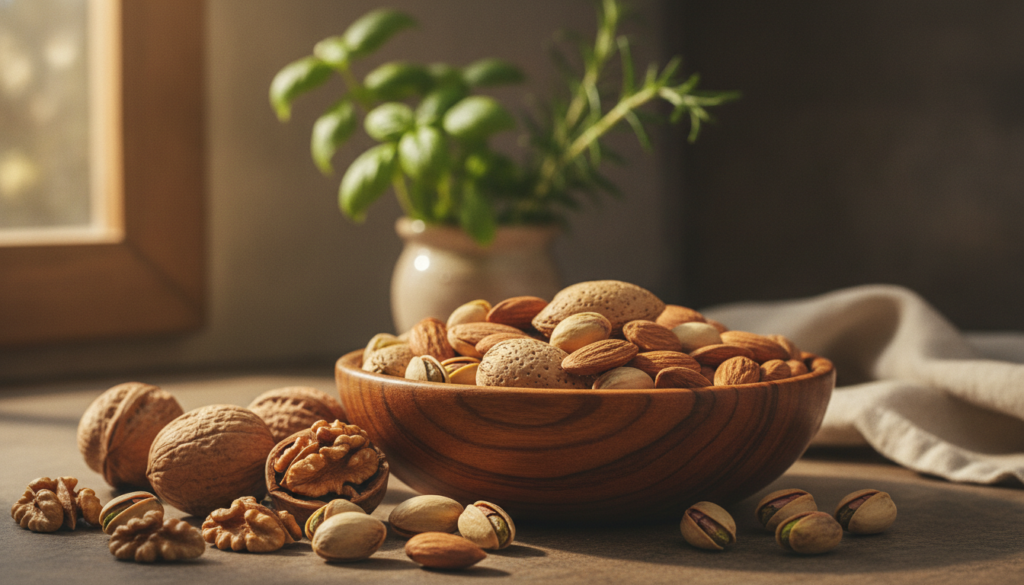
Choosing the right nuts is key to keeping your heart healthy. Not all nuts are created equal when it comes to heart health. Knowing which cholesterol-friendly nuts to pick can make a big difference in your diet.
Why raw or unsalted nuts are usually the best choice
Raw or unsalted nuts are top picks for heart health. They are in their natural state, without additives that can harm their benefits. Choosing raw nuts means you get healthy fats without extra ingredients.
How added sodium, sugar, and saturated fats change a nut snack
Many nut snacks have ingredients that aren’t good for your heart. Too much sodium can raise blood pressure. Added sugars and saturated fats make snacks higher in calories. Knowing this can help you make better choices.
| Nut Type | Processing Level | Heart Health Impact |
|---|---|---|
| Raw/Unsalted | Minimal | High |
| Dry Roasted | Moderate | Moderate |
| Honey/Chocolate | High | Low |
Reading labels on roasted, flavored, and packaged nuts
Always check the ingredient list before buying. Look for nuts that are just nuts. Avoid those with hydrogenated oils or too much sugar. These cholesterol-friendly nuts might not be as good for your heart.
Recognizing honey-roasted, chocolate-coated, and oil-fried varieties
Nuts like honey-roasted or chocolate-coated are more like desserts. Oil-fried nuts have unhealthy fats. Treat these as treats, not daily snacks.
Preventing cross-contact concerns if you have a nut allergy
If you’re allergic to nuts, reading labels is crucial. Watch for “may contain” warnings. Always follow your doctor’s advice to avoid cross-contact risks.
Building Nuts Into a Cholesterol-Lowering Diet
Swapping processed snacks for nuts can lower your cholesterol. It’s not just about adding nuts to your pantry. You need to change your daily eating habits.
Replacing butter, chips, and processed snacks with nuts
Many common snacks are full of saturated fats that harm your heart. Switching butter for almond butter or chips for walnuts can greatly improve your heart health.
Small substitutions lead to big results over time. Instead of processed crackers, choose top cholesterol-lowering nuts for a quick snack.
Combining nuts with other foods that help lower cholesterol
To get the most from nuts and seeds to reduce LDL levels, mix them with heart-healthy foods. A balanced diet works better together and supports your heart.
- Add chopped walnuts to your morning oatmeal with fresh berries.
- Toss almonds into a salad filled with leafy greens and beans.
- Use crushed pistachios as a crunchy topping for roasted vegetables.
Using nuts alongside exercise and prescribed cholesterol treatment
Diet changes work best with regular exercise. Exercise helps your body process fats better. Your medication manages your cholesterol levels.
“A heart-healthy lifestyle is a symphony of choices, where nutrition, movement, and medical guidance work in harmony to protect your longevity.”
Managing calories while pursuing LDL cholesterol reduction
Nuts are healthy but high in calories. Balance your intake to avoid too many calories while improving heart health.
Portioning nuts into individual containers
Don’t eat from the bag to avoid overeating. Use small containers for your daily nut serving to stay within the 1.5-ounce limit.
Choosing nut options that fit diabetes, hypertension, or kidney-related needs
If you have health conditions, your nut choices might need to change. Here’s a guide to help you make the right choices:
| Condition | Recommendation | Focus |
|---|---|---|
| Diabetes | Raw, unsalted nuts | Blood sugar stability |
| Hypertension | Salt-free varieties | Sodium reduction |
| Kidney Health | Portion-controlled | Potassium/Phosphorus |
When to discuss high LDL cholesterol with a health professional
If your cholesterol stays high despite diet and exercise, see your doctor. They can check if you need more tests or changes to your treatment.
Always tell your doctor about your diet. They can give advice that fits your health history and goals.
Conclusion
Small changes in what you eat can make a big difference in your health. Adding walnuts, almonds, pistachios, and Brazil nuts to your diet is a simple way to help your heart. These nuts are packed with nutrients.
Studies show these nuts can lower bad cholesterol by 3% to 10%. Eating 1 to 2 servings a day could bring these benefits. Choose raw or unsalted nuts to avoid extra salt and additives.
Swap unhealthy snacks for these nuts instead of adding more calories. This keeps your calorie intake steady while giving you fiber and healthy fats. Being consistent is key to lasting health gains.
Also, keep up with regular exercise to boost your health even more. If you have high cholesterol, talk to a doctor or a dietitian. Getting personalized advice can help you on your heart health journey.