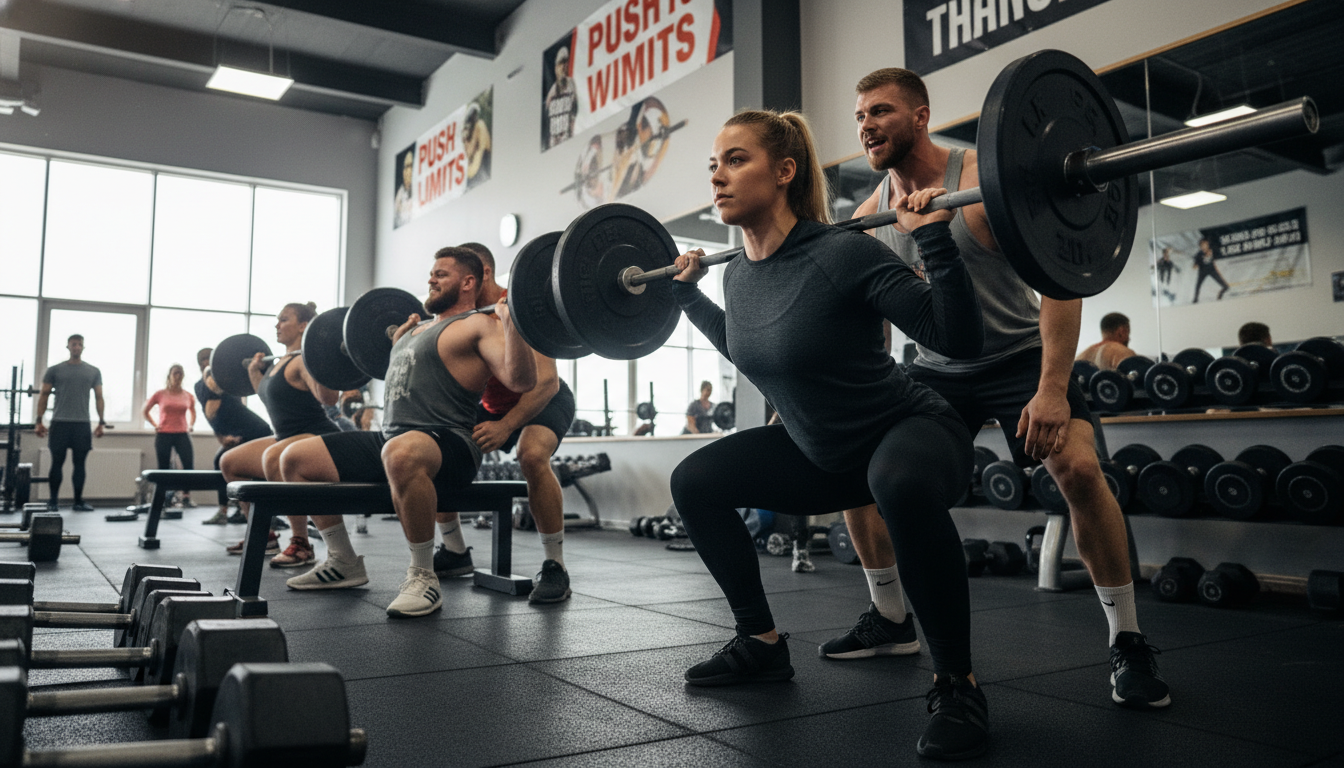
Are you ready to break your personal records and change your body? To achieve top muscle building and strength, you need a smart plan. A 4-day powerlifting routine helps you focus on key exercises.
This upper-lower powerlifting split organizes your workouts for better results. You’ll spend days on heavy lifts, giving your body time to heal and grow. It’s perfect for both newbies and seasoned lifters, offering a safe way to challenge yourself.
Adding a 5×5 powerlifting program builds a strong base and boosts your total volume. This strength-training program combines heavy lifting with hypertrophy and strength training. It helps you grow bigger and stronger. Stick to this 1RM training plan to track your progress and hit your goals quickly.
Key Takeaways
- Maximize your gains with a structured 4-day schedule.
- Focus on the big three lifts to increase your 1RM.
- Balance heavy sets with accessory work for muscle growth.
- Use a consistent powerlifting workout program to track progress.
- Prioritize recovery to ensure long-term strength development.
Understanding the Mechanics of the 4-Day Powerlifting Routine: Upper-Lower Powerlifting Split Powerlifting Workout
The 4-day upper/lower powerlifting training split is great for athletes at any level. It divides your week into two upper-body and two lower-body sessions. This way, every muscle group gets enough work and rest.
This powerlifting split routine is perfect for those who want to make the most of their gym time. It helps avoid overtraining.
This routine is often recommended for beginners in powerlifting. It prevents burnout from too much training. By alternating upper- and lower-body days, you let one set of muscles rest while the other works hard.
This cycle helps you make steady progress and keep your workouts intense. It’s key to a strong strength training routine.
Why the Upper/Lower Split Works for Powerlifting
The main benefit of this powerlifting workout plan is its balance. It avoids the feeling of being drained from full-body routines. You can focus on improving your technique in each powerlifting workout.
Also, it gives your central nervous system enough time to recover from heavy workouts. Training each movement twice a week helps you learn and get stronger faster. It’s a solid start for beginners.
Balancing Compound Lifts with Accessory Volume
Good powerlifting split training goes beyond just big lifts. You need accessory exercises to strengthen weak points and support muscle building. These exercises are crucial for progress and preventing injuries.
Adding hypertrophy-focused accessories for powerlifting increases muscle size. This extra muscle helps you get stronger over time. Here’s how to organize your week for the best results.
| Session Type | Primary Focus | Goal |
|---|---|---|
| Upper Body A | Bench Press & Chest | Strength & Hypertrophy |
| Lower Body A | Squat & Quads | Strength & Stability |
| Upper Body B | Overhead Press & Back | Strength & Posture |
| Lower Body B | Deadlift & Posterior Chain | Strength & Power |
Setting Your Strength Goals and Establishing a Baseline
Setting a baseline is key to a successful powerlifting program. Before starting a 4-day powerlifting routine, know your current strength level. This helps create a personalized plan that grows with you.
Determining Your Current One-Rep Max
To make a good 1RM training plan, you need to know your 1RM. This is the heaviest weight you can lift once with perfect form. Beginners often start with a calculated 1RM for safety, based on 3-to-5 rep sets.
“Strength does not come from winning. Your struggles develop your strengths. When you go through hardships and decide not to surrender, that is strength.”
Keeping track of your lifts is crucial for your powerlifting training program. Logging your lifts helps adjust the workout’s intensity. This keeps your strength-training workout challenging while avoiding burnout.
Identifying Your Primary Strength Weaknesses
Every lifter has areas they struggle with. It might be the squat’s bottom or the bench press’s lockout. Finding these weaknesses is key to your powerlifting program. A good strength-training plan uses specific exercises to address these issues.
The table below lists common technical issues and how to fix them in a typical power program:
| Lift | Common Weakness | Correction Strategy |
|---|---|---|
| Squat | Forward Lean | Pause Squats |
| Bench Press | Weak Lockout | Board Presses |
| Deadlift | Slow Off Floor | Deficit Deadlifts |
| General | Core Instability | Plank Variations |
By focusing on these areas, you improve your powerlifting strength goals. Consistent strength training needs patience and a commitment to fix your weaknesses. Once you know these areas, you’re ready for a structured powerlifting training plan that will help you grow.
Structuring Your Weekly Training Schedule for Optimal Recovery
Recovery is key to a lasting powerlifting training regimen. When you challenge your body, it needs time to heal and recharge. A smart powerlifting schedule keeps you on track without overdoing it.
The Importance of Rest Days Between Sessions
The upper-lower powerlifting split is a top choice for many. It splits your workouts into upper and lower body days. This lets muscles recover while you work on others.
Rest days are crucial for growth. They’re not just for chilling out; they’re when your body gets stronger. A good powerlifting training plan helps you avoid overtraining.
Managing Central Nervous System Fatigue
Compound exercises really tax your nervous system. Ignoring fatigue can stall your progress. Keeping an eye on recovery is key to a successful powerlifting training schedule.
To handle CNS fatigue, adjust your workout intensity. If you’re feeling slow or your lifts are off, it’s time to tweak your powerlifting regimen. Planning smart lets you perform at your best and recover fully.
| Day | Focus | Intensity Level |
|---|---|---|
| Monday | Upper Body Power | High |
| Tuesday | Lower Body Power | High |
| Wednesday | Rest / Recovery | Low |
| Thursday | Upper Body Hypertrophy | Moderate |
| Friday | Lower Body Hypertrophy | Moderate |
| Saturday | Active Recovery | Low |
| Sunday | Full Rest | None |
Mastering the Big Three: Squat, Bench Press, and Deadlift Technique
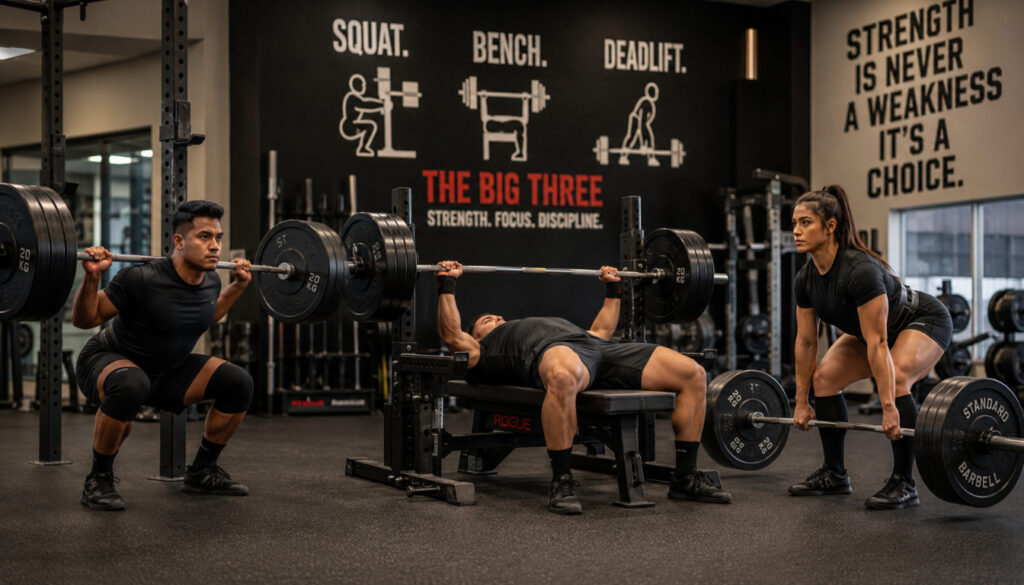
To excel in powerlifting, treat the big three lifts as a technical craft. Improving your form is key to long-term progress and injury prevention. Focus on these core powerlifting exercises to build a strong foundation for your squat, bench, and deadlift routine.
Using proper powerlifting techniques lets you lift more weight efficiently. These powerlifting tips are useful for both beginners and experienced lifters. They help optimize your movement for maximum output.
Squat Mechanics for Maximum Power
The squat is a full-body movement that needs internal pressure. Start by bracing your core as if you’re about to take a punch. This stabilizes your spine under the load. Keep your chest up and balance your weight on your mid-foot throughout the descent.
“Strength is the product of tension, and tension is the product of perfect technique.”
Bench Press Setup and Bar Path Efficiency
A successful bench press workout starts before the bar leaves the rack. Retract your scapulae to create a stable base on the bench. Maintain a slight arch in your upper back to reduce bar travel and protect your shoulders.
Don’t forget to include an overhead press workout in your training. It builds shoulder stability and tricep strength, making your bench press stronger. Use the table below to compare common technical cues for your upper body lifts:
| Movement | Primary Cue | Goal |
|---|---|---|
| Bench Press | Retract Scapulae | Stability |
| Overhead Press | Lockout Elbows | Shoulder Power |
| Squat | Brace Core | Spinal Safety |
Deadlift Form and Safety Protocols
Your deadlift training plan should focus on keeping your spine neutral. Approach the bar with your shins close to the steel. Pull the slack out of the bar before lifting to avoid jerking motions.
Always drive through your heels and engage your lats. This keeps the bar path close to your body, maximizing leverage. Consistent practice of these protocols will lead to steady, sustainable gains in your total.
Implementing 5×5 Strength Work and Progressive Overload
The 5×5 powerlifting program is a top choice for athletes wanting to grow. It balances volume and intensity to support muscle growth and improve performance. This strength training plan pushes you hard but lets you recover well.
The Logic Behind the 5×5 Protocol
This weightlifting routine focuses on five sets of five reps for key lifts. It’s enough to build muscle but not so much as to lose strength. It’s a mix of bodybuilding and powerlifting.
Doing this program, you get used to lifting heavy often. It improves your technique and helps avoid injuries. This keeps your progress steady and safe.
How to Incrementally Increase Weight Each Week
To keep getting better, add a bit more weight each week. Do this if you finish all sets and reps correctly. Keeping track of your progress is key to avoiding a plateau.
Start with a weight that’s hard but doable for all five sets. If you succeed, add 2.5 to 5 pounds next time. This slow increase is the key to success in a strength program.
| Week | Intensity Goal | Progression Strategy | Focus Area |
|---|---|---|---|
| Week 1 | Baseline Load | Establish Form | Technique |
| Week 2 | Baseline + 5 lbs | Maintain Speed | Bar Path |
| Week 3 | Baseline + 10 lbs | Controlled Tempo | Consistency |
| Week 4 | Baseline + 15 lbs | Peak Effort | Strength |
Being consistent is crucial for powerlifting progression. If you fail a rep, keep the same weight for the next session. This structured powerlifting workout program builds lasting strength for your goals.
Selecting Effective Accessory Exercises for Hypertrophy and Weak Point Correction
To reach your powerlifting strength goals, you must look beyond the big three. You need to address your specific physical limitations. Adding powerlifting accessory exercises to your routine is key to long-term progress. This balances hypertrophy and strength training, making your body strong and able to handle more weight.
Targeting Muscle Groups for Bench Press Gains
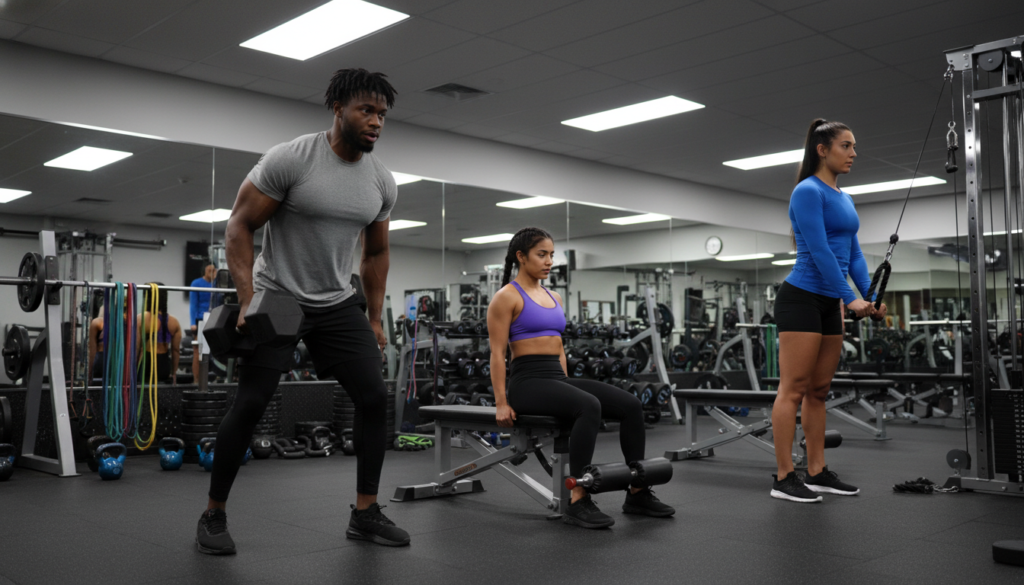
A good bench press workout needs more than just pressing the bar. You should work on your triceps, shoulders, and upper back. This improves your lockout and stability. An overhead press workout is great for building shoulder health and stability, which helps your bench press.
“Strength is never a weakness, and weakness is never a strength.”
Building Posterior Chain Strength for Squats and Deadlifts
Your deadlift training plan needs a strong posterior chain. Exercises like Romanian deadlifts and glute-ham raises are crucial for hypertrophy in powerlifting. They target the hamstrings and lower back. This makes your body more resilient to heavy squatting and pulling.
Core Training for Stability Under Heavy Loads
A strong core is the foundation for all heavy lifts. It prevents energy leaks during your sets. Dedicated core work keeps your spine neutral and protected under maximum tension. Regular training here leads to significant powerlifting gains by improving force transfer from your legs to the barbell.
Movements like weighted planks and hanging leg raises give you the stability needed for elite performance. Remember, consistency in your accessory work is as important as the intensity of your main lifts. By focusing on these movements, you build a balanced, injury-resistant body ready for the platform.
Utilizing RPE and Rest Periods to Manage Training Intensity
Controlling your intensity and rest times can change your 5×5 powerlifting program. Many athletes fail because they push too hard every time. A structured approach to your workouts keeps your powerlifting regimen effective and sustainable.
Understanding the Rate of Perceived Exertion Scale
The Rate of Perceived Exertion (RPE) scale rates how hard a set feels, from 1 to 10. Unlike strict 1RM plans, RPE lets you adjust weights based on how you feel. This flexibility is key because your strength can change for many reasons.
Using an RPE training guide helps you finish sets with a little left in the tank. This avoids overexertion and keeps your strength up. It lets you do high-quality powerlifting exercises all week.
Optimizing Rest Intervals for Strength Gains
Rest times are as crucial as the weight you lift. Rushing sets can hurt your ability to lift powerfully. For big lifts, rest for three to five minutes to get the most out of your powerlifting gains.
These powerlifting tips say to rest based on your heart rate and breathing. Wait until you’re fully recovered before lifting again. This ensures each rep is performed with proper form and effort.
Tracking Your Progress and Adjusting Your Training Plan
You can’t improve what you don’t measure, especially with a powerlifting training plan. A good strength-training program requires you to look back to plan ahead. By sticking to a powerlifting workout program, each session has a purpose in your growth.
Keeping a Detailed Training Log
Tracking your powerlifting progress is more than just remembering numbers. You should write down every set, rep, and weight for main lifts and powerlifting accessory exercises. This helps you see trends in your strength and find where to tweak your powerlifting program.
Keep your lifting schedule in a notebook or app for accuracy. Tracking your powerlifting schedule helps you make informed decisions about your training. This detail is what sets champions apart from casual lifters.
When to Deload and Reset Your Training Cycles
Even the most dedicated athlete needs to manage fatigue to keep improving. A deload is a planned break to let your body recover. Knowing when to take a break is key to a long-lasting powerlifting training program.
If your powerlifting training schedule feels too hard, even with enough sleep, it’s time for a reset. Taking a deload week every four to eight weeks helps avoid plateaus. See it as an investment in your future performance, not just a break from your weightlifting routine.
| Training Phase | Intensity Level | Primary Goal |
|---|---|---|
| Accumulation | Moderate to High | Build Work Capacity |
| Intensification | High | Increase Strength |
| Deload | Low | System Recovery |
| Peak | Maximum | Test One-Rep Max |
Nutrition and Recovery Strategies for Powerlifting Performance
To do well in a powerlifting regimen, treat your kitchen and bed as key training spots. Your time off the bench is important, but most muscle growth happens when you’re not lifting. A good squat bench deadlift routine needs strong recovery plans to work.
Fueling for Heavy Lifting Sessions
Good food gives you the nutrients you need for heavy lifting and muscle building. Eat a mix of carbs, proteins, and fats to help with hypertrophy and strength training. Carbs are your main fuel, keeping your glycogen levels up for tough workouts.
Protein is key to your deadlift training plan because it helps muscles grow. Eat protein often to stay in a building mode. Drinking enough water is also crucial, as dehydration can hurt your strength.
The Role of Sleep and Active Recovery in Strength Gains
Sleep is the best recovery tool for athletes. It’s when your body makes growth hormones for muscle building and strength. Without enough sleep, your powerlifting training will suffer, no matter your strength training plan.
Active recovery means doing light exercises to keep blood flowing without stressing your body too much. Light walks or mobility exercises on rest days help keep your joints healthy. Use the table below to improve your recovery for your next strength training workout.
| Recovery Method | Primary Benefit | Frequency |
|---|---|---|
| Quality Sleep | Hormonal Regulation | Daily (7-9 hours) |
| Protein Timing | Muscle Repair | Every 3-4 hours |
| Active Mobility | Joint Health | On Rest Days |
| Hydration | Performance | Throughout the day |
Conclusion
Building elite physical power needs a clear plan and dedication. This guide helps beginners create a winning powerlifting routine. It shows how to see real results in the gym.
You now have the tools to make a balanced powerlifting split routine. This routine focuses on growth. By following a consistent schedule, you make your long-term strength goals real. Every bench press and overhead press workout builds your total strength.
Success in powerlifting depends on adapting your training to your recovery. Use these tips to watch your fatigue and adjust your intensity. A good routine balances heavy lifting with rest.
Your commitment to a structured powerlifting split training sets you apart. Keep track of your lifts and improve your form for steady progress. You have the knowledge to excel in your powerlifting journey starting today.