You’ve probably heard that exercise can be a powerful tool for stress relief. The Mayo Clinic says it can release feel-good endorphins. These help distract you from worries and make you feel better.
Gentle exercises like walking or gentle stretching affect your nervous system. They promote relaxation and mindfulness. Unlike intense workouts, these activities calm your mind and body. They offer a much-needed break from stress.
Adding gentle exercise to your daily routine can help you feel better. It can improve your overall well-being.
Key Takeaways
- Exercise can act as a stress reliever by boosting feel-good endorphins.
- Gentle forms of exercise promote relaxation and mindfulness.
- Incorporating low-impact activities into your daily routine can improve overall well-being.
- Gentle exercise has a direct impact on the nervous system.
- Physical activity can distract from daily worries and improve mood.
The Science Behind Movement and Stress
When you move your body, you’re doing more than just getting fit. You’re also affecting your nervous system and stress levels. Gentle exercise, in particular, can have a positive effect on both.
How Physical Activity Affects Your Nervous System
Physical activity can calm your nervous system. It activates the parasympathetic nervous system, which helps you relax and lowers stress. Regular exercise also makes your nervous system stronger against stress.
The Stress Hormone Connection
Exercise changes your stress hormone levels, primarily cortisol. Knowing this is key to managing stress.
Cortisol Regulation Through Movement
Regular exercise helps control cortisol levels. Too much cortisol can harm your body, causing weight gain, insomnia, and weaker bones. Exercise can help prevent these problems.
Endorphin Release and Mood Enhancement
Exercise makes your body release endorphins, or “feel-good” hormones. These natural chemicals can improve your mood and lower stress.
| Exercise Type | Effect on Cortisol | Endorphin Release |
|---|---|---|
| Gentle Yoga | Reduces cortisol levels | Moderate endorphin release |
| Brisk Walking | Regulates cortisol | High endorphin release |
| Stretching Exercises | Lowers cortisol | Low to moderate endorphin release |
Understanding how different exercises impact stress and your nervous system helps you choose the best activities. This way, you can maximize stress relief through exercise.
Why Gentle Exercise for Stress Works Better Than High-Intensity Workouts
Gentle exercise is now seen as a better stress relief option than high-intensity workouts. High-intensity activities can sometimes make stress worse, especially for those already feeling anxious.
Gentle exercises like gentle yoga and mindful movement for mental health are more accessible. They calm the mind and soothe the body, offering a break from daily stress.
The Paradox of Intense Exercise and Stress
High-intensity workouts can help some people by releasing endorphins. But for others, it can add more stress by putting too much strain on the body.
Finding the Sweet Spot for Stress Relief
Finding the right balance in exercise is key to stress relief. Yoga for relaxation is excellent because it mixes physical activity with mindfulness. This helps you relax and lowers stress.
| Exercise Type | Stress Relief Benefits | Potential Drawbacks |
|---|---|---|
| High-Intensity Exercise | Releases endorphins, improves mood | Can increase stress, overexertion |
| Gentle Exercise (e.g., Gentle Yoga) | Promotes relaxation, reduces anxiety | May not be as engaging for some |
When to Choose Gentle Movement Over Intense Training
If you’re feeling really stressed or anxious, start with gentle exercise. It’s essential to pick an exercise that feels good and is easy to maintain. Avoid intense workouts that might make your stress worse.
Mindful Movement: The Connection Between Body and Mind
Mindful movement helps you connect your body and mind better. It combines physical activity with a cautious approach. This way, you get more benefits for your body and mind.
Present Moment Awareness During Exercise
When you exercise mindfully, you focus on the present moment. You let go of distractions and stress. This present moment awareness enables you to feel your body, breathe, and be fully aware of your surroundings.
Breaking the Cycle of Rumination
Rumination can make stress worse and hurt your mental health. Mindful movement breaks the cycle of rumination. It keeps your focus on now. As you move, you learn to notice without judgment and stop negative thoughts.
How Movement Anchors You to the Present
Movement helps you stay in the present. Your body’s feelings, breath, and movement pull you back. This anchoring effect is excellent for lowering stress and boosting mental clarity.
Adding mindful movement to your life can improve the connection between your body and mind. This leads to better overall well-being.
Walking Meditation: Combining Movement with Mindfulness
Walking meditation is a mix of moving your body and focusing your mind. It’s a great way to reduce stress through exercise. You pay attention to your walk, the ground beneath your feet, and your breath. This creates a calm, meditative state.
How to Practice Walking Meditation
To begin, set your intention to be mindful during your walk.
Setting Your Intention
Start by deciding to stay in the present moment. Let go of distractions.
Focusing on Your Breath and Steps
Notice your breath and the feeling of each step. This mindfulness leads to calm and less stress.
Incorporating Walking Meditation into Your Daily Routine
You can do walking meditation anywhere, making it a flexible exercise to reduce stress.
Urban Walking Meditation Tips
In cities, focus on your step rhythm and the environment. Could you not get lost in it?
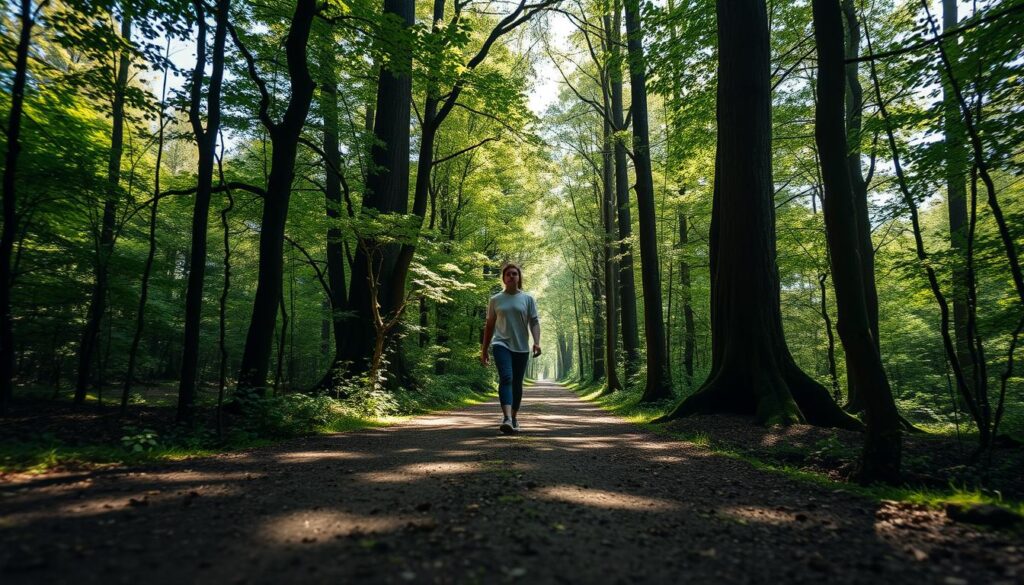
Nature makes it even better. Notice the sounds, sights, and smells around you. It deepens your mindfulness.
Adding mobility exercises like walking meditation to your day can really help with stress relief.
Gentle Yoga Practices for Immediate Stress Relief
Gentle yoga is a great way to reduce stress quickly. It calms your mind and relaxes your body. By adding certain poses to your day, you can feel better and be more relaxed.
Restorative Yoga Poses
Restorative yoga uses props to help you relax in different poses. It’s perfect for easing stress. Here are two poses that work well:
Child’s Pose (Balasana)
This pose is a gentle stretch that calms your mind. To do it, kneel on the mat, then sit back onto your heels. Stretch your arms out in front and lower your forehead to the ground. Take slow, deep breaths, feeling the relaxation spread through your body.
Legs-Up-The-Wall Pose (Viparita Karani)
This pose is excellent for calming your nervous system. Sit with your side against a wall, then swing your legs up onto the wall as you lie back. Stay here for 5-10 minutes, breathing deeply, and allow your body to release any stored tension.
Gentle Flow Sequences for Stress Reduction
Gentle flow sequences are also suitable for stress relief. They help calm your mind and relax your muscles.
5-Minute Morning Stress Relief Sequence
Start your day with a simple sequence. Begin with deep breathing, then do some gentle stretches like neck rolls and shoulder opens. Add flowing movements, like cat-cow stretches, to warm up your spine.
Bedtime Relaxation Sequence
Wind down before bed with a calming sequence. Start with leg raises to release lower back tension. Then, do some gentle twists to release spinal tension. Finish with deep, restorative poses like Reclined Pigeon or Reclined Spinal Twist.
Exercise for Stress: Creating Your Personal Stress-Relief Movement Plan
Learning to make a stress-relief movement plan is key to your health. A personalized exercise plan can help you deal with stress better. First, you need to check your stress levels and see how different exercises can help.
Assessing Your Current Stress Levels
Start by looking at your stress levels through self-reflection or using stress tools. Note the physical and emotional signs you see. This is crucial for making a plan that fits your needs.
Matching Movements to Your Stress Symptoms
Various exercises can tackle different stress signs. For muscle tension, mobility exercises can help. For anxiety, gentle yoga practices or walking meditation might be better. Knowing which exercises match your symptoms is important.
Building a Sustainable Practice
Building a lasting exercise routine means setting achievable goals and sticking to them. It’s about finding a routine that you can keep up with for a long time.
Daily, Weekly, and Monthly Movement Goals
Having daily, weekly, and monthly movement goals helps you stay on track. For instance, you might aim for:
- 10-15 minutes of deep breathing exercises daily
- 30 minutes of brisk walking or yoga three times a week
- A 60-minute restorative yoga session once a week
Adapting Your Plan During High-Stress Periods
Being flexible with your plan is crucial. When stress is high, you might need to adapt your exercise routine to include more stress-relief activities. Listening to your body and adjusting your plan can help manage stress better.
By following these steps and creating a personalized stress-relief movement plan, you can better handle stress and improve your health.
Active Recovery: The Missing Link in Stress Management
Active recovery is key to managing stress, yet it’s often ignored. Many focus on hard workouts or relaxation methods. But active recovery offers a special way to reduce stress and boost well-being.
What Is Active Recovery and Why Does It Matter
Active recovery means doing low-intensity activities after exercise or on rest days. It helps your body and mind recover. Unlike complete rest, active recovery keeps you engaged, easing the shift from activity to rest.
Benefits of Active Recovery:
- Enhanced circulation and reduced muscle soreness
- Improved mental clarity and reduced stress levels
- Promotes a balanced lifestyle by incorporating gentle movement
Active Recovery Techniques for Mental Restoration
There are many active recovery techniques, each with its own mental benefits.
Gentle Swimming and Water Movement
Gentle swimming or water exercises are very soothing. They offer a low-impact workout that calms the mind.
Tai Chi and Qigong Practices
Tai Chi and Qigong are ancient practices. They combine slow movements with deep breathing to relax and balance the mind.
Tai Chi focuses on slow, controlled movements. Qigong aims to build life energy through movement and breath. Both are great for stress relief and mental healing.
| Technique | Primary Benefits | Intensity Level |
|---|---|---|
| Gentle Swimming | Relaxation, Full-body workout | Low |
| Tai Chi | Balance, Flexibility, Stress relief | Low to Moderate |
| Qigong | Energy cultivation, Relaxation | Low |
Balancing Active Recovery with Rest
It’s important to balance active recovery with rest. Active recovery helps with stress and physical recovery. But your body and mind also need complete rest.
By mixing active recovery with enough rest, you can better manage stress. This leads to better mental and physical health.
Mobility Exercises for Releasing Tension and Stress
Mobility exercises are a great way to fight stress. They help release physical tension and make you feel relaxed. When we’re stressed, our bodies get tight, causing discomfort and stiffness. Adding mobility exercises to your day can help ease this tension and boost your well-being.
Understanding the Stress-Tension Connection
Stress and physical tension are closely linked. Stress makes our muscles tense, leading to pain and stiffness, especially in the neck, shoulders, and lower back. Mobility exercises counteract this by promoting relaxation and reducing muscle tension.
Joint Mobility Routines for Whole-Body Relief
Joint mobility routines can significantly reduce stress and tension. These routines involve gentle movements that keep or improve joint mobility.
Neck and Shoulder Tension Releasers
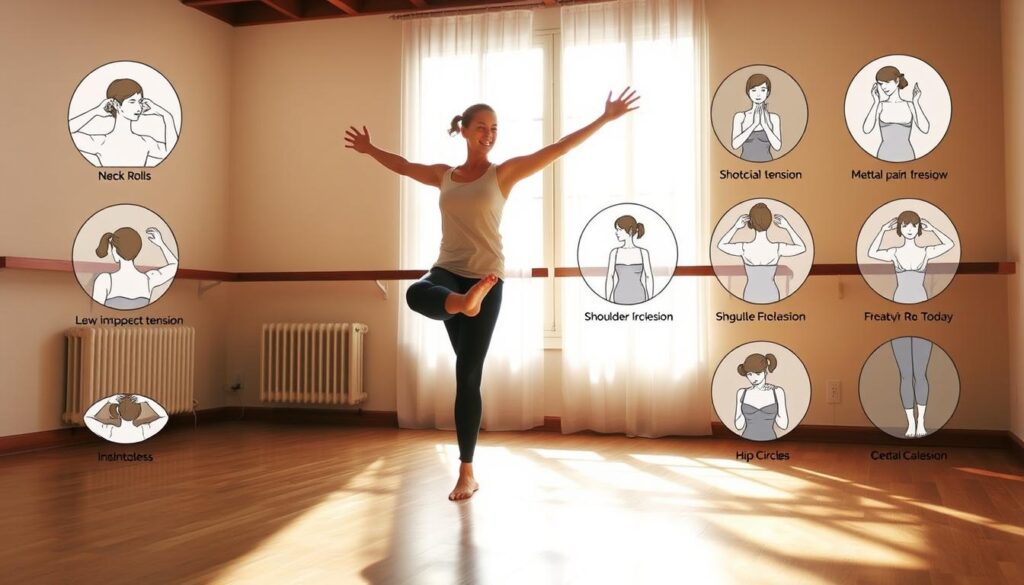
The neck and shoulders often hold tension. Simple moves like slow neck rotations and shoulder rolls can ease this. Do these exercises slowly and gently for the best results.
Hip and Lower Back Mobility Exercises
Hips and lower backs can also get tight, especially if you sit a lot. Gentle hip circles and knee lifts can help loosen these areas. Pay attention to your breathing to make these exercises even more relaxing.
| Exercise | Area of Relief | Benefits |
|---|---|---|
| Neck Rotations | Neck and Shoulders | Reduces tension, improves flexibility |
| Shoulder Rolls | Shoulders and Upper Back | Eases stress, promotes relaxation |
| Hip Circles | Hips and Lower Back | Relieves tension, enhances mobility |
Incorporating Mobility Work into Your Day
Adding mobility exercises to your daily routine is easy and beneficial. Begin with short sessions, like a few minutes a day, and increase as you get more comfortable.
Regular mobility exercises can help manage stress and improve your life quality.
Breathwork and Movement: Amplifying the Benefits
Combining breathwork with movement can significantly improve your stress relief and overall well-being. When you match your breath with physical activity, you unlock a powerful combined effect. This combination can make exercise even more beneficial for your mental health.
Coordinating Breath with Movement
To begin, aim to sync your breath with your movements. For example, inhale for a set number of steps or movements and exhale for the same amount. This can calm your mind and boost the relaxing effects of exercise.
Simple Breathing Techniques to Incorporate
There are easy breathing techniques you can add to your exercise routine:
- Box Breathing: Inhale for four counts, hold for 4, exhale for 4, and hold again for 4.
- Diaphragmatic Breathing: Expand your belly as you inhale, showing your diaphragm is moving down.
Box Breathing During Movement
Try box breathing during your next workout. For example, inhale for four counts in a yoga pose, hold for four counts, exhale for four counts as you release the pose, and hold again for four counts before starting again.
Diaphragmatic Breathing for Deeper Relaxation
Diaphragmatic breathing works well during low-intensity activities like walking or restorative yoga. Use deep, belly-expanding breaths to relax more deeply.
Creating Breath-Centered Movement Practices
To make a breath-centered practice, start with simple exercises like walking or gentle yoga. Use box breathing or diaphragmatic breathing to guide your movements. As you practice, you’ll notice a greater sense of calm and well-being.
Conclusion: Embracing Movement as Your Stress Management Tool
Adding gentle exercise and mindful movement to your day can help manage stress. It’s not just about hard workouts. It’s about finding the right activity for you.
Gentle exercise is a strong tool for stress relief. Practices like walking meditation and gentle yoga can bring calm. Combining these with breathwork boosts the stress relief benefits and lifts your mood.
Active recovery is key to managing stress. It helps your body and mind heal from stress. Remember, movement and mood are closely connected.
Start gentle exercise and mindful movement to improve your health and balance. Explore different activities to find what suits you best. With regular practice, you’ll build a lasting way to manage stress and enhance your life quality.