Structured breathwork is the deliberate control of your breathing pattern, and box breathing is a practical place to start if you want a simple, paced exercise. When stress makes your breathing feel hurried, a steady rhythm can give you something concrete to follow.
Results depend on the technique and how gently you practice. A paced exercise may support stress management, anxiety reduction, and emotional regulation, but it cannot promise panic attack relief for everyone.
Key Takeaways
- Box breathing offers four simple phases to follow.
- Comfort matters more than deep or forceful breaths.
- Different techniques may suit focus, mood, or rest.
- Brief practice may affect mood and breathing measures.
- A breathing exercise is not a medical treatment.
Begin with a comfortable breath rather than trying to take the deepest breath you can.
What Is Structured Breathwork and How Can It Affect Stress?
Your breathing can change alongside stress, and deliberately slowing its rhythm gives you one way to influence that response. The autonomic nervous system is the network that automatically regulates functions such as breathing and heart rate, including the sympathetic and parasympathetic branches.
The sympathetic branch supports the body’s fight-or-flight response. The parasympathetic branch supports rest-and-digest functions. Breathing can influence these systems, but it does not switch them on command.
When you feel tense, your breathing may become quick or shallow. Slower breathing can affect autonomic activity, and a longer exhale may feel calming for some people.
One link between breathing and heart rate is respiratory sinus arrhythmia. This is the normal variation in heart rate during inhalation and exhalation. Your heart rate may rise slightly as you breathe in and fall as you breathe out.
A calm feeling can guide your practice, but it cannot prove that your nervous system has been medically reset.
The vagus nerve helps carry signals between the brain and organs, including the heart. Some breathing patterns may affect activity along this pathway, but not every exercise directly stimulates the vagus nerve.
Slow, paced breathing is one form of nervous system regulation, not a guaranteed cure for stress. Your response can depend on the pattern, your comfort, and the moment you practice.
Treat a calm sensation as a useful cue, not proof that your nervous system has been medically reset.
What Benefits Does Research Support?
The strongest practical signal is that regular, brief breathing practice can improve some self-reported mood measures, with cyclic sighing standing out in one month-long trial. These findings point to possible short-term benefits, not a proven treatment for an anxiety disorder.
A remote randomized trial enrolled 111 healthy volunteers. They practiced one of three breathing exercises or mindfulness meditation for five minutes daily over one month.
| Comparison | Practice or condition | Measured result | Boundary |
|---|---|---|---|
| Daily practice over one month | Five-minute breathwork or mindfulness meditation | Positive affect rose 1.91 points for breathing groups and 1.22 for meditation | Healthy volunteers reported mood changes |
| Cyclic sighing versus other trial groups | Daily breathing or mindfulness practice | Greatest daily positive-mood gain among breathing groups; lower resting respiratory rate | Heart rate did not change across groups |
| 2023 review of interventions | 58 clinical studies; 72 stress or anxiety interventions evaluated | 54 interventions were found effective | Review results do not predict one person’s response |
In the trial, the mood effect of cyclic sighing grew across consecutive practice days. A randomized comparison also found greater mood improvement and respiratory-rate reduction with breathwork than with mindfulness, especially with cyclic sighing.
The comparison included cyclic sighing, box breathing, cyclic hyperventilation with retention, and mindfulness meditation. The reported differences were statistically significant, but positive mood and lower respiratory rate do not establish anxiety treatment.
A 2023 review found that many stress- or anxiety-reduction interventions helped in clinical studies. Interventions varied, so that broad finding does not promise the same outcome for everyone.
Use the findings as a reason to try a gentle practice, not as a promise that it will treat a mental-health condition.
Which Breathing Techniques Can You Try?
If you want a clear first exercise, use four equal phases and keep each breath comfortable. Box breathing is a beginner-friendly choice because its timing is easy to remember.
These breathwork techniques use different rhythms. Choose one that fits how you want to feel, then adjust the pace instead of forcing a breath.
Box Breathing for Steady Focus
Breathe in through your nose for four seconds. Pause for four seconds, then breathe out for four seconds.
Pause again for four seconds before the next breath. A 2026 trial used these four equal phases. If the holds feel uncomfortable, shorten every phase.
Cyclic Sighing for a Longer Exhale
Take a nasal inhale, then a second, deeper sip of air through your nose. Slowly exhale through your mouth.
Repeat this double inhale and long exhale for about five minutes. This pattern is also called a physiological sigh, and its slow out-breath may feel settling.
4-7-8 Breathing for a Settling Routine
Inhale for a count of four, hold for seven, then exhale for eight. Treat the counts as a gentle pattern, not a test of control.
A 2022 study used six cycles per set across three sets, with one minute of normal breathing between sets. Count at a comfortable pace. Air hunger is a reason to stop, not push through.
Choose the pattern you can follow without straining, even if that means using shorter counts.
How Do You Choose a Technique for Your Goal?
The best first technique fits your immediate goal and feels comfortable in your body. Match the rhythm to the moment, rather than assuming one exercise suits every need.
The table offers simple starting points. You can do a breathing pattern in different settings, so use comfort and ease as your guide.
| Goal | Technique | What you do | Useful setting |
|---|---|---|---|
| Steady focus | Box breathing | Follow four even phases | Before a focused task |
| Brief mood-oriented pause | Cyclic sighing | Use a double inhale and slow exhale | Between demanding activities |
| Bedtime wind-down | 4-7-8 breathing | Use a longer out-breath than in-breath | Part of a calm evening routine |
| Gentle body awareness | Diaphragmatic breathing | Let the belly rise softly | Seated or lying down |
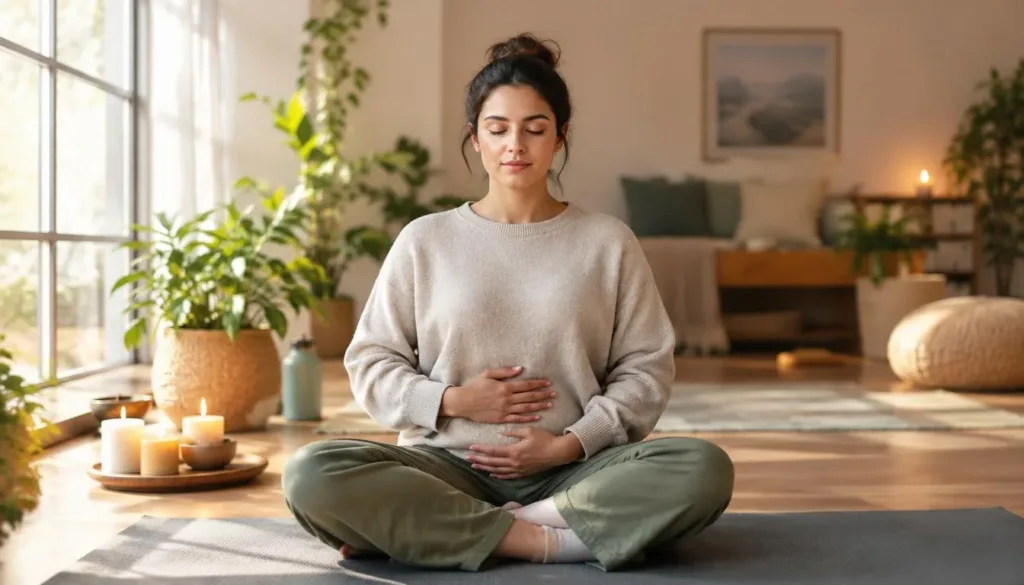
Diaphragmatic breathing uses the diaphragm, the primary breathing muscle at the base of your lungs. As it moves, your belly may rise gently. That movement does not require a huge inhale.
You can practice this breathing technique while seated or lying down. Notice the soft motion of your belly instead of trying to fill your lungs as much as possible.
Alternate nostril breathing, also called Nadī Shodhana, switches which nostril you use for each inhale and exhale. It is one practice within pranayama, a broader tradition with many breathing methods.
Sudarshan Kriya Yoga is a named practice, not a general term for every breathing exercise or a self-directed beginner routine. If breath holds make you tense, choose a pattern without a hold instead.
What Should You Know About A52 and High-Ventilation Methods?
A52 uses slow, even timing, while high-ventilation practices deliberately increase breathing intensity and may include breath holds. A proposed method or theory does not mean that its effects have been established.
These approaches differ from gentle paced respiration. Their names can sound similar to other exercises, but their timing and intensity matter.
The Proposed A52 Breath Method
The proposed A52 Breath Method uses a five-second nasal inhale and a five-second exhale through the nose or mouth. You then hold your breath for two seconds after exhaling.
Repeat that pattern for a 10-minute practice. A 2025 narrative review screened 465 articles and reviewed 30 studies in full text while developing the proposed method.
The method remains proposed and unvalidated. Its timing gives you a description of the protocol, not proof that it can treat a health condition.
Wim Hof Method and Other High-Ventilation Practices
The Wim Hof Method combines 30-40 rounds of hyperventilation with a voluntary hold at low lung volume. This high-ventilation method uses breath retention after repeated intense breathing.
A 2024 systematic review included nine papers covering eight individual trials. It found possible reductions in inflammation, while exercise-performance findings were mixed.
A 2025 semi-randomized trial enrolled 404 healthy adults in 29-day Wim Hof Method or mindfulness-meditation programs. After daily practice, participants in the Wim Hof group reported greater momentary gains in energy, mental clarity, and stress-management ability.
At first, that group reported smaller reductions in state stress than the meditation group. The difference grew across practice days, but these self-reports do not prove clinical benefit.
Sudarshan Kriya Yoga is another distinct named practice. Do not assume that a protocol’s name or proposed theory means its effects have been established.
How Do You Start a Practice at Home?
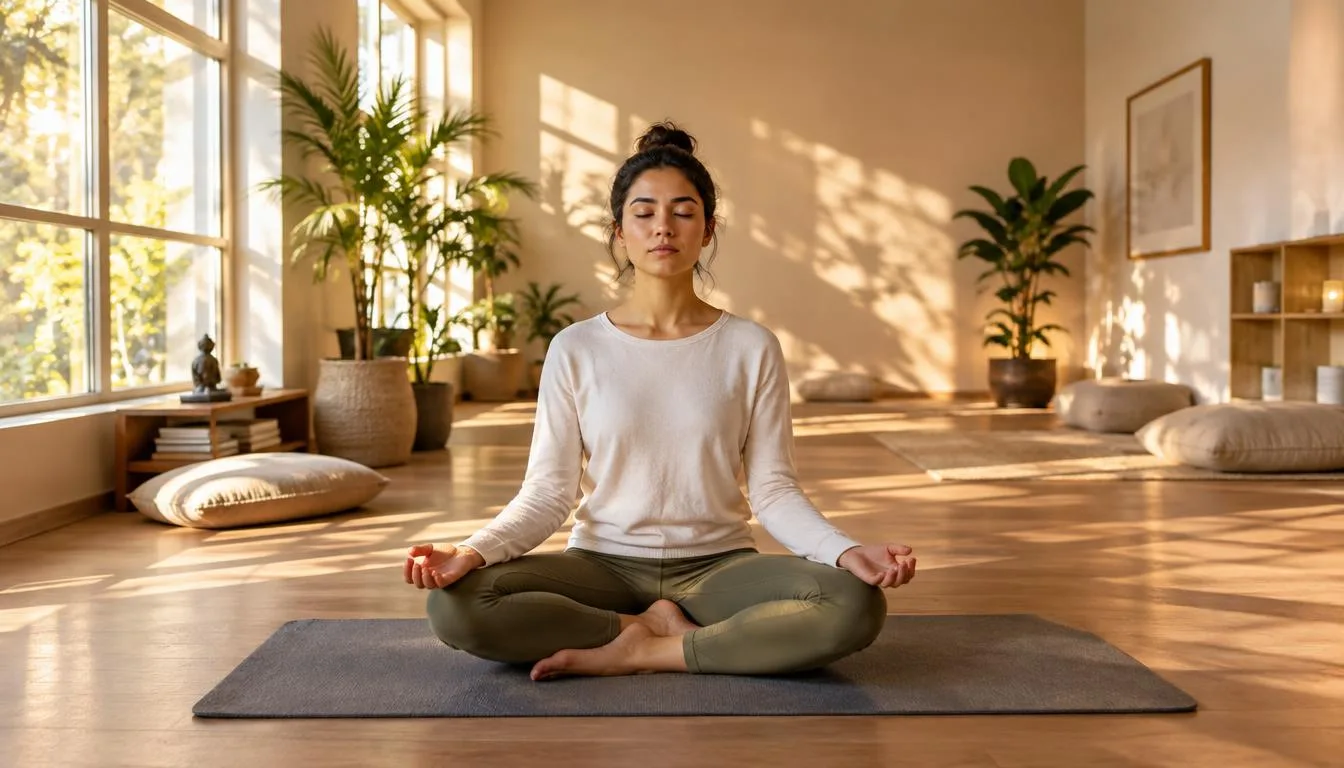
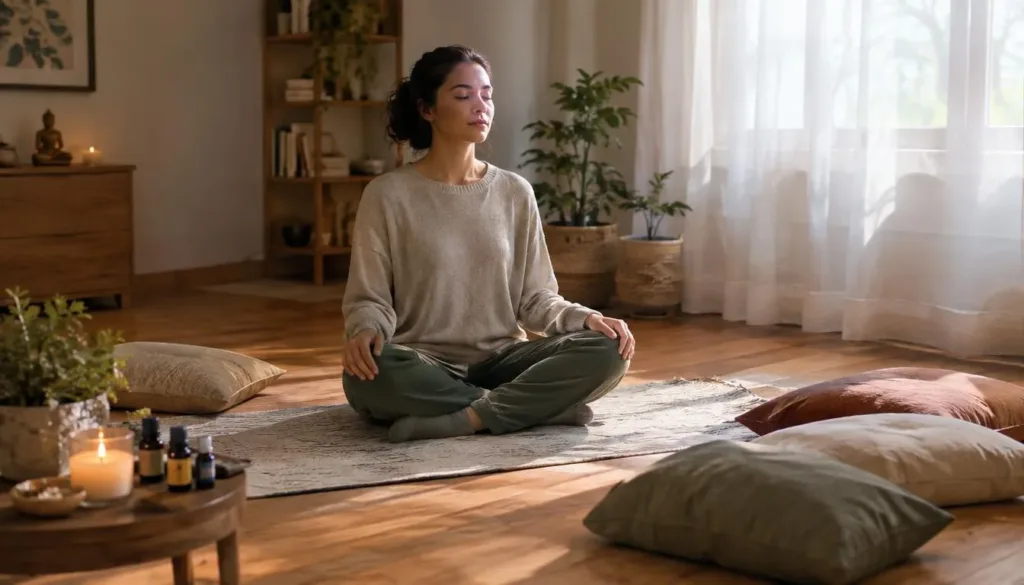
For your first session, choose a quiet spot and a gentle pattern you can follow without equipment. A comfortable seated or lying position makes it easier to focus while you learn.
Keep the first practice simple. A chosen word or phrase can act as a mental anchor when your attention wanders.
- Choose a comfortable seated or lying position.
- Select a gentle technique that fits your goal.
- Follow its rhythm without forcing your breath.
- Notice how you feel when the session ends.
Your thoughts may wander while you practice. That is normal; return your attention to a word, a short phrase, or the feeling of breathing.
A quiet place can make it easier to focus while you learn, though you don’t need special equipment. You can sit in a chair or lie down somewhere you feel at ease.
A guided recording can help you keep time, especially if counting feels distracting. Guided meditation may instead ask you to observe natural breathing without changing its pace or depth.
Those are different kinds of practice: one actively changes the breath, while the other notices it as it is. Neither requires you to clear your mind.
End by noticing whether your breath feels easier, unchanged, or less comfortable, and let that observation guide your next session.
What Changes Can You Expect in Heart Rate, Blood Pressure, and HRV?
Some breathing studies have measured immediate changes in heart rate or blood pressure, but results vary by protocol and outcome. A change in one body marker does not prove a broad health benefit.
Heart rate variability, or HRV, is the variation in time between heartbeats. It is not a direct measure of “vagal tone,” and one HRV reading cannot describe your whole health.
| Measure | Condition | Observed result | Limit |
|---|---|---|---|
| Heart rate and systolic blood pressure | 4-7-8 practice in 43 healthy adults aged 19-25 | Both fell immediately in participant groups | Study measured short-term responses |
| Stress-test response | Box breathing or prolonged-exhalation breathing | Smaller increases in heart rate, state anxiety, and salivary alpha-amylase than normal breathing | 66 participants; response followed a virtual stress test |
| HRV, cortisol, and cognitive performance | Three breathing conditions before a stress test | No statistically significant differences across conditions | No proof of cortisol reduction or higher HRV |
In a 2022 study, participants practiced 4-7-8 breathing for six cycles per set across three sets. They rested with normal breathing for one minute between sets.
High-frequency HRV power rose significantly among participants who had not been sleep-deprived. In a 2026 randomized trial, box breathing and prolonged-exhalation breathing changed some stress-test responses compared with normal breathing.
The 2026 trial assigned 66 people equally to normal breathing, prolonged-exhalation breathing, or box breathing. HRV, cortisol, and cognitive performance did not differ statistically among the three conditions.
These results do not show that every technique raises HRV or lowers cortisol. If you track a number at home, compare readings under similar conditions instead of treating one measurement as a verdict.
How Can You Build a Consistent Routine for Sleep and Focus?
A repeatable five-minute pause is easier to maintain than a complicated routine you rarely use. Start with five to 10 minutes daily, then use a steady cue to help the practice fit your day.
You might link a session to a work break or bedtime. A daily routine can take time to feel familiar, so keep the first steps manageable.
Set a Manageable Practice Rhythm
Choose a regular moment and return to it when you can. A short practice is easier to repeat than a long session that feels hard to fit in.
- Choose a regular cue, such as a break or bedtime.
- Keep each session manageable.
- Note how comfortable you feel afterward.
- Adjust the technique if it feels strained.
A 2023 review found that effective stress- and anxiety-reduction interventions avoided fast-only breathing and sessions shorter than five minutes. Many included human-guided training, multiple sessions, and long-term practice.
Match the Exercise to Your Setting
Slower, comfortable breathing can help you wind down before bed. Box breathing can give you a clear structure during a focus break.
Breathwork for sleep is not a proven cure for insomnia, and breathwork for focus does not reliably improve concentration for everyone. Use the exercise as a routine, not a guarantee.
Keep the practice tied to a real part of your day, such as closing your laptop or getting ready for bed. A cue makes it easier to remember without adding another task to your schedule.
Keep the routine only if it feels comfortable and workable in your day.
When Is Breathwork Unsafe or a Poor Fit?
A breathing exercise should feel controlled, not like a test of how long you can hold your breath. Breathwork is a wellness tool, not a medical substitute.
Start gently, especially with intense methods. No breathing pattern is safe for everyone, and you can stop or change an exercise when it feels wrong.
Keep Gentle Breathing Comfortable
Use these basic checks when trying a new breathing pattern:
- Stop if you feel dizzy or unwell.
- Do not force long breath holds.
- Practice seated or lying down at first.
If you feel unwell, let your breathing return to its usual pace. You do not need to finish a set or meet a count before stopping.
Get Guidance for Intense or High-Ventilation Practice
High-ventilation breathing and holotropic-style work are not suited to unsupervised experimentation. Holotropic breathing uses rapid, controlled patterns and should take place with a trained facilitator.
A 2023 review warned that high-ventilation breathwork may pose serious risks for people with specific comorbid conditions, particularly when practiced alone without expert monitoring. Intensity changes the risk.
Seek qualified guidance for intense practices, and ask a clinician about relevant health concerns. This matters if you have a condition that could make rapid breathing or breath retention a poor fit.
Stop the session and return to normal breathing if an exercise causes dizziness, distress, or discomfort.
That response matters more than completing a planned set or keeping pace with a recording.
Conclusion
Start with the breathing pattern that feels easiest to follow, not the one that sounds most advanced. A gentle, repeatable exercise gives you a practical way to pause and notice how you feel.
Box breathing offers a clear rhythm, while cyclic sighing gives you a different pace to try. If one feels uncomfortable, switch patterns rather than forcing it.
Keep your first attempt simple and judge it by comfort, not by how deeply you breathe. Try one comfortable session today, then decide whether it is worth repeating tomorrow.