Pushing your body to its limit feels rewarding, but training smarter is the real secret to long-term success. Understanding your internal metrics helps you stay within safe workout intensity levels while maximizing your results.
Most people rely on the classic 220 minus age formula to estimate their peak performance capacity. While this max heart rate calculator provides a solid baseline, newer research suggests the Tanaka formula offers improved accuracy for many individuals.
Following the American Heart Association guidelines ensures you maintain a healthy balance during your sessions. Whether you are aiming for moderate-intensity heart rate or pushing into higher cardio training zones, knowing your numbers is vital.
This guide explores how to navigate exercise heart rate zones effectively. By applying these fitness safety tips, you can ensure every movement supports your wellness goals without overexertion.
Key Takeaways
- Use the 220 minus age calculation as a quick starting point for your fitness journey.
- The Tanaka method provides a more precise alternative for calculating your peak capacity.
- Always align your training with official American Heart Association guidelines for safety.
- Monitoring your pulse helps you distinguish between moderate and vigorous exertion levels.
- Listen to your body and consult a professional if you experience unusual discomfort during training.
Understanding the Science of Heart Rate Training
Your heart rate is like a biological speedometer. It shows how hard your body is working during any activity. By using heart rate training, you can measure your effort with great precision. This method helps you stay in the right heart rate training zones for safe and effective workouts.
Why Intensity Matters for Cardiovascular Health
Keeping an optimal heart rate is key to better cardiovascular health. When you exercise, you strengthen and make your heart more efficient. A good heart rate monitor lets you track these gains, keeping you from overdoing it.
Regular checks help you avoid overexerting or underexerting. Staying in the right intensity range protects your heart and boosts your fitness. This balance is crucial for a lasting fitness journey.
The Physiological Response to Aerobic Exercise
During aerobic exercise, your body needs more oxygen for your muscles. Your heart beats faster to pump more blood, raising your heart rate. This change shows your fitness level and metabolic state.
Today’s fitness-tracking tools let you see these changes in real time. While a basic maximum heart rate formula is a start, many prefer digital heart rate calculators for accuracy. Knowing your aerobic exercise heart rate lets you safely challenge yourself and build a stronger body.
How to Calculate Your Target Heart Rate by Age
Finding your target heart rate is key to better heart health. By setting age-based heart rate targets, you make sure your workouts are safe and effective. This helps you reach your ideal exercise heart rate and meet your fitness goals.
Applying the 220 Minus Age Formula
The 220 minus age formula is a common way to estimate your maximum heart rate. Just subtract your age from 220 to get your estimated max beats per minute (BPM). This method is a big part of heart rate monitoring and helps you find your optimal heart rate for exercise.
After finding your max, you can figure out your heart rate zones for fitness. For example, moderate activity is usually 50% to 70% of your max. This simple math shows how hard your heart is working during a workout.
“The only way to define your limits is to go beyond them, but you must first understand the rhythm of your own heart.”
Limitations of Standard Estimation Methods
The 220-minus-age formula is a good start, but it has its limits. It’s based on averages and doesn’t consider individual differences in genetics, fitness, or medications. Using only this method might not give you the optimal heart rate range for everyone.
To follow cardiac exercise guidelines effectively, listen to your body more than the numbers. If your moderate intensity heart rate feels off, adjust your pace. Use the table below to see how these estimates match your effort levels.
| Intensity Level | Percentage of Max | Physical Feel |
|---|---|---|
| Light | 50% – 60% | Easy breathing |
| Moderate | 60% – 75% | Noticeable effort |
| Vigorous | 75% – 90% | Heavy breathing |
A heart rate zones chart is a guide, not a strict rule. Your health history and current fitness level affect how your heart reacts to exercise. Always put your comfort and safety first, even if it means not hitting a specific target.
Comparing the Tanaka Formula for Enhanced Accuracy
The Tanaka formula is a top choice for those looking for accuracy in cardio heart rate zones. Unlike simple math, it provides a more precise way to estimate your maximum heart rate based on your age. This method helps you understand your current fitness level and adjust your workout intensity.
Why the Tanaka Formula Often Outperforms Traditional Models
Older methods rely on outdated data, missing out on new research. The Tanaka formula, however, was made with a large, diverse group. This makes your fitness heart rate calculation more reliable for all ages.
It also better tracks the natural decline in heart rate, helping you keep a healthy heart rate during exercise. Experts like it because it’s more accurate than older studies. It’s a solid base for your health goals.
When to Use Advanced Calculation Methods
Move to advanced methods when you need precise heart rate calculation. If you’re training for a big event or tracking your cardio heart rate zones, you need to be exact. These methods ensure you’re not over- or under-training.
They’re great for athletes who want to know their maximum heart rate with certainty for workouts. By using these aerobic exercise guidelines, you can safely challenge yourself. Learning to calculate your target heart rate with better data gives you more control over your heart rate training methods. Always choose a method that fits your fitness level and health history.
Defining Your Exercise Heart Rate Zones
Understanding how your heart reacts to different levels of effort is key. Knowing your aerobic fitness zones helps you balance work and rest. This balance is crucial for improving workout efficiency and reaching your fitness goals.
Identifying the Moderate Intensity Heart Rate Zone
The moderate zone is the heart of a good workout plan. It’s between 50% and 70% of your maximum heart rate calculation. This zone lets you move steadily without too much effort.
Using an age-adjusted heart rate helps find these exact numbers. Staying in this zone is great for building endurance and burning fat. You should be able to talk while working out here.
Recognizing the Vigorous Exercise BPM Range
For a bigger challenge, try the vigorous zone. It’s 70% to 85% of your max. This pushes your heart and lungs, boosting your stamina.
Keeping an eye on your heart rate during workouts helps you stay in the right zone. If speaking is hard, you’re probably in the vigorous zone. Using these zones wisely offers many benefits:
- Enhanced recovery by avoiding burnout from too much high-intensity work.
- Better progress tracking through heart rate tracking.
- Increased safety by staying within safe limits.
- Improved metabolic health by training at the right intensity for your goals.
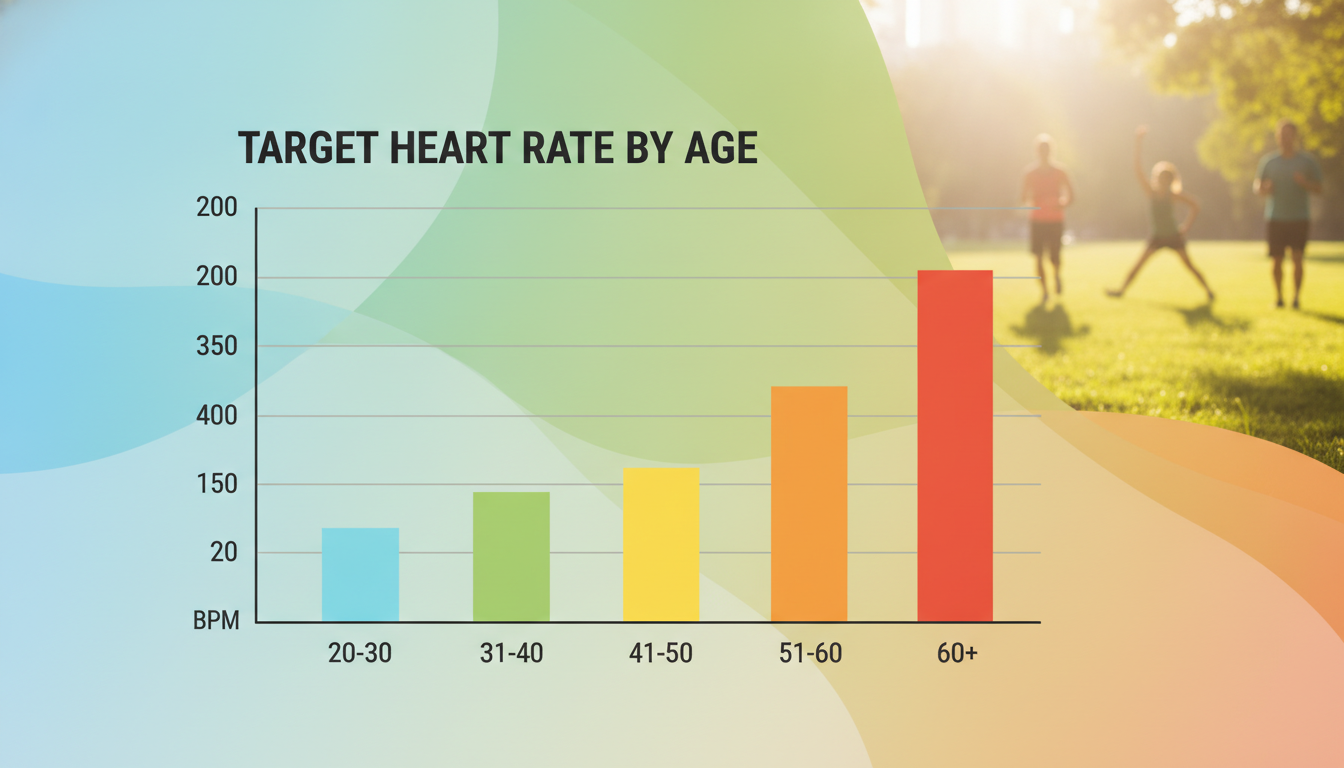
Target Heart Rate by Age Chart for Fitness Planning
Starting your health journey is easy with the right heart rate zones. A chart helps you safely track your cardiovascular exercise intensity. It’s key for anyone aiming for fitness goals without risking too much.
Heart Rate Targets for Ages 20 to 40
In your twenties, thirties, or early forties, you can handle more intense workouts. Use a maximum heart rate equation to find your baseline. This lets you safely boost your cardiorespiratory fitness.
For this age group, aim for 50% to 85% of your maximum heart rate. This range helps you get the most from your workouts while avoiding injuries.
Heart Rate Targets for Ages 50 to 70 Plus
In your fifties and beyond, focus on long-term health and regular exercise. Heart rate training for beginners in this age group should be gentle. This protects your joints and heart. Always check your heart rate recovery time after exercising to see if your body is adapting well.
The table below shows your target heart rate zones by age. These numbers are based on heart rate monitor accuracy and health guidelines. They help you plan your workouts for the week.
| Age Range | Moderate Intensity (50-70%) | Vigorous Intensity (70-85%) |
|---|---|---|
| 20-30 Years | 100-140 BPM | 140-170 BPM |
| 31-45 Years | 95-133 BPM | 133-162 BPM |
| 46-60 Years | 85-119 BPM | 119-145 BPM |
| 61-70+ Years | 75-105 BPM | 105-128 BPM |
Monitoring Your Heart Rate Without Gadgets
Learning to check your pulse manually lets you stay in your cardiovascular training zones no matter where you are. You don’t need fancy gadgets to know if you’re working out right. These simple steps give you control over your fitness journey.

Locating Your Pulse Points Effectively
First, find a good spot on your body to feel your pulse. The wrist or neck is a common place. Put your fingers lightly on the spot until you feel a steady beat.
Don’t use your thumb because it has its own pulse. Once you find a clear beat, you’re ready to figure out your target heart rate. This skill is key to keeping your heart rate within a fitness range during any workout.
Calculating Beats Per Minute During Physical Activity
After finding your pulse, look at a clock with a second hand. Count the beats for 15 seconds. Then, multiply that number by four to get your beats per minute (BPM).
This quick trick helps you stay in your aerobic exercise zones. It’s especially useful for keeping your optimal heart rate for fat burning. Here’s how different pulse spots and counts relate to your cardiovascular fitness level.
| Pulse Location | Best Use Case | Accuracy Level | Intensity Guideline |
|---|---|---|---|
| Radial (Wrist) | During walking or light jogging | High | Moderate intensity |
| Carotid (Neck) | During stationary exercise | Very High | Vigorous intensity |
| Temporal (Temple) | Quick checks while moving | Moderate | General heart rate for fat burning |
By using these exercise intensity guidelines regularly, you can track your progress without gadgets. This hands-on method lets you tune into your body and adjust your workout to meet your health goals.
Integrating Heart Rate Training for Beginners
Many beginners push too hard, too soon. This is why a workout heart rate guide is key to your success. By focusing on cardiovascular workout intensity early, you protect your body. This approach helps your heart and lungs adapt without injury.
Starting Slow to Build Aerobic Base
At the start, your main goal is to build a strong aerobic base. Learning to calculate heart rate for exercise is crucial. This ensures you stay in a comfortable, low-intensity zone. Regular heart rate monitoring for fitness helps track your progress and keeps your effort levels right.
Starting slow helps your body adapt to burning fat. This steady pace builds endurance and prepares your heart for tougher workouts later. Consistency is far more important than intensity in the early weeks.
Progressing Safely Through Intensity Levels
As you get fitter, you can increase your heart rate during cardiovascular exercise to challenge yourself more. Always remember your max heart rate for age to avoid overtraining. Finding your ideal exercise heart rate changes as you get stronger.
Here’s a table to help you scale your efforts based on your fitness level, heart rate, and fitness goals.
| Fitness Level | Intensity Goal | Max Heart Rate by Age | Resting Heart Rate Chart |
|---|---|---|---|
| Beginner | 50-60% | Standard Baseline | 60-80 BPM |
| Intermediate | 60-75% | Calculated Limit | 55-70 BPM |
| Advanced | 75-85% | Peak Performance | 45-60 BPM |
Listen to your body as you move through these levels. If you feel too tired, reduce your intensity to recover properly. Sustainable habits are built by balancing effort with rest, helping you reach your health goals safely.
Recognizing Warning Signs of Overexertion
Tracking your heart rate during physical activity is good. But you also need to listen to your body. Pushing too hard can hurt you or cause health problems.
Physical Symptoms That Require Immediate Rest
Even with an age-specific heart rate chart, your body might send warning signs. Stop right away if you feel chest pain, have trouble breathing, or feel dizzy.
Other signs to watch for are sudden nausea, cold sweats, or feeling extremely tired. These can mean you’re pushing too hard. Remember, a heart rate zone calculator is just a guide, not a hard rule.
Understanding Heart Rate Recovery Time
How quickly your heart rate returns to normal after exercise is key. A quick drop is good, showing your heart is strong and efficient. This is important for your cardiac training zones.
Check your heart rate one minute after stopping. If it’s still high or drops slowly, you might be pushing too hard. Watching this helps you stay in the right fitness heart rate zones.
Remember, your health is more important than a single workout. Use a heart rate training guide to find the right balance. This way, you can keep improving without overdoing it.
When to Consult a Doctor Before Starting
Putting your safety first is key when you want to get more active. Before you start pushing yourself harder, know your cardiorespiratory fitness levels. Setting age-based heart rate zones is a good goal. But your health history is more important.

Identifying High-Risk Health Factors
Some health issues mean you need to be extra careful with your heart rate zones for workouts. If you have heart disease, high blood pressure, or diabetes, get a doctor’s okay first. Age-specific heart rate guidelines are helpful, but they don’t cover everyone’s health needs.
Also, watch for signs such as dizziness, chest pain, or shortness of breath. These are warning signs that you need to see a doctor. Ignoring them while calculating the target heart rate can be risky.
Discussing Cardiac Exercise Guidelines with Professionals
When you talk to your doctor, be ready to discuss your exercise intensity levels. Ask how to safely check your maximum heart rate for exercise to avoid too much strain. A doctor can set a safe heart rate range for fitness training based on your health.
Use the following table to understand when you should prioritize a medical consultation before beginning your fitness journey.
| Health Condition | Risk Level | Recommended Action |
|---|---|---|
| Known Heart Disease | High | Consult Cardiologist |
| Uncontrolled Hypertension | High | Medical Clearance Required |
| Occasional Dizziness | Moderate | Discuss with Primary Care |
| No Known Issues | Low | Follow Standard Guidelines |
Always take your heart rate guidelines for fitness to your doctor’s appointment. They can give you advice on keeping an optimal heart rate during exercise. This way, your fitness plan will help your health, not harm it.
Optimizing Your Workout Efficiency and Fat Burning
You can improve your workouts by finding the right balance across your exercise heart rate zones. When you match your effort with your body’s energy, every minute counts towards your health goals.
Knowing how to manage your cardio training zones helps you train smarter, not just harder. Using a max heart rate calculator helps you know your limits without getting too tired.
Balancing Aerobic Fitness Zones for Results
Good training mixes different intensity levels to keep your heart working hard. The 220 minus age formula is a start, but the Tanaka formula offers a more tailored approach.
Sticking to a routine is crucial for improving your aerobic fitness. Training at a moderate intensity heart rate lets your body recover while building stamina. Following the American Heart Association guidelines keeps your workouts safe and effective.
Tailoring Intensity to Your Specific Fitness Goals
Your success depends on adjusting your workout intensity levels to fit your goals. For fat burning, focus on lower- to moderate-intensity zones where your body burns fat for energy.
For better athletic performance, include high-intensity intervals. Always follow fitness safety tips to keep your workouts safe and effective. Tracking your target heart rate by age ensures your efforts are both productive and safe.
Essential Fitness Safety Tips for Every Workout
Keeping safety first is key to a good fitness plan. While it’s good to challenge yourself with heart rate training, don’t forget to protect yourself, too. Skipping these basics can slow you down.
Hydration and Environmental Considerations
Drinking enough water is crucial for a good, optimal heart rate during workouts. Without enough water, your heart has to work harder. Always drink water before, during, and after your aerobic exercise to keep your body running right.
Also, the weather affects how your body handles exercise. Hot, humid weather can raise your heart rate, even when you’re not trying. If you use a heart rate monitor, watch out for these changes. You might need to slow down to avoid getting too tired.
Listening to Your Body During High-Intensity Sessions
It’s important to know what your body is telling you. Even if your heart rate calculator says you’re okay, stop if you feel dizzy or have chest pain. These signs mean you’ve gone too far, no matter what your maximum heart rate formula says.
Don’t push too hard too often. Listen to your body and take breaks when needed. This way, your aerobic exercise heart rate helps you get better, not hurt you. It’s all about knowing when to push and when to rest.
Conclusion
To reach your health goals, knowing your body’s response to exercise is key. Heart rate monitoring lets you track your progress accurately. This helps you stay in the right heart rate zone for your needs.
Using age-based heart rate targets keeps your workouts consistent. A heart rate zones chart guides your daily activities. These tools make it easy for athletes of all levels to calculate their fitness heart rate.
Following cardiac exercise guidelines is crucial for your long-term health. Finding your target heart rate is essential to getting the most out of each workout. Whether you aim for a moderate intensity or push to your maximum, safety always comes first.
Checking your cardio fitness levels by age helps you grow sustainably. Heart rate zones for fitness let you adjust your effort based on real-time data. As your stamina grows, so does the ideal heart rate for exercise.
Stick to these aerobic exercise guidelines to make your routine more effective. You have the knowledge to improve your performance and reach your peak. Start using these methods today for lasting health benefits.