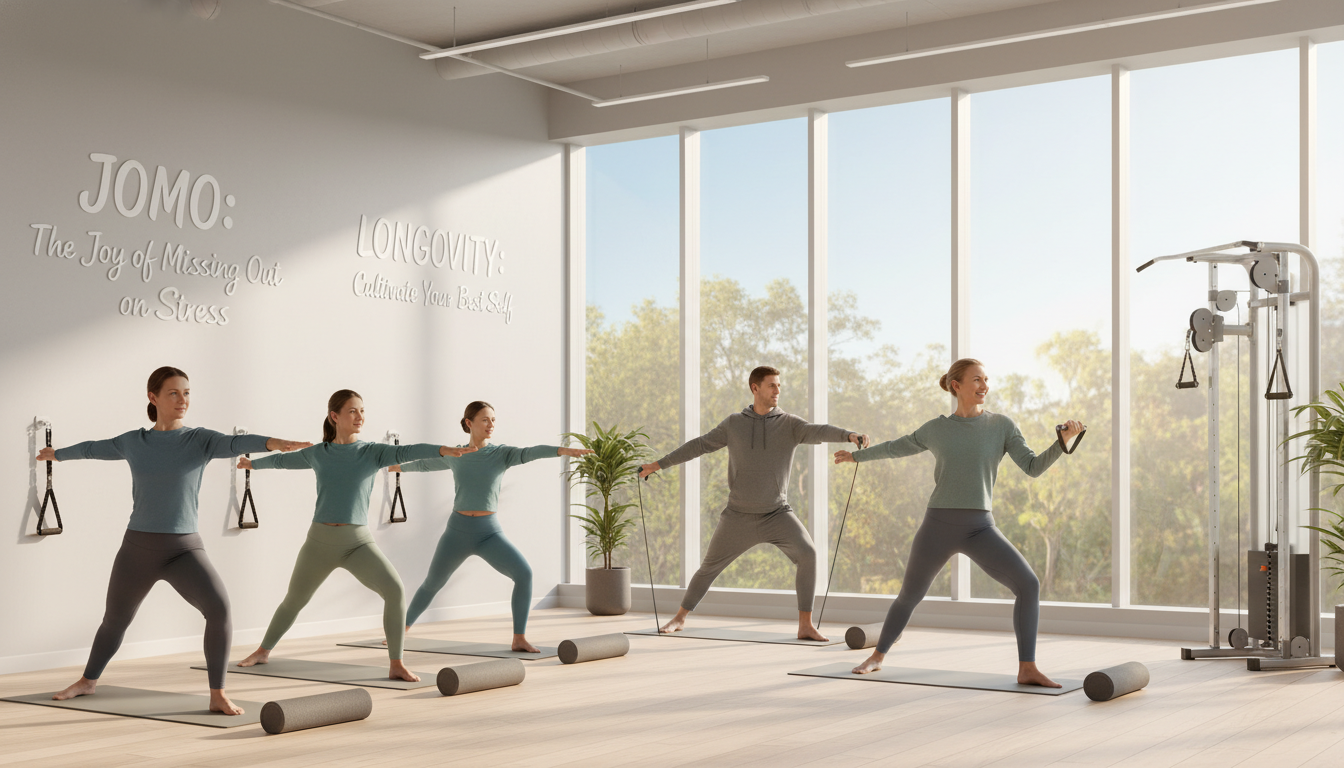
For years, we’ve been told that suffering is the only way to get results. You’ve probably heard that “no pain, no gain” is the only way to succeed. But this approach often leads to burnout and injuries rather than real progress.
It’s time to adopt a new fitness methodology. Modern science shows that your body does best when you focus on recovery and consistency. By choosing JOMO—the Joy of Missing Out—you can avoid exhausting trends.
Choosing a hybrid approach helps you build a routine that lasts for decades. This method focuses on long-term longevity over quick, intense workouts. By stopping self-punishment, you can perform at your best and feel energized every day.
Key Takeaways
- Abandon the “no pain, no gain” myth to prevent burnout.
- Prioritize sustainable habits that support your body for years.
- Use JOMO to focus on quality movement rather than social pressure.
- Integrate diverse training styles to improve overall physical health.
- Focus on recovery as a core component of your success.
The Shift from Ego-Driven Training to JOMO
The old days of ego-driven training are gone. Now, a smarter approach is taking over. Gone are the days of pushing until you collapse. Modern athletes now value longevity and mental clarity over intense workouts.
Defining the Joy of Missing Out in Fitness
JOMO, or the Joy of Missing Out, is a big change in fitness. It’s about choosing rest over workouts. This is a key Jomo Fitness trend changing the game.
By listening to your body, you avoid comparing yourself to others. This helps you focus on what you need, not what others do. This approach leads to:
- Lower cortisol levels and less stress.
- Long-term consistency without burnout.
- A healthier view of your limits.
Why Punishing Workouts Are Losing Their Appeal
For years, high-intensity workouts were all the rage. But now, people see that they often lead to injury. These hard workouts are being replaced by sustainable exercise trends that focus on health.
You should aim for a routine that builds you up, not tears you down. Moving away from extreme workouts can actually boost your performance. True strength comes from recovery and lasting effort, not just suffering.
Mastering Hybrid Training for Total Athleticism
If you want a body that is both powerful and capable, it’s time to try the hybrid model. Hybrid training combines strength, mobility, and cardio into one workout regimen. You don’t have to choose between them to see results.
The Synergy of Strength and Cardiovascular Capacity
Many athletes think lifting heavy weights hurts their endurance. But cardiovascular health and strength actually work together. By combining cardio and strength training, you build a strong foundation for both explosive power and sustained effort.
“The most capable human is one who can lift heavy, run fast, and move with ease.”
This method keeps your heart as strong as your muscles. Your recovery times will improve as your aerobic base strengthens. This balance is what makes a well-rounded athlete.
Designing Your Weekly Hybrid Workout Program
Creating effective hybrid workout programs means balancing your schedule with recovery in mind. Alternate between heavy lifting and endurance days to avoid burnout. A good hybrid workout might start with big lifts and end with steady cardio.
Sticking to your hybrid fitness workout routine is crucial. Here’s a weekly plan to help you stay on track:
- Monday: Heavy compound strength training (Squats, Deadlifts).
- Tuesday: Zone 2 aerobic capacity work (Running, Cycling).
- Wednesday: Functional mobility and active recovery.
- Thursday: High-intensity interval training (HIIT) mixed with strength.
- Friday: Full-body hypertrophy and core stability.
Following this plan keeps your body adaptable and strong. You’re building a sustainable engine that helps you beyond the gym.
The Science of Polarized Training 80/20
The secret to elite performance is a simple math split. Many athletes think every session must be hard to get results. But polarized training 80/20 shows that balance is key.
Understanding the 80/20 Intensity Split
This model means spending 80% of your time in low-intensity zones and 20% in high-intensity zones. Most of your endurance training should be easy. This lets your body fully recover between sessions.
When you do high-intensity interval training, focus is crucial. These HIIT workouts push your heart rate without harming your health. Limiting high-intensity interval training to 20% keeps your nervous system sharp for the next challenge.
Building Aerobic Endurance Without Burnout
Regular endurance workouts are crucial for athletes. Training at a lower intensity improves your endurance. This helps you avoid hitting a wall too soon.
“The biggest mistake athletes make is training too hard on their easy days and too easy on their hard days. True progress requires a polarized approach.”
This method helps avoid burnout from too much high-intensity training. By following the 80/20 rule, you build a sustainable path to peak performance.
Why Low-Intensity Work is the Foundation of Performance
Low-intensity work is not just “junk miles.” It’s the fuel for your polarized fitness journey. It builds the aerobic base needed for all endurance sports. Without it, high-intensity interval training (HIIT) won’t be as effective.
By prioritizing HIIT when fully recovered, you get the most out of every rep. This high-intensity training strategy ensures you’re always training with purpose, not just through fatigue.
| Training Type | Intensity Level | Primary Goal |
|---|---|---|
| Low-Intensity | Zone 1-2 | Aerobic Base |
| Moderate-Intensity | Zone 3 | Avoid (The “Grey Zone”) |
| High-Intensity | Zone 4-5 | VO2 Max Gains |
Leveraging Wearable Technology for Performance Optimization
Your body has its own way of telling you when it’s ready. Now, thanks to wearable fitness technology, you don’t have to guess. You can focus on performance training more effectively.
Using Oura Ring and WHOOP for Data-Driven Recovery
Tools like the Oura Ring and WHOOP change how athletes live their day-to-day lives. They give you deep insights into your HRV recovery and sleep. This lets you see how your lifestyle affects your body.
By tracking your sleep and heart rate, you can better understand your body. This helps you make smart choices about what you eat and how you relax at night. You’re not guessing anymore; you’re using facts to improve.
Interpreting HRV to Adjust Your Daily Training Load
Heart Rate Variability (HRV) indicates how well your body is prepared for stress. A high HRV means you’re ready for athletic performance. But a low HRV means it’s time to rest and recover.
Knowing how to read these changes is crucial for performance optimization. If your device says you’re not ready, skip the hard workout. Instead, do something gentle to keep your body in top shape.
The Rise of HYROX as the Ultimate Fitness Challenge
Looking for a top test of your physical skills? The hyrox race is hard to miss. It mixes fast running with specific, repeatable moves. It’s a top fitness event for all, from casual athletes to pros.
What Makes the HYROX Race Unique
HYROX stands out because it’s fair and simple. Everyone does the same thing, so you can see how you stack up globally. It’s great for those who like clear, measurable results.
The race consists of eight rounds of 1-kilometer runs and functional moves. The course is the same everywhere, so you can really get good at it. This makes it a big hit, rivaling traditional functional fitness.
Preparing for Functional Fitness Competitions
To do well, you need a mix of cardio and strength. You should be good at running and lifting even when tired. Good sport-specific training helps you switch between these fast.
For any fitness challenge, do lots of low-intensity work to build endurance. Also, train with the race’s intensity in mind. This gets your body ready for the race’s demands.
Integrating Sled Pushes and Wall Balls into Your Routine
Focus on the race’s key moves, such as sled pushes and wall-ball shots. These need strong legs. Make these exercises part of your weekly routine to build stamina.
Do these exercises after a quick run to mimic the race. This functional fitness training helps your muscles get used to heavy loads while your heart rate is up. With regular practice, you’ll find these fitness challenges. easier, letting you reach new heights.
AI Coaching and the Future of Personalized Programming
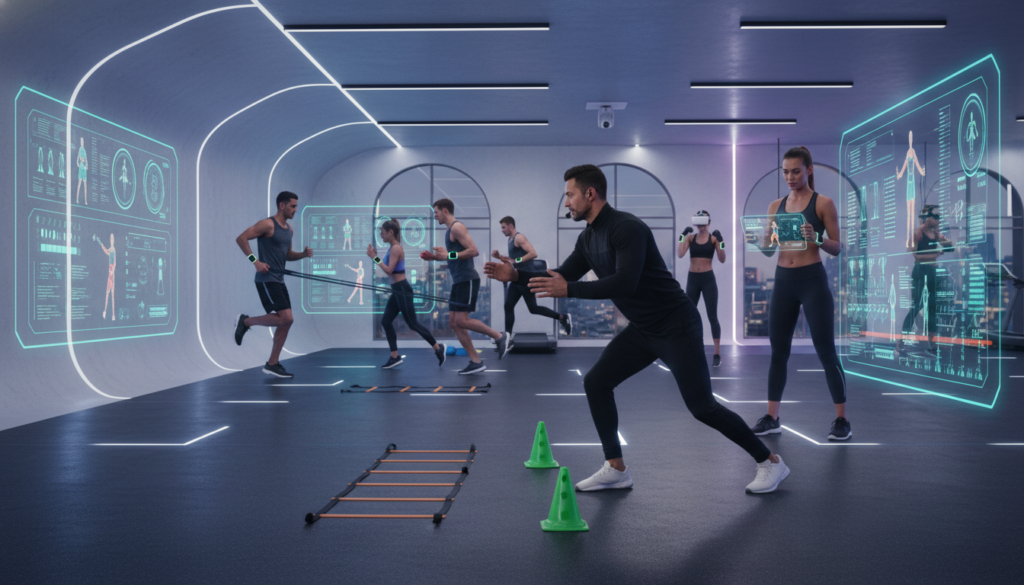
The old days of one workout plan for everyone are over. Now, you can use AI coaching tools for a more precise fitness plan. These tools use data from your daily life to make your fitness journey more dynamic.
How AI Adapts to Your Recovery Needs
Your body changes how it handles stress every day. Performance training platforms use your sleep, heart rate, and past workouts to adjust your plan. If you’re not recovering well, they’ll make your workouts easier to avoid burnout.
This feedback loop keeps your workout programming effective and safe from overtraining. Your fitness program always matches your current health. This is what modern online coaching is all about.
Moving Beyond Generic Fitness Templates
Generic training programs can lead to plateaus because they don’t fit your body perfectly. Sport-specific training ensures every exercise supports your specific goals. This approach focuses on your weaknesses while keeping your strengths.
For better sports performance, personalized digital coaching is key. The table below shows why moving to smart systems is a big change for your athletic performance training.
| Feature | Traditional Programming | AI-Driven Coaching |
|---|---|---|
| Adaptability | Static and rigid | Dynamic and real-time |
| Data Usage | Manual tracking | Automated biometric sync |
| Personalization | Generic templates | Individualized load management |
| Goal Alignment | General fitness | Sport-specific progression |
Prioritizing Longevity Fitness for Lifelong Function
Embracing longevity fitness means seeing your body as a long-term investment. It’s not just about short-term looks. It’s about keeping your body strong for years to come.
Shifting Focus from Aesthetics to Joint Health
Many start fitness to look better in the mirror. But true health comes from strong joints and tissues. Focusing on joint health lowers the risk of pain and injury.
By focusing on fitness longevity, you build a body that feels as good as it looks. Choose exercises that support your bones and improve movement. This helps you stay active without joint pain.
The Role of Mobility in Sustainable Exercise
Mobility is key to lasting exercise routines. It’s not just about being flexible. It’s about having the strength to move freely. Adding mobility exercises to your routine helps protect your body during intense workouts.
Investing in mobility today keeps you strong as you age. It’s a core part of longevity fitness. It helps you stay independent and full of life. See how changing your focus can lead to long-term success.
| Feature | Aesthetic-Focused Training | Longevity-Focused Training |
|---|---|---|
| Primary Goal | Muscle size and definition | Joint health and function |
| Recovery Focus | Minimal to avoid muscle loss | Essential for tissue repair |
| Movement Style | Isolated, repetitive motions | Functional, multi-planar patterns |
| Long-Term Outcome | Risk of burnout or injury | Sustainable, active lifestyle |
Choosing fitness longevity means a future where your body is strong. Every workout focused on mobility and joint health adds to your long-term health.
Active Aging Workouts for Long-Term Vitality
How you exercise today affects your life tomorrow. Instead of focusing on looks, aim for a body that stays strong and independent. Active aging workouts help keep you physically fit as you get older.
Building Muscle Mass as a Metabolic Insurance Policy
Think of muscle as a health savings account. As you age, losing muscle can slow your metabolism and energy. Functional fitness training helps keep your body burning energy well.
Strength training is more than looks; it’s about keeping your body healthy. Lifting weights boosts bone density and hormones, key to a long life. Here are the main benefits of keeping muscle:
- Enhanced Metabolic Rate: More muscle means more energy needed.
- Blood Sugar Regulation: Muscles help control blood sugar.
- Structural Support: Strong muscles protect your joints.
“Strength is the ultimate foundation for a long, vibrant life. It is the one investment that pays dividends in every single decade.”
Core Stability and Balance for Functional Independence
Functional fitness is more than strength; it’s about moving with confidence. Your core is key for every movement, from carrying groceries to playing with grandkids. Adding functional training to your routine keeps your spine strong and your posture upright.
Balance training is crucial for staying vital as you age. Your body’s ability to sense its position can weaken. Include specific movements in your metabolic conditioning to improve balance:
| Exercise Type | Primary Benefit | Frequency |
|---|---|---|
| Single-Leg Stance | Improves ankle stability | Daily |
| Plank Variations | Enhances core endurance | 3x Weekly |
| Farmer’s Carries | Builds grip and posture | 2x Weekly |
By focusing on these exercises, you’re actively protecting your future self. You’re training for a lifetime of movement. Stay consistent, stay strong, and focus on the mechanics that keep you moving well.
Optimizing Recovery as a Performance Metric
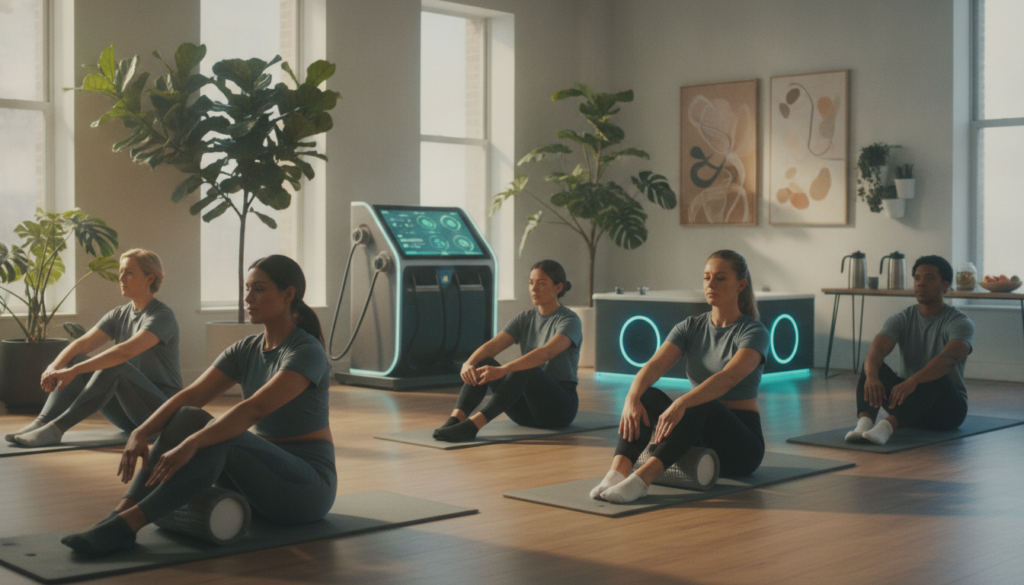
To reach your peak, treat rest as a key performance optimization strategy. Many athletes think more gym time means better results. But your body grows stronger when you’re not training.
Why Rest Days Are Not Optional
Rest days are the basis for all athletic gains. When you train hard, you cause tiny muscle tears. These need time to heal.
Without rest, you just get tired, not stronger. Think of training as the stimulus and recovery as the actual growth phase. Skipping rest days stops your body’s repair process. This can stall your progress and increase your risk of injury.
“Recovery is not merely the absence of training; it is the active process of preparing your body for the next challenge.”
The Connection Between Sleep Quality and Athletic Gains
Quality sleep is key to recovery. Deep sleep releases hormones that help muscles repair and improve thinking. Poor sleep hurts your performance the next day.
Modern wearable technology fitness devices help track recovery. Tools like the Oura Ring or WHOOP show how well you recover. They track HRV recovery metrics to show how your nervous system handles stress.
Matching your training to recovery data optimizes performance. You know when to push hard and when to rest. This keeps you healthy and on track to your goals.
Integrating Strength and Conditioning for Peak Performance
True athletic mastery comes from combining raw power and cardiovascular capacity. When you mix strength and conditioning, you build a strong base for top sports performance. This way, you’re not just strong, but can keep that strength even when tired.
Balancing Heavy Lifting with Metabolic Conditioning
To reach peak performance training, treat your body like a fine instrument. Hybrid training helps grow muscle while boosting your aerobic fitness. Start with big lifts like squats and deadlifts to build force.
Then, switch to metabolic conditioning to link power with endurance. High-intensity interval training (HIIT) is great, but make sure you recover well. Mix heavy days with endurance workouts to keep your body sharp.
Avoiding Overtraining Syndrome
It’s key to push your limits for growth, but listen to your body to avoid overtraining syndrome. This can stop your progress and cause injuries if ignored. Watch your recovery closely to see if your advanced training methods are working.
If your resting heart rate variability drops or HIIT workouts get harder, slow down. Cardio and strength training should work together, not fight for energy. Remember, high-intensity training only works if you can recover from it.
- Prioritize sleep to support muscle repair and hormonal balance.
- Use high-intensity interval training sparingly to avoid central nervous system fatigue.
- Adjust your volume based on your daily readiness scores.
Building a Sustainable Fitness Lifestyle
To build a lasting fitness lifestyle, you must choose long-term benefits over quick fixes. Focus on sustainable exercise trends that support your body for years. By mixing hybrid training and longevity fitness, your routine fits your life, not the other way around.
Consistency Over Intensity
Success comes from showing up often, not just pushing hard in one session. Consistency is key to lasting health, not short, intense workouts. Steady movement helps avoid burnout from too much intensity.
Using a polarized 80/20 training schedule helps you train a lot without overstraining your body. This method is great for hyrox races or just staying healthy. It makes your workouts a habit, not a chore.
Setting Goals That Last a Lifetime
Your fitness goals should grow with you, focusing on function over looks. AI coaching and online training offer tailored advice that fits your recovery needs. This approach keeps your body strong and ready for any fitness challenge.
Smart, sustainable fitness is here to stay. It’s time to choose a balanced path. Whether you’re into active aging workouts or fitness events, focus on building a strong foundation for your future. Use the table below to see the difference between short-term and long-term training.
| Feature | Short-Term Focus | Long-Term Focus |
|---|---|---|
| Primary Driver | Ego and Aesthetics | Longevity and Function |
| Training Style | High Intensity Only | Polarized 80/20 Split |
| Recovery | Often Neglected | Data-Driven Optimization |
| Outcome | Burnout Risk | Sustainable Vitality |
Conclusion
Smart, sustainable fitness is here to stay. You now have the tools to move away from punishing routines. Instead, you can embrace a life of lasting physical freedom.
True progress requires a shift in mindset. You must see your fitness goals as a lifelong journey, not a race. By balancing intensity with recovery, you create a body that thrives and heals well.
Your daily habits shape your future capabilities. Every choice you make about movement and rest builds your long-term health. Stay consistent to keep your fitness goals within reach for decades.
Listen to your body as you integrate these new strategies. You have the power to redefine what it means to be an athlete at any age. Embrace this balanced approach and enjoy the process of becoming the strongest version of yourself.