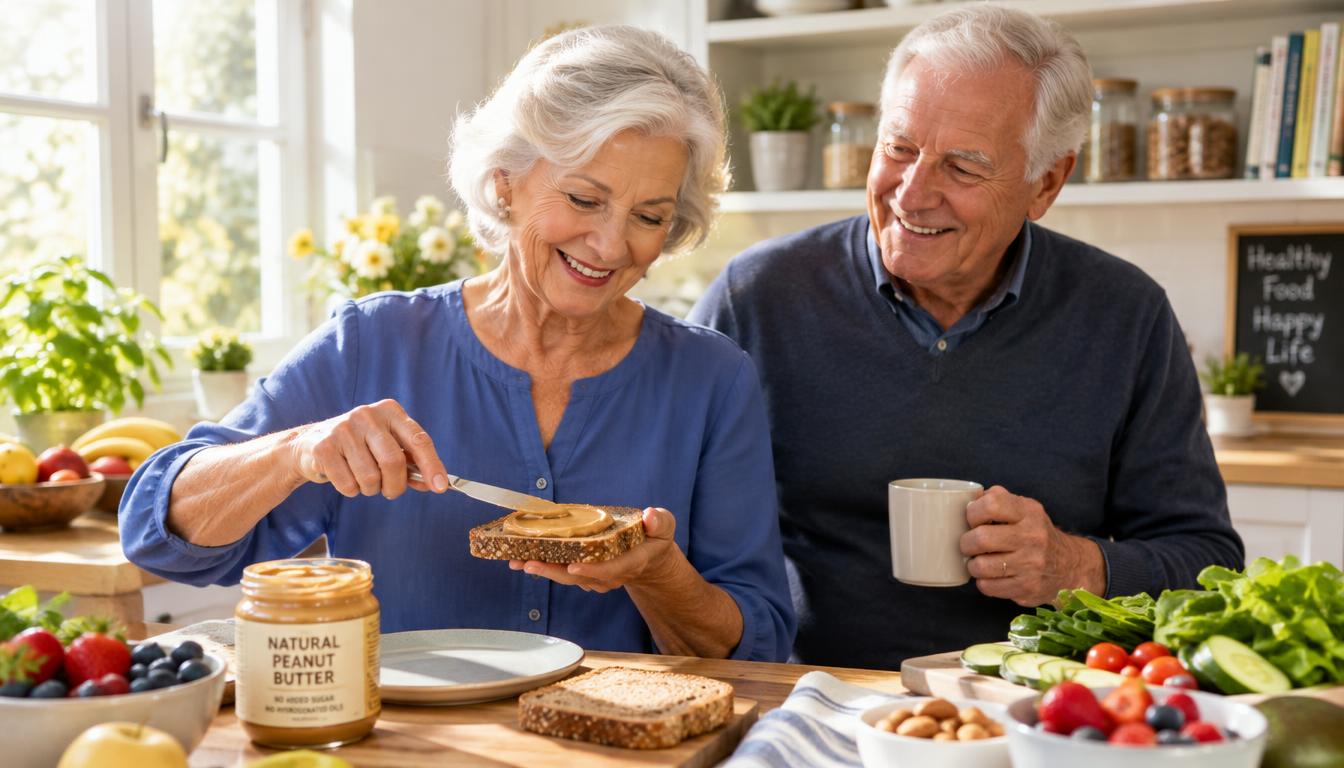
A six-month peanut-butter trial has brought a familiar snack into the conversation about muscle power and aging. The COINS trial, published on February 17, 2026, found that older adults who ate peanut butter daily had better sit-to-stand performance. It did not find a broad improvement in mobility or strength.
That distinction matters if you are exploring a healthy aging diet or nutrition for adults over 50. The tested participants were older adults at risk of falls, so the results may not apply to everyone over 50 or 60. Natural peanut butter benefits may be worth considering as part of everyday nutrition, but one trial cannot settle what works for everyone.
The study offers a practical food idea, not proof that peanut butter prevents falls or preserves independence. It also does not replace the movement and strength work that supports daily function. Promising, but preliminary is the right way to read this news.
Key Takeaways
- The COINS trial found better chair-rise performance after six months.
- Walking speed and several strength and body-composition measures did not significantly differ.
- The study involved adults aged 65 or older at risk of falls.
- Peanut butter can add protein and energy to meals or snacks.
- Nutrition works alongside, not instead of, strength and balance activity.
Treat the result as an addition to healthy routines, not a shortcut or substitute for exercise.
Why Does Muscle Power Matter as You Age?
Getting up from a chair quickly depends on lower-body muscle power. Muscle power is how quickly your muscles can produce force, helping you rise from a chair, climb stairs, and move through other activities. That quick force matters in daily tasks, not only in sports.
As you age, muscle loss can make everyday movement harder. Over a lifetime, people lose about 20%-30% of muscle mass and 40%-50% of muscle strength. Power also depends on how quickly your muscles respond, so it affects actions like stepping up or catching your balance.
Aging-related loss of lower-body strength can affect how steady and capable you feel during daily tasks. Movement trouble may relate to fall risk, but that link does not mean one food prevents falls. Fall prevention for seniors includes more than diet.
A food can support nutrition, but maintaining function also calls for activity that challenges balance and movement.
An analysis of nearly 8,000 older adults found that balance and functional exercises reduced fall rates by 24%. That finding concerns exercise, not peanut butter or the COINS trial.
Preventing muscle loss with age often involves regular activity, adequate nutrition, and attention to health needs. If stairs or chair rises have become harder, it may be helpful to discuss that change with a clinician. A clinician can help you consider causes beyond diet alone.
Muscle power in older adults supports daily function, but fall risk has many influences. Food supports nutrition, but maintaining function also requires activity that challenges balance and movement.
What Changed in the Peanut Butter Trial?
The clearest gains were in standing up from a chair, while walking speed did not differ significantly between groups. At six months, the peanut-butter group performed better on the 5STS (five-times sit-to-stand test). The primary outcome, gait speed, did not significantly differ.
The 5STS asks a person to rise from a chair five times with arms crossed. The study chair seat was 46 cm high. Because the test captures a specific movement, better performance does not, by itself, prove a broader change in mobility.
| Outcome | Difference favoring peanut butter | 95% confidence interval | p-value |
|---|---|---|---|
| 5STS time | 1.23 seconds faster | -2.09 to -0.37 seconds | 0.006 |
| Absolute power | 22.0 W higher | 7.1 to 36.9 W | 0.004 |
| Relative power | 0.27 W/kg higher | 0.10 to 0.45 W/kg | 0.002 |
The 5STS time and sit-to-stand power measure chair-rise performance. The confidence intervals show the ranges for these estimates. The p-values describe how strongly the results differed from chance under the study analysis.
There were no significant between-group differences in handgrip strength, knee extensor strength, weight or BMI. Total lean mass, fat mass, and appendicular lean mass (limb muscle mass) also showed no significant differences.
The COINS study peanut butter result is therefore narrower than a general claim about natural peanut butter health benefits or peanut butter and muscle strength. It did not show faster walking, stronger grip, more muscle, or changes in the other listed measures.
The result is a specific improvement in chair-rise performance, not evidence of stronger grip, more muscle or faster walking.
Who Took Part, and How Much Confidence Should You Place in the Findings?
The trial tested a defined group of older adults who lived independently but had an elevated risk of falls. Its findings apply most directly to people like those participants. They do not establish that every adult over 50 will have the same result.
The researchers used random assignment and a control group, which helps compare the intervention with usual care. Still, the group was small and specific, and the study lasted six months.
The participants and trial setup
The randomized controlled trial assigned 120 community-dwelling adults aged 65 or older to peanut butter or usual care. Participants also had to be at risk of falls. Random assignment placed people into the two groups in a 1:1 ratio.
Researchers at Deakin University’s Institute for Physical Activity and Nutrition ran the study from May 2023 to July 2024. A total of 108 participants (90%) completed the study. Their mean age was 76.1 years, and 70% were female.
The study was registered as ACTRN12622001291774. It was single-blind: researchers who collected outcomes and analyzed results did not know each participant’s group assignment. That design can reduce bias during measurement and analysis.
What the study can and cannot establish
The community setting makes the findings relevant to people living outside institutions, but it does not represent every older adult. The trial did not test all ages, health conditions, or living situations. Its results also cannot show what might happen over a longer period.
For a senior nutrition guide, the study offers one useful example of testing a food in a specific group. It does not prove peanut butter reduces fall risk or provide a general answer about peanut butter for seniors. You shouldn’t assume natural peanut butter offers health benefits based on one outcome alone.
The findings are useful evidence for a similar group, not a promise of the same result for every person over 50.
Can Peanut Butter Build Muscle on Its Own?
Peanut butter can provide protein and energy, but it cannot create a muscle-building stimulus on its own. Muscle growth and maintenance need more than one food. Protein supplies amino acids that your body uses for muscle protein synthesis, the process of making muscle proteins.
Peanut butter can be part of a balanced diet, but eating it alone won’t build muscle. Progressive resistance exercise challenges muscles and helps them adapt over time. An overall adequate diet and recovery also support that process.
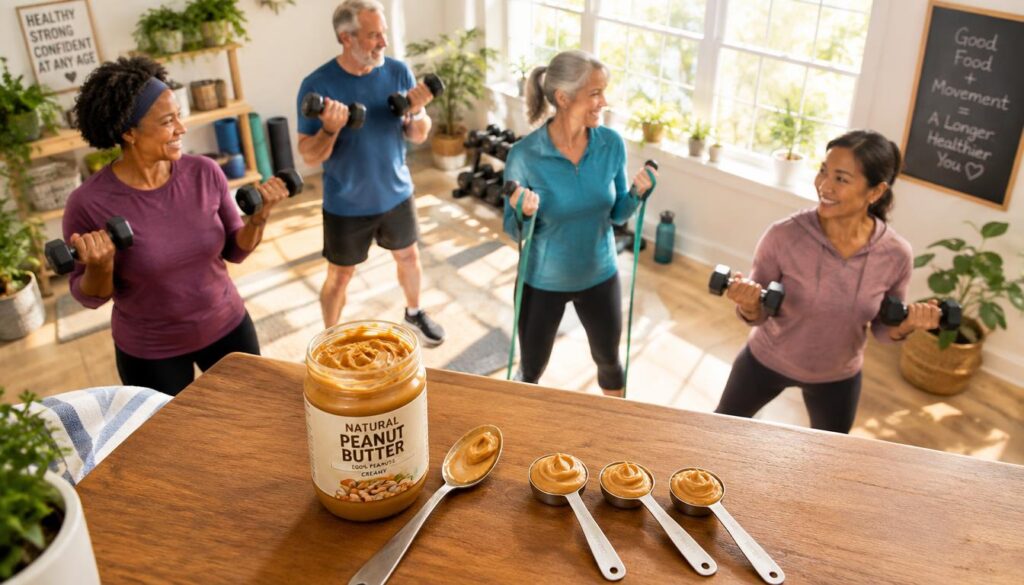
Elderly adults can get plant-based protein from several foods, including beans, soy foods, nuts, and seeds. Peanut butter is one option, but it shouldn’t be treated as a muscle-building treatment. It contributes to protein intake, but it doesn’t replace training.
Several common gaps can undermine muscle gains. Too little training challenge gives muscles less reason to adapt. Too little food or protein can limit the materials available for repair and growth.
Poor recovery can also slow progress. Rest, health conditions, and daily demands affect how well you recover from training. No single food can fix an inadequate training stimulus, insufficient nutrition, and poor recovery at once.
For protein for muscle maintenance, consider your full diet and activity pattern rather than focusing on one snack. If a health condition affects eating or exercise, a clinician or registered dietitian can help you create a suitable plan.
Pair a protein-containing snack with a consistent strength-training routine rather than treating the snack as the workout.
Can Peanut Butter Help With Weight Loss or Cause Weight Gain?
Peanut butter can fit a weight-management plan, but its calorie density makes portion size matter. Weight change depends on total food and drink intake, activity, and time. A daily serving may fit one person’s needs and exceed another’s.
The daily trial serving provided 250 kcal, 10 g protein, and 20 g fat, mostly unsaturated. Participants were advised to keep their usual diet and avoid nuts during the study. The added serving increased their usual diet energy.
Among participants who completed follow-up, mean adherence was 86.0% (SD 13.8%). The peanut-butter group had no significant weight gain over six months. That result describes this group, not a guarantee about your own weight.
Peanut butter calories and weight gain are not linked in a fixed way. If it replaces another food, your total intake may change differently than if you add it without changing anything else. Activity and eating patterns over time also matter.
Its mostly unsaturated fats can make it a useful option in some eating patterns, including plans that consider heart health. But the trial did not establish a heart benefit or show that the food causes weight loss. It measured neither outcome.
Adults over 50 may have different energy needs based on health, activity, and appetite. A calorie-dense food can be useful when you need compact energy, yet its calories can add up quickly. A measured daily trial serving is not a weight prescription.
If your weight is changing unexpectedly, review your overall eating pattern with a registered dietitian or clinician.
How Can You Add Peanut Butter to Everyday Meals?
Stir a small amount into familiar foods when a standalone spoonful feels too rich. A measured spoon helps you keep portions in view. A U.S. tablespoon holds about 15 mL.
Easy protein snacks for seniors can use foods you already have. Peanut butter may be an affordable healthy-aging food, though it isn’t always cheaper than other options. Pairings add variety, but they do not turn a snack into a complete meal.
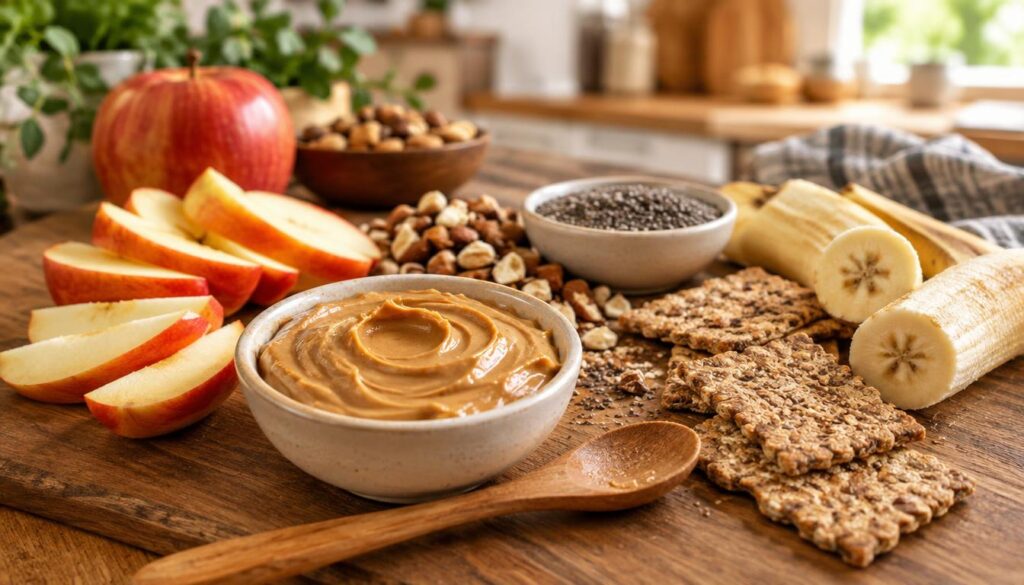
Pair it with familiar foods
Try one of these simple combinations as a snack or part of a meal:
- Spread peanut butter on apple slices.
- Add banana to peanut butter toast.
- Stir a small spoonful into oatmeal.
- Serve peanut butter alongside yogurt.
- Use a thin spread on crackers.
These options pair peanut butter’s familiar taste with fruit, grains, or dairy. Some also add fiber-rich foods, such as apples, bananas, and oatmeal. Dietary fiber varies by food and by how much you serve.
Make the texture work for you
A smoothie can be another texture option: blend peanut butter with other ingredients until smooth. This may suit you if chewing certain foods is tiring, though it does not make every drink right for every swallowing need.
Use a measured spoon when you want a steady amount. A tablespoon is a familiar kitchen measure, not a daily target you must hit. If your appetite is low, adding a little to food may feel easier than eating a larger snack on its own.
“ Budget-friendly superfoods” can make food sound like a bargain for everyone, but prices vary by store and product. Compare the cost with other foods you enjoy, and pick options that fit your budget and meals.
Choose combinations that fit your appetite, chewing comfort, and usual meals.
How Do You Choose Natural Peanut Butter Over Regular?
The ingredient list and Nutrition Facts panel tell you more than a natural label by itself. Products labeled natural can still differ in ingredients and nutrition. Compare the jar’s details with your needs.
Natural-style peanut butter may contain only peanuts, sometimes with salt. Other products may use added sugar, salt or oils. Formulas vary, so the product name alone does not tell you what is inside.
Compare the ingredient lists
| Feature | Natural-style peanut butter | Other peanut butter |
|---|---|---|
| Ingredient list | May be just peanuts, sometimes salt | May include salt, sugar, or added oils |
| Oil separation | Can separate and may need stirring | Formulation varies |
| Added sugar | Check the label | Check the label |
| Texture and sodium | Compare the nutrition panel | Compare the nutrition panel |
For a quick review, check these details on the jar:
- Look for peanuts near the top of the ingredient list.
- Added sugars in the Nutrition Facts panel.
- Sodium per serving.
- Storage directions after opening.
Check sodium, sugar, and storage directions
The FDA uses Daily Value guidelines to help you read labels. Five percent Daily Value or less counts as low, while 20% or more counts as high for a nutrient.
Natural peanut butter protein is not the only detail to compare. The sodium content and added sugar can vary, as can the amount of unsaturated fats. Check the serving size on each jar before comparing the nutrition panel.
Creamy texture does not establish fiber content. Peanut butter fiber content varies by product and serving, so the texture alone cannot tell you how much fiber you will get. The same goes for sodium and sugar amounts.
Choose the jar whose ingredients, sodium, and sweetness match your needs.
Is Peanut Butter Safe for Every Older Adult?
A peanut allergy is a clear reason to avoid peanut butter, even when the product has a short ingredient list. Anyone with a peanut allergy should not eat it. Peanuts are one of the FDA’s nine major food allergens.
Check for cross-contact warnings if you have a peanut allergy. A product may be made in a place that also handles peanuts, and that risk matters for people who must avoid them.
Swallowing difficulties also call for care. Peanut butter’s thick, sticky texture can be hard for some people with dysphagia, a condition that affects swallowing. Do not assume a soft spread is safe because it is not solid or crunchy.
If you have dysphagia or another swallowing problem, follow advice from your clinician or speech-language pathologist. They can help you choose foods and textures that match your needs. Swallowing safety is individual.
Medication interactions are also personal, rather than a general reason to avoid peanut butter. Ask a pharmacist or clinician about your specific medicine and diet if you are unsure. They can consider your full medication list and health needs.
Basic food safety matters at home, too. Use clean utensils and follow the storage directions on the jar. These steps help keep the product in good condition after opening.
If you have swallowing or medication concerns, ask a qualified clinician or pharmacist before making it a daily habit.
What Exercise Helps Protect Mobility and Reduce Falls?
Regular movement remains the most direct way to build strength, improve balance, and support everyday function. The CDC recommends aerobic activity, muscle strengthening, and balance work. The peanut-butter trial did not test an exercise program or show a lower fall rate.
The CDC’s weekly targets give you a broad starting point. Your abilities, health and safety needs can shape how you meet them.
| Activity | CDC target | Practical example |
|---|---|---|
| Aerobic | At least 150 minutes of moderate-intensity activity per week | Brisk walking if suitable |
| Muscle strengthening | At least 2 days per week | Chair rises or clinician-approved resistance exercises |
| Balance | Include balance activities | Supported balance practice chosen for ability |
An analysis of nearly 8,000 older adults found that balance and functional exercises reduced fall rates by 24%. This evidence supports movement, not a claim that peanut butter prevents falls.
Fall prevention for seniors can include several kinds of activity, but start with what you can do safely. A brisk walk may suit one person, while another may need supported practice or a clinician-developed plan.
- Begin at a level you can manage.
- Use support or supervision when needed.
- Ask a clinician about symptoms, falls, or exercise restrictions.
Resistance training nutrition can help provide energy and protein for an active routine, but food does not replace the training itself. Muscle power older adults use in daily life depends on practice and nutrition.
If you have fallen or feel unsteady, ask a clinician to help tailor a safe activity plan.
What Are the Natural Peanut Butter Benefits for Healthy Aging?
Peanut butter’s clearest contribution is its convenience as an energy-dense food with protein and unsaturated fat. Its nutrients are food attributes, not proof that it prevents disease. USDA MyPlate includes nuts and seeds in the protein foods group.
Peanut butter provides plant-based protein, fiber, vitamins and minerals, along with mostly unsaturated fats. These features can make it a useful part of a varied eating pattern. They do not mean the food treats disease or slows aging.
Nutrients and practical advantages
These are possible nutritional or practical attributes, not proven health outcomes:
- Plant-based protein that contributes to daily intake.
- Mostly unsaturated fats.
- Dietary fiber, depending on the product and serving size.
- Vitamins and minerals found in peanuts.
- Compact energy in a small portion.
- Easy use in snacks and meals.
- A familiar taste many people already enjoy.
- A soft texture that may suit some people with dental difficulty.
- Versatility across different meals.
- A convenient way to add food when appetite is low.
A soft texture may help some people with dental issues, but it doesn’t make the food suitable for every swallowing difficulty. Your needs and preferences matter more than a broad claim about older adults.
Keep broader health claims in perspective
Natural peanut butter can provide useful nutrients and convenience, but the COINS trial showed no sex-specific benefits. The study does not show that peanut butter works differently for women or men.
For anti-aging diet tips, focus on your full eating pattern rather than expecting one food to control health. Fiber and sodium amounts vary by brand and serving size. Peanut butter fiber content varies across products.
Broad claims about heart disease, blood pressure, cholesterol or blood sugar are not established by the COINS trial.
Nutrition often discusses the health benefits of unsaturated fats, but this trial did not test heart disease prevention or changes in blood pressure or cholesterol. It also did not test blood sugar management. Its results cannot support those claims.
USDA MyPlate places nuts and seeds among protein foods, a useful way to think about their role in meals. Your overall eating pattern matters more than any single item, including foods linked with cardiovascular health or blood sugar control.
Think of it as one useful food choice within a varied diet, not an anti-aging treatment.
Conclusion
Natural peanut butter can be a useful part of your routine if it suits your nutrition needs and preferences. The COINS trial supports a specific chair-rise improvement, not a broad gain in mobility or strength.
Peanut butter may be a convenient way to add nutrients, but it doesn’t replace strength and balance activity. Consider how it fits your meals, health needs, and appetite.
Check the label, try a portion that fits your meals, and ask your clinician or dietitian about personal nutrition or mobility concerns.