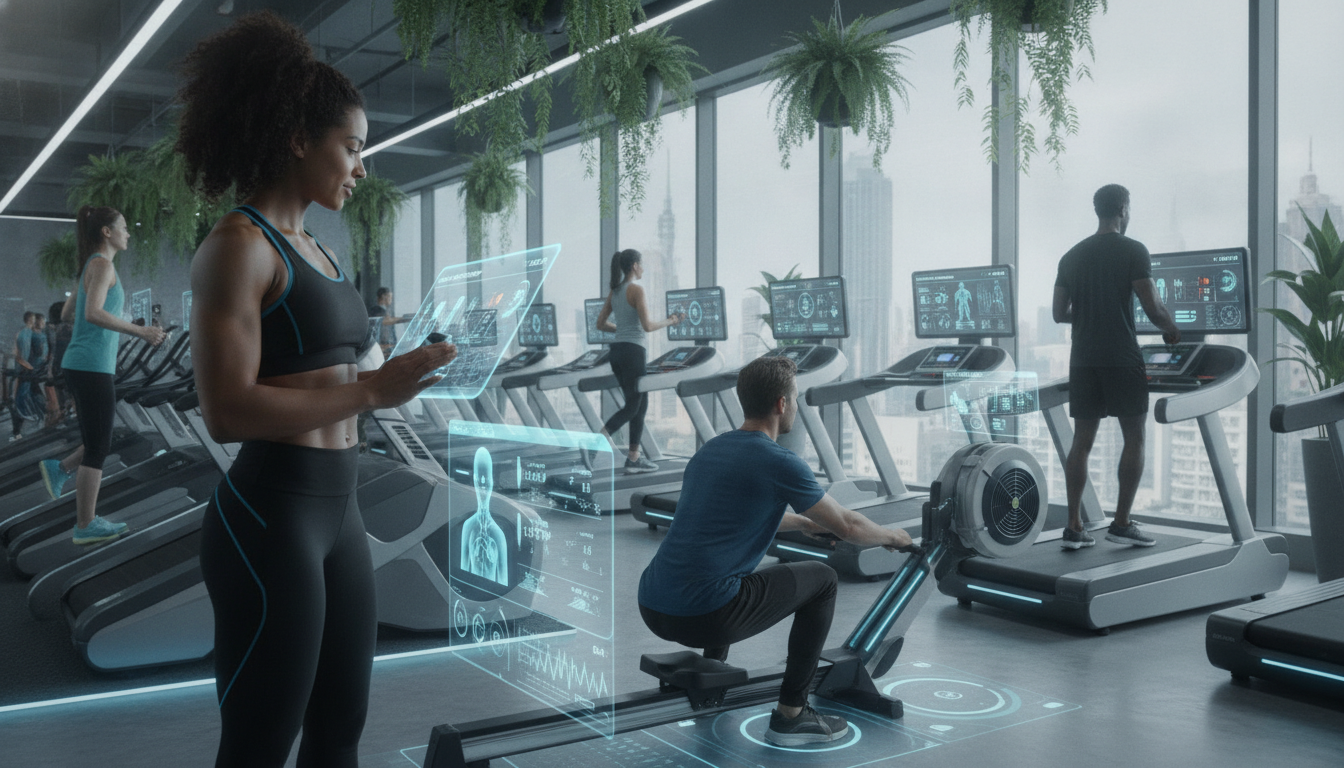
AI-powered fitness coaching now delivers smarter, safer workouts by adapting routines to your body’s current state—so every session is more effective and less guesswork.
Modern technology—from a connected smart home gym to a mobile AI workout app—uses biometric inputs such as sleep and HRV, along with movement data, to make real-time adjustments. By leveraging advanced machine learning, a personalized fitness app aligns your daily workout intensity with recovery and readiness, reducing injury risk while maximizing gains. You may see a fitness app advertisement promising fast results, but the real value is in thoughtful personalization and ongoing guidance.
Understanding how a fitness app with AI technology works helps you get the most from these tools. For example, apps like Fitbod (routine planning) and Tempo (form feedback) demonstrate how an AI personal trainer can guide your form and adjust your sets. These are examples—not one-size-fits-all solutions—so choose based on your equipment and goals.
Key Takeaways
- Real-time workout adjustments use sleep and recovery data to optimize daily load.
- Biometric sensors (HRV, heart rate, sleep) integrate with apps to improve safety and performance.
- A good fitness app blends data-driven coaching with user awareness to help you reach goals.
- Watch ads to discover tools, but evaluate features (data access, personalization) before subscribing.
- Machine learning improves long-term programming by learning your responses and adapting training over time.
The Evolution of AI-Powered Fitness Coaching: AI Personal Trainer Smart Home Gym AI Workout App Ad
Imagine a digital personal trainer that adapts your workout to how you feel each day. The era of one-size-fits-all programming is ending: fitness AI technology now uses daily data to create a personalized workout program that evolves as you progress.
Understanding the Shift from Static Plans to Adaptive Intelligence
Traditional plans were static spreadsheets that ignored daily energy, stress, or sleep. Adaptive workout plans combine inputs—sleep, HRV, rep quality, bar speed—and change your routine in near real time. An automated workout planner, acting as an AI fitness coaching platform, considers your goals, available equipment, and past performance to build a tailored, personalized workout plan.
| Feature | Static Plans | Adaptive AI Plans |
| Adjustment Speed | Manual/Slow | Instant/Real-time |
| Data Integration | Limited | High (Wearables/Sensors) |
| Personalization | Low | High/Dynamic |
How Machine Learning Algorithms Analyze Your Performance
Modern AI fitness programs use machine learning to analyze measurable signals—HRV and heart rate trends, barbell velocity, rep consistency, and movement quality from cameras or sensors. That lets your AI workout app detect early fatigue markers (for example: sustained drop in bar speed or a multi-day HRV decline) and recommend real-time workout adjustments.
Practical benefits for your training include:
- Dynamic Volume Scaling: If your 3-day HRV average drops 8–12% versus baseline, the system can reduce sets by ~20% (example rule—exact values vary by program).
- Intensity Modulation: Bar speed declines trigger lighter loads or longer rest to protect form.
- Exercise Selection: The app swaps higher-risk moves for alternatives that target the same muscles with lower injury risk.
Using these health and fitness AI solutions gives data-driven guidance for smarter workouts and long-term programming. Whether you run a smart workout program at home or use mobile apps at the gym, the aim is the same: maximize gains while reducing unnecessary risk through informed, adaptive coaching.
How Biometric Data Drives Your Personalized Training
Your body sends measurable signals every day, and modern tools are getting better at reading them. With AI-powered fitness coaching, those signals—sleep, heart metrics, movement—are used to enable recovery-based training so your workouts match your current capacity.
Matching exercise intensity to your body’s state leads to smarter personalized fitness training: you push harder when you’re ready and back off when you need recovery, reducing burnout and improving long-term progress.
Tracking Heart Rate Variability for Daily Readiness
Heart rate variability (HRV) measures the time variation between heartbeats and is a useful indicator of autonomic nervous system status. Generally, a higher HRV (relative to your baseline) suggests better readiness for intense training, while a sustained drop can indicate stress or incomplete recovery. Note: HRV interpretation varies by individual—use multi-day trends rather than a single reading.
When HRV or other recovery markers fall, you can adjust personalized workout plans in real time—lower volume, swap a heavy strength session for technique work, or take an active-recovery day—to keep your personalized fitness program effective without increasing injury risk.
- Improved Recovery: Use objective data to schedule rest and active recovery.
- Injury Prevention: Reduce high-intensity load when physiological signals show your body isn’t ready.
- Performance Gains: Capitalize on high-readiness windows for targeted, challenging workouts.
The Role of Wearable Sensors in Data Collection
Wearable fitness technology connects physiological and movement data to your app, enabling the system to make informed adjustments. Consumer devices—smartwatches, chest straps, armbands—collect resting heart rate, HRV, sleep metrics, and movement patterns that feed into your personalized workout plan.
The table below summarizes common metrics and how they influence your personalized training program:
| Metric | Purpose | Impact on Training |
| Resting Heart Rate | Baseline cardiovascular load | Detects fatigue trends; may reduce volume |
| HRV | Nervous system readiness | Determines daily intensity and recovery focus |
| Sleep Quality | Recovery status | Adjusts volume, session type, and timing |
Practical tips: check your HRV and sleep-tracking data for 7–14 days to establish a baseline before letting an app auto-adjust your program. Devices such as advanced smartwatches and some chest-strap monitors provide the most reliable HRV and sleep-stage data—review manufacturer specs (for example, Apple Watch and comparable devices) if HRV-driven programming is important to you.
Setting Up Your Smart Home Gym Environment
A well-designed smart home gym pairs reliable hardware with compatible software so you can track every workout and get meaningful, real-time feedback. When equipment, wearables, and apps integrate smoothly, your digital fitness program becomes a cohesive system that supports consistent progress.
See setup video (recommended):
Configuring Connected Equipment for Optimal Feedback
To maximize value from your smart fitness equipment, follow a basic setup checklist: position cameras or sensors with clear sightlines, calibrate the device per the manufacturer’s instructions, and run a test session to verify movement tracking. Accurate sensors are essential for form cues and meaningful progress tracking.
When installing smart exercise equipment, ensure sensors capture the full range of motion for your main lifts and common exercises. Keep firmware and the connected fitness platform up to date to access bug fixes and new features; updates often improve sensor accuracy and compatibility with third-party apps.
Syncing Your Wearables with Fitness Software
Wearable fitness technology completes the picture by adding HRV, heart rate, and sleep data to movement metrics. Link your wearable to the primary app or sync through a hub (Apple Health, Google Fit) so recovery and biometric data can shape your smart workout programs. This lets the system adjust volume and intensity based on how you actually recovered overnight.
Choose devices that integrate easily with your main app to avoid siloed data. For many users, pairing a wrist-based tracker with a chest strap (for more accurate heart rate during intense sets) and a camera-based form system provides the best balance of convenience and accuracy. Always review app permissions and data-access settings to control how your information is shared and stored.
| Component | Primary Function | Integration Benefit |
| Smart Hardware | Movement Tracking | Real-time form correction |
| Wearable Sensors | Biometric Monitoring | Dynamic intensity scaling |
| Fitness Software | Data Aggregation | Personalized smart fitness solutions |
Leveraging Computer Vision for Form Correction
Your smart exercise equipment can now track movements and deliver immediate, actionable cues. Acting like a virtual coach, camera-based systems monitor posture and motion patterns using modern computer vision fitness techniques to help you train safer and smarter.
Fitness AI technology compares your live movement against ideal templates and flags deviations in real time—useful for strength sessions where small errors compound. Note: camera systems perform best in controlled lighting and unobstructed views; they’re helpful but not infallible.
How Cameras Analyze Your Movement Patterns
Contemporary artificial intelligence fitness solutions combine high-resolution video (and in some products, depth sensing) to model joints and limb trajectories. This effectively maps your range of motion and detects inconsistent reps or asymmetries that reduce training quality.
With exercise AI, the app can quantify rep-by-rep metrics—angle ranges, tempo, and displacement—and compare them to target standards. That allows the system to spot subtle form breakdowns that a human spotter might miss during heavy or fast workouts.
Correcting Biomechanical Errors in Real Time
The power of artificial intelligence fitness technology lies in its immediate feedback: if your hips shoot up and your lower back rounds during a deadlift, the system can prompt a cue (reduce load, reset hips) so you can correct the movement on the next rep. These timely adjustments help protect joints, reinforce correct motor patterns, and accelerate progress.
Practical tip: run a simple form-check drill (record a set of 5 reps for a key lift) and review the app’s flagged errors for 2 weeks to identify consistent trends before changing the load or programming. Remember that environmental factors (lighting, camera angle, clothing) and the complexity of the exercise affect accuracy—use computer-vision feedback alongside coach input or self-awareness for best results.
| Feature | Traditional Training | AI-Assisted Training |
| Form Feedback | Manual/Subjective | Instant/Objective |
| Injury Risk | Higher (Unmonitored) | Lower (Real-time correction) |
| Data Accuracy | Low | High (Biometric & motion tracking) |
| Coaching Style | Static | Adaptive |
Implementing Velocity-Based Training for Strength Gains
Velocity-based training shifts strength work from purely load-based cues to speed and intent—measuring how fast the barbell moves gives a real-time window into neuromuscular readiness. This data-driven approach helps you train smarter, protect form, and manage fatigue across workouts.
Integrated exercise AI systems translate bar speed and rep consistency into daily training recommendations so you hit the appropriate intensity for your current level instead of chasing preset percentages that ignore recovery.
Measuring Barbell Speed to Determine Fatigue
Bar speed is a practical proxy for fatigue: when velocity drops versus your baseline, that signals reduced power output and increased technical risk. A common practical threshold used by coaches is a ~10%–15% drop in mean concentric velocity from the session baseline as an early indicator of fatigue (protocols vary by program and lift). If velocity falls consistently across sets, the system can flag fatigue and recommend lower volume or earlier session termination.
Reliable velocity measurement can come from linear position transducers, dedicated velocity sensors, IMU-based devices, or camera-based estimates, depending on the system. Consumer-grade solutions vary in accuracy—higher-end encoders and validated sensors provide the most consistent readings.
Adjusting Load Based on Movement Velocity
Velocity-informed adjustments let you auto-tune load and reps: if your average rep speed is faster than expected, the app may suggest a small weight increase; if it drops beyond your fatigue threshold, it can call for reduced weight, fewer sets, or longer rest. Example programming rules: reduce planned sets by ~20% after a sustained 10% drop in velocity, or switch to technique-focused sets until velocity stabilizes.
Practical advice: log bar-speed metrics for 2–4 weeks to establish reliable baselines before making long-term 1RM adjustments. Use velocity data alongside coach input when possible—an experienced coach can interpret context (form, sleep, stress) that raw numbers may not capture. This combined approach supports progressive overload while keeping your strength training safe and effective.
Utilizing AI Spotting and Real-Time Intensity Adjustments
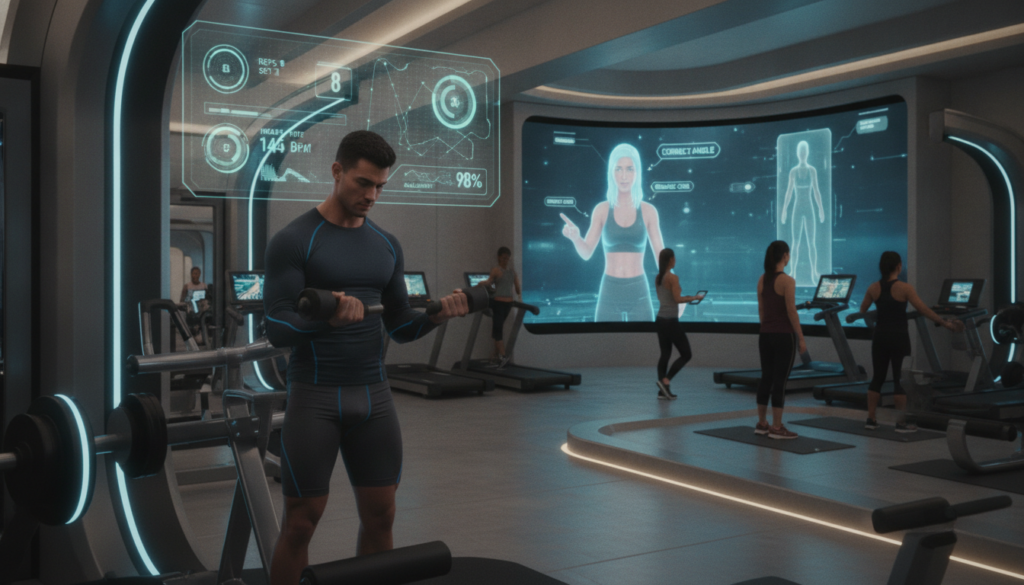
Smart digital systems are transforming strength training by acting as an extra layer of safety and intelligence during heavy workouts. When combined with velocity-based cues, AI strength training lets you push toward new PRs while managing risk through automated monitoring and on-the-fly adjustments.
How Digital Spotters Prevent Injury During Heavy Lifts
Historically, a human spotter provided safety during max attempts; today, exercise AI can play a similar role. Common behaviors include issuing audible/visual warnings, suggesting an immediate weight reduction, or triggering mechanical safety systems (where supported). Note: consumer systems differ—many provide alerts rather than physical auto-stops, while a few integrated machines can apply automatic braking or resistance adjustments.
These real-time workout adjustments let you test heavier loads with more confidence: the software watches bar speed, form, and biometric signals and intervenes if it detects unsafe patterns. Still, always validate system behavior in a supervised setting before relying on it for maximal lifts.
Dynamic Volume Scaling During Your Workout
AI-driven dynamic volume scaling tunes sets and reps within a session based on how you’re performing. If your bar speed and rep quality remain high, the system may add volume or increase intensity; if metrics decline, it may reduce sets or shift to technique-focused work. This keeps each session productive and minimizes unnecessary fatigue.
Micro-case (what to watch): compare a traditional session vs. an AI-assisted session by tracking three metrics—average concentric velocity, rep-to-rep movement consistency, and perceived exertion. Many fitness and workout apps display these metrics during sessions, letting users see how AI adjustments affect outcomes. Before trusting auto-spotting for heavy attempts, try a supervised test and review how the system responds to flagged issues.
Integrating Sleep and Recovery Metrics into Your Routine
Understanding how your body recovers overnight is essential for effective training. Modern wearable fitness technology brings sleep and recovery data into your apps so you can tailor workouts around real physiological readiness rather than guesswork.
Adjusting Training Intensity Based on Sleep Quality
Your performance varies day to day; poor sleep can blunt nervous system capacity and increase injury risk. Many systems now offer real-time workout adjustments that reduce intensity or switch to a different session type when sleep-tracking or recovery scores indicate you’re not fully recovered. Use multi-day trends rather than a single night’s reading to decide changes—this reduces false positives from an isolated bad night.
Simple rule of thumb: after establishing a 7–14 day baseline, if your 3-day rolling HRV or sleep-quality score drops by a meaningful margin (for many users that’s roughly 8–12% from baseline, though individual thresholds vary), consider reducing planned intensity by ~20% or switching to a recovery-focused session.
Recognizing Signs of Overtraining Through Data
Monitoring heart rate variability (HRV) alongside sleep and resting heart rate is one of the best objective ways to spot early fatigue. A sustained downward trend in HRV or consistently poor sleep suggests your body needs more rest—this is where recovery-based training pays off.
Practical recovery session templates when scores are low: light mobility and joint work, low-impact steady-state cardio (20–30 minutes), or technique-focused strength sets with very light loads. Track how recovery sessions affect your subsequent sessions and progress—this data-driven approach preserves long-term progress and overall health.
Tip for device users: products like the Apple Watch and dedicated chest straps provide useful sleep and HRV data for most recreational athletes—verify device specs and wear consistently to get reliable tracking.
Navigating Popular AI Fitness Platforms
AI-driven platforms now offer coaching for home and mobile use, whether you need a full-featured smart home gym or a lightweight digital fitness companion. Understanding each platform’s strengths—technology, pricing model, and ideal user—helps you choose the best connected fitness platform for your goals and lifestyle.
Features of Tonal AI Coaching
Tonal is a leading smart fitness solution built around electromagnetic resistance and integrated sensors. It provides personalized exercise recommendations and adjusts load within sessions based on performance metrics, helping manage workout volume and technique.
Best for: serious home strength users who want a space-saving, full-stack system (hardware + subscription). Pricing typically includes a significant up-front hardware cost plus a subscription for coaching features.
Capabilities of Tempo Studio and Vitruvian Trainer+
Tempo Studio prioritizes form and technique using 3D sensor arrays and on-screen instruction to deliver detailed virtual-fitness-instructor feedback. It’s ideal for visual learners who value biomechanical accuracy in their smart workout programs.
Vitruvian Trainer+ targets heavy-lifting athletes in small spaces with a compact, high-load design and dynamic load control. It’s a solid pick for users who need serious equipment but have limited room.
Best for: Tempo—people focused on movement quality and injury prevention; Vitruvian—lifters who need high-capacity hardware in tight spaces. Both require hardware purchase and typically run a subscription for advanced coaching features.
Using Fitbod and Freeletics for Mobile Guidance
For on-the-go training, mobile apps provide flexible programming. The Fitbod app acts as an automated workout planner, generating routines based on available equipment, recovery, and training history—great for gym-goers who want efficient, adaptive workouts.
The Freeletics app specializes in bodyweight and HIIT-style sessions, using AI to tailor plans to your progress and schedule—ideal for users who travel or prefer minimal equipment.
Best for: Fitbod—gym users who want intelligent programming tied to their equipment; Freeletics—users who prefer bodyweight training and short, intense sessions. Both are app-first models with subscription pricing (lower entry cost than hardware systems).
| Platform | Primary Focus | Best For | Key Technology |
| Tonal | Strength Training | Home Gym Users | Electromagnetic Resistance |
| Tempo Studio | Form & Technique | Visual Learners | 3D Computer Vision |
| Fitbod | Routine Planning | Gym Goers | Adaptive Algorithms |
| Vitruvian | Heavy Lifting | Space-Saving | Dynamic Load Control |
Quick user scenarios to help decide: if you want integrated hardware + coaching and heavy lifting capacity, consider Tonal or Vitruvian; if you prioritize form and corrective cues, Tempo is a strong match; for flexible, lower-cost mobile programming, try Fitbod or Freeletics. Also consider accessory compatibility (Apple Watch and other wearables often pair well with these platforms) and whether you prefer a hardware purchase or an app subscription model.
CTA: Create a short checklist—budget, space, equipment, coaching depth, and preferred workouts—and match it to platform features to find the best fit for your training and progress goals.
Overcoming Limitations of Automated Coaching
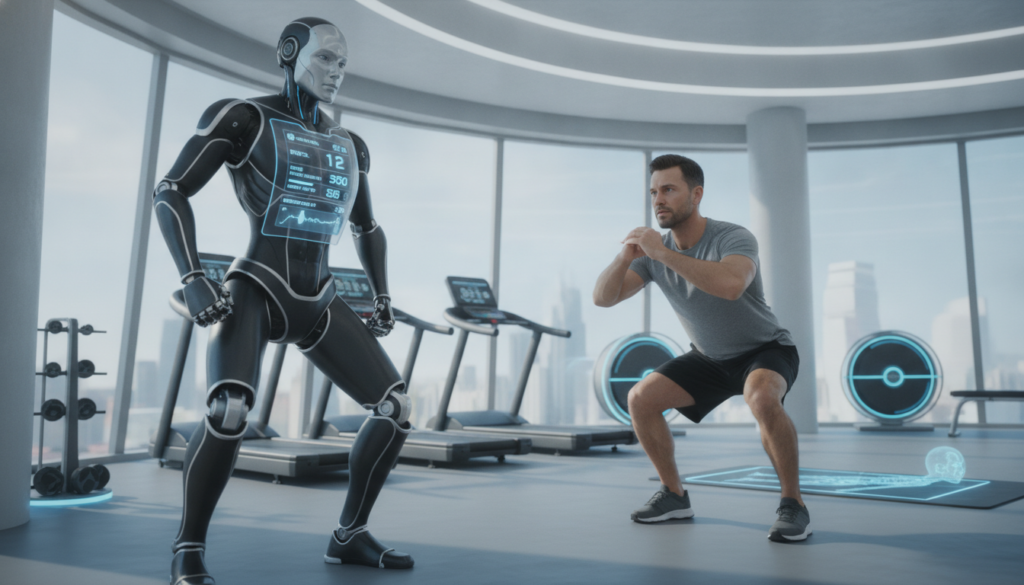
Virtual fitness coaching delivers precision and scalability, but it isn’t perfect—especially when real life interferes. Tools like Tonal AI coaching and the Fitbod app provide excellent structure and data-driven programming, yet they can miss context: work stress, illness, or an unusually poor night’s sleep that a sensor might not fully capture.
Addressing the Impact of External Stressors
Your digital fitness companion primarily reads biometrics and movement—useful signals, but incomplete. Before every session, run a quick human check-in: ask yourself three simple prompts (sleep quality last night, current stress level 1–10, any new pain). If your answers indicate low readiness, treat the app’s recommendation as advisory and reduce intensity or swap to a recovery session.
Simple “If in doubt” flow: app says “OK” + you feel off → reduce intensity by ~20% or choose a mobility/technique session; app flags low recovery + you feel fine → follow reduced plan and reassess next day. This protocol blends automated guidance with human judgment to keep you progressing without overreaching.
Why Human Intuition Still Matters in Fitness
AI and computer vision fitness excel at objective metrics, but human coaches and your own intuition capture nuances—motivation, recent life stressors, subtle pain—that sensors can miss. Think of an AI trainer as a powerful assistant: it handles programming and data analysis, while a human coach or the individual user interprets context and adjusts goals or routines accordingly.
Practical integration tips: add a daily one-question input to your app (e.g., “Rate recovery 0–10”), schedule a weekly human checkpoint (self-review or coach consult), and keep a short log of perceived exertion for each session. These small steps let AI optimize volume and form while human oversight preserves safety, experience, and long-term adherence.
| Feature | AI Coaching | Human Intuition |
| Data Analysis | High Precision | Subjective Awareness |
| Stress Detection | Limited/Indirect | High/Direct |
| Adaptability | Algorithmic | Instinctual |
| Goal Setting | Metric-Driven | Holistic/Balanced |
Balancing Data-Driven Insights with Intuitive Training
Long-term success comes from combining precise, data-driven guidance with your own body awareness. AI delivers useful metrics and programming, but your internal signals—energy, soreness, motivation—help you apply those recommendations safely and sustainably.
Learning to Listen to Your Body Beyond the App
No virtual personal trainer can feel subtle cues during a set. If you feel unusually tired, sore, or stiff, treat your personalized workout plan as a guide, not an order. Tuning into your body prevents overtraining and preserves long-term progress.
Daily check-in, you can copy into any app:
- Sleep quality last night (Good / Okay / Poor)
- Energy level now (1–10)
- Any new pain or soreness? (Yes / No)
If two or more answers indicate low readiness, shift the session to mobility, technique work, or a short, low-intensity routine rather than pushing high loads.
Managing Motivation and Mental Health Factors
Motivation fluctuates—sometimes the best personalized fitness recommendations are rest or a light movement day. Mental health matters for adherence: a rigid plan that ignores context increases the risk of burnout. Blend AI suggestions with compassion and short-term program edits when needed.
Example modifications for low-motivation days: replace a heavy strength session with 20–30 minutes of mobility + low-impact cardio, a short HIIT-style workout, or a bodyweight circuit that maintains movement without high psychological cost. These small changes protect your routine while keeping momentum.
Try this 1-week experiment: follow an app-based program for 5 days, then intentionally apply intuition for 2 days (swap or scale workouts). Compare perceived exertion and recovery; you may find the hybrid approach improves consistency and results.
| Indicator Type | Data-Driven Signal | Intuitive Signal | Recommended Action |
| Physical Readiness | High HRV Scores | Feeling Energetic | High-Intensity Training |
| Recovery Status | Low Sleep Quality | Persistent Muscle Soreness | Active Recovery or Rest |
| Mental State | Consistent App Usage | Feeling Motivated | Standard Training Load |
| Stress Levels | High Daily Activity | Feeling Mentally Drained | Light Movement or Yoga |
Quote to remember: “Think of AI as your data-savvy assistant and your intuition as the final editor.” Use both data to inform programming and the human coach mindset to adapt and care for your long-term fitness level and muscle health.
Preparing for the Future of Intelligent Fitness
Future fitness coaching will shift from reactive tracking to a proactive health partnership—integrating movement, nutrition, sleep, and predictive insights so your AI fitness program can recommend not only workouts but also smarter lifestyle choices that support long-term performance and recovery.
The Integration of Nutrition and Circadian Rhythms
Next-generation AI-based workout programs are being designed to consider your circadian rhythm and nutrition when scheduling and programming sessions. Rather than a fixed training slot, an automated workout planner could suggest the best time of day for strength versus conditioning based on your sleep-wake cycle and recent meals—helping you train when your body is naturally more ready.
Real-time nutrition tracking is emerging but varies in maturity: some systems use manual logging + photo recognition, while experimental integrations use continuous glucose monitoring (CGM) data to inform immediate fuel needs. These features are in active development or limited beta in many apps—expect broader consumer access as integrations with nutrition platforms and wearables expand.
Advanced Muscle Monitoring and Predictive Analytics
Wearable sensors and predictive models are improving insights into muscle recovery. Combining velocity-based training metrics with muscle-level sensors (EMG prototypes and other biomarkers in research settings) will help flag early signs of overtraining and recommend programming adjustments before injuries occur. Right now, some capabilities are research- or enterprise-grade; consumer-ready solutions are arriving gradually.
Predictive analytics will also refine how sleep tracking informs training. By analyzing trends in heart rate variability (HRV), sleep quality, and movement, future AI fitness programs can forecast readiness and recommend precise intensity changes to preserve progress and boost performance.
Practical note: if you want to experiment today, look for apps that integrate Apple Health / Apple Watch data, CGM feeds (if you already use one for medical reasons), and food-logging tools—these offer an early taste of integrated personalization while full real-time nutrition sensors and validated muscle monitors continue to mature.
CTA: Subscribe to platform newsletters or beta programs to get early access to new features and test how integrated data affects your training progress and recovery access.
Conclusion
AI is reshaping how we approach fitness by using data from wearables and connected devices to deliver more precise, adaptive coaching. A modern virtual personal trainer—whether embedded in a smart home gym or in a mobile app—can tailor workouts to your readiness, helping you progress while reducing unnecessary risk.
Platforms such as Tonal, Tempo Studio, and the Vitruvian Trainer+ showcase different trade-offs between hardware, space, and coaching depth, while mobile-first options like the Fitbod app and Freeletics offer flexible, affordable programming. Choose the option that fits your budget, space, and training goals—hardware systems typically require a higher upfront cost plus a subscription, while apps are lower-cost and subscription-based.
Safety note: Use progressive overload principles, validate device measurements (HRV, bar speed) over a baseline period, and consult a healthcare professional if you have medical concerns before starting an aggressive program.
Next steps you can try today: pick one platform, run a 2-week trial (most services offer one), and compare objective metrics (HRV trends, session velocity) and subjective measures (perceived exertion, recovery). That direct comparison will clarify which coaching experience and programming suits your needs.