

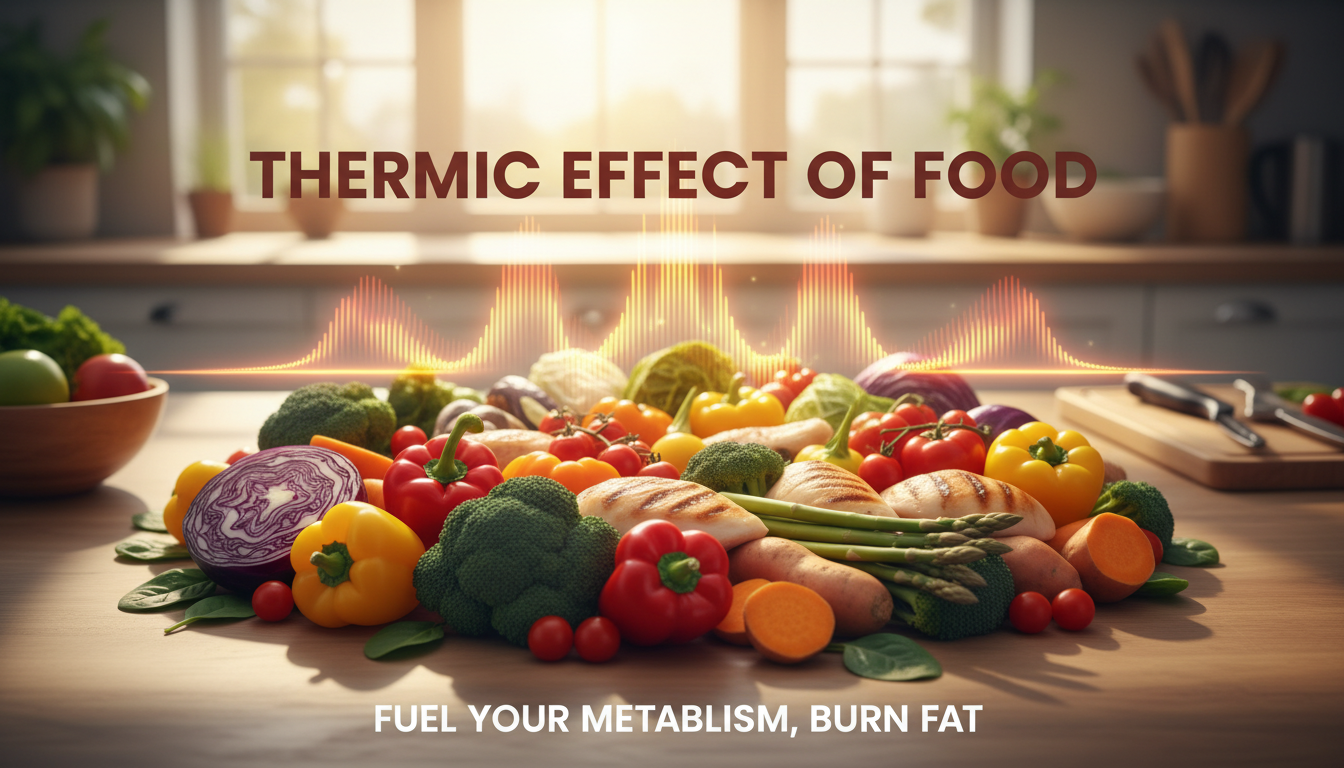
Did you know your body burns energy when it breaks down food? This is called the thermic effect of food. It’s a secret way to help you lose weight. By choosing the right foods, you can boost your metabolic rate throughout the day.
The type of food you eat is very important. Eating a fibrous steak or raw veggies makes your body work hard. This takes a lot of energy. On the other hand, drinking a liquid shake is easy for your body to digest and requires very little energy.
Knowing the difference between whole foods and processed foods helps you work smarter, not harder. By choosing foods that require more effort, you boost your TEF metabolism. Every meal becomes a powerful tool for losing fat.
Key Takeaways
- Digestion requires energy, which contributes to your daily calorie burn.
- Whole, fibrous items force your body to work harder than refined alternatives.
- Liquid nutrition often bypasses the energy-intensive breakdown process.
- Strategic meal choices can naturally increase your internal heat production.
- Focusing on natural ingredients helps you maintain a more efficient body composition.
Understanding the Thermic Effect of Food and Metabolic Rate
Most people see food as just fuel, but your body sees it as a complex metabolic project. To improve your health, you need to look beyond just counting calories. You must understand how your body uses energy.
Your daily energy use is split into three parts: Basal Metabolic Rate (BMR), physical activity, and the thermic effect of food. The BMR is the largest component, accounting for 60–75% of your daily calorie burn. Knowing this helps you better manage your weight and energy levels.
Defining Dietary Thermogenesis
Dietary thermogenesis, or the thermic effect of food (TEF), is the energy your body uses to digest your food. It’s like the “cost of doing business” for your digestive system. When you eat, your body works hard to break down your food into fuel.
This process is crucial for diet-induced thermogenesis. Many people forget this when calculating their daily calorie needs. By choosing foods that are harder to digest, you can burn more calories without extra exercise.
How Your Body Processes Energy
Your body adjusts its metabolic rate based on the food you eat. When you eat, your metabolism speeds up to handle the nutrients. This shows how important nutrition and metabolism are linked; the food you eat affects how much energy your body uses.
Understanding TEF in nutrition helps you make better food choices. Whether you want to burn more calories or understand how food affects your metabolism, knowing about diet-induced thermogenesis is crucial. Your body is efficient, but it still needs a lot of energy to turn food into fuel for your day.
The Biological Cost of Digestion
Some foods burn more calories than others because of the biological cost of digestion. Many people think eating is just a passive act. But your body is always working hard to digest what you eat. This active, energy-intensive process is called dietary thermogenesis.
Energy Expenditure During Nutrient Breakdown
When you eat, your body works hard to get nutrients. This work is a key part of your daily metabolism. It’s like a tax on every meal you eat.
“The thermic effect of food is the energy required for the digestion, absorption, and disposal of ingested nutrients.”
To get the most out of your diet, consider how your body responds to different foods. Here are the main steps in this energy-using process:
- Mechanical breakdown: Chewing and stomach churning.
- Chemical breakdown: Enzyme secretion and acid production.
- Nutrient transport: Moving molecules into the bloodstream.
Why Macronutrients Matter for TEF
Not all calories are the same when it comes to TEF metabolism. Protein digestion requires much more energy than fat or carbohydrate digestion. This is because breaking down proteins into amino acids is harder work for your body.
Eating high-quality protein helps keep your muscles lean. This is key for understanding tef and how it affects your metabolism. By focusing on these pathways, you can better use tef for weight loss.
| Macronutrient | Energy Cost | Metabolic Impact |
|---|---|---|
| Protein | High (20-30%) | Supports muscle |
| Carbohydrates | Moderate (5-10%) | Quick energy |
| Fats | Low (0-3%) | Efficient storage |
Choosing the right nutrients has big health benefits. By optimizing your diet, you make your digestive system more efficient for fat loss.
Whole Foods Versus Processed Foods
When you look at whole foods vs processed foods, it’s clear how digestion affects energy. Your body treats each calorie differently based on the food’s state. Knowing how food affects your metabolism is key to using energy wisely.
The Structural Integrity of Whole Foods
Whole foods have natural fiber and complex cells, making digestion harder. This effort is part of food thermogenesis. It means your body burns more energy breaking down these foods.
Choosing clean eating means eating foods in their natural state. This way, your body works harder to get nutrients. So, your metabolism gets a boost from whole foods over processed ones.
The Hidden Cost of Food Processing
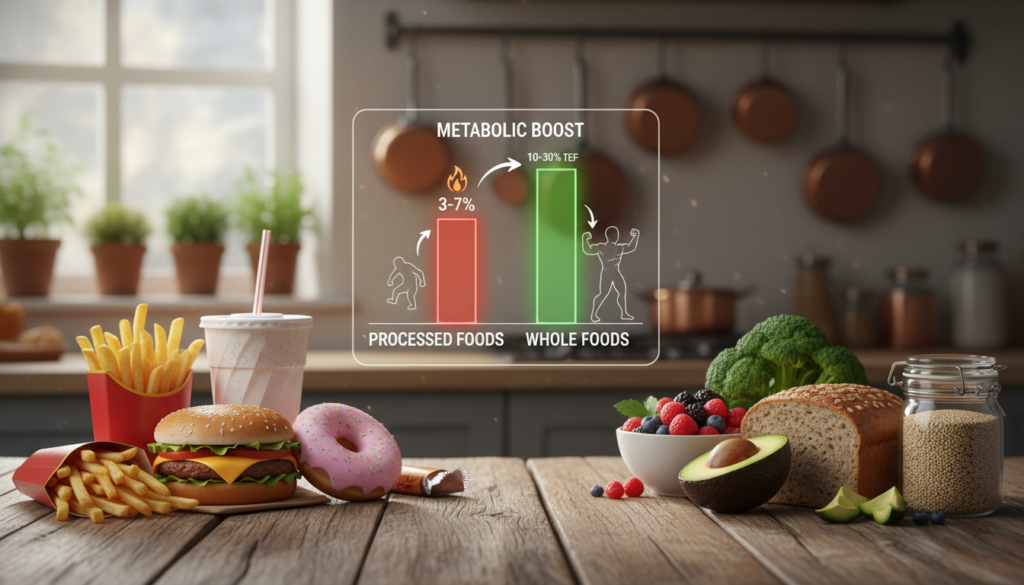
Food processing effects often make foods easier to digest. But this makes processed foods and metabolic rate less beneficial. These foods are quickly absorbed, leading to less energy spent by your body.
The table below shows how your body handles whole and processed foods differently:
| Feature | Whole Foods | Processed Foods |
|---|---|---|
| Digestive Effort | High (Mechanical) | Low (Pre-digested) |
| Fiber Content | High/Intact | Low/Removed |
| Metabolic Cost | Significant | Minimal |
| Nutrient Density | High | Variable/Low |
The food’s impact on metabolism depends on the effort of digestion. Choosing whole foods over processed ones is better for health. Staying away from food processing effects on metabolism helps keep your metabolism high and efficient.
Comparing Energy Requirements: Steak Versus Shakes
When picking your next meal, the food’s state is as important as its calories. A hearty steak and a protein shake show a key difference in energy use. Both offer similar protein, but how your body processes them varies a lot.
The Mechanical Work of Chewing and Digestion
Eating a whole steak means your body has to work hard to break it down. This rigorous process boosts your metabolism for hours. It’s a big reason why whole foods are better than processed ones.
Choosing solid, nutrient-rich proteins makes your body work harder. This effort helps “cook” your metabolism from the inside. Knowing how your body digests protein is key to boosting your metabolic rate through food choices.
Why Liquid Calories Bypass Metabolic Hurdles
On the other hand, processed shakes are liquid and easy to digest. They don’t require as much energy to absorb nutrients. This food processing impact means they have a lower thermic effect than whole foods.
Dependence on liquid nutrition means missing out on the calorie-burning benefits of whole foods. The processed foods and metabolic rate link is clear: refined foods require less bodily work. To keep your metabolism high, choose whole foods over processed ones.
Selecting High-TEF Foods for Maximum Fat Loss
Boosting your metabolism starts with understanding which nutrients require more energy to digest. Eating nutrient-dense foods provides your body with the building blocks for muscle growth. It also helps increase the energy use of your diet. This smart nutrition plan is key to lasting fat loss and health.
Prioritizing Lean Proteins
Protein is harder for your body to break down than fats or sugars. This protein digestion process burns a lot of calories. Adding foods like chicken breast, white fish, or tofu to your meals boosts your calorie burning.
Protein’s high thermic effect makes it a natural metabolism booster. Eating these foods means your body has to use more energy just to digest them. This is a simple yet effective way to increase your metabolic rate without supplements.
Incorporating Fibrous Vegetables and Complex Carbohydrates
Adding fibrous veggies and complex carbs to your diet is also important. These foods have natural fiber that takes work to digest. This slow energy release keeps your metabolism going and offers TEF benefits that processed foods can’t match.
Choosing whole, unprocessed foods is the heart of clean eating. Foods like broccoli, kale, or legumes are calorie-burning and filling. By picking these options, you learn how to lose weight naturally and sustainably.
Cooking Your Metabolism from the Inside Out
Think of your metabolism as a fire that needs constant, high-quality fuel to keep burning bright. By understanding how diet affects metabolism, you can make every meal work for you. This means choosing calorie-burning foods that make your body work harder to digest them.

Strategies for Meal Composition
The key to boosting metabolism with whole foods is in your macronutrient composition. Pairing lean proteins with fibrous veggies creates a challenge for your body. This keeps your system active and engaged, boosting your metabolism.
Choosing whole, unprocessed foods makes your body work harder to digest them. This intentional selection of food increases the energy cost of your meals. By focusing on nutrient-dense options, you naturally boost your daily energy expenditure.
Timing Your Intake for Metabolic Efficiency
The timing of your meals also affects your metabolism. Avoiding long periods without eating helps prevent energy dips that slow you down. By maximizing TEF through nutrition, you keep your calorie burn steady all day.
Regular, balanced meals help keep your metabolism running smoothly. By focusing on metabolic efficiency and whole foods, you avoid metabolic crashes. This ensures your body is always ready to process fuel effectively.
| Strategy | Metabolic Impact | Primary Benefit |
|---|---|---|
| Protein-Fiber Pairing | High | Extended digestion time |
| Consistent Meal Timing | Moderate | Prevents metabolic dips |
| Whole Food Focus | High | Increased thermic cost |
| Hydration Support | Low | Facilitates nutrient transport |
Optimizing Nutrient Absorption and Metabolic Efficiency
Reaching your health goals is more than just choosing the right foods. It’s about how your body uses them. By optimizing metabolic rate, you make sure every calorie counts. This is key for boosting metabolism with whole foods and staying healthy for the long term.
The Role of Gut Health in Thermogenesis
Your gut microbiome controls your energy use. A healthy gut helps you process food well, which affects your energy use. A balanced gut supports metabolic processes that help burn energy.
Bad gut health can cause inflammation, slowing down your nutritional and metabolic progress. A diverse gut microbiome helps your body better use energy. This balance is key to keeping weight off.
Balancing Micronutrients to Support Metabolic Pathways
To improve nutrient absorption efficiency, you need the right nutrients. Micronutrients are crucial for your cells to work well. Without them, even the best diet won’t work.
Eating nutrient-dense foods gives you the vitamins and minerals needed for metabolism enhancement. These nutrients are essential for optimizing metabolism and keeping your body running well. Here’s a table showing how certain nutrients affect your metabolism.
| Nutrient Category | Primary Metabolic Role | Impact on Efficiency |
|---|---|---|
| B-Vitamins | Energy conversion | High |
| Magnesium | Enzyme activation | High |
| Zinc | Hormonal regulation | Moderate |
| Iron | Oxygen transport | High |
Focus on metabolic efficiency and whole foods to support your health. By increasing metabolic rate through good nutrition, you give your body what it needs to succeed. Paying attention to these details will improve your metabolic efficiency and the effectiveness of your diet.
Common Pitfalls in Metabolic Rate Regulation
Your journey to a better metabolism often involves avoiding common traps in modern foods. Many people struggle with regulating their metabolic rate because they eat high-energy foods that require little effort. Understanding metabolic rate fluctuations can help you make choices that support your long-term health.
Avoiding the Processed Food Trap
The impact of processed food on health is often overlooked. Refined products are easy for your body to break down. This means you miss out on the natural thermic benefits of whole, fibrous foods.
Often, relying on these easy options leads to unexpected plateaus. To keep your body at its best, watch out for these common pitfalls:
- Choosing refined grains over whole, intact grains.
- Over-relying on liquid calories that bypass the digestive process.
- Ignoring the food processing effects on nutrient bioavailability.
- Prioritizing convenience over the structural integrity of your meals.
Recognizing the Impact of Caloric Density
The impact of diet on metabolism is greatly influenced by calorie density. Foods with high caloric density have a lot of energy in a small volume. These foods are easily absorbed, doing little to help optimize metabolic rate.
By focusing on whole, unprocessed foods, you regain control over your metabolism. Foods that require more energy to digest help increase metabolic rate. Choosing nutrient-dense, whole foods over processed ones keeps your body working hard, naturally boosting your metabolism.
Practical Steps to Implement a High-TEF Diet
Starting your journey to better metabolic efficiency is easy. Just make a few simple changes in your kitchen. By choosing and preparing your meals wisely, you help your body work better. These small steps help your body function at its best.
Planning Your Grocery List for Whole Food Success
Your health journey begins at the grocery store. Look for nutrient-dense foods that take a lot of energy to digest. Choose whole food advantages like raw veggies, lean proteins, and whole grains over processed foods.
Focus on foods high in fiber. They help boost your metabolism. Eating foods in their natural state makes your digestive system work harder. This is key to clean eating.
Adjusting Your Cooking Methods to Preserve Fiber
How you cook your food matters a lot. Use gentle methods like steaming or light sautéing. This keeps the fiber in your food, helping your metabolism.
Avoid over-processing your food. It lowers the energy your body uses to digest. Keeping your metabolism-boosting foods natural helps your body absorb nutrients better. The table below shows how different cooking methods affect your body’s energy use.
| Cooking Method | Fiber Retention | Metabolic Impact |
|---|---|---|
| Steaming | High | High TEF |
| Light Sautéing | Moderate | Moderate TEF |
| Deep Frying | Low | Low TEF |
| Boiling (Long) | Low | Low TEF |
Adding these calorie-burning foods to your diet is simple. By choosing cooking methods that support metabolic efficiency and whole foods, you give your body what it needs. Enjoy the benefits of whole foods as you build a stronger, more efficient metabolism.
Conclusion
Using the thermic effect of food is a smart way to increase your energy use. Eating whole, protein-rich, and fibrous foods makes your body work harder. This boosts your metabolism from the inside.
Learning about tef in nutrition helps you make better food choices. You’ll see how it helps with weight loss by focusing on quality foods. This supports your long-term health goals.
Being consistent, not perfect, is key in managing your metabolism. Small daily changes add up over time. Tracking how your body reacts to different foods helps you understand metabolic changes.
The effect of tef on weight loss is clear when you avoid processed foods. You should feel energized by what you eat. Start today by choosing better quality meals to see the benefits of tef for yourself.
Understanding tef helps you navigate nutrition with confidence. Your journey to better health begins with every meal. Adopt these principles to improve your health and energy for years.


https://shorturl.fm/Gyi4P