Building a daily meditation habit depends less on session length than on consistency. Lasting success comes from practicing, no matter how you feel. Many people struggle when they treat mindfulness as an elaborate performance instead of an ordinary task.
You can build meditation consistency by keeping each session brief. Committing to two to five minutes builds momentum without feeling overwhelming. Like brushing your teeth, meditation should be a non-negotiable morning task requiring little willpower.
By starting a meditation practice with small steps, you remove barriers that often lead to quitting. This guide offers a clear system for your journey. You will learn to choose effective cues, create a dedicated space, select simple techniques, and track progress on difficult days.
Key Takeaways
- Focus on showing up every day rather than aiming for long, perfect sessions.
- Keep your initial sessions between two and five minutes to ensure success.
- Treat your mindfulness routine as a non-negotiable task, like brushing your teeth.
- Use specific environmental cues to trigger your practice automatically.
- On busy days, adapt your approach to maintain momentum without stress.
daily meditation habit, how to start meditating, meditation for beginners
Building a steady mindfulness routine starts with changing how you view your daily schedule. Many people fear sitting in silence, but starting meditation is simpler than most people think. For meditation for beginners, small steps can help you build a meditation habit that fits your busy life.
Define consistency as returning to the practice each day
Consistency does not mean keeping a perfect, unbroken streak of sessions. It means returning to the cushion after distraction or a missed session. To maintain a meditation practice, treat each return as a victory, not a failure.
“The goal of meditation is not to control your thoughts, but to stop letting them control you.”
Set realistic expectations for stress relief, focus, sleep, and mental clarity
Approach your practice with realistic expectations. Meditation can support stress relief and mental clarity, but these benefits often develop slowly. See each session as a long-term investment in well-being, not a quick fix for immediate problems.
| Benefit | Expectation | Timeline |
|---|---|---|
| Stress Relief | Gradual reduction | Weeks to Months |
| Focus | Improved attention | Consistent Practice |
| Sleep Quality | Better relaxation | Ongoing |
| Mental Clarity | Increased awareness | Steady Progress |
Treat meditation like brushing your teeth: brief, ordinary, and non-negotiable
The best way to establish a daily meditation habit is to treat it like basic hygiene. Like brushing your teeth, meditation should be brief, ordinary, and non-negotiable. Removing daily decisions makes it easier to show up for yourself.
Step 1: Start With a Two- to Five-Minute Meditation
Consistency comes from showing up each day, not from practicing intensely. When you begin a daily meditation routine, avoid planning more time than your schedule can support. Brief sessions remove barriers that can make you quit.
Choose a starting duration you can complete on your busiest day
Choose a time that feels manageable, even when your schedule is packed. Two to five minutes is a practical starting range for most beginners. If you can practice on your busiest day, maintaining momentum throughout the week becomes easier.
Use one minute as your minimum viable practice
Some days may leave you overwhelmed or short on time. Use one minute as your minimum viable practice to keep the habit alive. This keeps your daily commitment going, even when you have time for only a few deep breaths.
“The journey of a thousand miles begins with one step.”
Understand why short sessions are effective for building momentum
Short sessions lower your resistance to starting. When a breath awareness meditation lasts only a few minutes, you are more likely to practice. These moments show that you can keep showing up for yourself.
Let session length grow naturally instead of forcing longer meditations
Do not jump into twenty-minute sessions right away. Let session length grow as you become more comfortable with the practice. Whether you choose a guided meditation or silent reflection, focus on presence, not duration. These meditation tips show that steady, small steps create lasting results.
Step 2: Anchor Meditation to an Existing Daily Routine
A lasting habit needs more than willpower. It needs a reliable trigger. Habit stacking pairs a new behavior with an action you already do automatically.
Pair meditation with brushing your teeth, morning coffee, or another reliable habit
Daily life includes many automatic actions. You may brush your teeth, brew morning coffee, or lock your front door every day. Attach meditation to an anchor so you don’t have to remember it.
For example, sit for a brief body scan meditation after pouring your coffee. Since coffee already fits your day, meditation becomes a natural part of that flow.
Choose a consistent time that fits your energy and schedule
Many people seek a “perfect” practice time, but the best time is one you can repeat. If you feel alert early, a morning meditation may suit you best. If mornings feel chaotic, forcing practice then may cause frustration.
Notice your energy levels throughout the day. Meditation for stress relief may work best during lunch, when you need to reset your focus. Match practice to your natural rhythm instead of fighting your calendar.
Decide whether morning meditation, midday practice, or evening meditation is most realistic
Your schedule shapes what you can sustain. Morning practice can create a calm tone, while evening practice helps you relax before sleep. Midday practice can break up a long work shift.
| Time of Day | Primary Benefit | Best For |
|---|---|---|
| Morning | Mental Clarity | Starting the day with focus |
| Midday | Stress Reduction | Resetting during work hours |
| Evening | Better Sleep | Unwinding from daily tension |
Create a clear habit-stacking cue: after this routine, I will meditate
Use a simple statement to define your new routine. Tell yourself, “After I finish my morning coffee, I will practice loving-kindness meditation for three minutes.” This clear instruction links an old habit to your new goal.
Defining the “after” moment removes guesswork. You no longer decide when to start; finishing your anchor task becomes the automatic cue. This structure turns a vague intention into a concrete daily reality.
Step 3: Design a Place and Setup You Can Repeat
You do not need a zen garden to build a lasting meditation habit. Create an inviting space that takes little effort to use. A simple setup removes mental barriers that can stop you from starting.
Select one quiet, accessible location for your daily meditation routine
Choose a spot where you can sit comfortably without interruptions. It can be a bedroom corner or a living room chair. Consistency matters because the same place helps your brain know when to settle down.
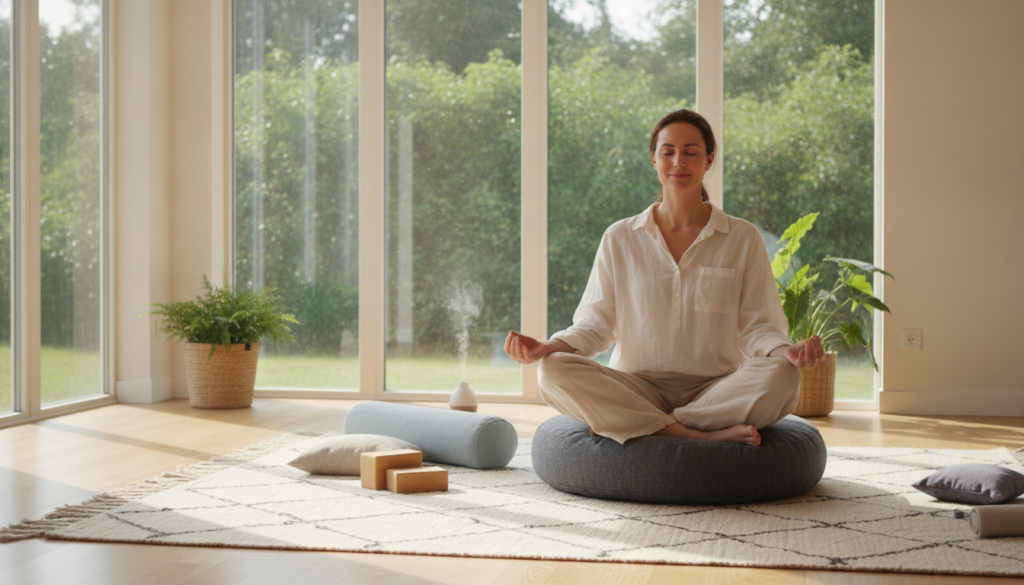
Prepare a chair, cushion, timer, or blanket without overcomplicating the setup
You might wonder how long to meditate when you are starting. A 5-minute meditation is an excellent way to test your setup without feeling overwhelmed. You need only a chair, firm cushion, or simple timer to keep your session on track.
Keep distractions manageable rather than waiting for perfect silence
Many beginners wait for total silence, but busy households rarely provide it, so manage distractions. Use noise-canceling headphones or accept the sounds around you. You can use meditation apps for guided focus, and when comparing Headspace vs Calm, choose the simpler interface.
| Feature | Simple Setup | Complex Setup |
|---|---|---|
| Preparation Time | Under 30 seconds | Over 5 minutes |
| Equipment Needed | Chair or cushion | Incense, mats, candles |
| Sustainability | High | Low |
Make the meditation space visible so it prompts action
Keep your cushion or chair in plain sight as a visual cue for practice. When your gear is in a closet, you may forget your commitment. Visible equipment becomes a gentle reminder to sit down and begin.
Step 4: Choose a Simple Meditation Technique
A consistent practice starts with a technique that feels natural and easy. The best method is one you can repeat each day comfortably. A simple approach supports long-term meditation consistency and helps you avoid overthinking your routine.
Practice breath awareness meditation by noticing natural breathing
Breath awareness is an effective starting point for a mindfulness practice. It needs no special equipment or prior knowledge. Sit quietly and notice your breath as it naturally enters and leaves your body.
Use a guided meditation app when structure or instruction helps
If focusing alone feels hard, digital tools can provide helpful structure. These apps offer clear instructions that keep you on track during each session.
Compare Headspace and Calm by choosing the app with the simplest repeatable routine
When choosing between Headspace and Calm, pick the app with the least friction. It should let you start quickly without endless menus. Choose a simple, repeatable routine that fits your daily life.
Try body scan meditation to notice physical sensations from head to toe
Body scanning can support sleep meditation and deep relaxation. Move your attention slowly from your toes to your head to release stored tension. This technique helps you notice how your body feels right now.
Use loving-kindness meditation to develop warmth toward yourself and others
Try loving-kindness to support your emotional well-being. Silently repeat kind phrases for yourself and others. This method shows meditation’s benefits beyond stress reduction.
Choose walking meditation when sitting still feels impractical
Sitting on a chair or cushion can feel restless or hard. Walking meditation helps you keep your habit while moving slowly and with care. It supports meditation for focus when you need a clear mind while staying active.
- Breath Awareness: Best for simplicity and daily repetition.
- Guided Apps: Ideal for those who need external structure.
- Body Scan: Perfect for physical relaxation and sleep.
- Loving-Kindness: Great for building emotional warmth.
- Walking Meditation: Useful when you cannot sit still.
Step 5: Follow the Practice When Your Mind Wanders
If your focus slips, you are doing the work correctly. Many people struggle to overcome meditation obstacles because they think a quiet mind is the only goal. Noticing that thoughts drift is the moment your practice begins.
Recognize that noticing distraction is the central mindfulness exercise
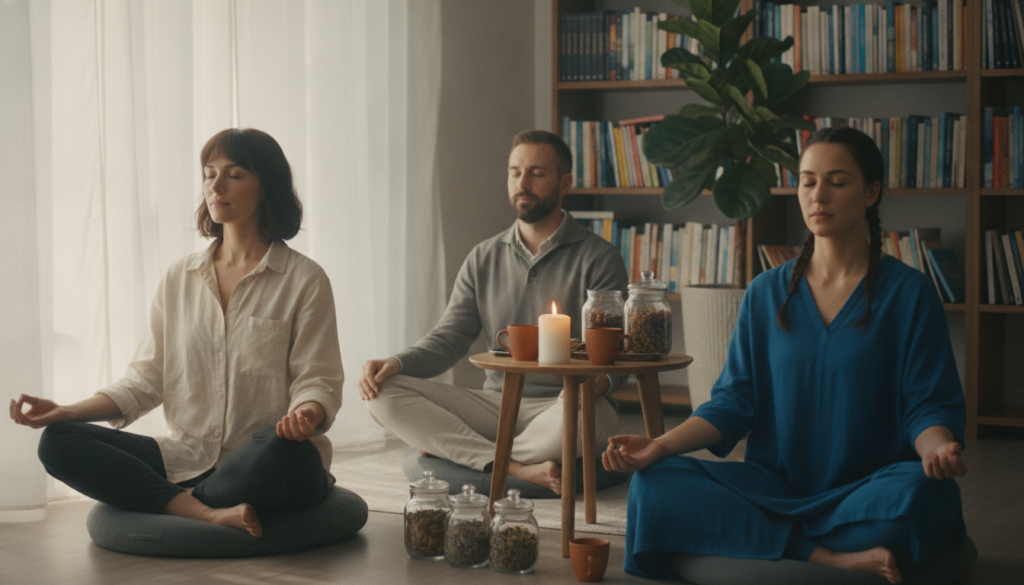
Think of attention as a muscle that needs training. Each time you catch your wandering mind, you complete one mental repetition. This simple awareness is central to any beginner meditation guide.
Name the distraction gently as thinking, planning, remembering, or hearing
When you notice a thought, label it gently and without judgment. Say “planning” when you think about your schedule, or “remembering” when you reflect on the past. This technique creates helpful distance between you and your thoughts.
“The goal of meditation is not to get rid of thoughts or emotions. The goal is to become more aware of your thoughts and emotions and learn how to move through them without getting stuck.”
Return attention to the breath, body, words, or walking steps
After labeling the distraction, guide your focus back to your anchor. Your anchor might be air entering your lungs or your feet touching the floor. The benefits of daily meditation often come from this cycle of drifting and returning.
Replace self-criticism with curiosity about how the mind works
Instead of feeling frustrated, become curious about where your mind went. Ask why your brain chose that topic today. This shift turns a wandering mind into a tool for self-discovery.
Measure success by returning, not by achieving a blank mind
Success is not measured by time focused, but by how often you choose to return. One of the most effective meditation techniques for beginners is celebrating every return as a victory. Use the table below to reframe your practice experience.
| Common Experience | Old Mindset | New Mindset |
|---|---|---|
| Mind wanders | I failed today | I am practicing awareness |
| Feeling restless | This is not working | I am noticing my energy |
| Judging thoughts | I should be better | I am curious about my mind |
| Returning focus | I lost my time | I strengthened my focus |
Step 6: Make Meditation Consistency Visible
Tracking meditation turns an invisible habit into a clear achievement. Recording each effort shows your brain that you value your mindfulness practices. This small act strengthens your commitment over time.
Track each completed session with a calendar, journal, or habit app
You need no complex tools to track your growth. A wall calendar, notebook, or habit app can support your beginner meditation tips. Marking an “X” gives quick visual feedback and strengthens the habit.
Use a visible streak to reinforce your daily meditation habit
A chain of successful days can motivate you. A visible streak makes you want to protect your progress and avoid breaking the cycle. This approach helps you build a meditation routine beyond the first few weeks.
Follow the never-miss-two-days rule after an interruption
Life is unpredictable, and missing one day is normal. The “never-miss-two-days” rule keeps one missed session from becoming a lasting lapse. Returning quickly protects your progress without guilt.
- Acknowledge the missed day without self-judgment.
- Commit to returning to your mindfulness techniques the very next day.
- View the interruption as a temporary pause, not a failure.
Restart immediately without trying to compensate with an excessively long session
When you return, avoid trying to “make up” lost time with a marathon session. Compensating can cause burnout and make meditation feel like a chore. Instead, resume your usual short session to keep the habit sustainable.
Record useful observations without turning meditation into a performance test
Keep a brief log of how you feel during or after each session. Note changes in your energy, focus, or mood. These insights help you build a meditation routine focused on self-awareness, not a “perfect” score.
Step 7: Lower the Bar on Difficult Days
When life gets busy, simplify your practice instead of stopping. You can maintain your mental clarity through meditation with little time or energy. The goal is to keep the habit alive, even when your session changes.
Replace a full session with one minute when time or energy is limited
Consistency supports establishing a meditation routine. If you have only sixty seconds, sit quietly. This brief effort keeps the habit going during busy days.
Use three deliberate breaths as a practical emergency version of the habit
When one minute feels impossible, take three deep, intentional breaths. This is a practical emergency version of your practice. It anchors you in the present without requiring much time.
Shrink the practice instead of skipping it because conditions are imperfect
Many people abandon goals when they cannot reach perfection. Instead, shrink your session to fit your current reality. These tips for daily meditation show that practice matters more than session length.
Adapt posture, location, and technique when restlessness or fatigue appears
If you feel too tired to sit upright, lie down or use a different chair. You can also try guided meditation techniques when your mind feels scattered. A simple change in your environment may reset your focus.
Return to your original reason for practicing when motivation fades
When motivation fades, remember why you started. Whether you seek peace or better focus, your purpose provides the motivation to keep going. If you are new, guided meditation for beginners can provide structure and help you get back on track.
Step 8: Overcome Common Obstacles Without Abandoning the Routine
Obstacles will come up on your journey, but they don’t have to end your practice. The importance of meditation includes valuing commitment over a perfect session each day.
Handle lack of time by scheduling a shorter session before removing meditation entirely
When your schedule feels overwhelming, you may want to skip your practice. Instead, commit to just one minute of mindfulness exercises.
A brief still moment is better than a complete break. A shorter session maintains your daily connection without adding stress.
Manage restlessness with walking meditation, body awareness, or a guided practice
Restlessness is a natural part of the process, not a sign of failure. If sitting still feels impossible, try walking meditation and focus on your feet touching the ground.
You might shift your focus to a body scan and notice physical sensations. Guided audio sessions can provide structure for a wandering mind.
Address boredom by changing techniques while keeping the same daily cue
If your practice feels stale, you do not need to quit. Rotate your meditation techniques to keep your mind curious and engaged.
You could switch from breath awareness to loving-kindness or sound-based focus. Keep your original daily cue to anchor the habit in your lifestyle.
Recover from missed sessions, travel, illness, and disrupted schedules
Life is unpredictable, and missing a day is not a catastrophe. These meditation tips remind you to return as soon as you can.
Do not try to “make up” for lost time with an hour-long session, as this often leads to burnout. Resume your normal, short duration to regain your rhythm.
Use professional support when meditation brings intense distress or worsens symptoms
While mindfulness meditation is generally beneficial, it can sometimes bring up difficult emotions. If practice causes distress or worsens your mental health, please pause.
In these cases, seek guidance from a qualified therapist or counselor. Professional support helps keep your wellness journey safe and supportive of your long-term health.
Step 9: Expand the Practice and Evaluate Its Benefits
Once your daily habit feels steady, you might wonder how to take your practice to the next level. This phase lets your mental wellness practice evolve at a natural, sustainable pace.
Increase from two minutes to five minutes only after the routine feels stable
Consider extending your time only once the initial, shorter duration feels completely automatic. If you find yourself skipping days, return to your shorter, more manageable session immediately. Consistency is far more valuable than duration when you are starting a meditation practice.
Experiment with longer sessions without making them a new requirement
Think of longer sessions as an occasional experiment rather than a rigid new rule. If you have extra time, try sitting for ten minutes and notice how it feels. Do not feel pressured to maintain that length every day. Keeping the bar low protects your routine from unnecessary expectations.
Look for gradual changes in stress response, attention, emotional regulation, and sleep
As you continue, notice subtle shifts in your daily life. You may notice that you react to stress with more patience or that your ability to focus during work improves. These mindfulness meditation tips suggest that profound changes often happen slowly over time.
Assess progress after several weeks of steady practice rather than one session
Avoid judging your success based on a single day. Some sessions will feel calm, while others may feel restless, and both are normal parts of developing a meditation routine. Evaluate your growth by looking at your overall trend over several weeks instead of focusing on individual moments.
Connect meditation benefits to daily situations such as work, relationships, and focused tasks
The true goal of mindful living is to carry the peace you find on the cushion into everyday life. Whether you use guided meditation practices or simple meditation exercises for beginners, benefits should show in daily life. They may help you handle a difficult conversation or busy afternoon at the office.
| Stage of Practice | Primary Focus | Expected Outcome |
|---|---|---|
| Early Stage | Building Consistency | Establishing a daily habit |
| Intermediate Stage | Refining Awareness | Improved relaxation techniques |
| Advanced Stage | Integrating Mindfulness | Greater emotional regulation |
Conclusion
A sustainable daily meditation habit grows through small, repeatable actions. You don’t need long sessions or a perfectly quiet mind to get real results. Start with two to five minutes, and build a practice that fits your busiest days.
Link your practice to a reliable routine, so you return each day. Keep your setup simple, and track progress to maintain momentum. When life feels chaotic, use three deliberate breaths or a one-minute session to protect your streak.
Treat each return of your attention to the breath as a victory. This simple act builds the mental strength needed for lasting change. You will notice improvements in stress response, focus, and sleep quality as you remain consistent over the coming weeks.
Trust steady, incremental growth. Your commitment to showing up, even briefly, can change your relationship with your own mind. Start today, and let clarity and calm unfold naturally in daily life.