Do you often feel like your goals are slipping away because your willpower is running thin? Most people rely on sheer grit to reach their targets, but this approach is rarely sustainable. Instead of fighting your impulses, you can become the master of your own surroundings.
By implementing intentional environmental design, you can ensure that your daily routine follows the path of least resistance. This strategy shifts the focus from internal struggle to external systems. When you master choice architecture, you effectively guide your future self toward better outcomes without needing constant reminders.
You can leverage subtle habit cues to make positive actions feel automatic. By reducing friction for the tasks that matter, you transform your daily life into a series of effortless wins. Embracing this behavior change allows you to stop wishing for success and start building a space where it becomes your default state.
Key Takeaways
- Stop relying on fleeting motivation and start building better systems.
- Use your surroundings to automatically guide your daily actions.
- Simplify your path to success by removing unnecessary obstacles.
- Small adjustments to your space lead to significant long-term results.
- Make positive actions the easiest option in your daily routine.
The Myth of Willpower and the Reality of Decision Fatigue
Ever wondered why your best plans fade by day’s end? Many think it’s a lack of discipline. But the truth is, willpower is a limited resource. When demands pile up, your mental energy wanes, making poor choices more likely.
Understanding Your Cognitive Budget
Imagine your mental energy as a cognitive budget you spend all day. Every choice you make, big or small, takes from this account. This decision-making process is exhausting, leading to decision fatigue by the time your budget is spent.
At this point, your brain looks for the easiest option. It’s more likely to fall back into old habits because it’s too tired to think critically. Knowing this, you can create a better decision-making framework to keep your focus sharp.
Why Stress Depletes Your Ability to Choose
Stress quickly drains your mental energy, speeding up fatigue. Under pressure, your brain focuses on immediate needs over long-term goals, a key idea in behavioral economics. This makes it hard to use good decision-making strategies when you need them most.
Grasping the psychology of choice helps you create a better decision-making environment. By cutting down on unnecessary choices, you save mental energy for important decisions. The table below shows how your mental state affects your ability to tackle daily challenges.
| State of Mind | Decision Quality | Energy Level | Primary Driver |
|---|---|---|---|
| Rested | High | Abundant | Logic and Planning |
| Stressed | Low | Depleted | Habit and Impulse |
| Overwhelmed | Very Low | Exhausted | Avoidance |
Mastering Choice Architecture to Automate Your Habits
Imagine your home and office making your best habits easy to do. Your environment shapes your behavior, often leading you to choices you didn’t plan. By using choice architecture, you can make your surroundings support your growth.
Mastering choice architecture principles turns your path of least resistance into progress. This method uses behavioral design to make your environment work for you. You won’t fight your impulses when your setup encourages the right actions.
Defining the Default Path
A choice framework is key for automating your routines. With nudge theory, you can set up your space so the right action is the default. These nudging strategies make decision-making easier, letting you move through your day smoothly.
Think of this as improving your life’s user experience. Effective nudging techniques create a flow where good habits happen automatically. This is the heart of behavior design: making the right choice easy.
How Environmental Cues Trigger Subconscious Actions
Your brain looks for cognitive triggers to decide your next step. By placing specific psychological nudges in your sight, you can act without reminders. These subtle nudges guide your subconscious toward your goals.
The table below shows how to adjust your environment for better daily outcomes:
| Environment Type | Design Strategy | Expected Outcome |
|---|---|---|
| High-Friction | Add barriers to bad habits | Reduced impulsive actions |
| Low-Friction | Simplify access to good habits | Increased consistency |
| Visual-Cue | Place prompts in high-traffic areas | Automated habit formation |
By using choice architecture strategies on purpose, you control your subconscious. You’re not a victim of your surroundings but the architect of your success. Start small, notice your triggers, and see how your environment supports your ambition.
Conducting an Environmental Audit of Your Living Space
Your environment plays a big role in your decisions. To change, you need to become the architect of your home. Start by thoroughly checking your surroundings.
Identifying Friction Points in Your Daily Routine
Friction points are obstacles that slow you down. They make good habits hard and bad habits easy. Find these spots to improve your daily routine.
Look for common friction points:
- The “Clutter Trap”: Cluttered surfaces that make it hard to work.
- The “Hidden Tool”: Important items like gym clothes or journals, hidden away.
- The “Temptation Zone”: Places with distractions, like snacks or remotes, right in front of you.
Removing these barriers simplifies your life. Good environmental design makes the right choice easy.
Mapping Your High-Traffic Zones
Your home has areas where you spend a lot of time. These spots shape your habits. To change, understand how you move through your space.
Notice your daily path from waking up to bedtime. Do you walk by a cluttered desk? Do you go to the kitchen counter when stressed?
By mapping these zones, you can place strategic cues where they matter most. This smart approach to environmental design helps your space support your goals. You are in control, and every part of your home can help you succeed.
Reducing Friction for Positive Behaviors
Eliminating hidden barriers in your home makes it easier to follow your best habits. By using a user-friendly design, your home becomes a supportive space for growth. Friction is anything that makes a habit hard, like searching for equipment or unclear setups.
To master your environment, focus on frictionless experiences. This makes your day flow smoothly. Removing obstacles makes positive behaviors feel easy, not a chore. This is the key to staying consistent over time.
“We are what we repeatedly do. Excellence, then, is not an act, but a habit.”
The Two-Minute Rule for Environmental Setup
Applying the two-minute rule can greatly improve your success. Spend 2 minutes each day preparing for the next morning. This ensures your goals are ready to go.
This habit boosts your productivity. Waking up to a clean, prepared space saves you from procrastination. A bit of prep keeps your momentum going.
Preparing Your Gear for Immediate Access
Keeping your tools visible and ready is key to frictionless design. Place your walking shoes by the bed for a morning walk. This small change helps you start without delay.
Having your gear within reach makes it easier to act on your plans. This user-friendly design principle works for gym bags to healthy snacks. It turns your home into a system that supports frictionless experiences.
Remember, reducing friction is smart, not lazy. Making the right choice comes easily, so you don’t need to rely on willpower. Your environment becomes the driver of your success.
Increasing Friction for Unwanted Habits
True behavior modification starts when you put obstacles between you and distractions. Adding friction to unwanted habits makes your brain think more. This helps you choose a better path for your day.
Creating Physical Barriers to Distraction
Building physical walls around temptations can disrupt unwanted cycles. Making it hard to start a habit often makes the urge disappear. These effective behavior modification techniques help you control your focus and time.
Devices or items that distract you can be a problem. If your phone distracts you, put it in another room while you work. This physical barrier makes you stand up and walk to get it, often breaking the impulse to reach for it.
The Power of Hiding Temptation
Visual cues can trigger our subconscious mind. Seeing an object makes our brain ready to use it, often before we decide. Removing the item from sight can interrupt this process.
For example, hide the TV remote in a drawer or behind a book. When the remote is out of sight, you’re less likely to turn on the TV after a long day. Hiding temptation is a subtle yet powerful way to create an environment that supports your growth.
Optimizing Your Workspace for Deep Focus
Your workspace is your daily command center. A messy environment makes it hard for your brain to focus. By improving your user experience enhancements, you can turn your desk into a place for deep work.

Removing Digital and Physical Clutter
A messy desk means a cluttered mind. To really optimize, get rid of things you don’t need right now. Clear your desk of everything except what you’re working on.
“The ability to focus is the superpower of the 21st century.”
Digital clutter is as bad as a physical mess. Here’s how to clean up your digital space:
- Close tabs not related to your task.
- Use software to hide unused icons.
- Turn on “Do Not Disturb” to block notifications.
Establishing Visual Triggers for Productivity
After cleaning up, use user experience optimization to signal work time. Visual cues help your brain know it’s time to focus. They make starting work feel natural.
Here’s how to set up good triggers for your work sessions:
| Trigger Type | Action | Result |
|---|---|---|
| Lighting | Turn on a dedicated desk lamp | Signals “work mode” start |
| Audio | Play specific focus music | Blocks external distractions |
| Physical | Place a notebook open | Ready for immediate input |
By using these methods, you make a system for high-quality work. Remember, optimization is a constant process. When your space supports your goals, focusing becomes easy, not hard.
Designing Your Kitchen for Healthier Choices
Turning your kitchen into a health haven is easy with a few design tweaks. By using choice framing, you can make your kitchen encourage healthier eating. Your kitchen environment subtly guides you toward better food choices all day.
The Visibility Principle for Whole Foods
Improving your diet starts with making healthy foods easy to see. When you open your fridge, fresh fruits, veggies, and lean proteins should be the first things you see. This choice optimization helps your brain choose these foods first.
Place washed berries in clear containers at eye level. Store processed snacks in opaque bins or high shelves. This makes it easier to pick whole foods, helping you stay on track with your health goals.
Strategic Placement of Healthy Staples
Your pantry layout is key in influencing consumer behavior at home. Keep healthy items like quinoa, lentils, and nuts in clear jars. This visual reminder encourages their use, making healthy choices easier.
Here are ways to organize your kitchen for success:
- Front-loading: Place healthy ingredients at the front of your shelves.
- Grouping: Store all parts of a healthy meal in one area.
- Accessibility: Keep your most-used healthy items on the counter.
Aligning your kitchen with your health goals makes healthy eating effortless. A well-organized kitchen supports your journey to a vibrant, energetic life.
Leveraging Habit Cues to Build Consistent Routines
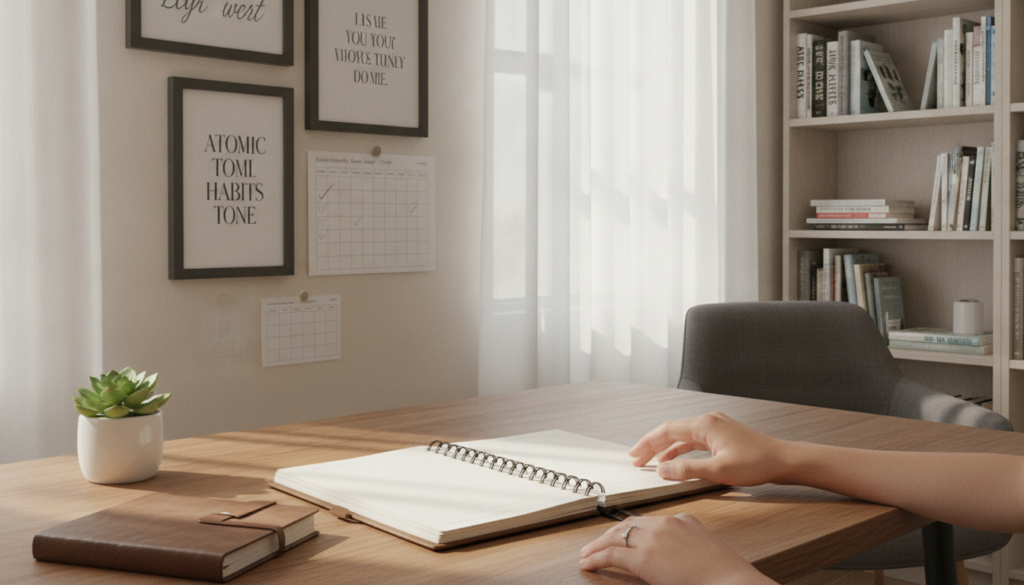
Building consistent routines is easy when you link them to things you already do. Cognitive psychology helps you change your daily life without needing willpower. Adding a new action to a habit you already have feels natural, not forced.
Stacking New Behaviors onto Existing Anchors
The best way to start a new habit is with the “If-Then” method. Choose a habit you already do, like making coffee, and add your new goal, like reading five pages. This uses habit cues your brain already knows.
Linking your new habit to something you already do saves mental energy. You don’t have to think about when to do it because the old habit reminds you. This keeps you moving forward, even when you’re busy.
Using Environmental Prompts to Stay on Track
When you lose motivation, psychological triggers help. Use physical items to remind you of your goals. For example, having your running shoes by the door reminds you to exercise.
These environmental cues act as silent coaches all day. Designing your space with these prompts makes the right choice easy. By using these psychological triggers, you keep moving forward and build a successful lifestyle.
Managing Your Decision-Making Environment During Travel
Traveling can upset your habits, but it doesn’t have to stop your progress. When you’re away from home, you miss the cues that guide your day. By using choice architecture in your travel plans, you can keep your goals in sight, no matter where you are.
Portable Strategies for Maintaining Consistency
Success on the road comes from bringing your own structure. Treat your suitcase as a mobile extension of your home or gym. Packing items that trigger good habits makes it easier to choose the right path.
Use digital tools to keep up your usual routines. If you need visual reminders, a travel app or a small checklist can help. This setup creates a reliable decision-making environment that goes with you, easing the stress of new places.
Adapting Your Architecture to New Spaces
When you arrive, take time to adjust your new space. Apply sustainable design principles to any room to make it work for you. Start by removing clutter that might distract you.
Change the layout to create a space for your key tasks. This sustainable design helps your environment support your habits. Even small changes, like moving a chair or clearing a desk, can help focus.
Being flexible is key in different decision-making environments. If a space doesn’t fit your goals, add your own cues. Use lighting, music, or scent to signal work or rest time, making any place a personal sanctuary.
Mastering sustainable choice architecture lets you stay consistent wherever you are. By shaping your surroundings, travel becomes a chance for growth. Your commitment to your environment is the strongest tool for lasting success.
Overcoming Common Pitfalls in Behavior Design
Even the best systems can hit unexpected roadblocks. You might find your environmental design no longer works as your life changes. Don’t see this as a failure, but as a sign to update your system.
Adjusting When Your Environment Fails
At times, your surroundings become too familiar or cluttered. This can lead to ignoring the cues you set for success. Spotting these biases is key to fixing them.
If your behavior design stops working, review your space. Check if old habits have returned. By spotting these changes, you can quickly get back on track.
The Importance of Iterative Refinement
Mastering behavior change is not about being perfect at first. It’s about being open to trying new things and improving over time. Your behavior change strategies should grow with you.
Be ready to test new setups and let go of what doesn’t work. This iterative refinement turns every failure into a chance to learn. By staying adaptable, your environment remains a powerful ally in your success.
| Common Pitfall | Underlying Cause | Corrective Action |
|---|---|---|
| Habit Stagnation | Cognitive Adaptation | Change the visual cue |
| Increased Friction | Environmental Clutter | Perform a deep clean |
| Loss of Focus | Digital Distractions | Reset device settings |
| Goal Drift | Lack of Clarity | Re-map your priorities |
Conclusion
Your environment shapes your daily life in ways you might not see. You have the power to change it to help you reach your dreams. By focusing on environmental design, you work with your body rather than against it.
Real change comes from creating lasting habits, not just quick motivation. You build a system that makes it easy for good habits to grow. This makes your home and office tools for success.
See your space with new eyes today. Even small changes can make a big difference over time. You should have a life where your surroundings help you reach your goals.
Start living intentionally today. Keep making your space better as you grow. You are in control, and making your life better will become second nature.