
A lifter with only a short window for accessory work can still make that session count by choosing an efficient set structure. If you already know the basics of resistance training, you may want to fit your hypertrophy work into a crowded schedule. Time matters, but cutting a workout short does not guarantee the same results.
This approach offers one way to organize hard sets, not a promise that every lifter will build muscle in half the time. Your results still depend on effort, exercise choice, and recovery. The goal is to help you decide whether the method fits your training and schedule.
Key Takeaways
- Myo-reps use short rests between reps of hard work.
- Use them mainly on safe accessory exercises.
- Keep most of your program built around sound training basics.
- Results vary with effort, exercise choice, and recovery.
- Try the method selectively before adding more work.
The method is a specific protocol with clear set rules, not just any workout done quickly. First, it helps to see what makes that protocol distinct.
Myoreps, Myo Reps, Myorep Training, Myorep Method Workout Plan: What the Protocol Means
Børge Fagerli developed Myo-reps to condense demanding hypertrophy work into a compact sequence. This Norwegian coach’s approach uses one activation set, followed by short-rest mini-sets with the same load. The activation set uses 10-12 reps at 60-80% of your one-rep max, or 1RM.
The activation set comes first, and brief-rest mini-sets follow with the same load.
The coach and training idea behind the method
Fagerli’s Myo-rep protocol is a form of short rest training. It differs from straight sets because you don’t fully rest between bouts. Instead, one demanding sequence keeps the work focused around a single exercise and load.
The activation set is the greater opening effort. It prepares you for the follow-up work, but it isn’t the same as a mini-set. The distinction matters when you track reps and judge when to stop.
How the activation set and mini-sets fit together
After the activation set, rest 10-20 seconds, then complete a mini-set of 3-5 reps. Take the same brief rest before each later mini-set. Keep the load unchanged throughout the sequence.
Most sequences end after 3-5 mini-sets. Stop sooner if you cannot complete the target reps with sound form. Do not force extra reps just to reach a planned count.
In this context, an effective rep is a repetition performed close enough to muscular failure to provide a strong muscle-growth stimulus. The protocol aims to gather demanding work in a compact format. Having defined the sequence, consider why coaches think short rests and rising fatigue may make those repetitions productive.
Why Might Short-Rest Mini-Sets Stimulate Muscle Growth?
The method’s rationale starts with a practical observation: repetitions become more demanding as a muscle tires. Myo-reps use this rising effort to keep later work challenging without long breaks. That rationale is plausible, but it does not prove that every mini-set repetition has a unique growth effect.
What the effective-reps idea proposes
Effective reps theory is a coaching idea about effort near muscular failure. It suggests that repetitions closest to failure may provide a strong muscle-growth stimulus. Coaches sometimes call these demanding repetitions effective reps.
The activation set can create fatigue before the mini-sets begin. As the muscle tires, later repetitions may feel harder, even with the same load. That can make a short sequence feel more demanding than its total rep count suggests.
Recruitment, fatigue, and the limits of the explanation
Muscle fiber recruitment may also change as effort rises. As fatigue builds, fast-twitch muscle fibers and their high-threshold motor units may join the work. These fibers can produce high force, but the exact recruitment pattern depends on the task and person.
Metabolic stress, which describes changes linked to hard work and its byproducts, is another proposed contributor. It may contribute to muscle growth, but it does not explain every outcome on its own. Fatigue and muscle recruitment offer a possible account, not proof that each small cluster has a special effect.
Effective reps can describe training effort, but they aren’t a precise count you can verify rep by rep. The theory is not settled proof that one set style always beats another. Separate that rationale from outcome evidence when judging whether the method works.
What Does the Evidence Say About Myo-Reps?
The evidence summary points to comparable muscle and strength outcomes, but it does not provide enough detail to promise the same result for every lifter. It reports similar outcomes against traditional training with about 30% less volume. That comparison is encouraging, not proof of universal equivalence.
Muscle and strength outcomes compared with traditional training
The reported comparison links Myo-reps with muscle growth and strength gains similar to traditional training. It also describes shorter sessions. These claims may interest you if you have limited time or find high training volume hard to manage.
| Outcome | Reported comparison | What you can reasonably take from it |
|---|---|---|
| Muscle growth | Similar gains to traditional training | Promising, but not a guarantee for each lifter |
| Strength | Similar gains to traditional training | Results may vary with training and effort |
| Training volume/session time | About 30% less volume; shorter sessions | A possible time saving, not a fixed result |
What the reported volume and recovery claims do not prove
The summary also reports improved recovery, but it gives no exact recovery measure. It doesn’t describe study details, such as the participants or the training setup. So you cannot tell from that summary how well the comparison applies to your routine.
Muscle hypertrophy training depends on more than one technique. Your load, effort, exercise choice, and recovery ability all affect results. The science behind a useful workout cannot guarantee a specific outcome for everyone.
Take the reported volume reduction and recovery claim as reasons to consider the method, not as settled rules. No precise session length or recovery benefit is promised. With those claims in mind, focus on performing the method with care.
How to Do Myo-Reps Safely and Consistently
Before the first repetition, choose a setup that lets you rack or release the weight safely when fatigue builds. Select an exercise you can control without rushing. Set up first, since a safe exit matters when your muscles tire. Keep 1-2 reps in reserve during the activation set instead of reaching absolute failure.
Set up and complete the activation set
- Choose a stable exercise and check that the equipment is ready.
- Use the planned load and complete the activation set with controlled form.
- Stop with 1-2 reps in reserve (RIR).
- Rest briefly, then perform a mini-set with the same load.
- Repeat the short-rest cycle while you can meet the target reps.
- End the sequence when you cannot complete the target with good form.
Reps in reserve means how many more clean reps you think you could do before failure. If you could do two more, you have about 2 RIR. This estimate takes practice, so avoid pretending you know the exact number.
Repeat mini-sets and stop at the target limit
Use a steady pace and the same range of motion for each rep. Do not swing, bounce, or shorten the movement just to keep the count. Consistent technique makes it easier to judge whether fatigue, rather than a changed movement, caused the slowdown.
During mini-sets, use the target count you chose within the established range. End the sequence when you fall short of that target. Do not turn one hard set into repeated attempts after your form slips.
For example, a target of three means you stop when you cannot complete three controlled reps. You do not need to reach absolute failure to make the method demanding. The steps are easier to understand in context, so consider a worked set.
Myo-Reps Example: How One Set Unfolds
On a leg-extension machine, a sample set could begin with 11 controlled activation reps and then continue with smaller clusters. This is an illustration, not a required rep pattern. Keep the same load for the activation set and every mini-set.
After the 11 reps, rest briefly and complete four reps. Rest briefly again, then do four more. The third mini-set has three reps, with the same weight and controlled motion.
The sequence looks like this:
- Activation set: 11 reps
- Mini-set one: 4 reps
- Mini-set two: 4 reps
- Mini-set three: 3 reps
Now rest briefly before attempting another mini-set. If you cannot reach three clean reps, stop the sequence. The point is to meet the target while keeping the load and technique consistent, not to force a fixed total.
A different lifter might choose another load or rep pattern within the protocol. This example doesn’t set a universal prescription for everyone or every workout. The example shows the sequence, while exercise choice determines whether this demanding format is suitable.
Which Exercises Work Best for Myo-Reps?
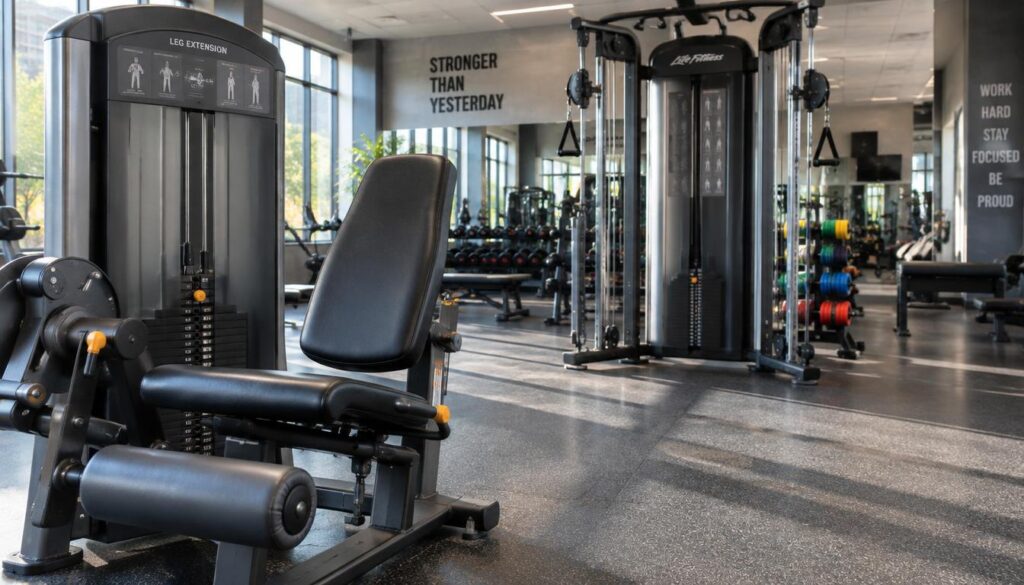
A leg extension is a more suitable place to test Myo-reps than a heavy squat because fatigue is easier to manage. Machine and isolation work usually lets you stay in control near failure. Safe effort matters more than picking the hardest lift. Avoid heavy squats, deadlifts, and other compounds where failure could be dangerous.
| Exercise | Type | Why it suits or does not suit Myo-reps | Practical caution |
|---|---|---|---|
| Leg extension | Machine isolation | Stable setup makes fatigue easier to manage | Keep hips still and control each rep |
| Cable fly | Cable isolation | Targets the chest with a steady path | Use a load you can control near failure |
| Lateral raise | Isolation exercise | Lets the shoulders work with a light load | Avoid swinging the torso |
| Squat | Compound lift | Heavy fatigue can make failure risky | Do not use heavy squats for this method |
Other suitable options include leg curls, triceps pushdowns, biceps curls, machine chest presses, and machine rows. Cable flyes and lateral raises can also work when you keep the load and movement under control. Heavy deadlifts are poor choices because fatigue can affect your whole-body position.
- Can you maintain form near failure?
- Can you stop or rack the weight safely?
- Can the target muscle do most of the work?
Use those three tests before adding an exercise. Compound vs isolation exercises differ in how much coordination and body control they demand. Once the exercise is a good fit, decide how much of the workout to devote to it.
How Many Myo-Rep Exercises Belong in a Workout?
Treat Myo-reps as a targeted accessory tool, not as a reason to rebuild every exercise in your program. Use the method for only 1-2 exercises per workout, often after your main lifts. You can use it 1-2 times per week per muscle group, but not on every exercise or workout.
A small dose can add focused work without changing your whole plan. Keep your regular training in place and use the method where it fits. If your recovery worsens, adjust the amount.
- Retain conventional work for your main lifts.
- Choose a small number of safe accessory exercises.
- Adjust the plan if your recovery worsens.
This approach helps you manage resistance training volume without turning each movement into a near-failure effort. It also keeps workout volume management simple: most of the session stays familiar, and only a few exercises use the protocol.
Do not treat this as a replacement for an entire program or every set. Not every lifter needs high-volume training, and the right workload depends on your goals and recovery. After setting a manageable dose, decide how you will progress it over time.
How Should You Progress Myo-Reps?
Record every activation set and mini-set so you can tell whether performance is actually improving. Log the load, reps, and technique quality together. Improve the work you can do with sound form before adding weight.
Write down the activation-set reps and the reps in each mini-set. Note whether you used the same range of motion and stayed in control. Those details show more than total reps alone.
First, aim to improve repetitions or complete more target mini-sets within the established protocol. Don’t add sets beyond the usual structure just to chase a higher number. Your log should reflect the work you can repeat with good form.
When the current workload is consistently manageable, increase the load slightly. Added weight should not force broken technique or push you outside the target range. If the increase changes the movement or makes you miss the target, return to a manageable load.
Progressive overload means making training more challenging over time, but it does not require a fixed increase on a set schedule. Rep range progression can help you track that change. Your notes also help distinguish a real gain from a day when effort simply felt easier.
Progression explains how to advance this method, while comparing it with other set styles helps you decide when to use them instead.
How Do Myo-Reps Compare With Rest-Pause, Drop Sets, and Straight Sets?
The main difference isn’t just the short rests; it’s how each method organizes load and follow-up work. Myo-reps keep the same load for short mini-sets after an activation set. Structure matters when you compare training methods. No method is best for every lifter or exercise.

| Method | Opening work | Rest and follow-up | Typical emphasis |
|---|---|---|---|
| Myo-reps | Activation set of 10-12 reps at 60-80% 1RM | 10-20 seconds; 3-5-rep mini-sets, usually 3-5 | Same-load, short-rest hypertrophy work |
| Traditional rest-pause | Initial set of 6-10 reps | 10-20 seconds; 3-5-rep mini-sets, usually 2-3 | More work after a hard opening set |
| Cluster sets | Heavy efforts of 2-3 reps | 15-30 seconds; commonly 4-6 clusters | Planned pauses within heavy work |
Traditional rest-pause training also uses short rests, but starts with a 6-10-rep effort and usually ends after 2-3 mini-sets. Cluster sets use planned pauses during heavy sets. Their typical clusters involve 2-3 reps, brief rests, and 4-6 rounds.
Drop sets reduce the load after a hard set instead of repeating the same-load mini-sets. Straight sets use separate work sets with longer rests, though no exact rest duration is set here. These approaches manage fatigue differently, but neither is better for everyone.
Use the style that suits the lift and goal. Knowing the distinctions makes it easier to avoid technique errors and fatigue that undermine the intended stimulus.
What Mistakes and Recovery Problems Should You Watch For?
Most avoidable problems begin when you turn a controlled accessory technique into an all-out test on every exercise. More effort is not always better when fatigue affects form or recovery. Reduce effort or volume if performance declines persistently or recovery problems grow.
- Choose a load that allows you to hit the target activation reps.
- Taking the activation set to absolute failure.
- Extending mini-sets after falling below the target.
- Using the method for too many exercises.
Each mistake can turn the method into more stress than planned. A load that is too heavy may cut the opening set short. Too many hard sequences can also make recovery from strength training harder to manage.
Watch for persistent performance decline, unusual fatigue, or recovery problems. These signs may mean you need to review your training stress, but they don’t diagnose a condition on their own. Reduce effort or volume and reassess how you feel and perform.
Recovery between sets is only one part of workout recovery. Sleep, food, and the rest of your training also affect how ready you feel. The final decision is whether your experience and training circumstances make this a suitable tool at all.
Who Should Use Myo-Reps, and Who Should Wait?
Myo-reps are most useful when you already have reliable technique and want to make limited training time more productive. Experienced lifters who train consistently may use them for suitable accessory work. Experience matters because the method asks you to judge effort as fatigue rises. Beginners should first build basic technique and steady programming.
If you cannot judge your effort or keep your form steady, wait before using an advanced intensity technique.
A lifter who cannot reliably estimate reps in reserve may misjudge how hard a set is. The same applies if you struggle to keep a useful mind-muscle connection, or feel the target muscle doing the work. Simpler training gives you more room to build those skills.
Limited workout time can make a compact method appealing, but it does not replace consistent training and recovery. Strength training techniques work best when they fit a plan you can sustain. Age alone does not make Myo-reps necessary or automatically appropriate.
If you have reliable form and can manage effort, you might test the method on a safe accessory. If not, stick with simpler training while you build consistency. That gives you a clear choice: a small trial or waiting for now.
Conclusion
Myo-reps are a focused option for saving time on suitable accessory work, not a requirement for building muscle. They can condense demanding hypertrophy work into a shorter session, but they don’t guarantee results. Reserve the method for safe exercises and lifters who can judge effort.
Choose one suitable machine or isolation exercise in a future workout. Log the set, your technique, and how you recover afterward. Use that response to decide whether the method fits your training before you add it elsewhere.