Home back stretchers range from simple foam arches to mechanical systems. Understanding how each tool affects your body helps you choose a safer option for everyday discomfort.
Many people search for home spinal decompression to manage back pain. Affordable products often relax muscles rather than provide medically controlled traction. They may offer temporary comfort but differ from professional at-home traction devices.
Before you stretch your spine at home, ask a healthcare professional whether the method fits your health, symptoms, and physical needs. Medical guidance is especially important with sciatica, persistent pain, or a diagnosed condition. No home therapy should replace an appropriate evaluation.
Key Takeaways
- Separate muscle stretching from clinical traction.
- Most affordable arches do not create controlled vertebral movement.
- Ask a clinician before starting a new routine.
- Temporary relief does not treat every underlying problem.
- Use mechanical equipment cautiously and stop if symptoms worsen.
What You Need to Know Before Trying Home Spinal Decompression to Stretch Your Spine at Home With At-Home Traction Devices
If you want back pain relief at home, you may find products that promise instant spinal decompression. Options range from foam arches to mechanical systems, but “decompression” is also a marketing term. Learn how each device affects your back and whether it may provide temporary comfort rather than a guaranteed treatment.
Why home back stretchers are receiving more attention
Online marketplaces and social media have made home spine products easier to find. People may use them to manage stiffness without frequent clinic visits. This convenience can make home spinal decompression seem appealing, but product popularity does not prove that a device treats the source of back pain.
What these devices are designed to do
Most entry-level arches passively place the spine in a fixed position and may relax surrounding muscles. A spinal traction machine applies controlled force, while a mechanical traction device may allow adjustments to fit the user. Neither option should be assumed to reduce disc pressure or provide clinical decompression without appropriate evidence and guidance.
Why “stretching” and true spinal traction are not interchangeable
Passive stretching, an inversion table, and mechanical traction use different methods. An inversion table uses gravity and body position; the Saunders Hometrac is designed to apply adjustable tension, and Yuyao Boan traction systems may use other mechanisms. Check the instructions, intended body size, positioning requirements, and contraindications before using any equipment.
Why a doctor’s evaluation should come before home use
Consult a healthcare professional before starting home therapy. Persistent pain may involve a disc, nerve, circulation, or another condition requiring diagnosis. Medical guidance helps ensure you don’t aggravate an underlying condition with the wrong equipment, position, or amount of force.
Confirm that the device suits your diagnosis, body size, and health history before using it.
How True Traction Differs From Passive Spinal Stretching
Not every device that stretches your back works in the same way. Passive positioning, gravity, and controlled mechanical force place different demands on the spine. Understanding the difference between a passive stretch and active traction can help you use these products more safely.
How traction creates space between vertebrae
True lumbar traction at home applies a measured, steady pull along the lower back. Depending on the device and the individual, this force may temporarily change loading around the vertebrae or reduce perceived pressure. It may also affect nerve-related symptoms, but results vary and should not be presented as guaranteed. Traction does not automatically correct a disc problem.
How foam arches and posture correction tools affect surrounding muscles
In contrast, a foam spine corrector or similar posture correction tools mainly influence soft tissue and body alignment. Your body weight creates a fixed curve or resting position that may loosen tight muscles. These tools can support mobility, but they do not provide the adjustable pulling force of clinical traction or prove that a structural problem has changed.
“Passive stretching and mechanical traction differ in how force reaches the spine; feeling a stretch does not prove that decompression has occurred.”
Why temporary back muscle tension relief is not the same as decompression
A gravity-assisted stretch bench may relax muscles around the back, so some people notice short-term comfort. That response does not demonstrate a change in disc position or confirm true spinal decompression. A deep stretch may feel useful without being a medical treatment.
What “spinal decompression” claims can and cannot prove
Marketing can blur simple relief and medical care. Be cautious with claims about herniated disc traction or sciatica-relief devices, especially promises to cure chronic conditions. Evidence may differ by diagnosis, device, and treatment plan.
A professional spinal decompression machine is used with clinical assessment and supervision. Home decompression products cannot guarantee the same outcome. Choose qualified guidance over bold claims about what these devices can do.
Foam Spine Correctors and Stretching Arches: What Works and What Does Not
If you are exploring home back pain remedies, you may see foam arches and spine correctors marketed as back-stretching devices. They create a gentle curve and may make your back feel more comfortable, but a passive stretch is not the same as clinical spinal decompression therapy.
What a foam spine corrector can help you feel
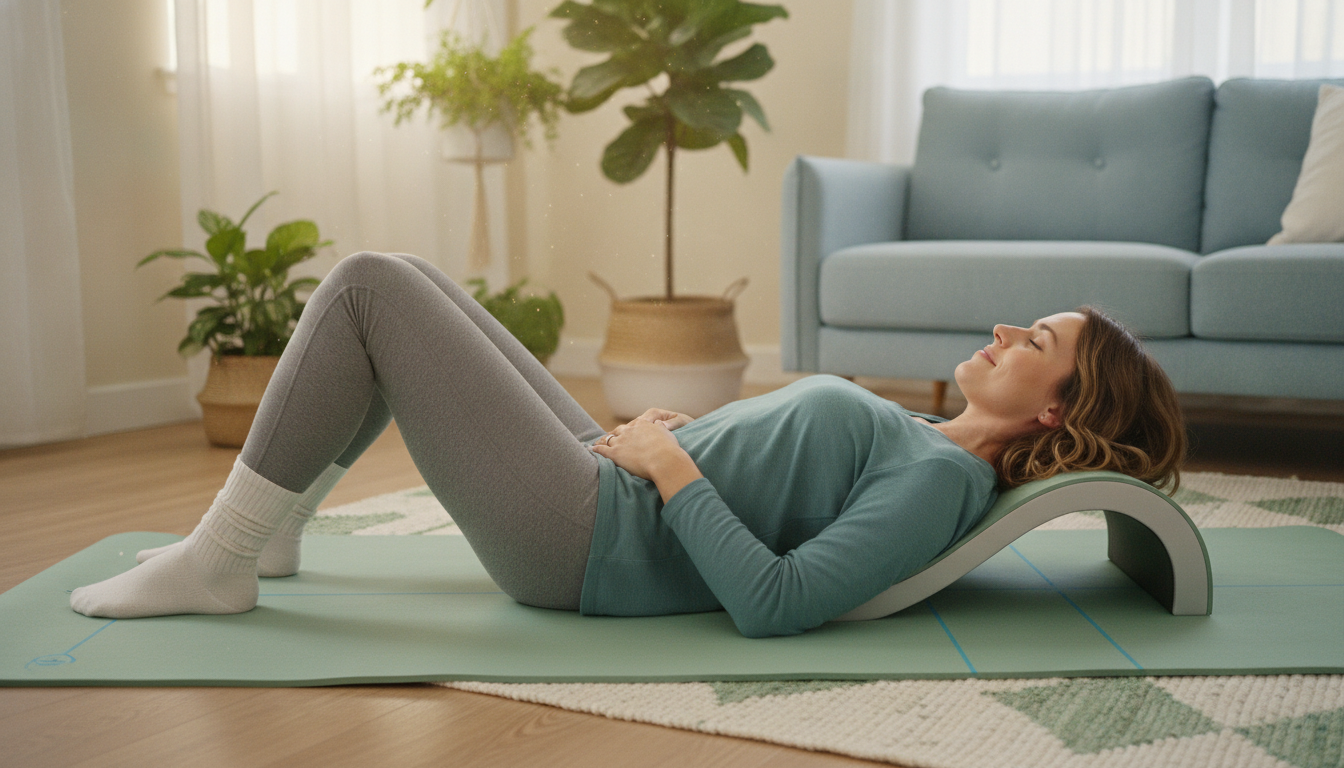
A foam spine corrector may ease temporary back pain after prolonged sitting. Lying over the arch can open the chest, draw the shoulders back, and support better posture. The position may relax tight muscles, but comfort does not mean the spine has changed structurally.
“Passive stretching tools may support a routine for minor stiffness when used cautiously and within the user’s physical limits.”
Why foam devices do not provide controlled lumbar traction
Unlike a spine stretcher machine, a foam arch relies mainly on body weight and its fixed shape. It cannot provide the measured pull used in controlled traction therapy at home. Because the tension isn’t adjustable, it cannot reliably target a specific spinal level or manage disc pressure. Review inversion table contraindications before choosing a stronger method.
When passive spinal stretching may support posture and mobility
Passive spinal stretching may support flexibility in the thoracic and lumbar areas and counter a slumped sitting position. A clinician-approved routine may include gentle exercises that help with:
- Maintaining comfortable movement in the upper spine.
- Reducing stiffness after prolonged sitting.
- Supporting a more upright posture during the day.
- Improving mobility without forceful decompression.
Signs that a foam tool is aggravating rather than relieving symptoms
Stop the stretch if it causes new or worsening symptoms. Keep your feet stable on the floor, use a comfortable position, and follow the product’s instructions rather than holding a position for a set number of seconds without guidance.
- Sharp or shooting pain traveling into the legs.
- Muscle cramping or spasms.
- Numbness or tingling in the extremities.
- Symptoms that worsen instead of improving.
These changes may indicate excessive pressure on sensitive structures. Contact a healthcare professional if your back pain persists, changes, or limits normal activity.
Inversion Tables and Gravity-Assisted Stretch Benches
An inversion table uses body weight and gravity rather than floor stretching. Although it may provide temporary spinal decompression comfort, it is not appropriate for everyone. Use a stable surface, check the manufacturer’s weight limits, and enter or exit slowly with support at your side.
How inversion table benefits are supposed to work
When tilted backward, an inversion table uses gravity to load the lower back and may change how pressure is distributed. Some users report short-term comfort, but this does not establish that the method produces lasting decompression or treats a spinal condition.
What gravity-assisted stretching can and cannot accomplish
Gravity-assisted stretching may temporarily relax muscles, but it offers less control than supervised mechanical equipment. These home spinal decompression devices do not provide a guaranteed therapeutic effect or the precise force a clinician may select for a specific condition.
“The safety of any traction device depends on the user’s health profile, diagnosis, and the device’s intended use.”
Why inversion table contraindications matter
Before using at-home traction, discuss spinal decompression safety with a healthcare professional. Inversion can alter pressure in the head and eyes and may stress the ankles and knees. People with hypertension, glaucoma, heart disease, osteoporosis, recent surgery, or spinal hardware should obtain medical clearance before using an inversion table. Stop immediately if symptoms worsen.
Mechanical Traction Devices Provide More Control—but Not a Guarantee
Mechanical traction devices offer more control than foam arches or other passive tools. Their adjustability may support targeted spinal decompression, but adjustability alone does not prove that a device will reduce back pain or improve the spine.
How a spinal traction machine applies measured force
A mechanical system applies a controlled pull to the spine and may let you adjust tension, fit, or body position. Results depend on the equipment, diagnosis, and instructions. At-home traction should not be assumed to create therapeutic decompression or reduce disc pressure without professional guidance.
Why controlled tension differs from cheaper guesswork-based devices
Fixed-angle products rely mainly on body weight and may provide a passive stretch. A device with measurable force can offer more repeatable settings, but it is not automatically effective or safe. Compare fit, force control, manufacturer instructions, warranty, and return terms before buying home equipment.
What to know about Saunders Hometrac and Yuyao Boan traction systems
The Saunders Hometrac and various Yuyao Boan models may use different harnesses, pumps, gauges, or controls. Check the specifications for the exact model rather than assuming that every system works the same way. Neither is a “set it and forget it” solution for back pain.
Why brand recognition does not replace professional fitting or instruction
Even high-end equipment may not fit your anatomy or condition. Ask a clinician whether at-home spinal decompression and home spinal traction exercises are appropriate before use.
Which Home Back Stretchers May Help With Everyday Tightness
For minor tightness, gentle movement may be more suitable than forceful DIY spinal decompression. Heat, walking, or clinician-approved exercises may offer temporary comfort.
Options for temporary back muscle tension relief
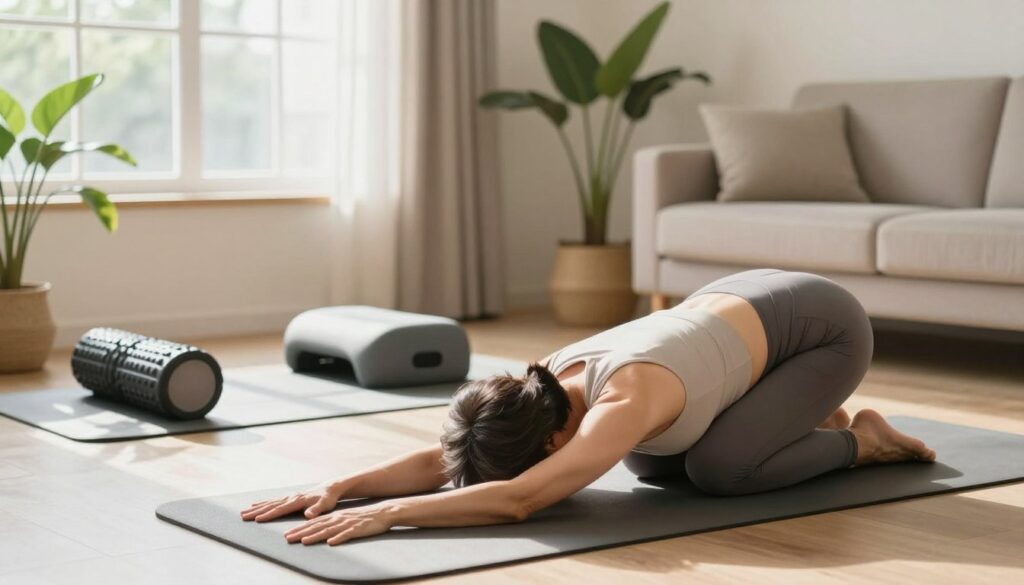
A light walk or heating pad may help relax tight muscles. Keep your feet stable, avoid painful floor positions, and stop if symptoms worsen.
How posture correction tools may support movement habits
Ergonomic supports may encourage better posture and reduce strain, but they do not replace therapy or clinical decompression.
Easy spine stretching exercises and lumbar decompression exercises to discuss with a clinician
Ask a physical therapist about gentle spine stretches and lumbar movements that suit your needs. Do not choose a routine based only on online advice.
Why gentle movement is usually safer than forceful diy spinal decompression
Slow, controlled stretches and clinician-approved lumbar decompression exercises may support mobility. Follow professional guidance, never force a position, and do not hold movements for a prescribed number of seconds or repeat them a specific number of times without guidance.
Why Home Devices Are Not a Universal Treatment for Diagnosed Spinal Conditions
Many people use home traction devices for back pain, but these products aren’t appropriate for every spinal condition. They may offer temporary comfort for minor muscle tightness, yet they cannot diagnose or treat complex problems. Using spinal decompression without professional assessment may delay care for the actual source of your back symptoms.
Herniated disc traction and sciatica relief devices require individualized guidance
If you have a herniated disc or sciatica, do not begin DIY spinal decompression techniques without medical advice. Nerve irritation, inflammation, and disc problems can respond differently to force or movement. Professional guidance helps determine whether traction is appropriate and reduces the risk that pressure will aggravate a nerve or worsen your condition.
Why symptoms can have causes that stretching will not correct
The potential benefits of at-home spinal stretching are generally limited to temporary relief from muscle tension. Persistent back pain may instead relate to instability, fracture, infection, inflammatory disease, or another condition. A stretch cannot correct every cause and may increase symptoms if used in the wrong position.
“The spine is complex; safe treatment depends on understanding the cause of pain, not just responding to the symptom.”
Limitations of home spinal decompression therapy for persistent or severe pain
Many affordable home spinal decompression devices are marketed as universal solutions. When pain persists, becomes severe, or limits movement, temporary relief from a device should not replace an examination. Relying only on home decompression may delay necessary treatment.
When imaging, examination, or supervised physical therapy may be necessary
If rest or gentle movement does not help, a clinician can decide whether an examination, MRI, or X-ray is appropriate. Use home spinal traction or spine stretching at home only after advice for your condition. Back decompression tools should complement, not replace, physical therapy, ergonomic changes, and approved exercises.
When You Should Avoid Spinal Decompression Devices Entirely
Some conditions require avoiding traction until a qualified professional provides clearance. DIY spine traction may place unwanted force on the back, especially when bone, joints, muscles, or nerves are vulnerable.
Osteoporosis and the risk of injury from traction or inversion
People with osteoporosis or low bone density should not use at-home back decompression without medical direction. Mechanical force or body weight may injure weakened vertebrae. Ask a clinician before using home traction devices, including inversion equipment.
Spinal hardware and other reasons force may be unsafe
If you have rods, screws, cages, or other spinal hardware, obtain clearance from your surgeon before trying spinal decompression at home. Applied pressure may be unsuitable for healing tissue or implants. Use the same caution after recent surgery, with significant joint problems, or with severe lumbar symptoms.
Numbness, weakness, radiating pain, and other warning symptoms
Stop using home spine stretching techniques if you develop numbness, weakness, or sharp pain that travels into an arm or leg. These symptoms may indicate nerve irritation. Do not attempt home cervical traction or additional decompression until a medical professional evaluates the problem.
Seek urgent advice for new neurological symptoms rather than testing another position, holding a stretch for several seconds, or repeating exercises. Self-diagnosis is not reliable when the spine or a nerve may be involved.
Why worsening pain, balance problems, or bowel and bladder changes require prompt care
Some red flags require immediate medical care, not an at-home spinal stretch. Seek urgent help if you notice:
- Sudden changes in bowel or bladder function, which may indicate serious nerve compression.
- Unexplained balance problems or difficulty walking.
- Worsening pain that does not improve with rest or position changes.
- Loss of sensation in the saddle area or extremities.
These symptoms are not typical muscle tightness. They may signal cauda equina syndrome, severe disc herniation, or another urgent condition affecting the lower back. Do not drive yourself if symptoms are severe; seek emergency clinical care.
How to Use Home Spinal Traction More Safely If Your Doctor Approves
If your doctor approves a specific spine decompression tool for your diagnosis, learn how to operate it safely. The correct technique for home spinal decompression may reduce avoidable strain, but approval for traction in general does not automatically approve every device.
Choose a device that matches your diagnosis and body position
Choose a device that matches the spinal area and condition being treated rather than searching for a universally “best” at-home stretcher. During lumbar decompression at home or cervical traction at home, the equipment should support natural alignment and a comfortable position.
Check the stated height and weight limits, harness fit, stability, and clearance around your feet. Keep the device on a stable floor, and avoid any position that increases pain or strains your back, shoulders, arms, or muscles.
Start with conservative settings and follow the manufacturer’s directions
When beginning at-home back traction, use only the settings and session instructions provided for your device and diagnosis. Do not guess the force, duration, or number of times to use it.
Read the manual before every new setup. Follow the manufacturer’s steps to secure the harness, maintain position, and release tension. Never use a pull-up bar, chair, belt, or other improvised equipment as a substitute for a designed traction system.
Stop immediately when symptoms spread, intensify, or change
Your body provides important feedback during each session. Stop if pain spreads into your legs or arms, becomes sharper, or changes from a mild stretch to an electric sensation. Release the tension instead of pushing through it.
Contact your clinician before trying again if symptoms continue or worsen. Do not change the device, increase force, or add exercises without professional advice.
Why diy spine traction and improvised equipment can increase risk
A diy spinal stretch using household items can apply uneven pressure and destabilize the spine. Always choose equipment with clear instructions, clear safety information, and manufacturer support. Spinal decompression is not automatically safe because a product is adjustable.
How to Compare the Best At-Home Spine Stretch Tools
Compare tools by function, fit, safety, and evidence rather than by “best” marketing claims. Back-comfort products don’t all provide the same type of decompression or therapy.
Separate muscle stretching, inversion, and mechanical traction by function
Separate basic spine stretching techniques from mechanical spinal decompression. A foam roller or arch may relax muscles, an inversion table uses gravity, and a mechanical system applies more controlled force. Each option carries different risks and requires different instructions.
Choose mobility support or clinical-style traction only after considering your diagnosis, symptoms, and clinician’s advice.
Evaluate adjustability, force control, fit, and return policies
For home spinal traction, review measurable force, body-size limits, harness comfort, stability, warranty, customer service, and return conditions. One size may not suit every body or back.
Check whether the manual explains safe steps and whether the equipment can maintain a comfortable position without excessive pressure. A return policy cannot replace medical clearance.
Consider supervised physical therapy before buying a spinal decompression machine
Before using a diy spine stretcher at home, ask a licensed physical therapist about spinal decompression exercises and other options. Supervised therapy can show how your body responds and help you use approved home devices more safely.
Professional guidance remains an important safety filter for any home stretching device.
Questions to ask before choosing home traction devices for back pain
- Does this device provide measurable force, or is it purely passive?
- Does it fit my height, weight, diagnosis, and available floor space?
- Have I cleared this specific tool with my physician or physical therapist?
- Are the harness, supports, warranty, instructions, and return policy clear?
- What symptoms mean I should stop, and whom should I contact for help?
Conclusion
Choosing a home back tool starts with understanding your symptoms and goals. Foam arches may support a gentle stretch, inversion tables use gravity, and mechanical systems apply more controlled force, but none is a universal treatment for back pain or complex spine conditions.
Speak with a physician or physical therapist before purchasing or using traction equipment, especially for cervical spinal decompression or a diagnosed lumbar problem. A clinician can help determine whether home therapy, a specific position, or supervised care is appropriate.
Clinician-approved lumbar decompression exercises may support mobility without expensive equipment. Follow the recommended routine, and don’t add stretches or change how often you use a device without guidance.
Stop any home decompression method if you develop new pain, numbness, or weakness. Protect your back, listen to your body, and follow professional advice to keep your spine care safe.